
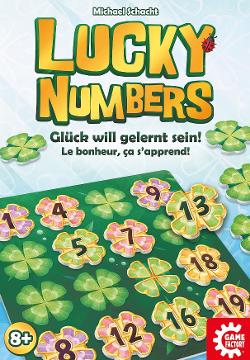
2012 · Stratégie abstraite
Lucky Numbers
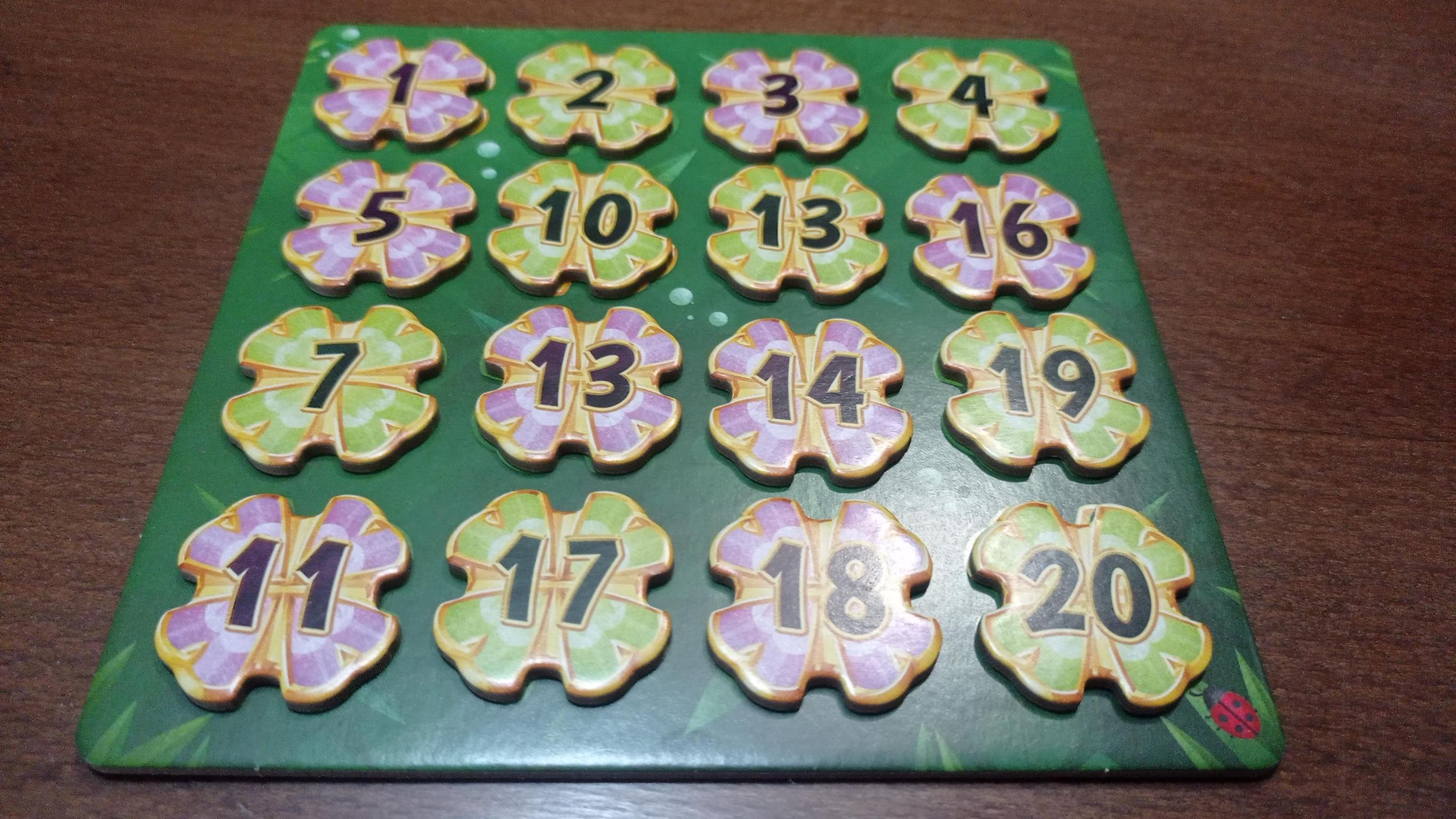
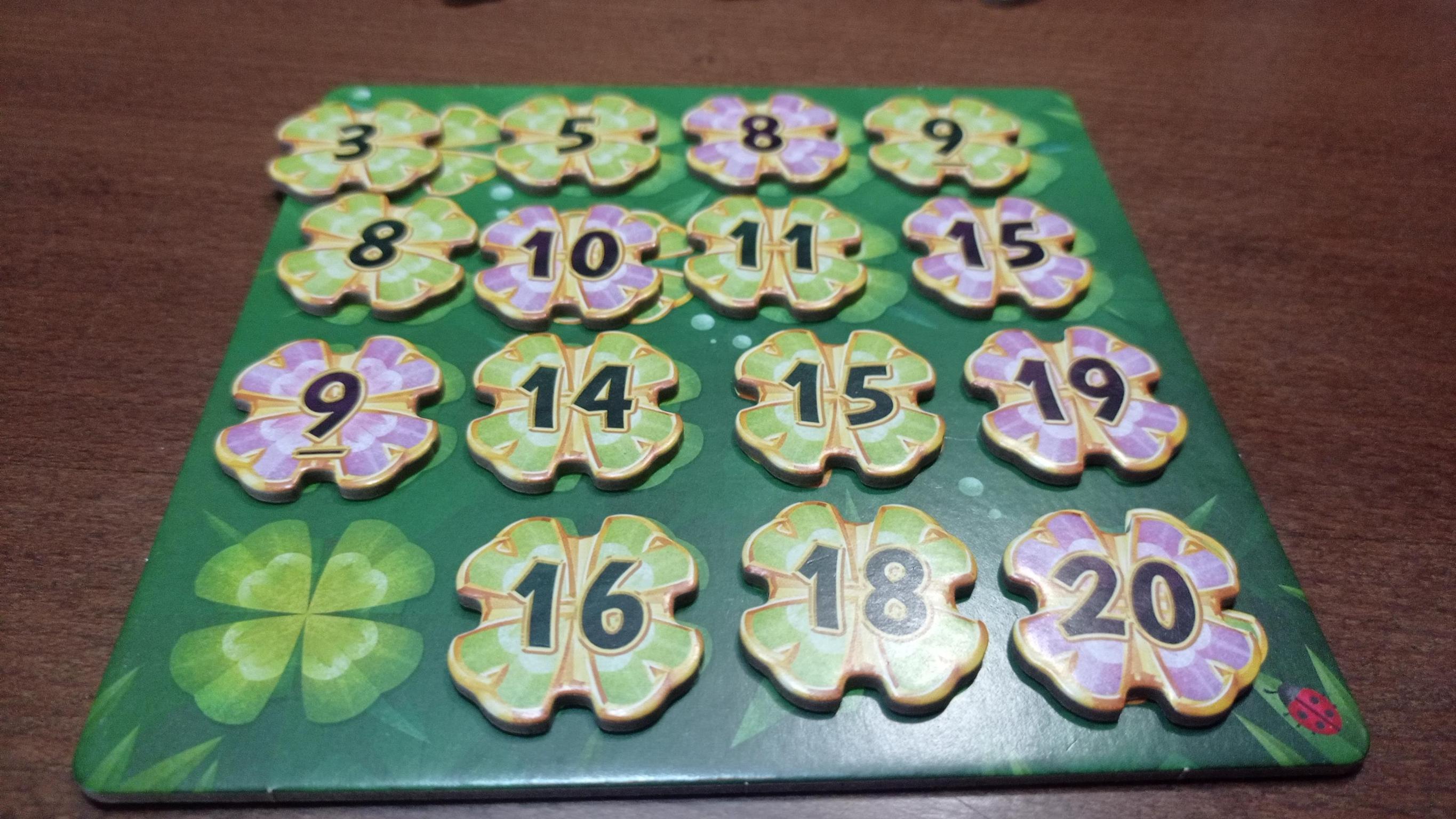
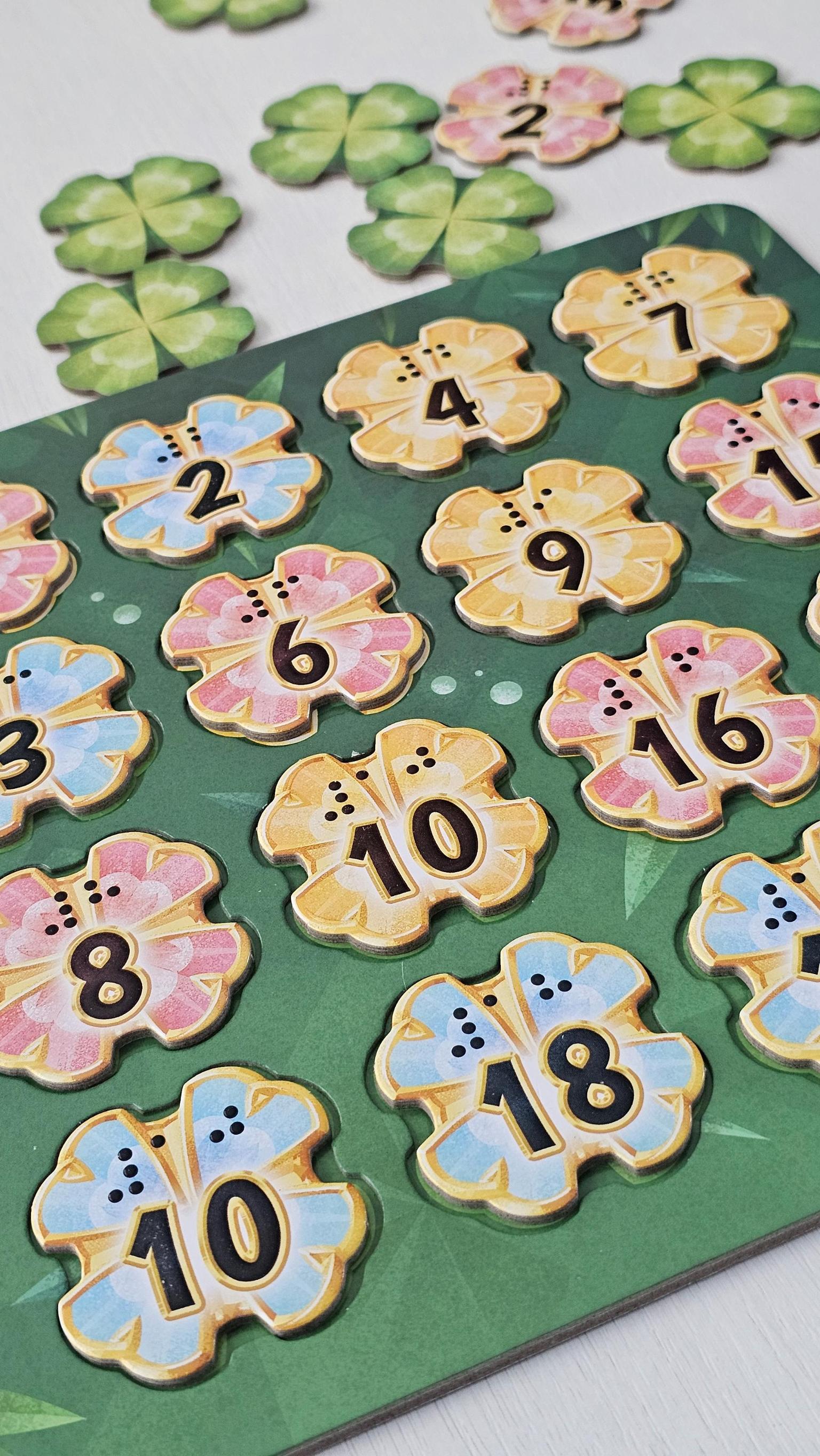
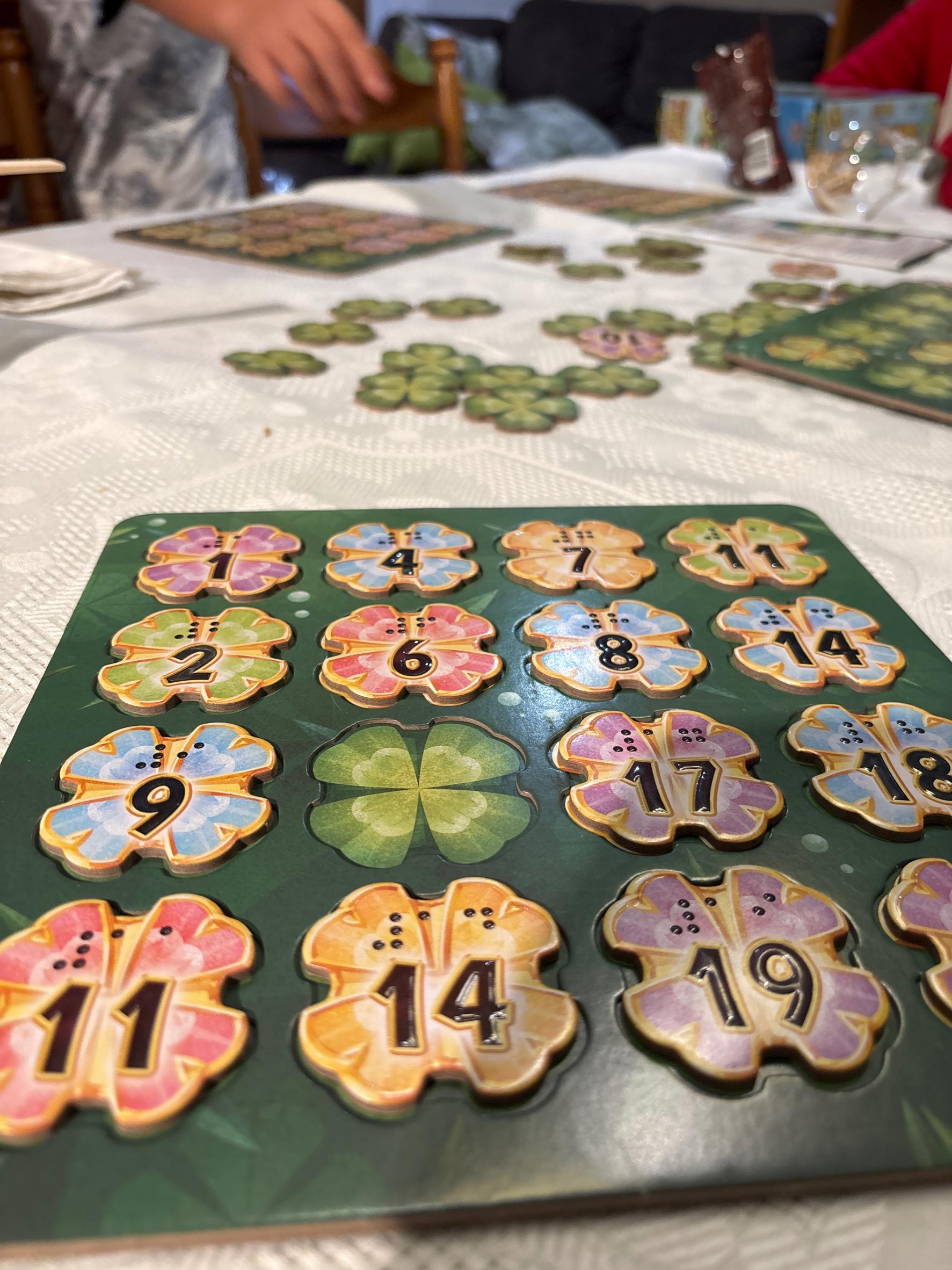
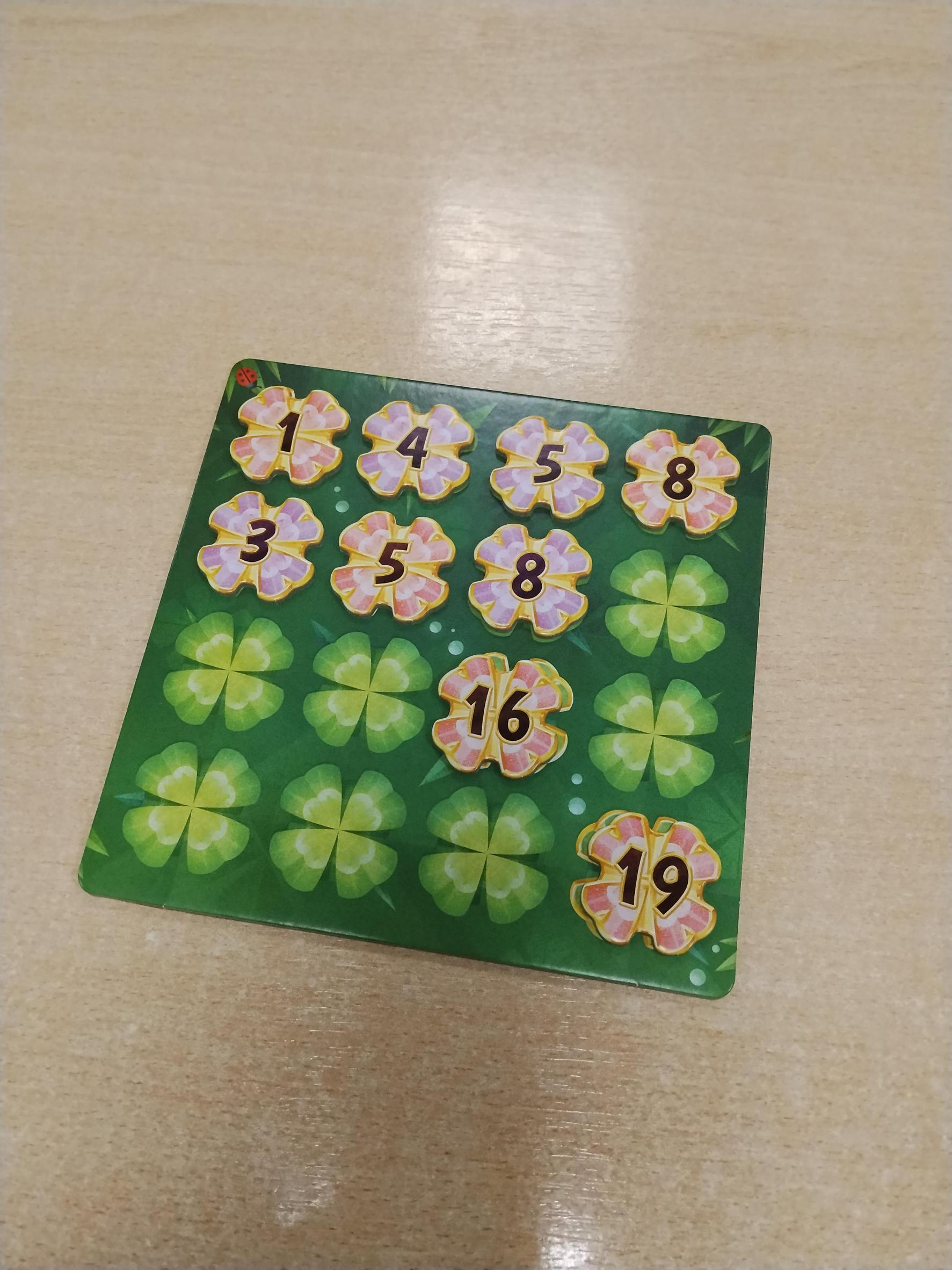
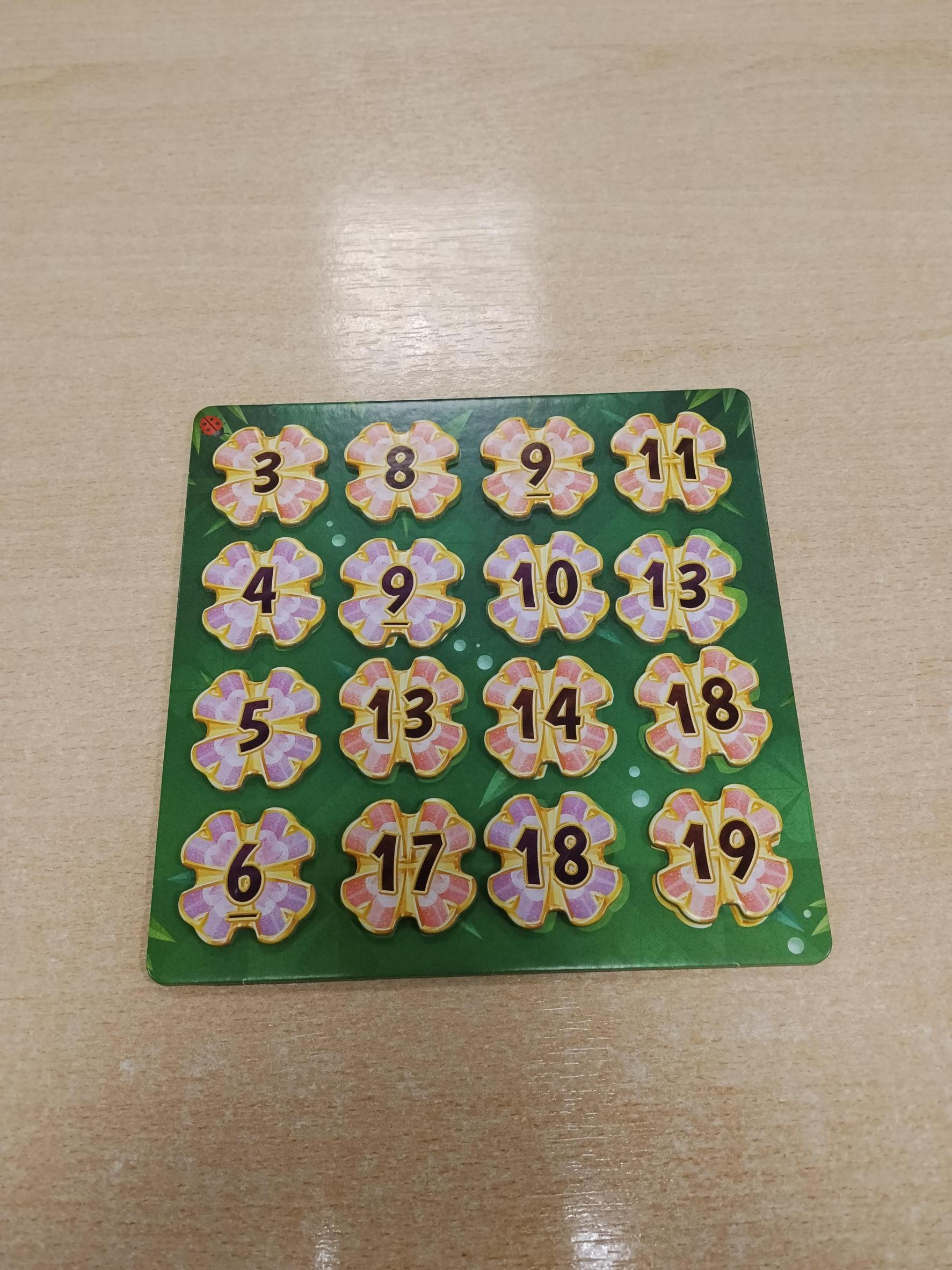
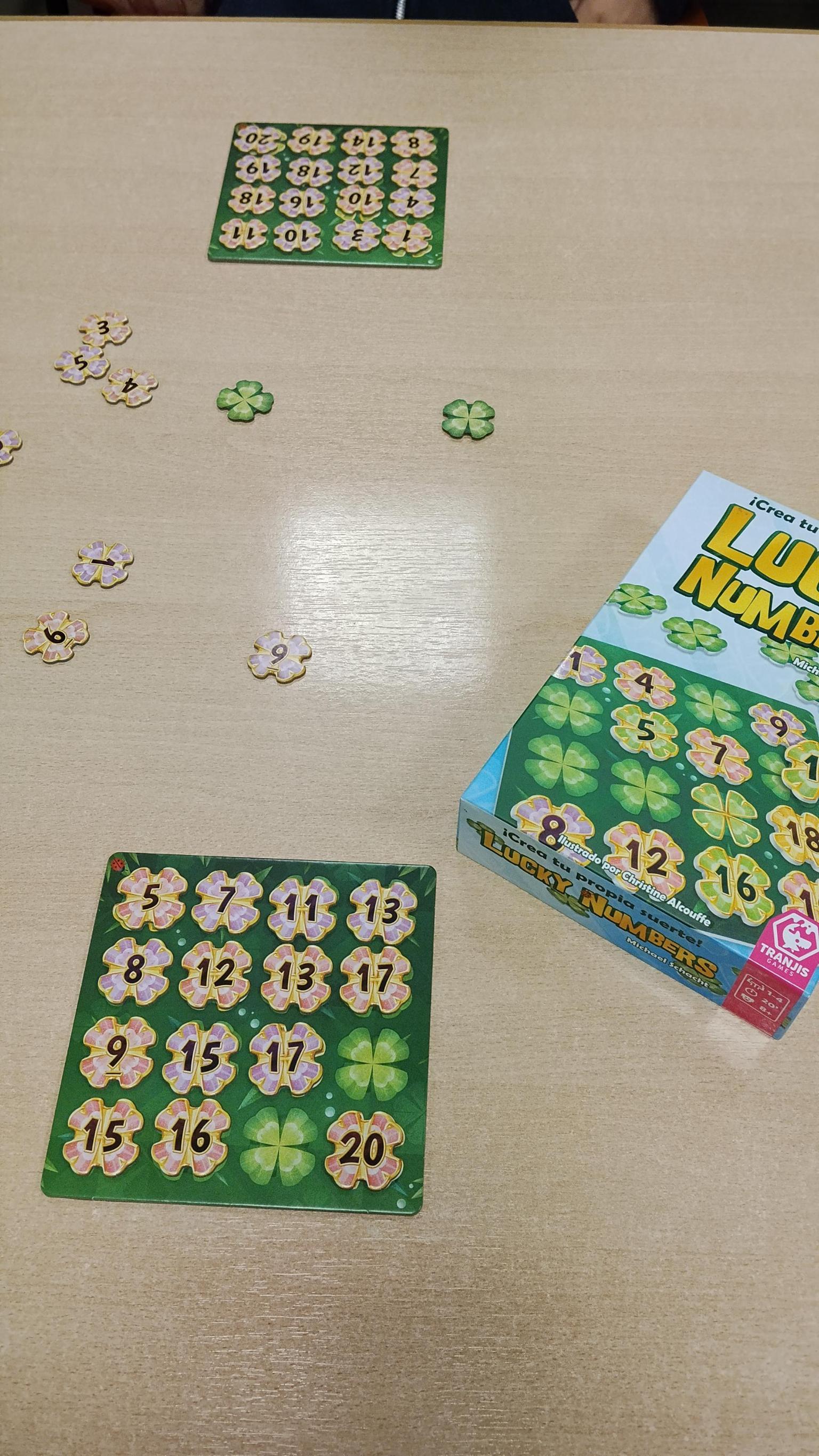
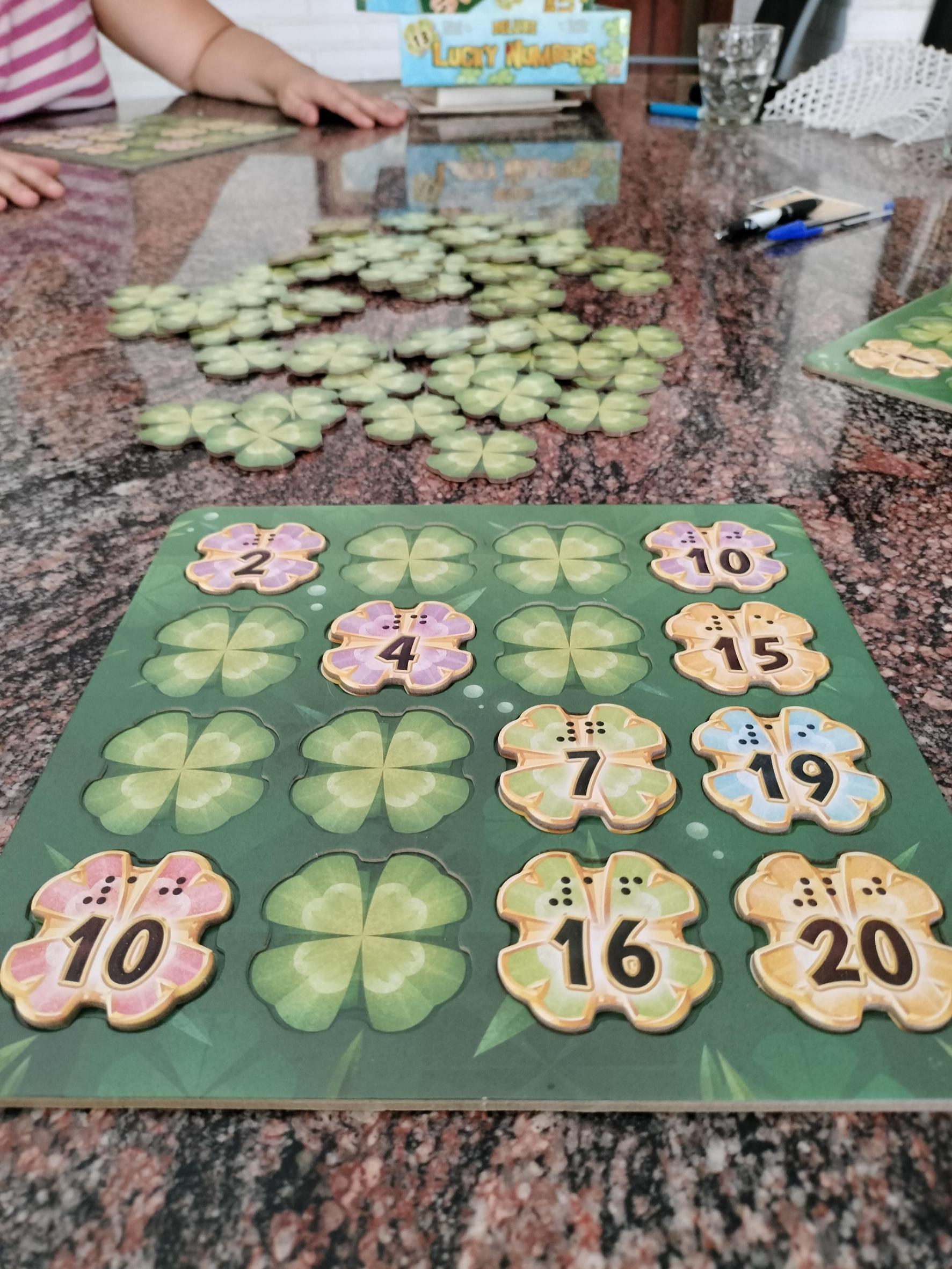
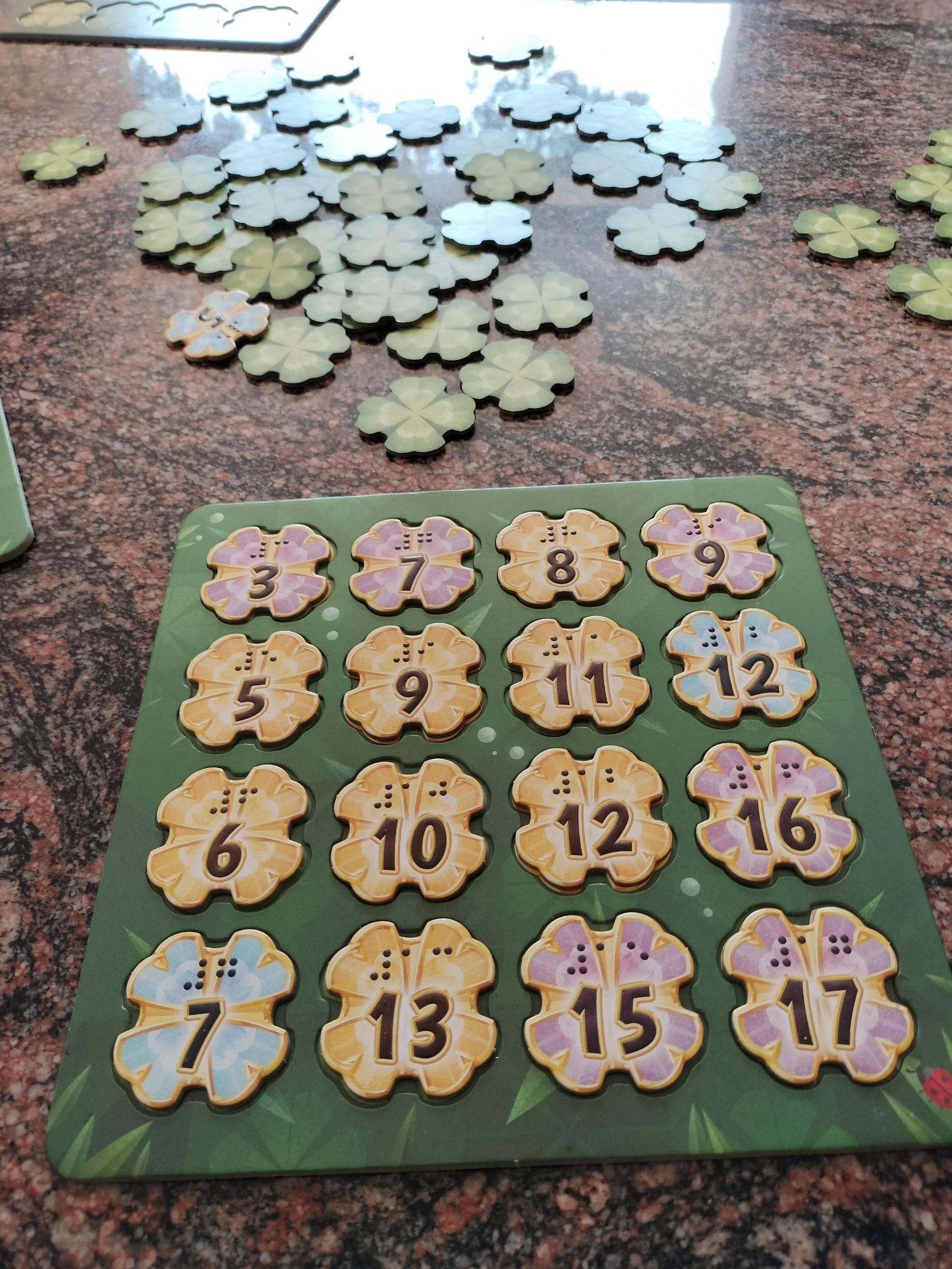
Players race to fill a personal 4x4 grid with numbered tiles while maintaining a local ordering rule: each tile must be higher than any tile directly above or to its left, and lower than any tile directly below or to its right. On a turn a player draws either a face-down tile or a face-up discard and may place it in an empty cell, swap it with a tile already in the grid, or discard it to the table. Initial setup places four randomly drawn tiles in the main diagonal in ascending order. Play ends when a player fills all sixteen spaces (or when the draw pile is exhausted, with the most-filled grid winning). Tournament scoring and a solo puzzle mode are included.
- Joueurs
- 1–4 idéal à 3
- Temps de jeu
- 20 min
- Âge
- 8+
- Complexité
- 1,1 / 5
À propos du jeu
- Auteurs
- Illustration
- Éditeurs




Extensions
Les voir dans Ludoya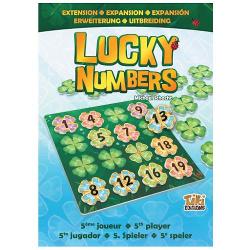
Photos des tables de Ludoya
Toutes les photos dans Ludoya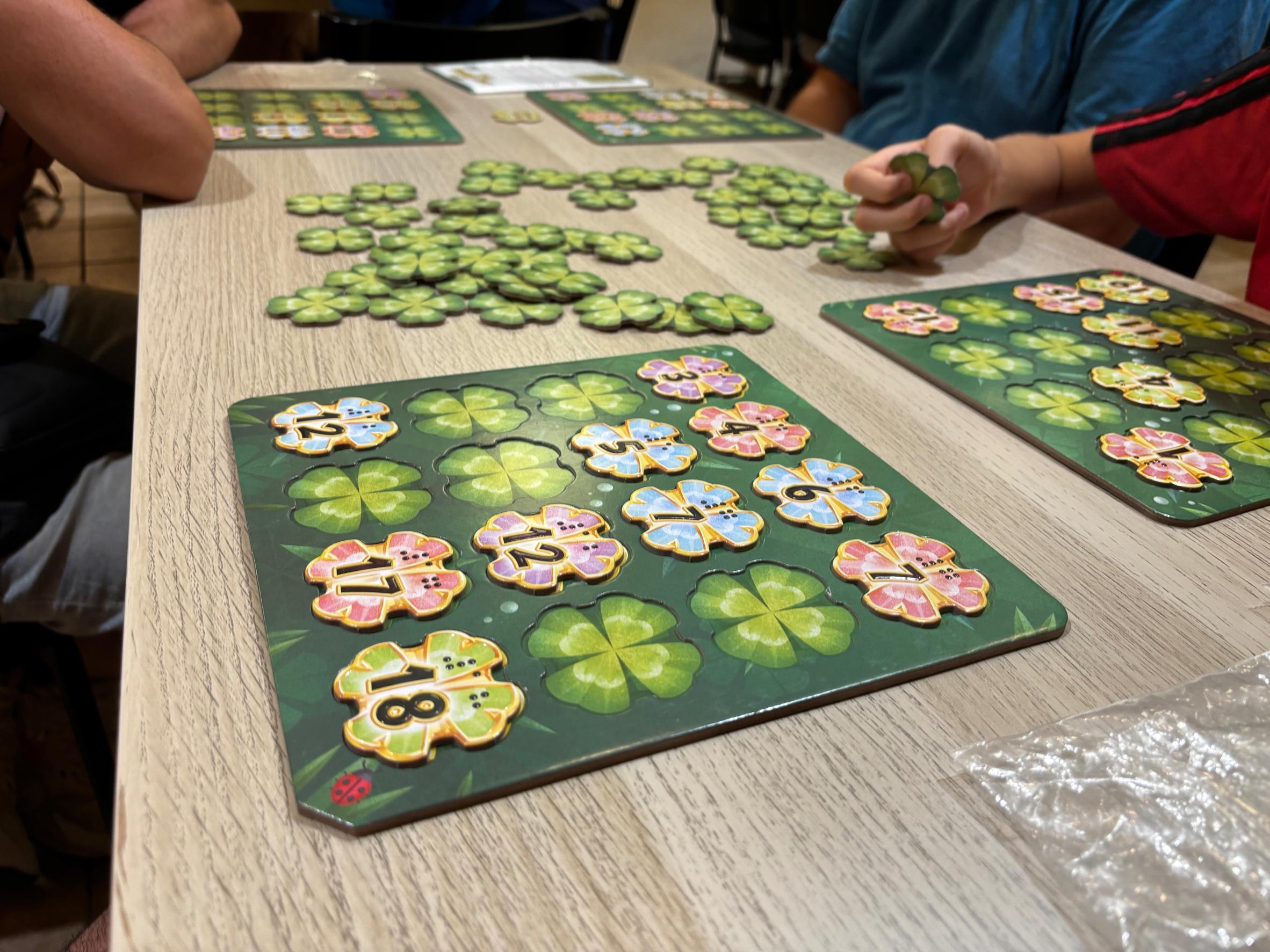
Où l'acheter
Prix des boutiques et exemplaires d'occasion, vérifiés chaque jour.
- LudifolieVérifier le stock17.9 €
- Zatu GamesEn stock16.75 £
- Milan SpieleRupture de stock17.1 €
- SpelexpertenVérifier le stock199 kr
- Juegos de la Mesa RedondaRupture de stock17.96 €
- Dungeon MarvelsRupture de stock17.96 €
- ZacatrusEn stock17.99 €
- Va de jocsEn stock18 €
Sur les tables de Ludoya
Toutes les statistiques dans Ludoya- 3 002
- Parties enregistrées
- 942
- Joueurs
- 13m 33s
- Partie moyenne
- 113
- Dans des collections
- 6
- Dans des listes de souhaits
6,9/10
sur 64 avis Ludoya
A pesar del nombre, #LuckyNumbers no es para nada un juego de azar. Se trata de un juego sencillo en el que hay que tomar decisiones a corto plazo y en el que podemos solucionar facilmente nuestros errores intercambiando las fichas de trébol en nuestro turno. Me gustan los componentes y la estética del juego, siendo muy amigable y haciendo que un juego de estadística y probabilidad se combierta en algo atractivo para el público. Lo más interesante son las variantes que trae el juego y la opción de modo solitario que trae en la que se nos ofrecen 40 retos distintos. Un juego muy recomendable y más aún con el precio que tiene.
Julio CC6,0 A pesar del nombre, #LuckyNumbers no es para nada un juego de azar. Se trata de un juego sencillo en el que hay que tomar decisiones a corto plazo y en el que podemos solucionar facilmente nuestros errores intercambiando las fichas de trébol en nuestro turno. Me gustan los componentes y la estética del juego, siendo muy amigable y haciendo que un juego de estadística y probabilidad se combierta en algo atractivo para el público. Lo más interesante son las variantes que trae el juego y la opción de modo solitario que trae en la que se nos ofrecen 40 retos distintos. Un juego muy recomendable y más aún con el precio que tiene.
- Base -



Questions de règles
Réponses tirées du livret par l'assistant de règles de Ludoya.
Can I rearrange or freely move tiles on my board later in the game?
No — you may only change your board when you place a new clover: you can add it to an empty space or exchange it for a previously-placed clover (returning the exchanged clover face-up to the middle); you cannot otherwise rearrange tiles (page 2).
If I draw a face-down clover and can't or don't want to place it, what do I do with it?
You leave it face-up in the middle of the table for anyone to take on a later turn (page 2).
If I take a face-up clover from the middle, can I also draw a face-down clover on the same turn?
No — if you take a face-up clover you do not reveal another clover on that turn (page 2).
Do the numbers in each row and column have to be consecutive (like 7,8,9) or something else?
They do not need to be consecutive; the number you place must simply be in ascending order with the other numbers in its row (left to right) and column (top to bottom) (pages 1–2).
What happens when the last clover from the draw pile is revealed? How does the game end?
If a player reveals the last clover and completes their turn, the game ends; normally the winner is the first to fill their board, but in this rare case the winner is the player with the fewest empty spaces (ties mean multiple winners) (page 1).
Are the four starting clovers placed on the diagonal locked in place, or can they be exchanged later?
The four starting clovers are placed face-up on the four diagonal spaces and may be exchanged later like any previously-placed clover under the Placement Rules, except in the Michael’s Setup variant where tiles placed during that setup may not be relocated (pages 2 and 1).












Gratuit, sur le web, Android et iOS
Jouez à Lucky Numbers avec Ludoya
- Gardez-le dans votre collectionSuivez votre exemplaire et ses extensions, prêtez-le à vos amis ou ajoutez-le à votre liste de souhaits et soyez prévenu quand le prix baisse.Ajouter à votre collection
- Enregistrez chaque partieScores, gagnants, minuteurs et photos, puis vos statistiques : taux de victoire, nombre de joueurs préféré, meilleur score.Enregistrer une partie
- Réglez les questions de règlesPosez n'importe quelle question sur les règles et obtenez une réponse tirée du livret, avec la page pour vérifier.Demander à l'assistant de règles
- Trouvez des gens avec qui y jouerClubs, soirées jeux et événements près de chez vous qui mettent ce jeu sur la table.Voir les événements
Données du jeu (joueurs, durée, âge, crédits) issues de BoardGameGeek.