
2009 · Economico
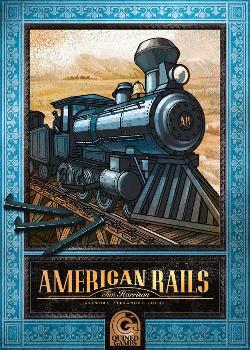
American Rails
I giocatori vestono i panni di ricchi capitalisti che gestiscono azioni e obbligazioni di sei compagnie ferroviarie fittizie negli Stati Uniti orientali. A ogni turno comprano e vendono titoli, negoziano con gli altri e assegnano azioni per influenzare il valore delle compagnie e i collegamenti tra le loro tratte. L’ordine dei turni variabile, la diluizione delle città e le diverse configurazioni modificano le priorità strategiche a ogni partita. La partita termina al verificarsi di una determinata condizione e vince il giocatore con più denaro, dopo aver aumentato il valore dei propri investimenti e creato la rete ferroviaria più redditizia.
- Giocatori
- 3–5 ideale in 4
- Tempo di gioco
- 90 min
- Età
- 14+
- Complessità
- 2,9 / 5
Il gioco
- Autori
- Illustrazioni


Foto dai tavoli di Ludoya
Tutte le foto in Ludoya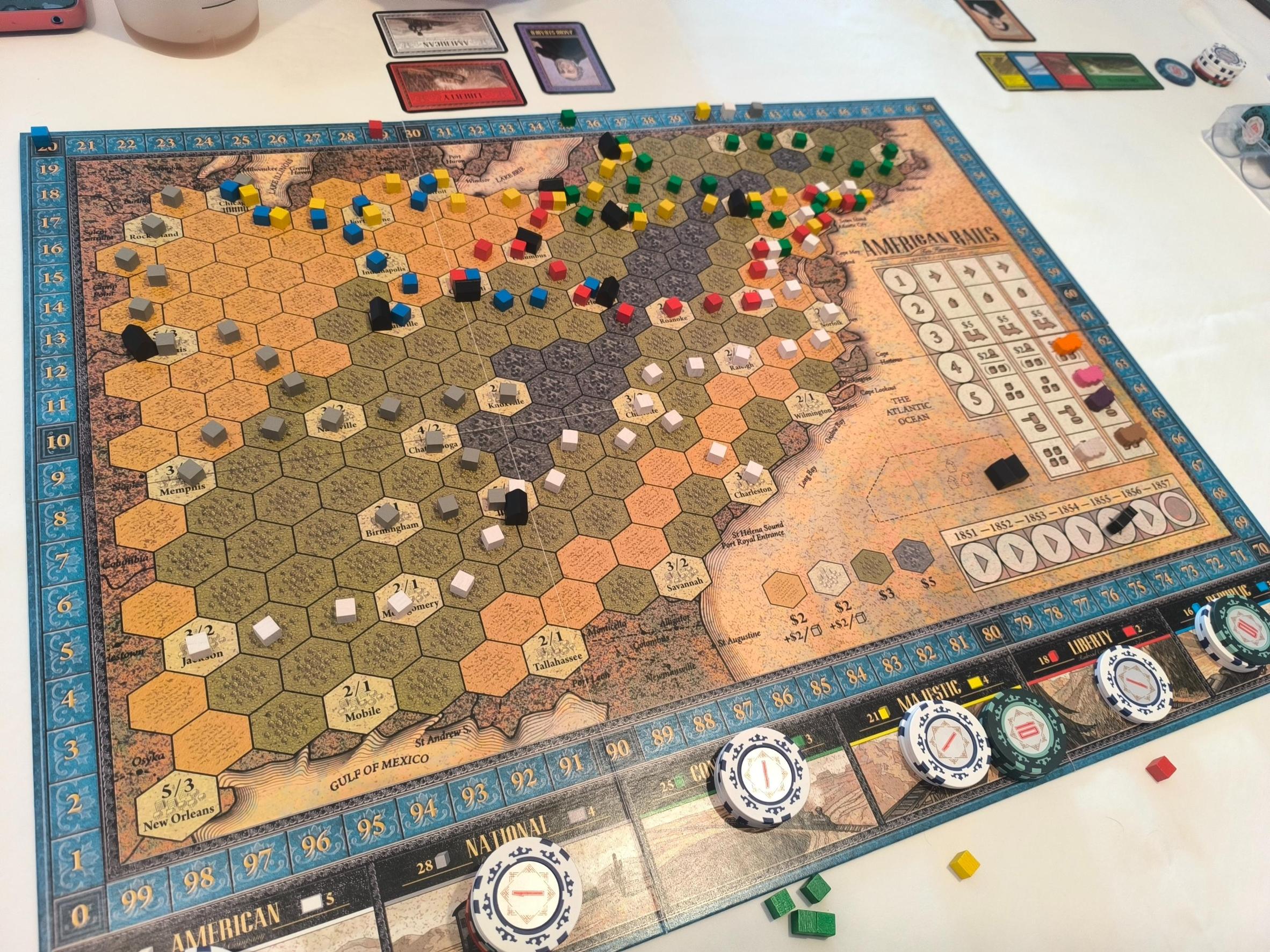
Sui tavoli di Ludoya
Tutte le statistiche in Ludoya- 25
- Partite registrate
- 57
- Giocatori
- 1h 47m
- Partita media
- 7
- Nelle ludoteche
- 2
- Nelle liste dei desideri
7,0/10
da 6 recensioni Ludoya
Evan7,0 This game is not substantially different from Chicago Express and Paris Connection, but it does have the potential to go on longer than it's cousins. It's been just long enough since I played the other two games that I don't feel comfortable writing up a list of differences between the games, but from our one play it felt like the thing that makes this game really interesting and different is that you don't know quite when the end of the game will trigger, which makes your mental math about what stocks are worth difficult, since stocks pay out at the end of each round. I enjoyed the game quite a bit, but I've liked most train games I've played. One of my friends who likes Paris Connection because it's short, and likes 1846 because it's more about stocks than logistics for him, disliked this game a lot. He felt the game relies too much on players knowing what their own best interests are and then acting on them in order for the game to be stable and avoid a runaway leader. In fact, in our game, despite other players having the opportunity to stop me, I was able to buy both copies of the stock in the red company, which seemed like a fairly chumpy move since Red wasn't a large or impressive company, however, players had more or less left it alone all game, and since I was getting 100% of it's payout, this small company amounted to more money coming to me than other players were getting for their 30-50% of larger companies. ★ Art, Iconography and components functional ★ Clever or interesting mechanisms ★ Reasonably low downtime between turns with mildly AP players ★ Multiple plays stay interesting ★ Low or mitigatable luck elements ★★☆☆☆ Raw enjoyment
Prime impressioni · 1 partita
Giochi simili

















Gratis, sul web, Android e iOS
Gioca a American Rails con Ludoya
- Tienilo nella tua ludotecaTieni traccia della tua copia e delle sue espansioni, prestala agli amici o mettila nella lista dei desideri e ricevi un avviso quando il prezzo scende.Aggiungilo alla tua ludoteca
- Registra ogni partitaPunteggi, vincitori, timer e foto, poi le tue statistiche: percentuale di vittorie, numero di giocatori preferito, miglior punteggio.Registra una partita
- Segna i punti senza cartaUsa i fogli punteggio e gli assistenti di gioco della community e lascia che Ludoya sommi i punti.Trova fogli punteggio
- Trova persone con cui giocarloClub, serate di gioco ed eventi vicino a te che portano questo gioco in tavola.Vedi gli eventi
Dati del gioco (giocatori, durata, età, crediti) da BoardGameGeek.