
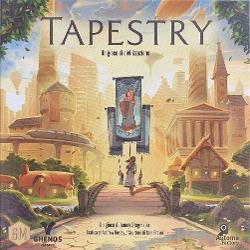
2019 · Civiltà
Tapestry
Crea una civiltà che si sviluppa dalla preistoria fino a un futuro ipotetico attraverso una combinazione di progressi culturali e tecnologici. I giocatori avanzano lungo quattro tracciati distinti — scienza, tecnologia, esplorazione e militare — per sbloccare vantaggi, migliorare le entrate e costruire una città capitale, sfruttando abilità asimmetriche per ciascun giocatore. Il gioco combina l’avanzamento sui tracciati, la costruzione del tableau con carte arazzo che narrano la storia di ogni civiltà, la gestione delle entrate e decisioni sul punteggio, con l’obiettivo di accumulare più punti vittoria degli avversari nell’arco di una partita tipica di circa due ore, per 1–5 giocatori.
- Giocatori
- 1–5 ideale in 3
- Tempo di gioco
- 90–120 min
- Età
- 12+
- Complessità
- 3 / 5
Il gioco
- Autori
- Illustrazioni
- Publisher



Espansioni
Vedile in Ludoya
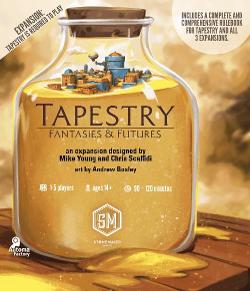
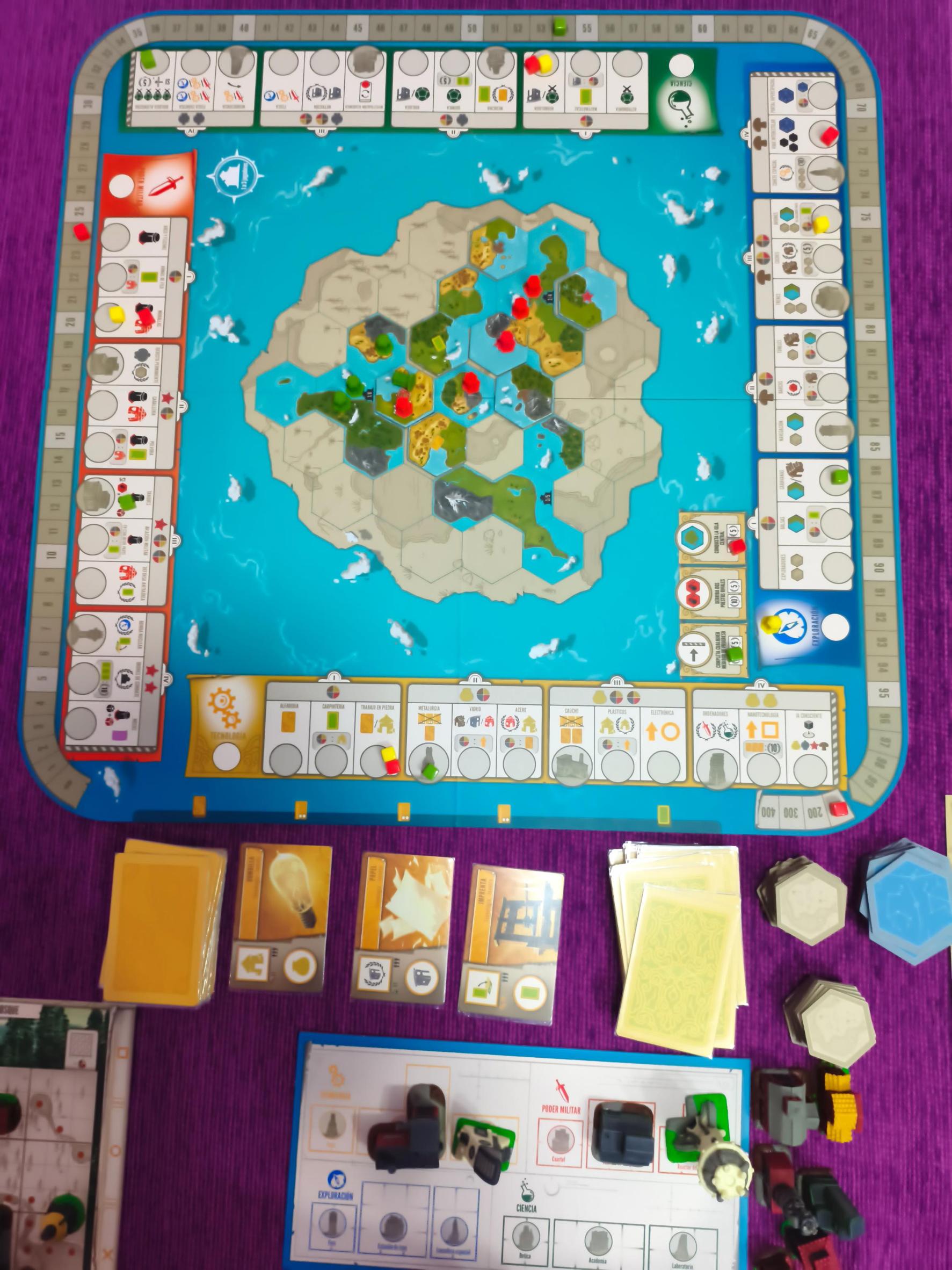
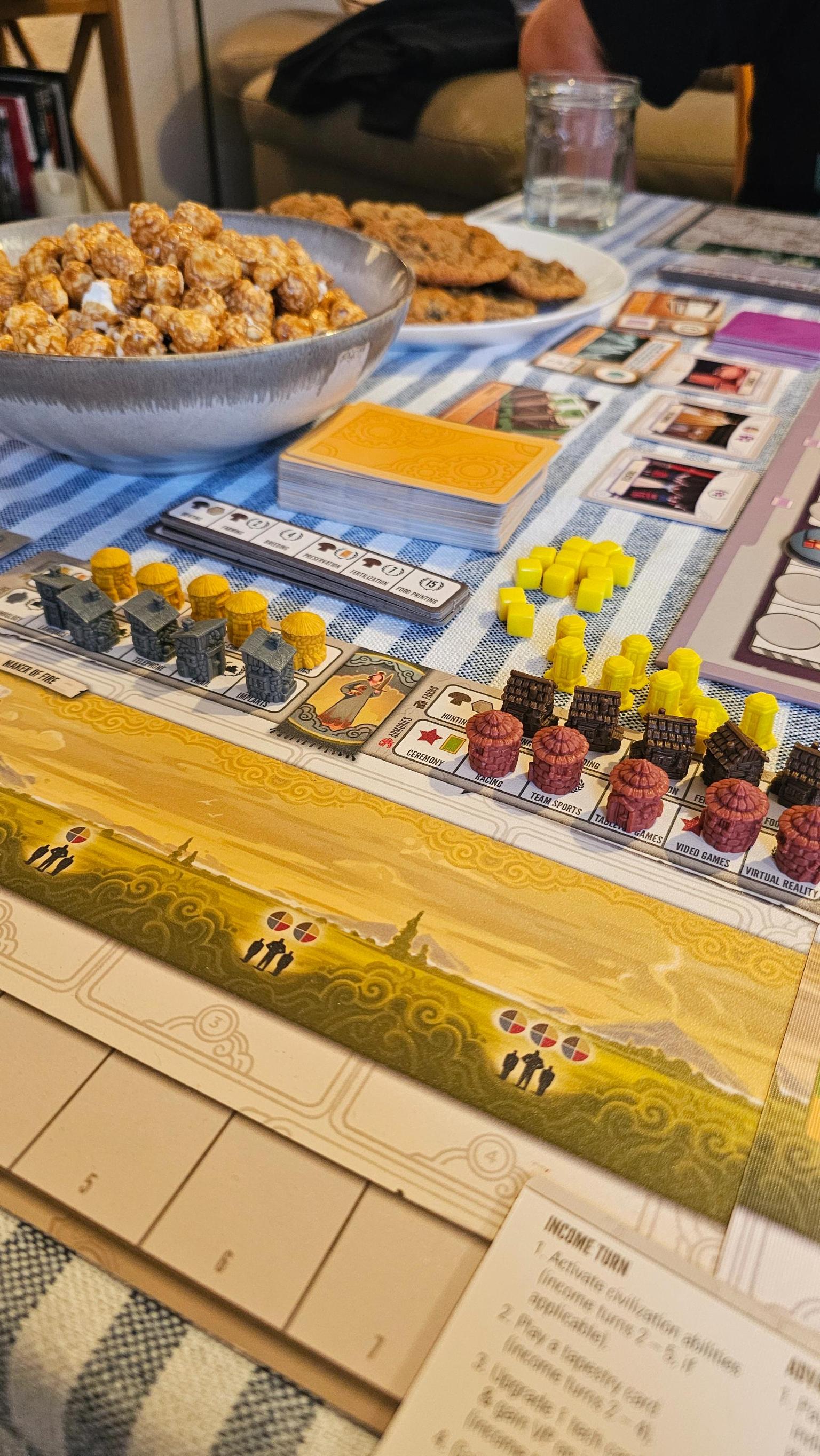
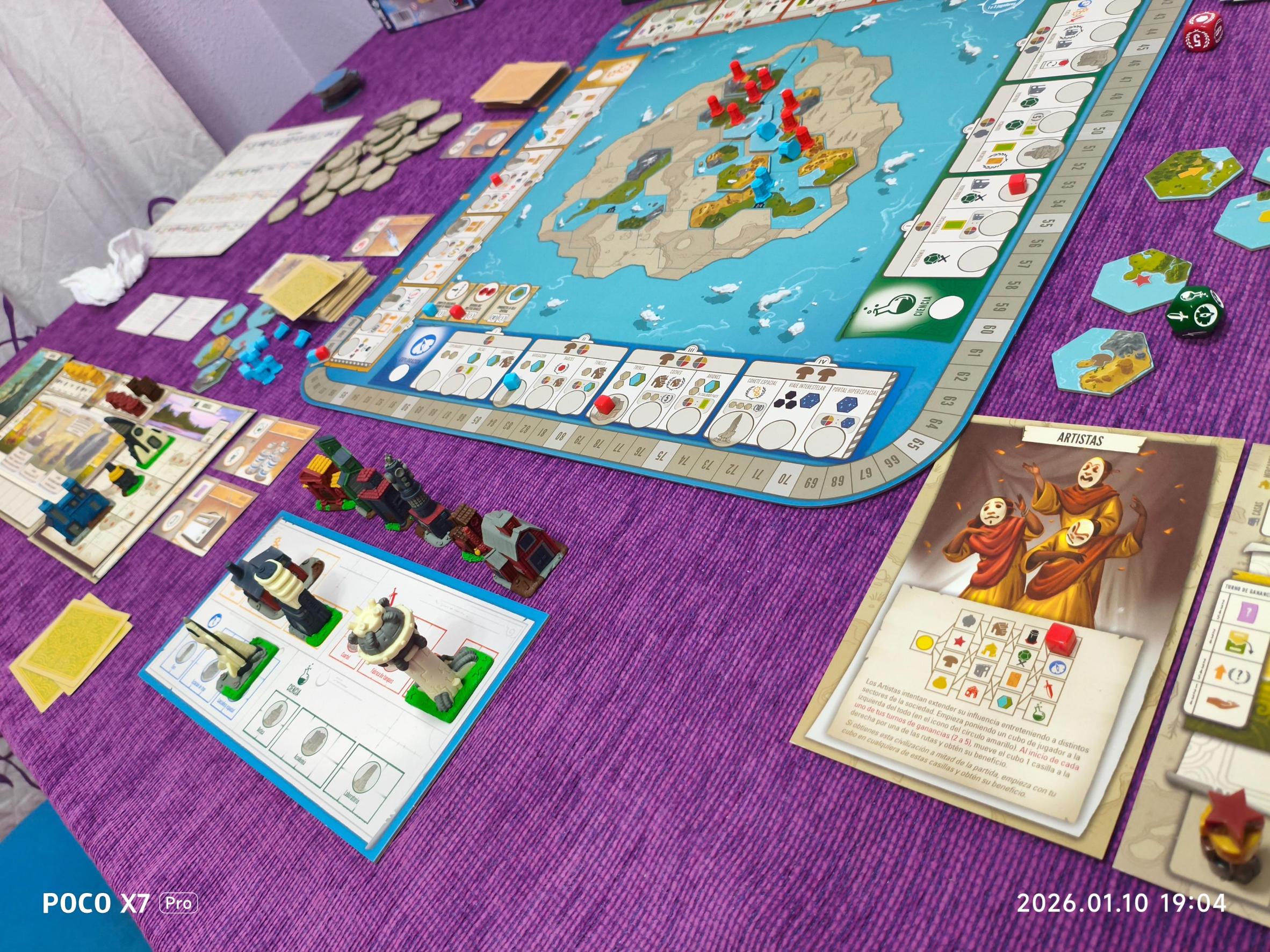
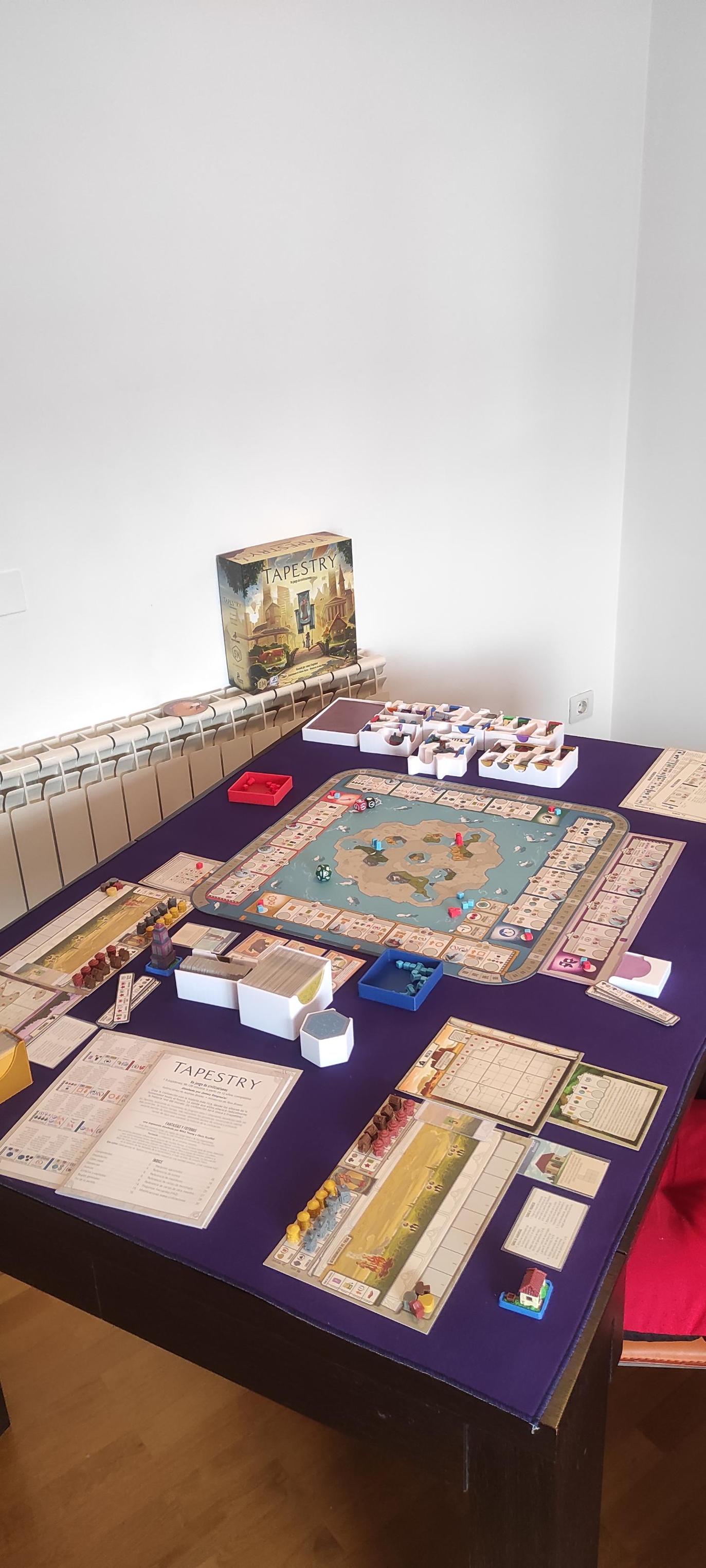
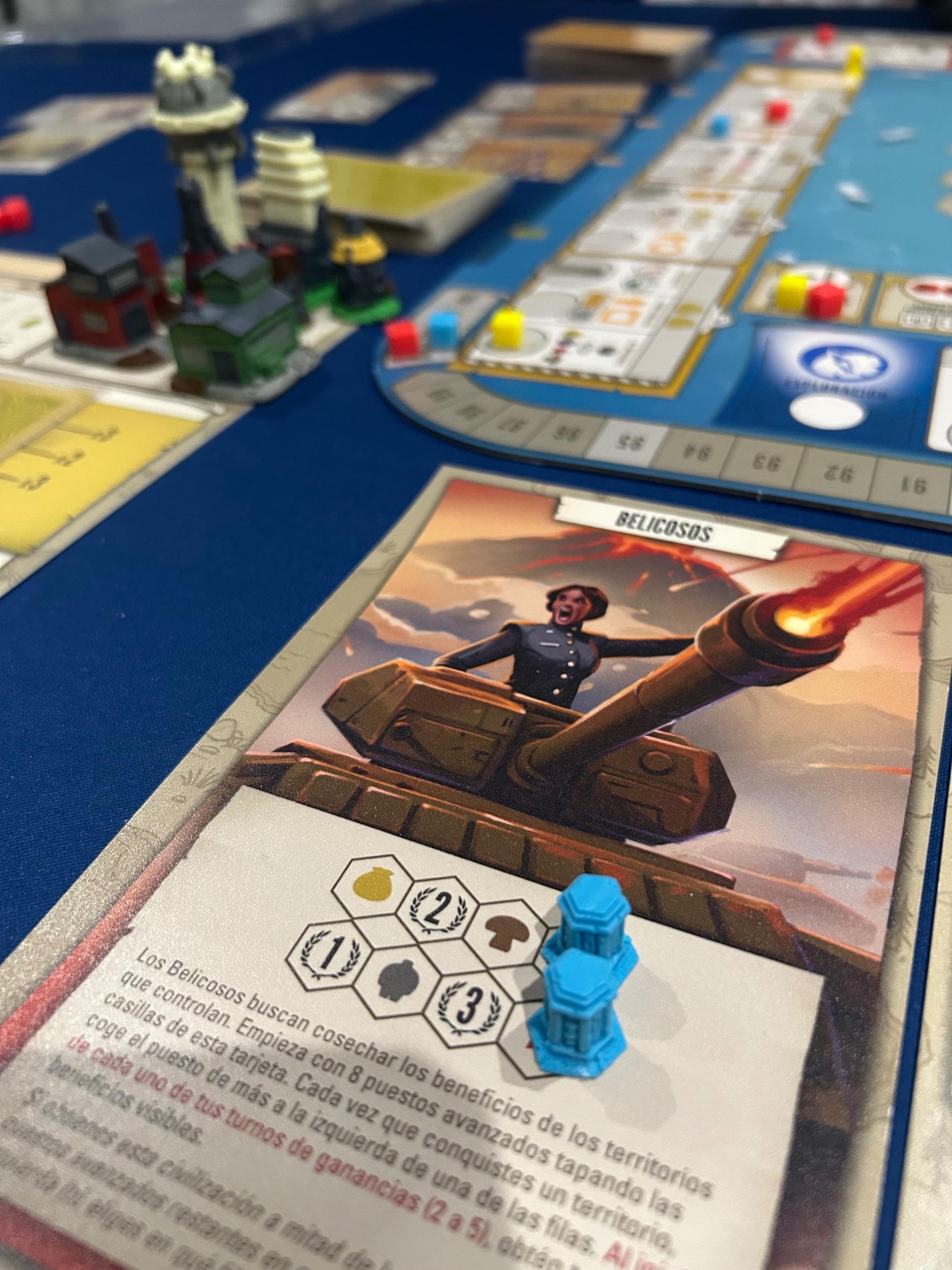
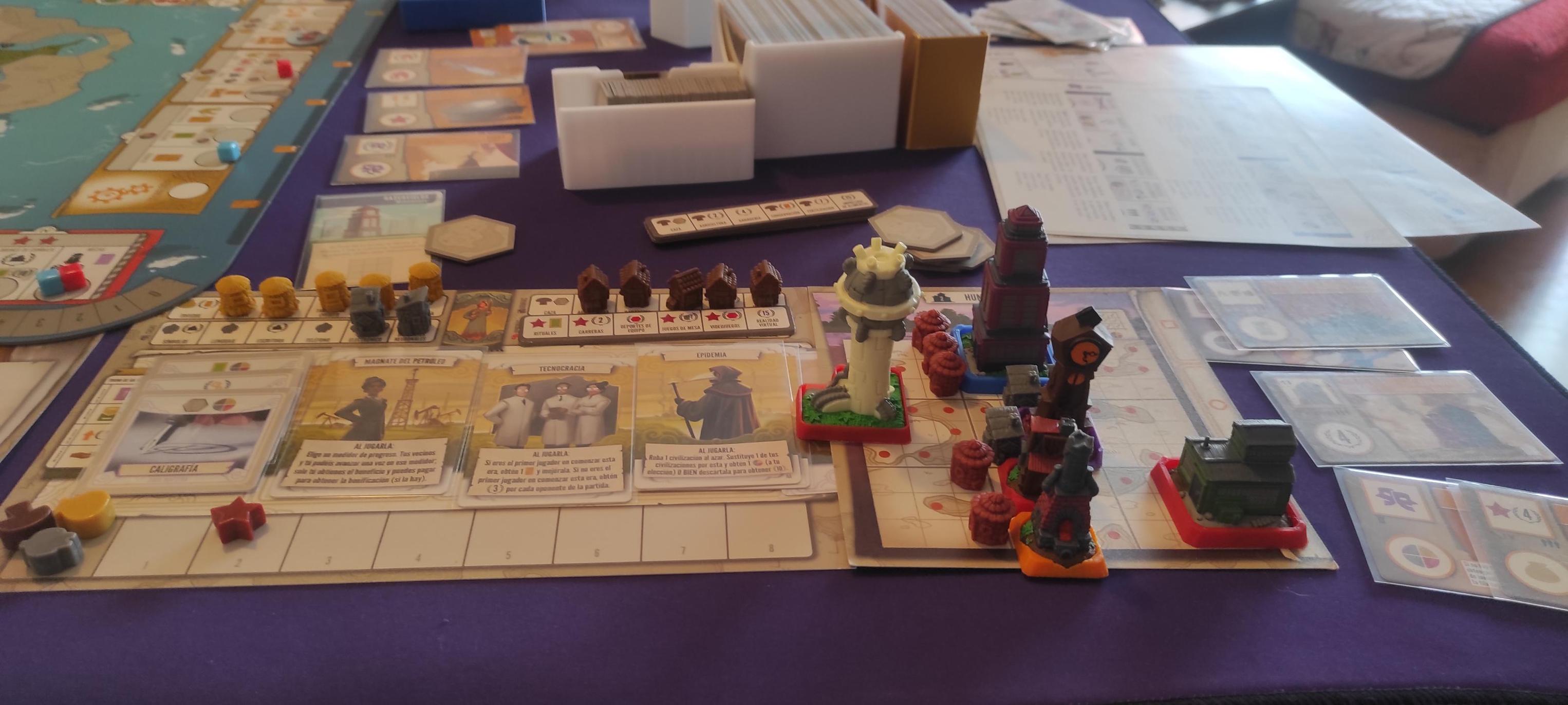
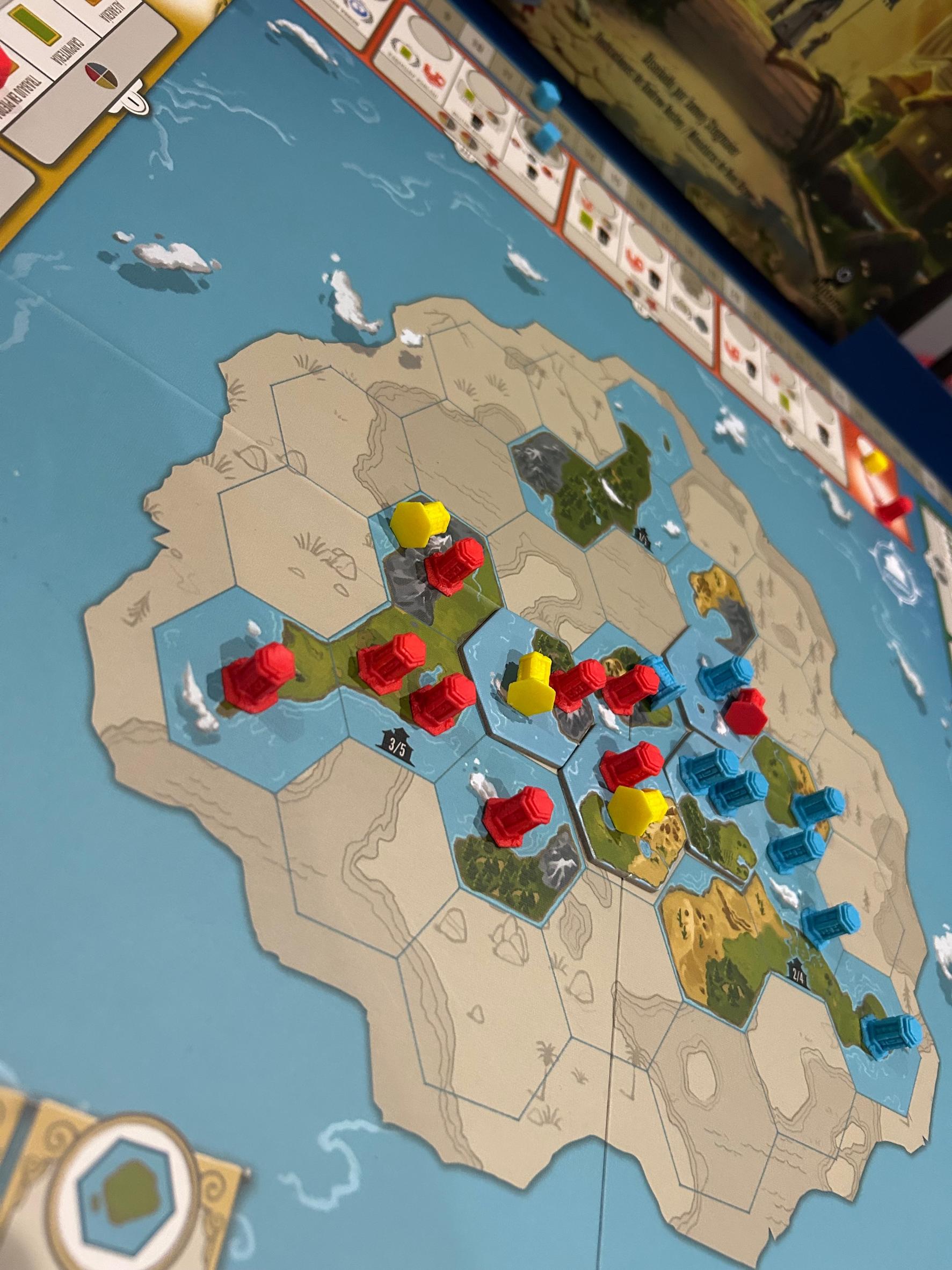
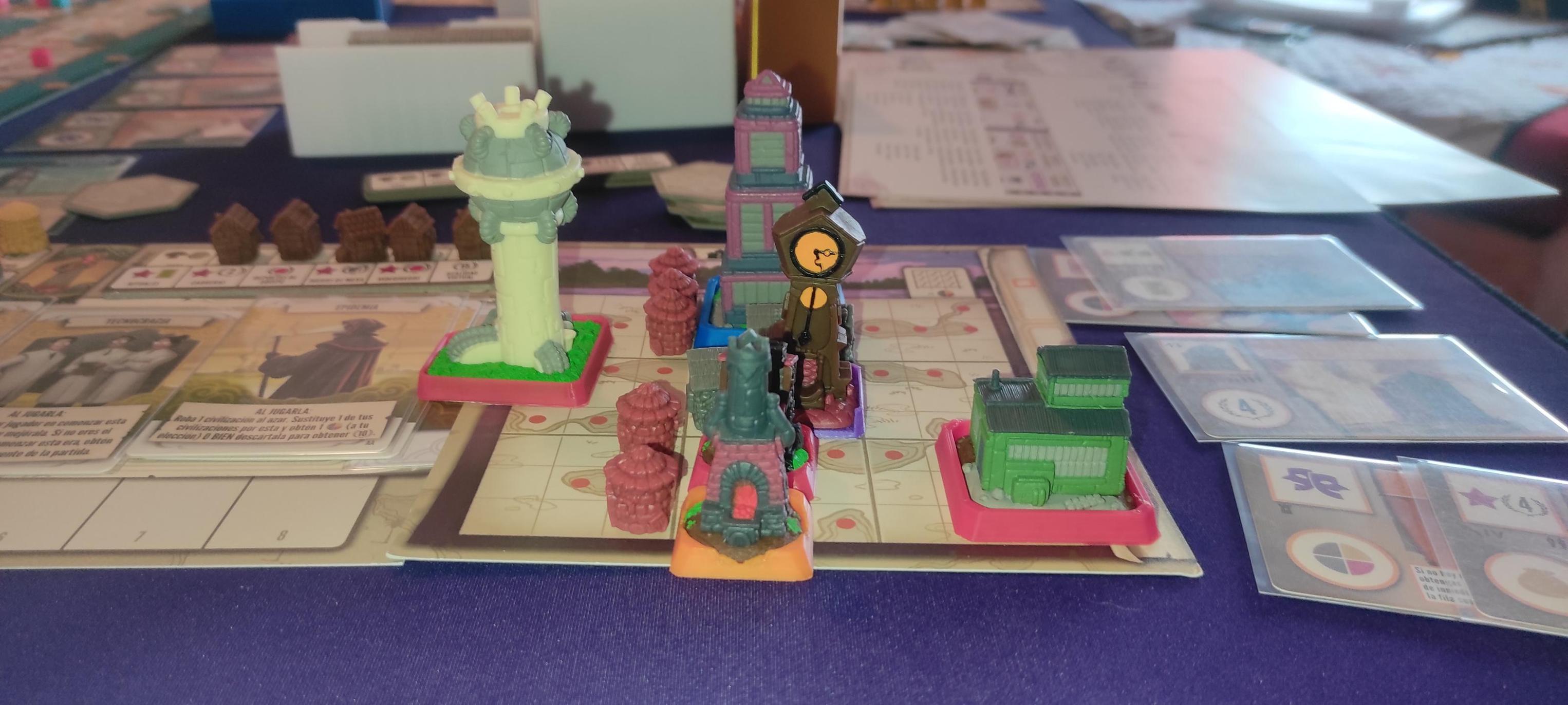
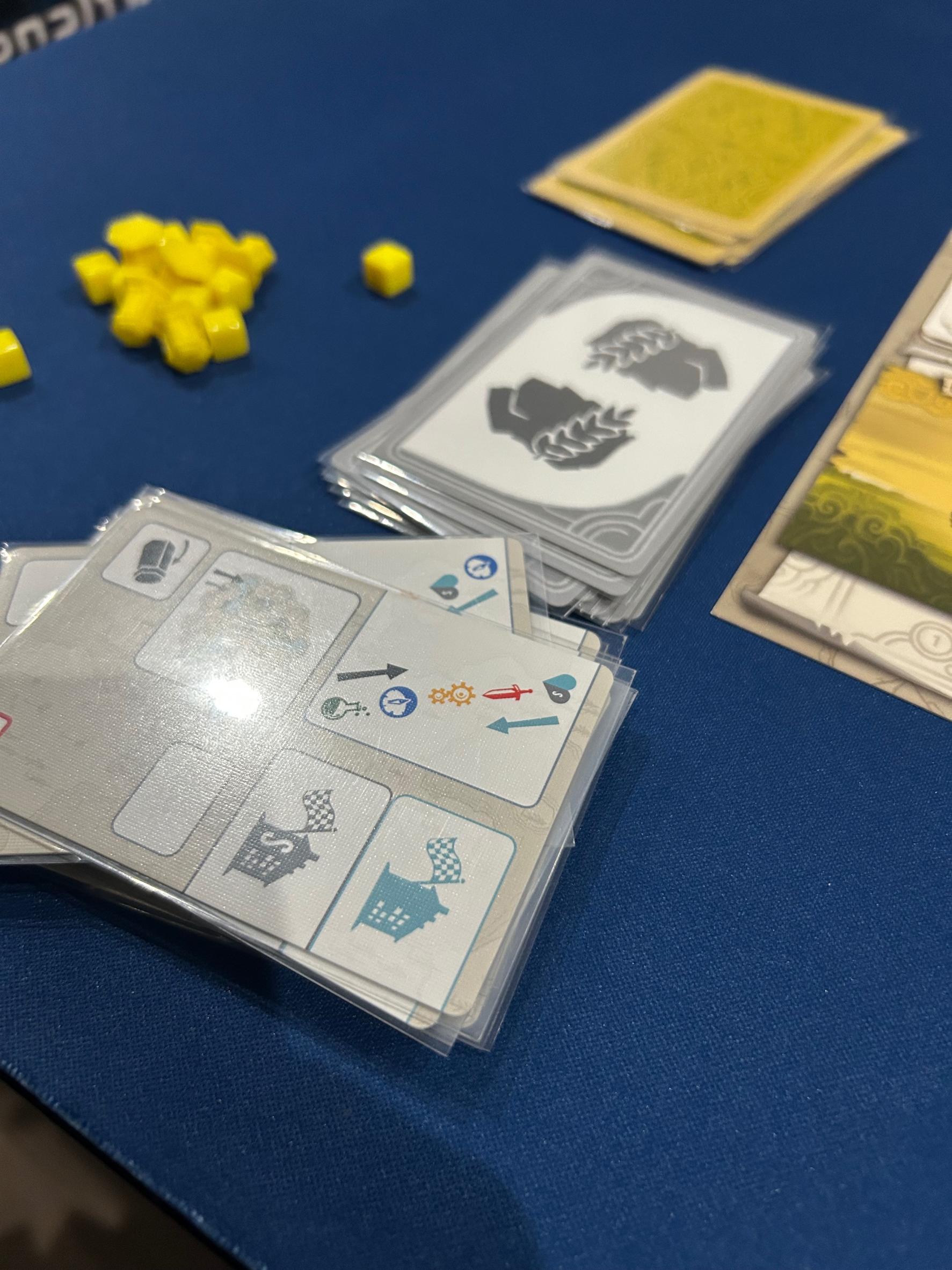
Foto dai tavoli di Ludoya
Tutte le foto in Ludoya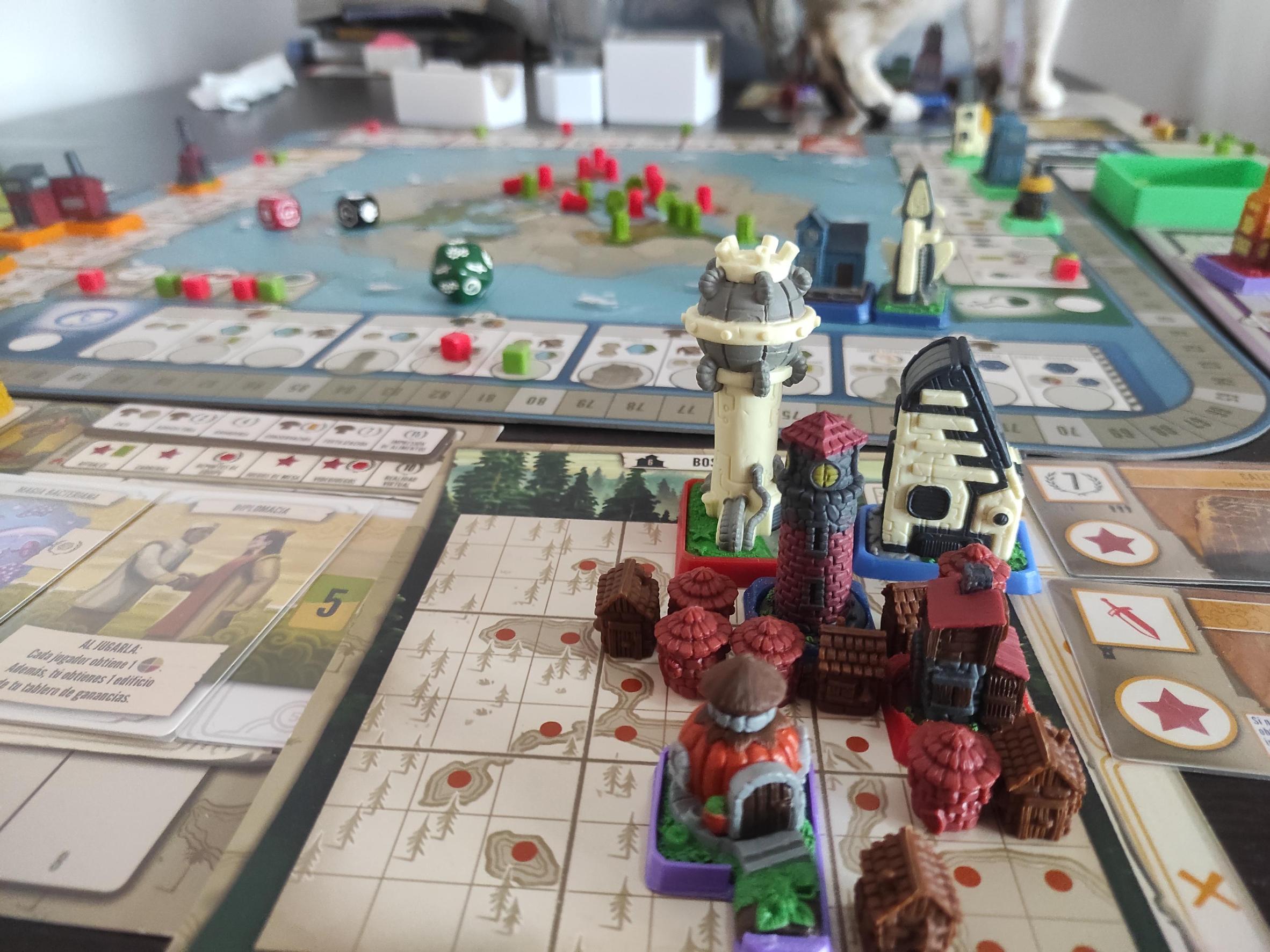

Dove comprarlo
Prezzi dei negozi e copie usate, controllati ogni giorno.
Sui tavoli di Ludoya
Tutte le statistiche in Ludoya- 646
- Partite registrate
- 643
- Giocatori
- 2h 2m
- Partita media
- 159
- Nelle ludoteche
- 25
- Nelle liste dei desideri
7,0/10
da 87 recensioni Ludoya
Jan Solo8,0 Excelente juego de civilizaciones en un tiempo contenido. Personalmente no siento en absoluto el desarrollo de mi civilización pero disfruto mucho con el puzzle que supone la gestión de acciones. Básicamente consta de 4 tracks por los que ir subiendo casillas. Cada una de ellas es una acción. JAN SOLO RULES: -Coloca puestos rivales en los 8 hexágonos más alejados. -Al ganar un monumento tapa otro del mismo nivel o inferior que no podrás obtener -No obtienes recursos al inicio de era. -A efectos de resolver cartas te puedes considerar rival (ej. Copia una carta de tu rival = una tuya) Impro-Reseña⇒ https://youtu.be/ZfpcBL7nBEs
Balleflass2,0 Felt very restrictive and boring. If you're not lucky enough to draw a trap card, you're doomed to get your piece of the land toppled if you explore too close to other players. There are at least 5 other major problems in my opinion with the game but I only felt like listing one of them. Very overproduced. Very high cost for such low amount of game and replayability.
Evan7,2 This is a euro-civ game with a very unique and intuitive action selection process. The game has four tracks. On your turn you pay the resource cost indicated at the top of the bracket to advance your marker to the next step in the track, then resolve the effect of the space. Each track relates to a different strategy through the game. Deciding where to focus and what order to push which track makes for a very compelling puzzle. Each track also has three firsties bonuses at set points of the tracks which must be taken into consideration when you see your opponents pushing up the same tracks you have been working on. Of course as you bump higher on the tracks the costs grow but so do the rewards. In particular, the last step of the tracks tend to have an ability that lend themselves more to a mid-game build-up effect than an end of the game hoorah. If you run out of resources to spend, or you decide you want to pass, you can take a reset action, with causes your player board tracks to generate points and resources for you depending on how many production buildings your track actions removed. You get five resets per game, with the first being your very first turn of the game and your last being your very last turn of the game, so realistically, everything about your ability to generate the resources you need to succeed come from only three production moments. The game gives you the ability to pick up an odd resource here or there, but often also temps you away from it with the option to instead get a die roll worth of victory points that could land between 4 and 7. I found it's not uncommon to be sitting late game and realizing you spent one too many of a specific resource to be able to hit that last track step you desperately want. What this all amounts to is an intense experience where you always feel like next time you'd be able to do a better job. There are other elements that feed into this feeling as well such as doing a bad job planning out your city board for the multi-space buildings earned from firsties bonuses. I happen to love games that give me the feeling of failure in this way. It teases me with the promise that with slightly more focused or more efficient play, great things will happen for me. The game is not without it's problems. There's a decent amount of flip-luck involved with the game. The effects of the cards and the tiles you encounter from the flip luck piles have a pretty wide range of usefulness. The special pre-painted building minis the game comes with are a little hard to read in terms of what size their base is for purpose of covering the player mat. Each player also has an asymmetric power, and those seem to vary in terms of quality, or at least some are substantially more intuitive to play. Overall though, I'm having a fantastic time with the game. There's not a lot to be done about the flip-luck, but it's a random element I enjoy tactically reacting to, even if at times card luck could mean a substantial point differential.

Domande sulle regole
Risposte tratte dal regolamento dall'assistente per le regole di Ludoya.
Devo giocare una carta arazzo durante il mio turno delle entrate?
Sì — durante un turno delle entrate devi giocare una carta arazzo dalla tua mano nello spazio vuoto più a sinistra del tuo tabellone delle entrate; se non hai carte arazzo in mano, piazza lì la prima carta del mazzo degli arazzi a faccia in giù (pagina 2).
Se sono il primo ad avanzare in un nuovo livello, ottengo automaticamente il punto di riferimento?
Sì — se sei il primo giocatore ad avanzare a un nuovo livello (I–IV) in qualsiasi modo, ottieni il monumento corrispondente e lo piazzi nella tua capitale (pagina 2).
Quando esploro una tessera territorio, come conto i PV per i lati della tessera: i fiumi o la rotazione sono importanti?
Guadagni 1 PV per ogni lato del territorio esplorato che ha almeno un terreno allineato (massimo 6 PV); ignora i fiumi decorativi e puoi orientare l’esagono in qualsiasi rotazione quando lo piazzi (pagina 3).
Se lancio il dado della scienza e mostra una X, ottengo comunque il vantaggio o il bonus?
No: se l’icona della ricerca ha una X, non ottieni né il beneficio né il bonus; se non ha una X, puoi avanzare gratuitamente, ottenere il beneficio e, facoltativamente, pagare per il bonus (pagina 3).
Posso conquistare un esagono che ha già due avamposti o che controllo già?
No: puoi piazzare un avamposto solo su un territorio che non abbia più di un segnalino e che sia adiacente a un territorio sotto il tuo controllo; inoltre, non puoi conquistare territori che già controlli. Se rovesci l’avamposto di un avversario lasciando due segnalini, il territorio non può essere conquistato di nuovo, e non puoi più conquistare territori una volta che tutti i tuoi avamposti sono sulla mappa (pagina 3).





Chi ce l'ha possiede anche


Gratis, sul web, Android e iOS
Gioca a Tapestry con Ludoya
- Tienilo nella tua ludotecaTieni traccia della tua copia e delle sue espansioni, prestala agli amici o mettila nella lista dei desideri e ricevi un avviso quando il prezzo scende.Aggiungilo alla tua ludoteca
- Registra ogni partitaPunteggi, vincitori, timer e foto, poi le tue statistiche: percentuale di vittorie, numero di giocatori preferito, miglior punteggio.Registra una partita
- Risolvi i dubbi sulle regoleChiedi qualsiasi cosa sulle regole e ottieni una risposta dal regolamento, con la pagina per verificarla.Chiedi all'assistente per le regole
- Trova persone con cui giocarloClub, serate di gioco ed eventi vicino a te che portano questo gioco in tavola.Vedi gli eventi
Dati del gioco (giocatori, durata, età, crediti) da BoardGameGeek.