
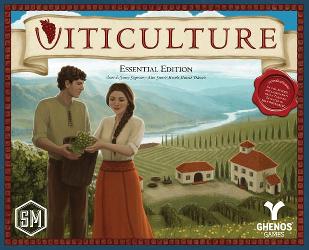
2015 · Economico
Viticulture Essential Edition
I giocatori vestono i panni di proprietari di vigneti nella rustica Toscana, che ereditano piccoli appezzamenti, una pressa, una cantina e un pugno di lavoratori. Ogni anno è diviso in stagioni; i giocatori assegnano i lavoratori ad azioni stagionali come piantare viti, curare i campi, raccogliere l’uva, costruire strutture, gestire i visitatori e produrre vino. I visitatori arrivano come carte che danno bonus una tantum o abilità speciali quando un lavoratore viene assegnato a ospitarli. I giocatori espandono le loro tenute acquistando altri campi e edifici, piantando e migliorando le viti e completando ordini di vino per guadagnare punti. Il gioco include moduli che aggiungono crescita familiare, opzioni di proprietà variegate, mazzi visitatori rivisti e regole automa per il solitario, mantenendo però il cuore del piazzamento lavoratori e il ciclo di azioni stagionali.
- Giocatori
- 1–6 ideale in 4
- Tempo di gioco
- 45–90 min
- Età
- 13+
- Complessità
- 2,9 / 5
Il gioco
- Illustrazioni
- Publisher




Espansioni
Vedile in Ludoya Viticulture: Tuscany Essential Edition2017
 Viticulture: Moor Visitors Espansione2018
 Viticulture: Rhine Valley2023
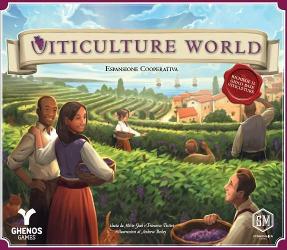 Viticulture World: Espansione Cooperativa2022
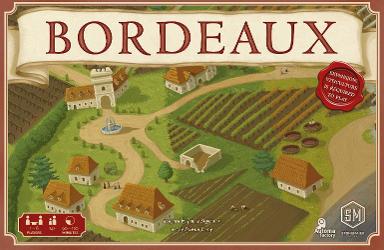 Viticulture: Bordeaux Expansion2026
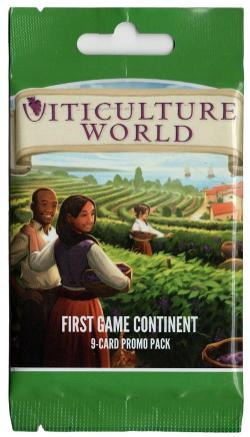 Viticulture World: First Game Continent Promo Pack2022
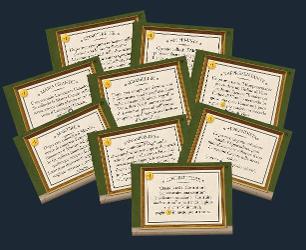 9 carte Promo Lavoratori: Tuscany Essential Edition2018
 Viticulture: Arboriculture and Formaggio Expansions2013
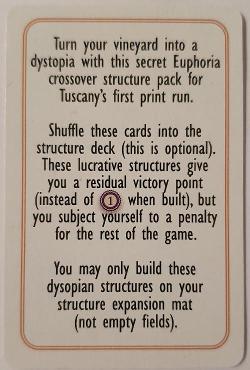 Tuscany & Euphoria Crossover Structures2014
 Viticulture: Formaggio Expansion2013
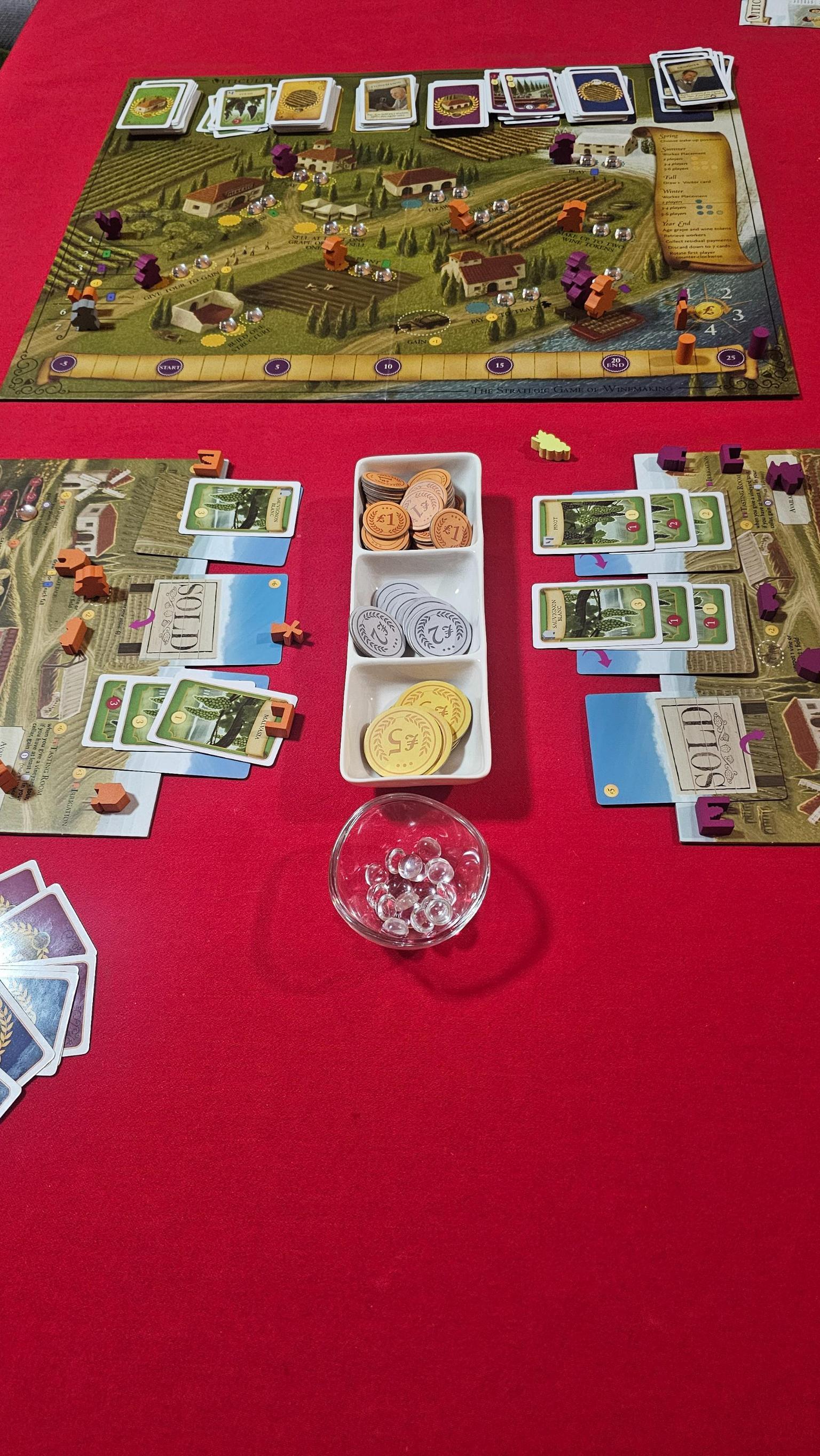
Foto dai tavoli di Ludoya
Tutte le foto in Ludoya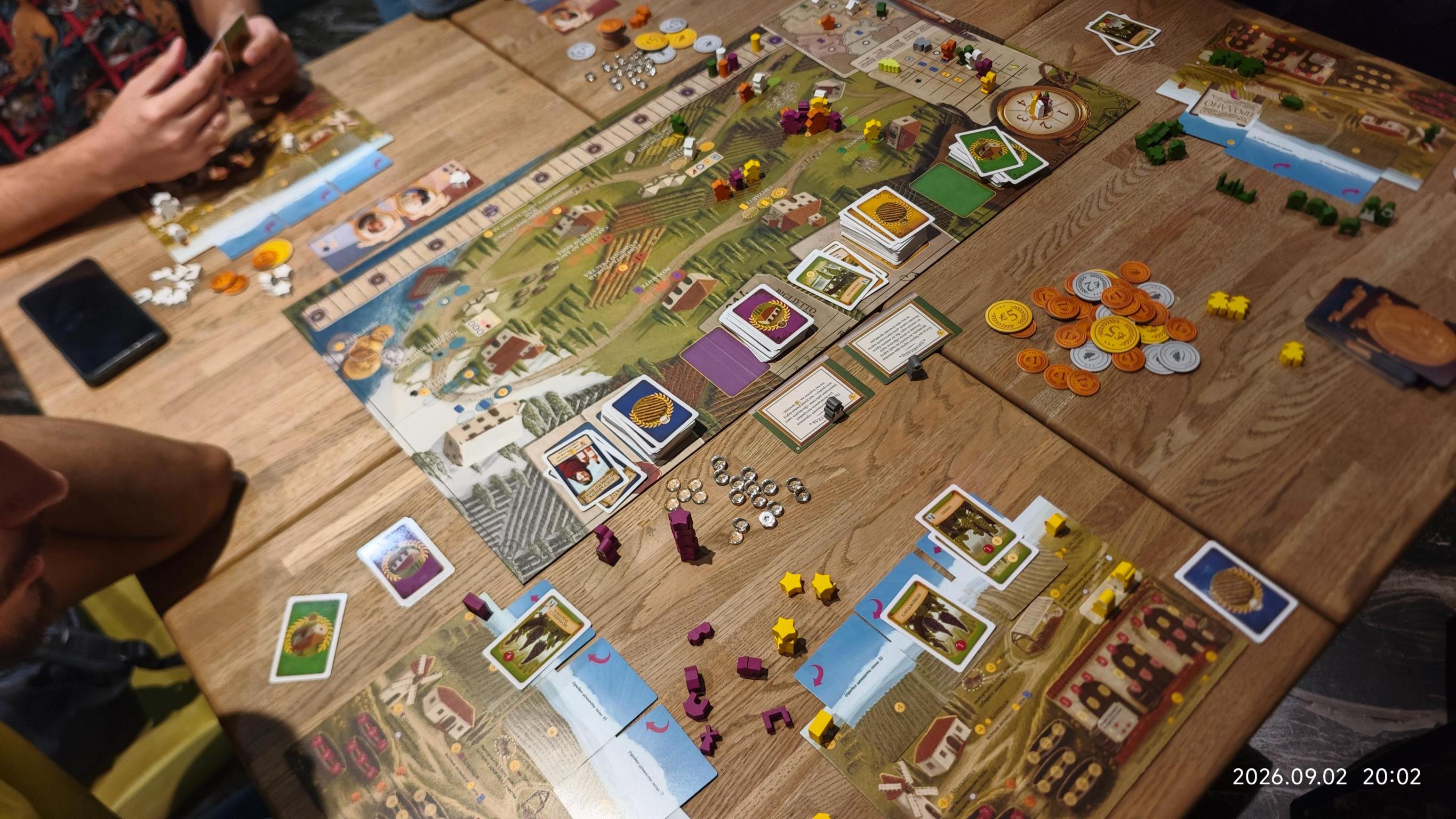
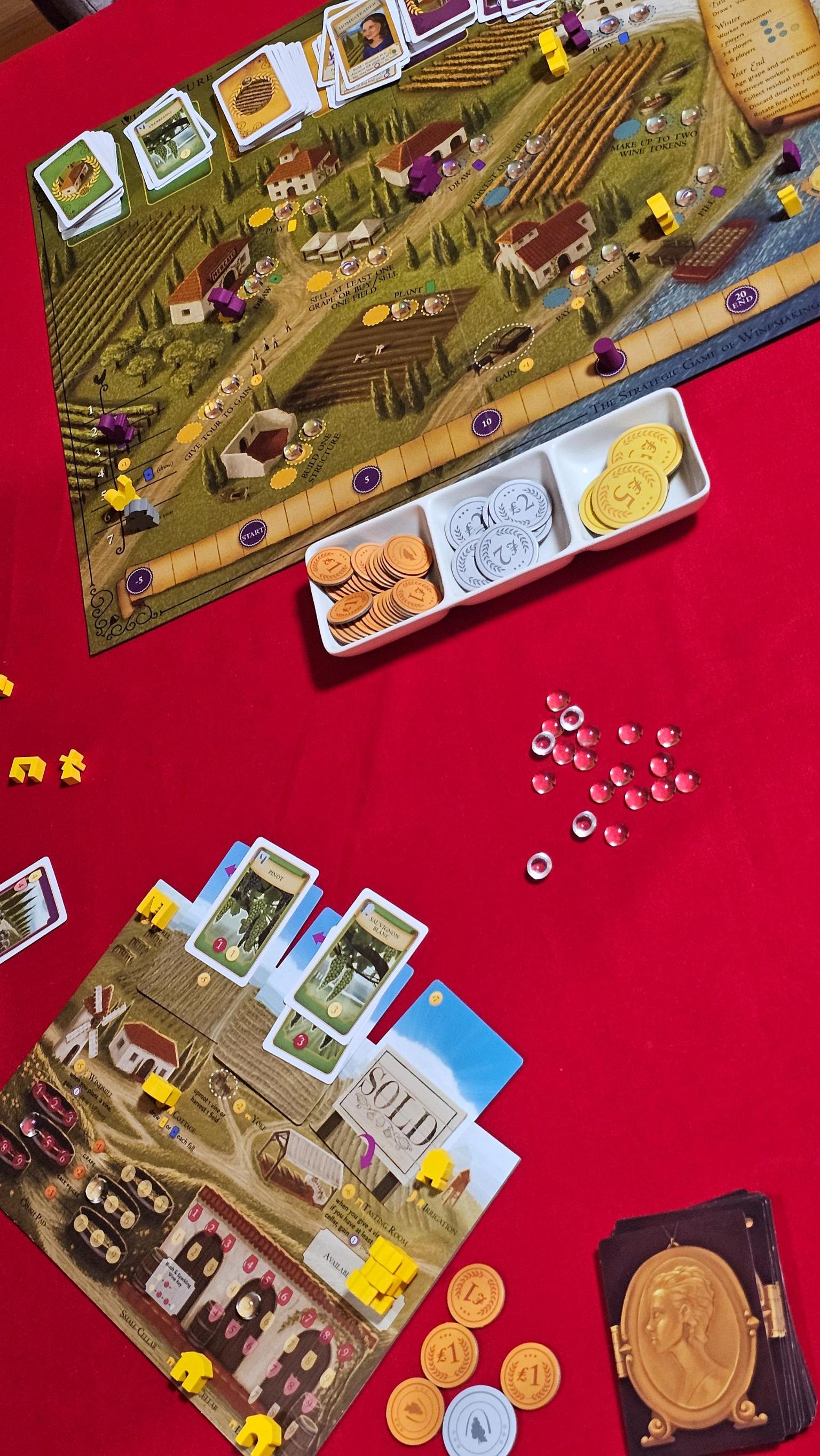
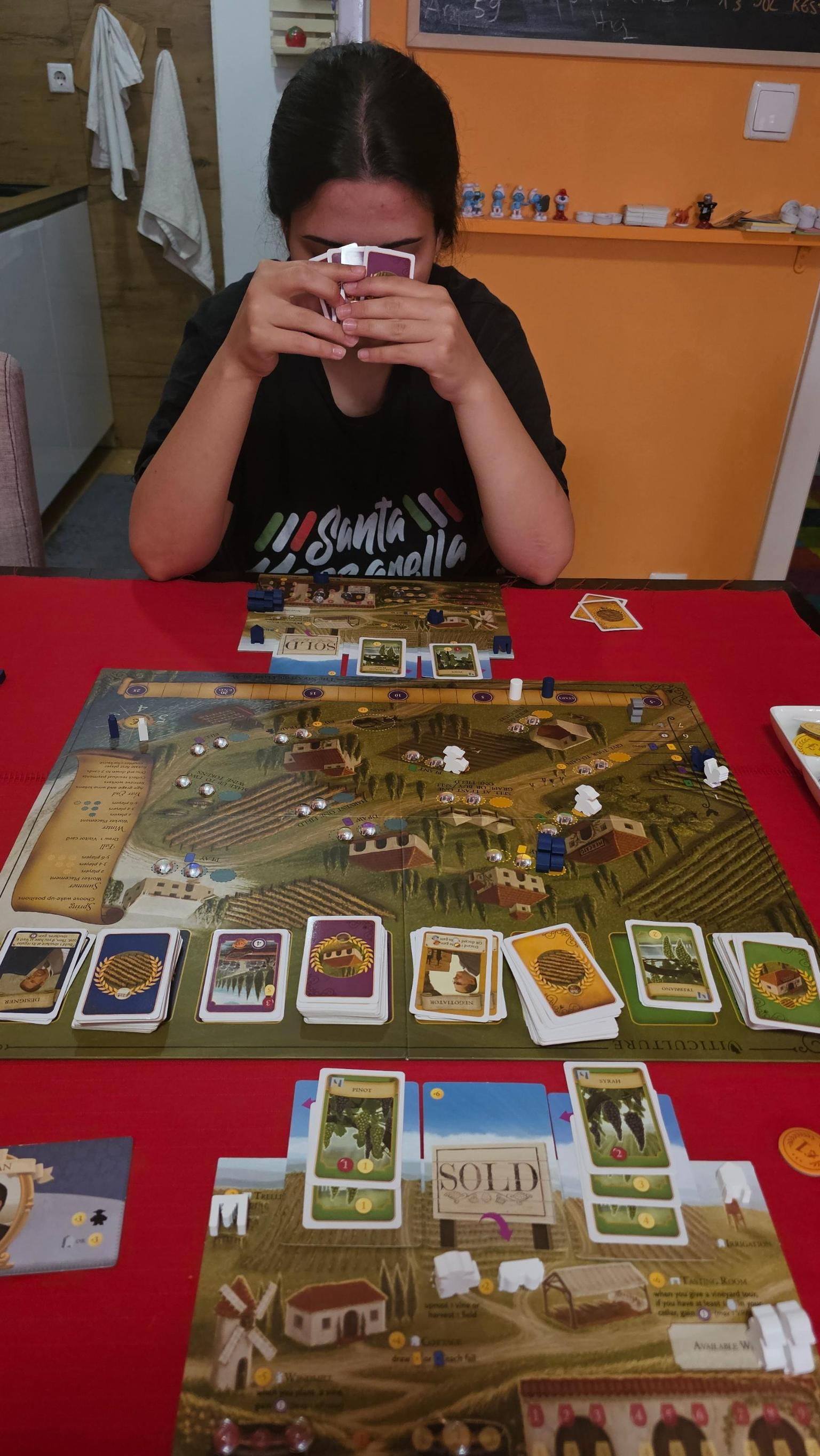
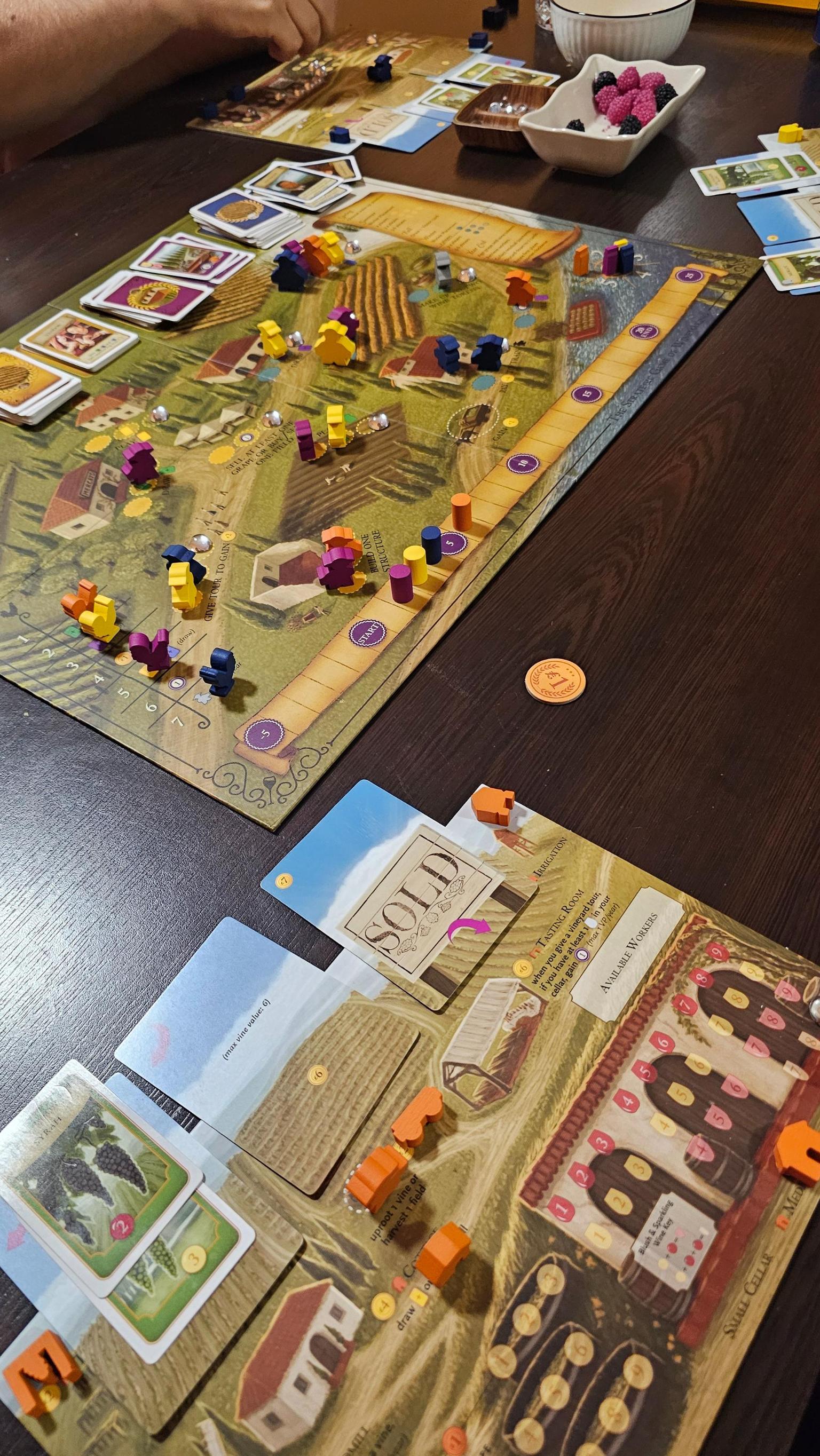
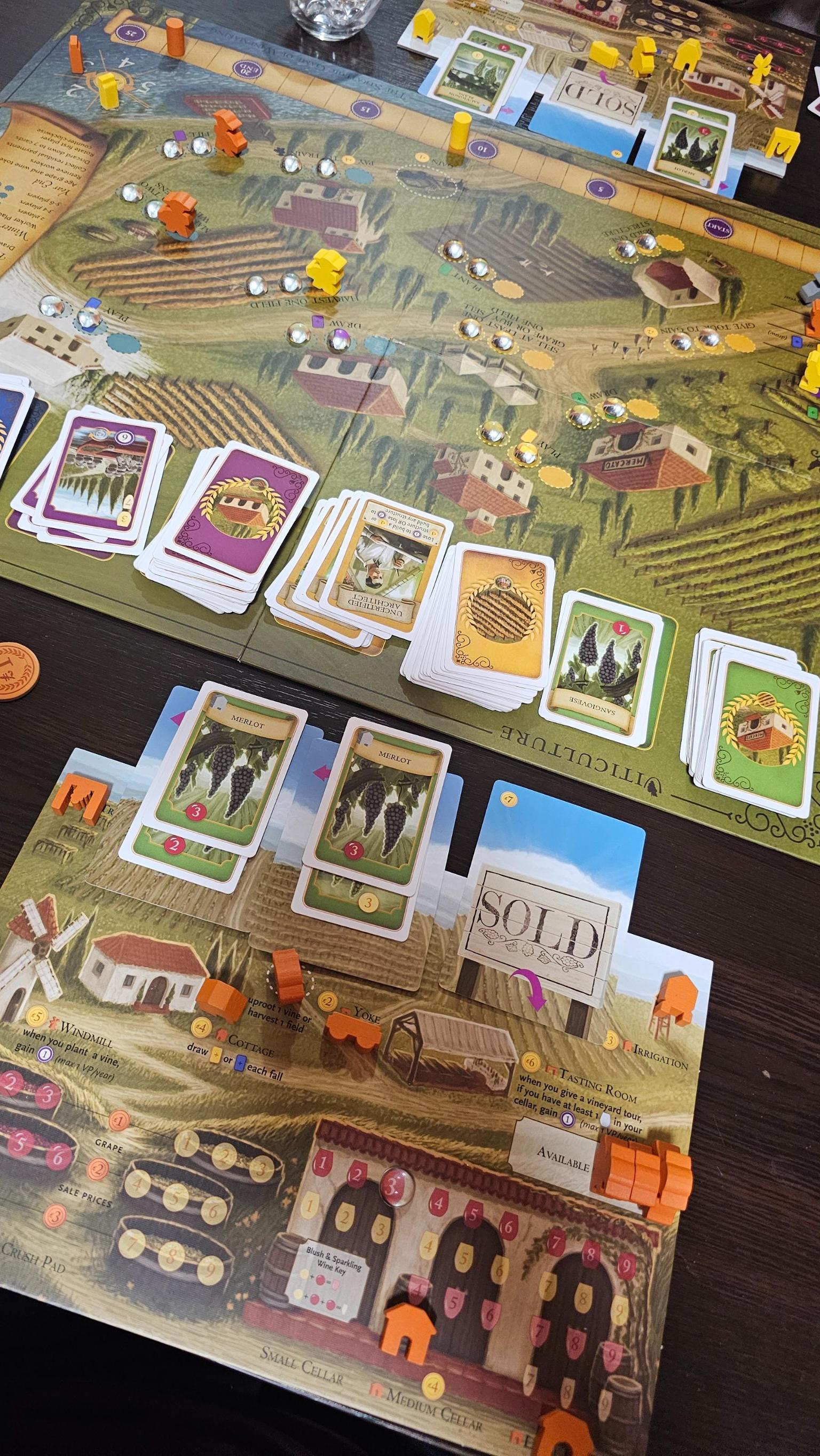
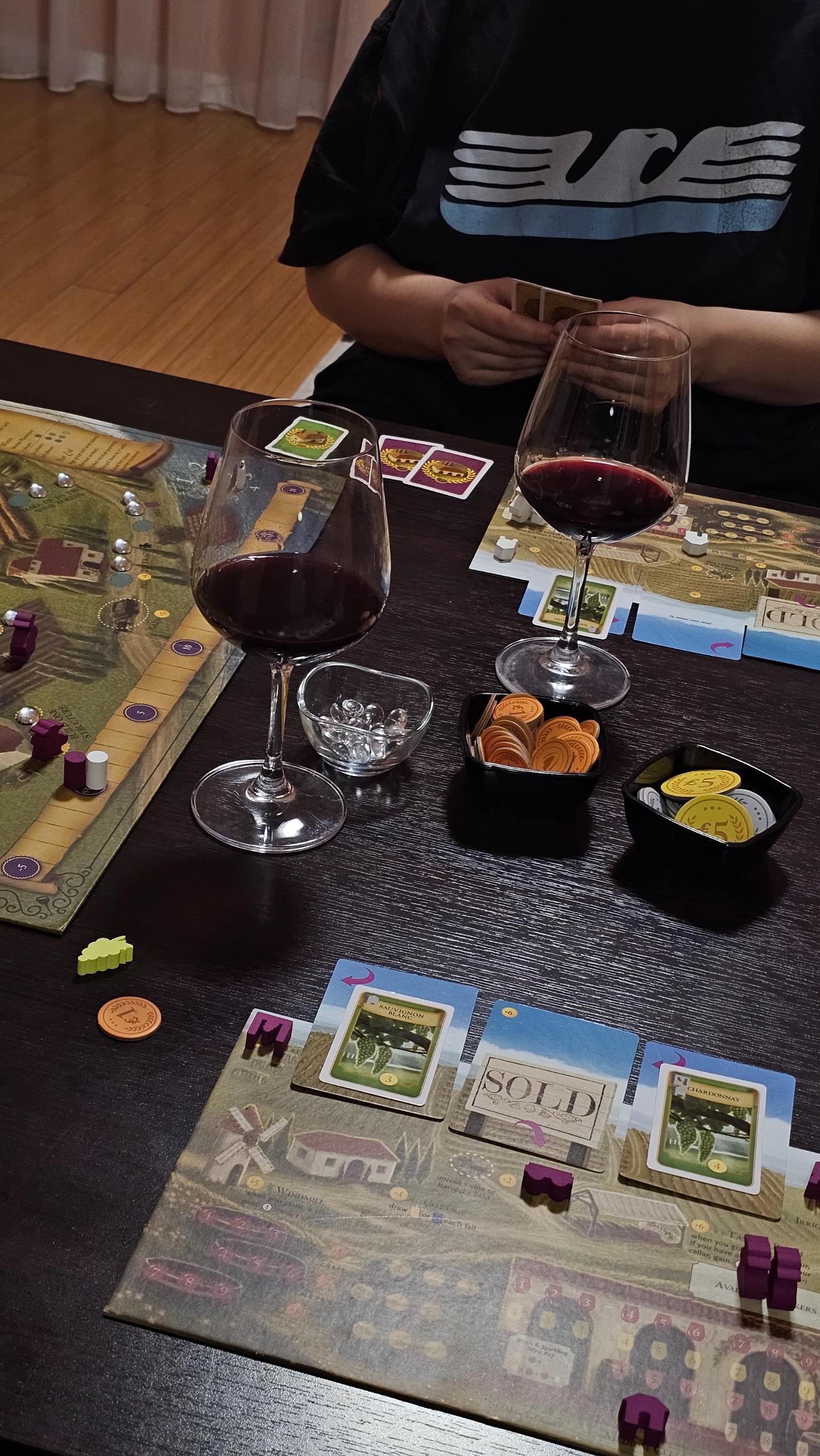
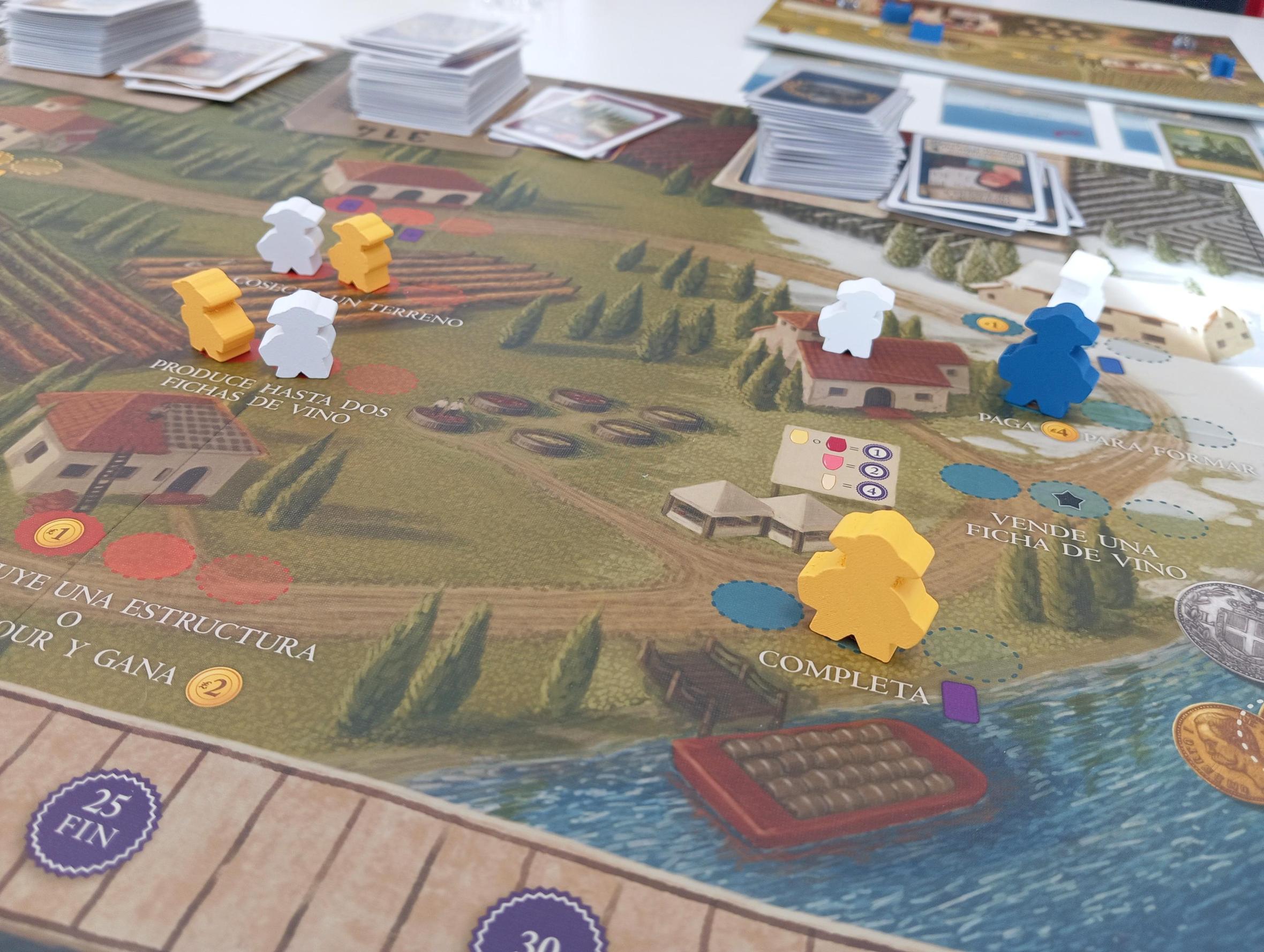
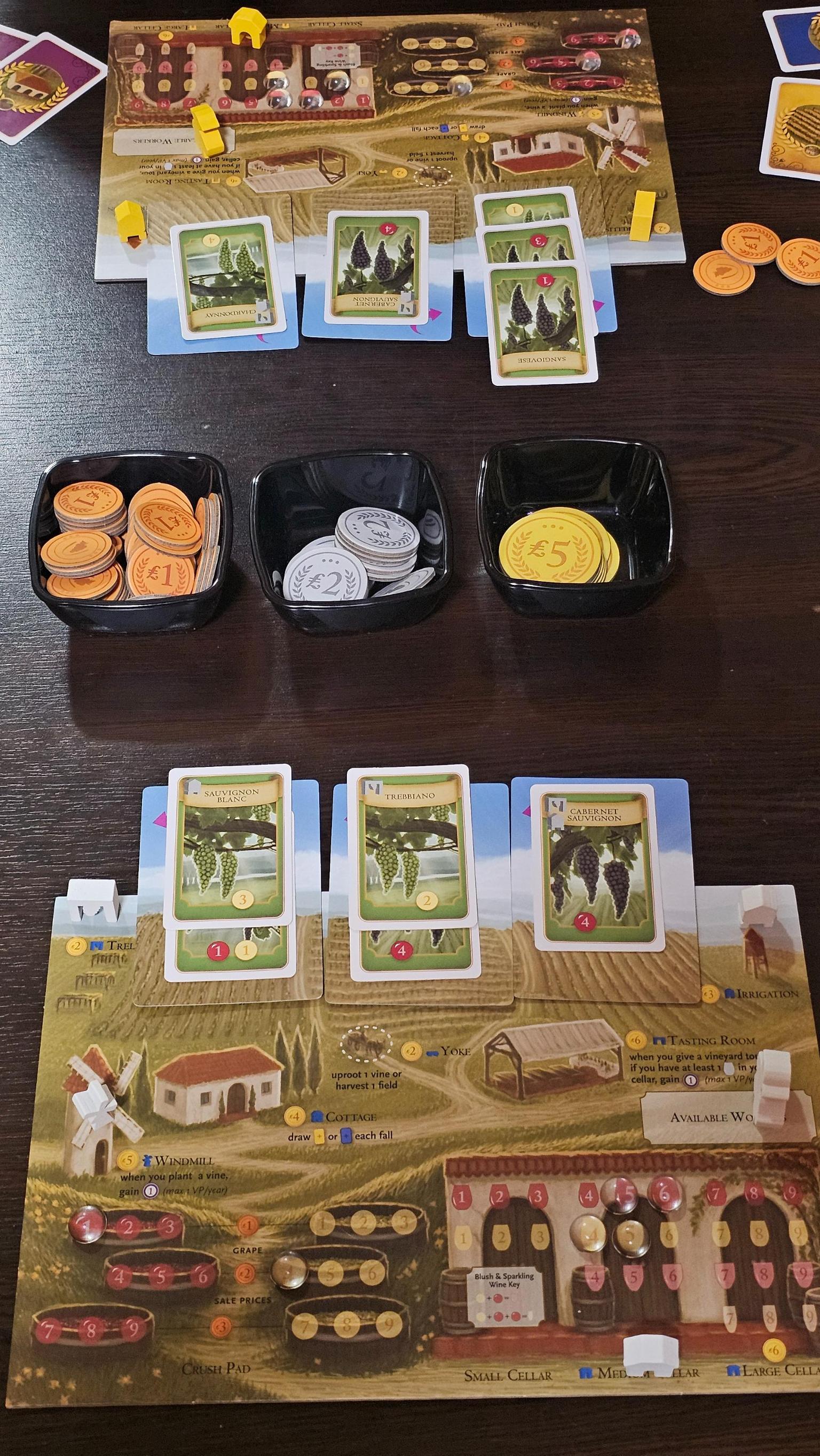
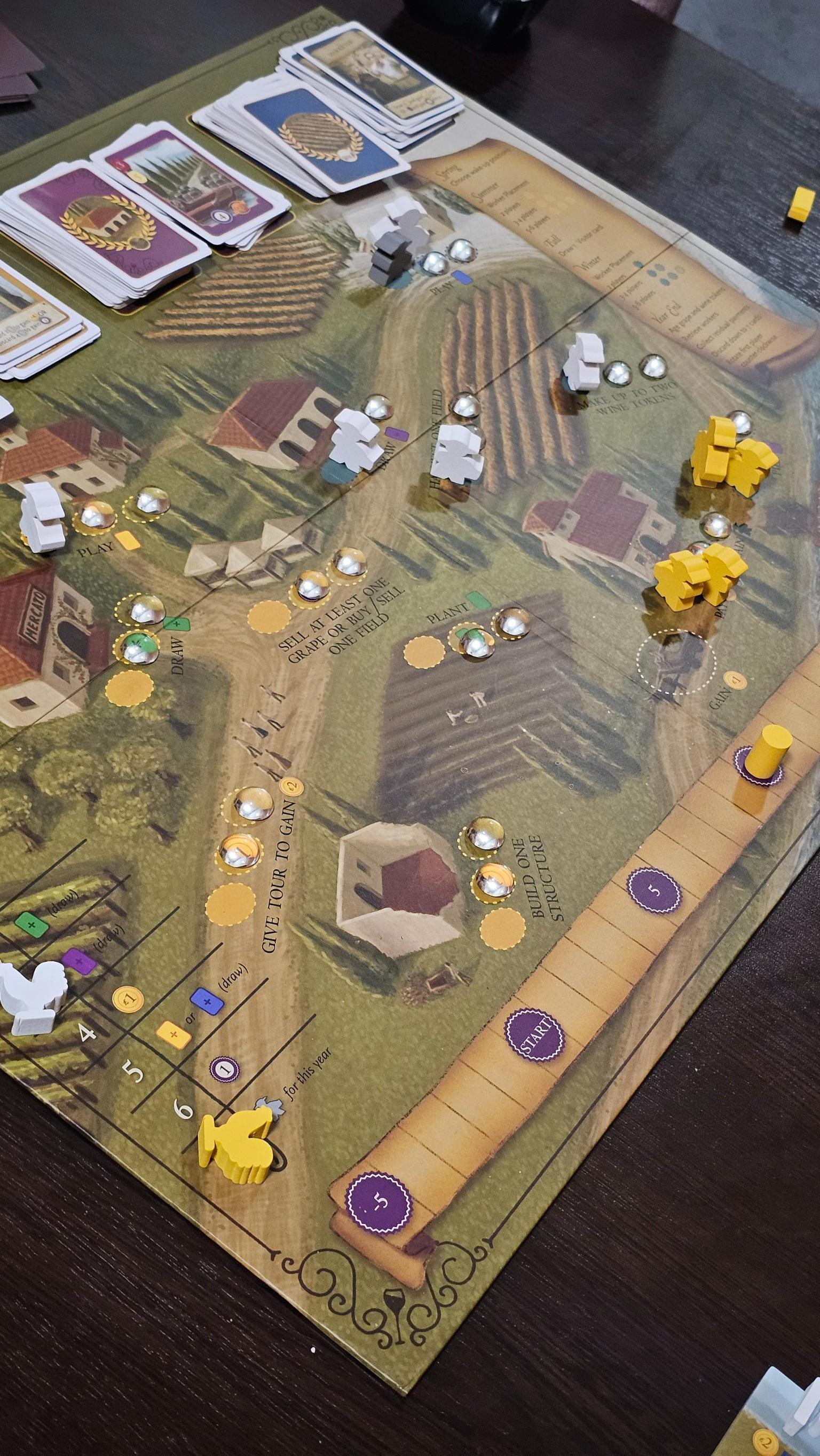
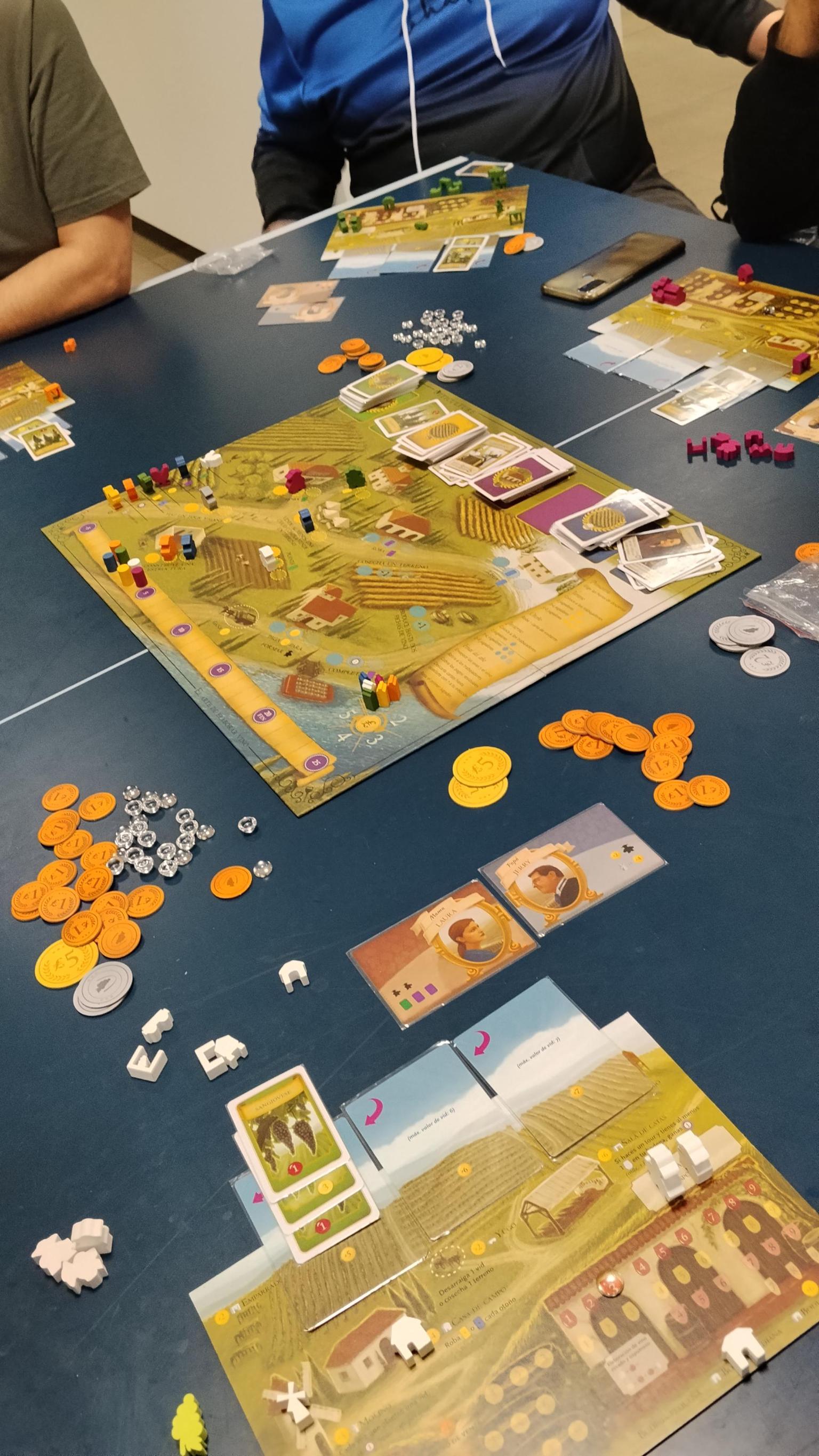
Dove comprarlo
Prezzi dei negozi e copie usate, controllati ogni giorno.
Sui tavoli di Ludoya
Tutte le statistiche in Ludoya- 1691
- Partite registrate
- 1228
- Giocatori
- 1h 34m
- Partita media
- 353
- Nelle ludoteche
- 58
- Nelle liste dei desideri
7,8/10
da 205 recensioni Ludoya
Jan Solo8,0 Eurogame medio de colocación de trabajadores en el que deberás plantar uvas, cosechar y elaborar vinos para obtener puntos de victoria. Un euro medio muy vistoso que deja muy buenas sensaciones. Impro-Reseña⇒ https://youtu.be/ocbIBc1KXeM
Mohasz8,6 RATING WITH TUSCANY EXPANSION (BASE GAME: 7.0) As much as I wanted to instantly love this game, our first 2p game was somewhat underwhelming. The game starts slow, then in the second half you almost don't have anything to do with all your workers and money. All you really want to do is play cards that give you VP or fulfill order cards. I also felt like the game was a bit overcomplicated for what it offers. I'm sure it gets better once you fully understand the strategies but either way, I wasn't blown away, I expected more from such a highly regarded game. + Tuscany Essential - It is truly a better game with the Tuscany board, 7.0 -> 8.5. The visitor cards can still be a bit swingy, but other than that, really fun. + Visitor card expansions
Mestremuten8,0 Rating: 4/5 Production value: 3/4 Is the game in my collection/Love to have?: 1/1

Domande sulle regole
Risposte tratte dal regolamento dall'assistente per le regole di Ludoya.
When do I place my rooster on the wake‑up chart and when do I get the wake‑up bonus?
In Spring, starting with the first‑player and going clockwise, each player places their rooster on an unoccupied wake‑up row and immediately gains that row’s listed bonus; the rooster placement also determines turn order for Summer, Fall, and Winter that year (page 6).
Can I place more than one worker on the same action space?
No — each action space can be occupied by only one worker, though larger player counts open additional spaces for the same action; the exception is the grande worker, which may be placed on a fully occupied action to perform that action (and it grants the bonus only if placed on a bonus space) (page 7).
If I harvest a grape value but that crush‑pad slot is already occupied, where does the new grape go?
When harvesting, you must place the grape on the matching value icon if empty; if that icon is occupied you devalue the new grape to the next lowest empty icon (and continue downward if needed) (page 14).
Can I play a visitor card whenever I want, or only when I take a specific action?
You may only play a summer or winter visitor by taking the corresponding "play visitor" action (placing a worker there), and you may only play a visitor if you can fully resolve its effect when played; visitor effects resolve immediately and then the card is discarded (pages 9–10).
How many wine tokens can I make at once, and do I need a certain cellar to make higher‑value, blush, or sparkling wines?
When making wine you may create up to two wine tokens (they can be same or different types), but you must own the appropriate cellar to produce blush/sparkling or wines above certain values, and each cellar slot holds exactly one wine token (see cellar level and capacity rules) (page 15).
When I fill a wine order, do I get residual lira right away or later, and how does the residual tracker work?
When you fill an order you discard the required wine tokens, gain the victory points on the card, and immediately advance your residual token on the residual tracker by the card’s lira amount; you then collect lira from your residual position at the end of each year (the marker remains where you moved it and caps at £5) (page 16).







Gratis, sul web, Android e iOS
Gioca a Viticulture Essential Edition con Ludoya
- Tienilo nella tua ludotecaTieni traccia della tua copia e delle sue espansioni, prestala agli amici o mettila nella lista dei desideri e ricevi un avviso quando il prezzo scende.Aggiungilo alla tua ludoteca
- Registra ogni partitaPunteggi, vincitori, timer e foto, poi le tue statistiche: percentuale di vittorie, numero di giocatori preferito, miglior punteggio.Registra una partita
- Risolvi i dubbi sulle regoleChiedi qualsiasi cosa sulle regole e ottieni una risposta dal regolamento, con la pagina per verificarla.Chiedi all'assistente per le regole
- Trova persone con cui giocarloClub, serate di gioco ed eventi vicino a te che portano questo gioco in tavola.Vedi gli eventi
Dati del gioco (giocatori, durata, età, crediti) da BoardGameGeek.