
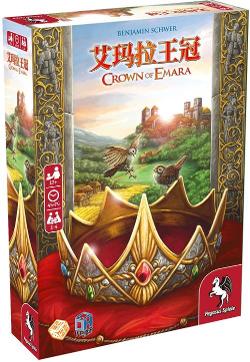
2018 · 中世纪
艾玛拉王冠
玩家们通过满足王国的需求并提供住房,争取新近到来的居民支持,以确保王位继承权。 游戏将可选择的卡牌行动与两个独立的环形路线上的工人移动相结合;每位玩家控制两名顾问,他们的位置决定可用行动,并需要在闲置时间进行规划。玩家推动首都建设、满足居民需求,并在两条计分轨上推进;最终排名由两项分数中较低的一项决定。建造、行动选择与顾问部署之间的策略平衡,推动着这场争夺多数支持的胜负之战。
- 人数
- 1–4 最佳 3 人
- 游戏时长
- 45–75 分钟
- 年龄
- 12+
- 复杂性
- 3 / 5



在 Ludoya 的牌桌上
在 Ludoya 中查看完整统计- 107
- 已记录对局
- 95
- 玩家
- 57m 13s
- 平均时长
- 45
- 收藏数
- 5
- 愿望清单数
5.9/10
基于 26 条 Ludoya 评测
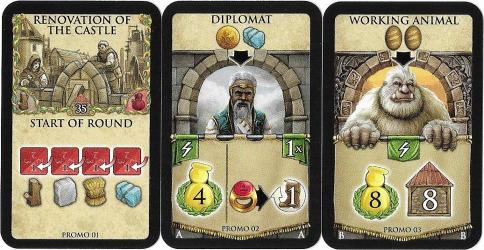
Evan4.6 The central board here is made of up two four-space roundels. Each player gets three action slots and a symmetrical deck of bonus cards. Each of the three action slots has a movement value which is either 1 2 or 3 steps. You place a bonus effect card into a slot, move one of your two pawns that many steps to resolve the action in their ending space, and gain the bonus printed on the card you played in whatever order you like. There are also bonus actions that allow you to place workers into production spaces increasing the output when you go there, or pick up special ability cards that give you various bonus effects. This game is raw efficiency where the only player interaction is competing to be the first to get cards or production spaces. Never the less I did enjoy the puzzle presented. I felt like I had interesting options every turn and both short term and long term goals. The game ends once each player has played every card in their deck twice so once you are used to the engine of the game you can plan out your moves well in advance. The only downside is that the experience while short feels a bit limited. There are minor engine building aspects that you can take advantage of, but the game runs a little too short for them to feel satisfying. To a certain extent you are also on rails with the game as the places to get points, and the way you gt those points don't feel substantially different game to game. Only the details of which special cards are in the mix change, and most of those cards have one time, or very limited effects. It's overall a good game that feels like it had a little more potential than it realized, that I got tired of quicker than I'd hoped. Perhaps a little more player interaction would have been welcome to spice things up. ★ Art, Iconography and components functional ★ Clever or interesting mechanisms ★ Reasonably low downtime between turns with mildly AP players ☆ Multiple plays stay interesting ★ Low or mitigatable luck elements ★★☆☆☆ Raw enjoyment
规则问题
由 Ludoya 的规则助手根据规则书回答。
我必须在自己的回合中严格按照卡牌行动、移动行动和奖励行动的顺序执行吗?
你可以按自己选择的顺序执行卡牌行动、移动行动以及最多三种不同的奖励行动,但必须完成一个行动后才能开始下一个行动(第5页)。
如果我把行动卡打出的格子写着“2步”,我可以只移动1步吗?
不——你必须正好按照该格上显示的步数移动(1、2或3步);“你不能少移动!”(第5页)。
行动卡让我移动1步——这是替代版块上的移动行动,还是在此基础上额外移动?
先结算卡牌行动,其中可能包括移动(例如“移动1步”);之后你仍要执行由格位决定的移动行动,因此两者都可能让你移动(第5页)。
如果我的议员都不在该城镇地点,我还能在市场/城堡/大教堂招募顾问吗?
通常,你必须在一名己方议员所在的城镇地点招募一名顾问(奖励行动)(第7页);但某些卡牌行动允许你无视议员的位置执行城镇地点行动(第5页),而管家顾问则允许你无视议员的位置进行招募(第9页)。
Favor Token 是怎么运作的?我什么时候可以使用它们?
你保留从大教堂获得的恩宠标记;当一名议员在标记所指示的城市地点结束移动,或你通过卡牌行动执行该地点的行动时,你可以弃掉其中任意数量以获得相应奖励;即使你不使用该地点的行动,也可以领取奖励(第6页和第9页)。
最终分数如何确定,平局时的胜负判定规则是什么?
游戏结束时,计算终局分数(例如:每枚印戒2分,每枚金币/恩惠/书籍/面包1分,每剩余2个资源1分),这些分数可以分配到建筑或公民总分中;然后你的最终得分取建筑分和公民分中较低的那个。平局时依次比较:(1)第二个标记物的位置更高者;(2)贵族等级最高者;(3)从最高贵族卡获得的公民分更多者(第7页)。














游戏信息(人数、游戏时长、年龄、制作人员)来自 BoardGameGeek。