

2017 · 骰子
脈衝星 2849
Players take on the role of future energy entrepreneurs who explore space, claim pulsars, and build infrastructure to distribute pulsar power across the stars. Each of eight rounds begins with a communal dice roll and draft: players choose dice from a shared pool to pay for actions such as moving a survey ship, developing pulsars, building transmitter vectors, acquiring technologies, buying dice modifiers, or completing special projects at a headquarters. Scoring occurs each round based on exploration, developed pulsars, patents, and progress toward shared objectives, while multiple strategic paths and engine-building choices determine the endgame outcome.
- 人数
- 2–4 最佳 4 人
- 游戏时长
- 60–90 分钟
- 年龄
- 14+
- 复杂性
- 3.3 / 5
关于这款游戏
- Publisher


来自 Ludoya 牌桌的照片
在 Ludoya 中查看所有照片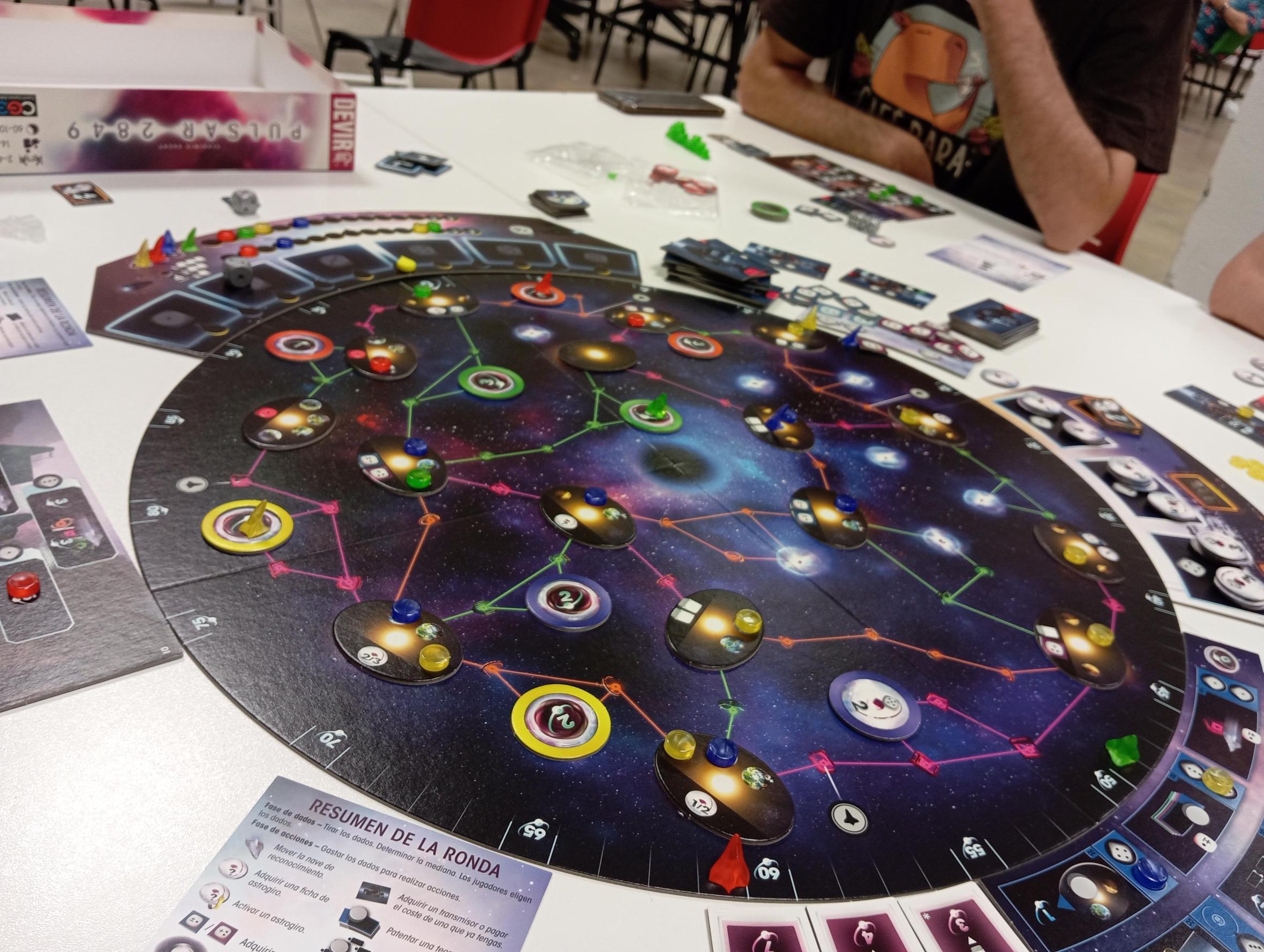
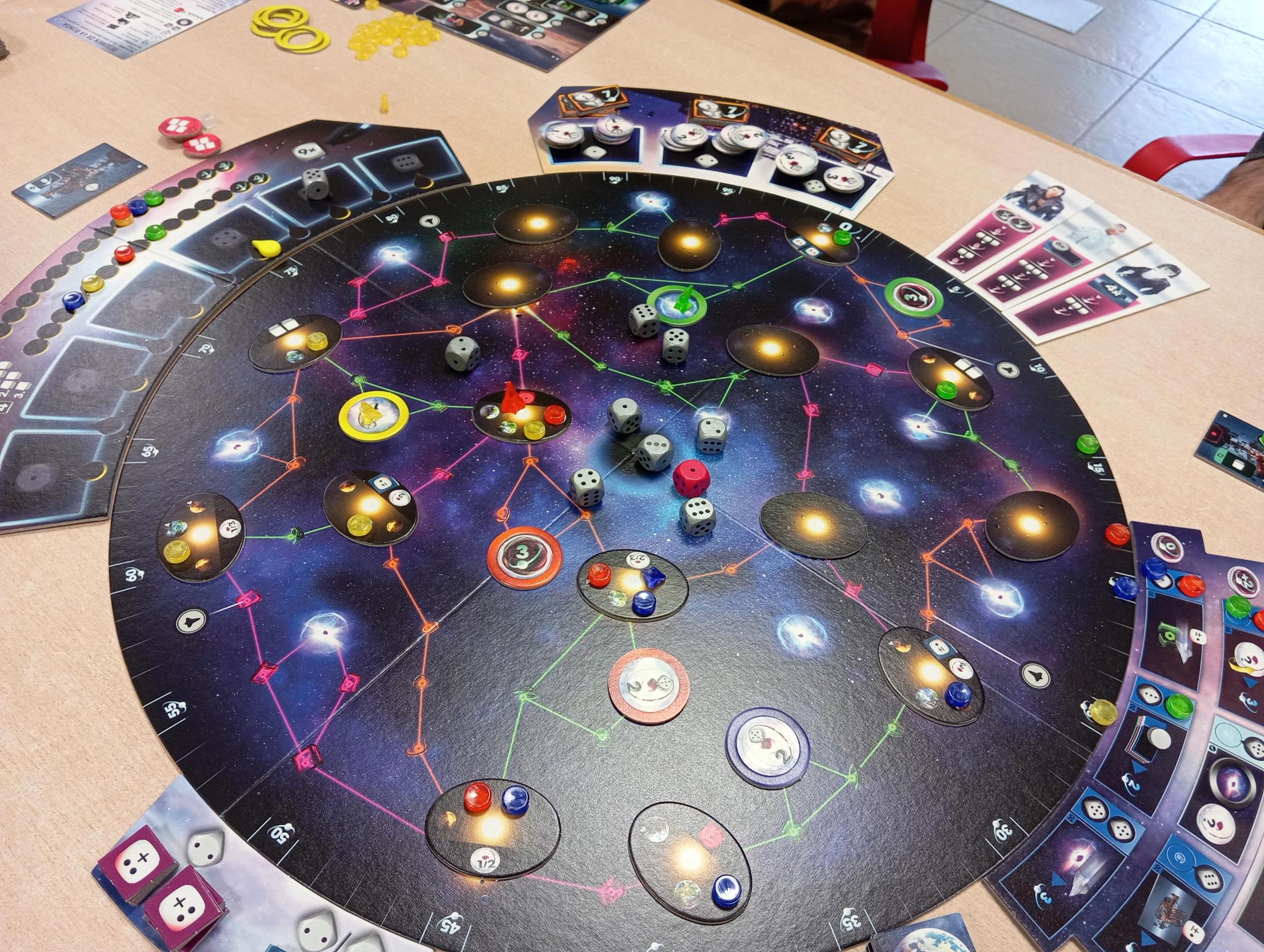
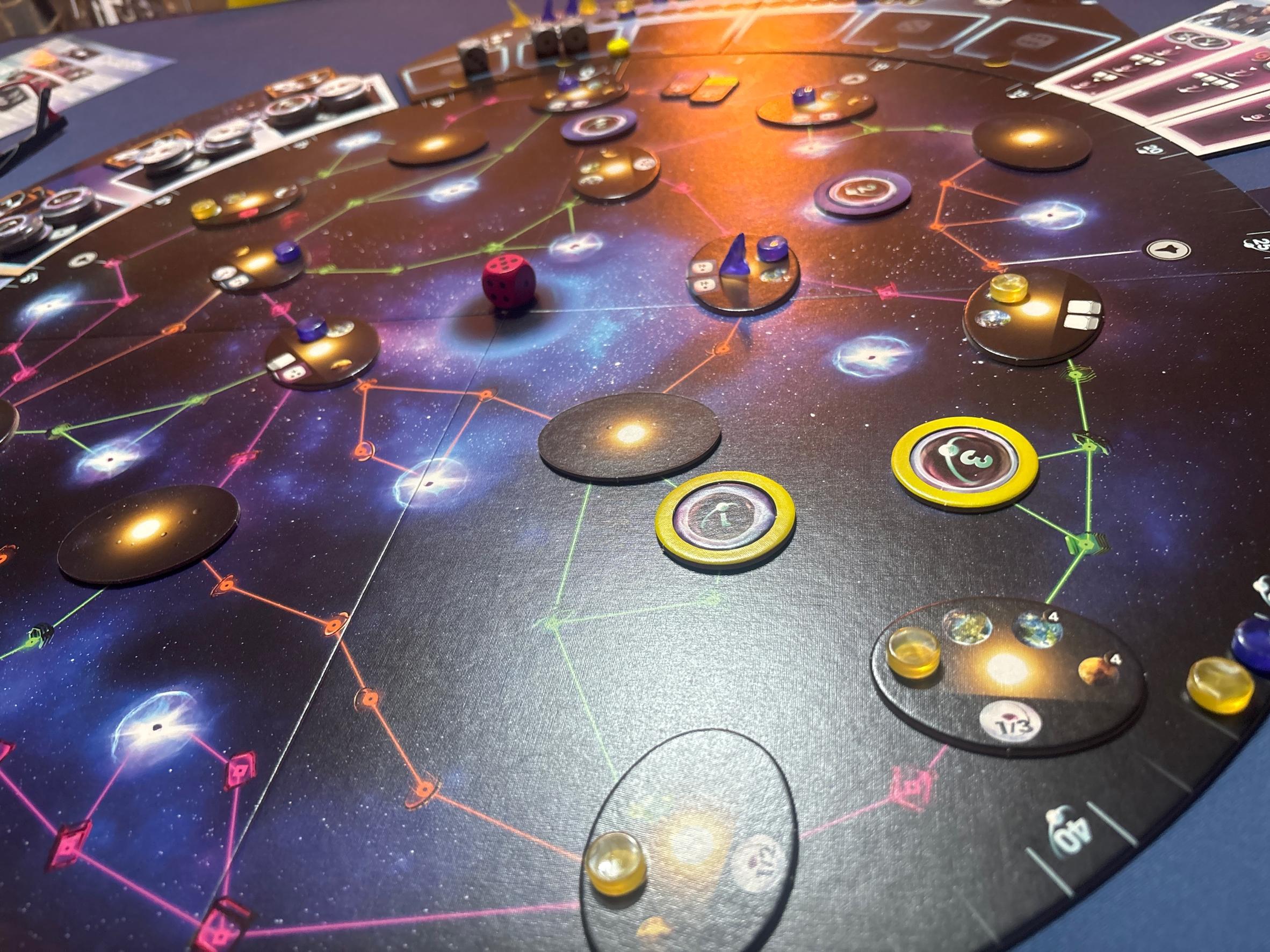
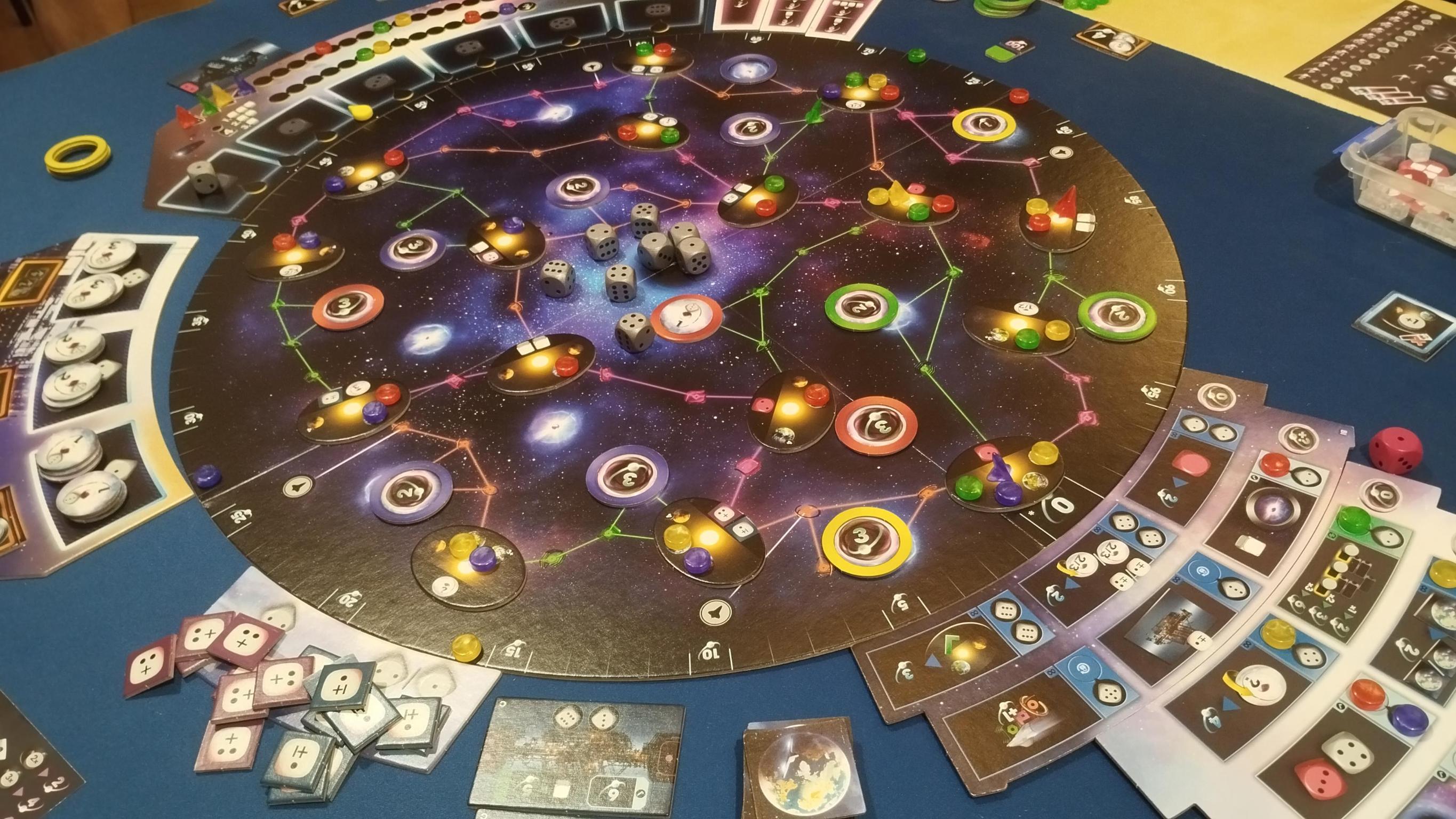
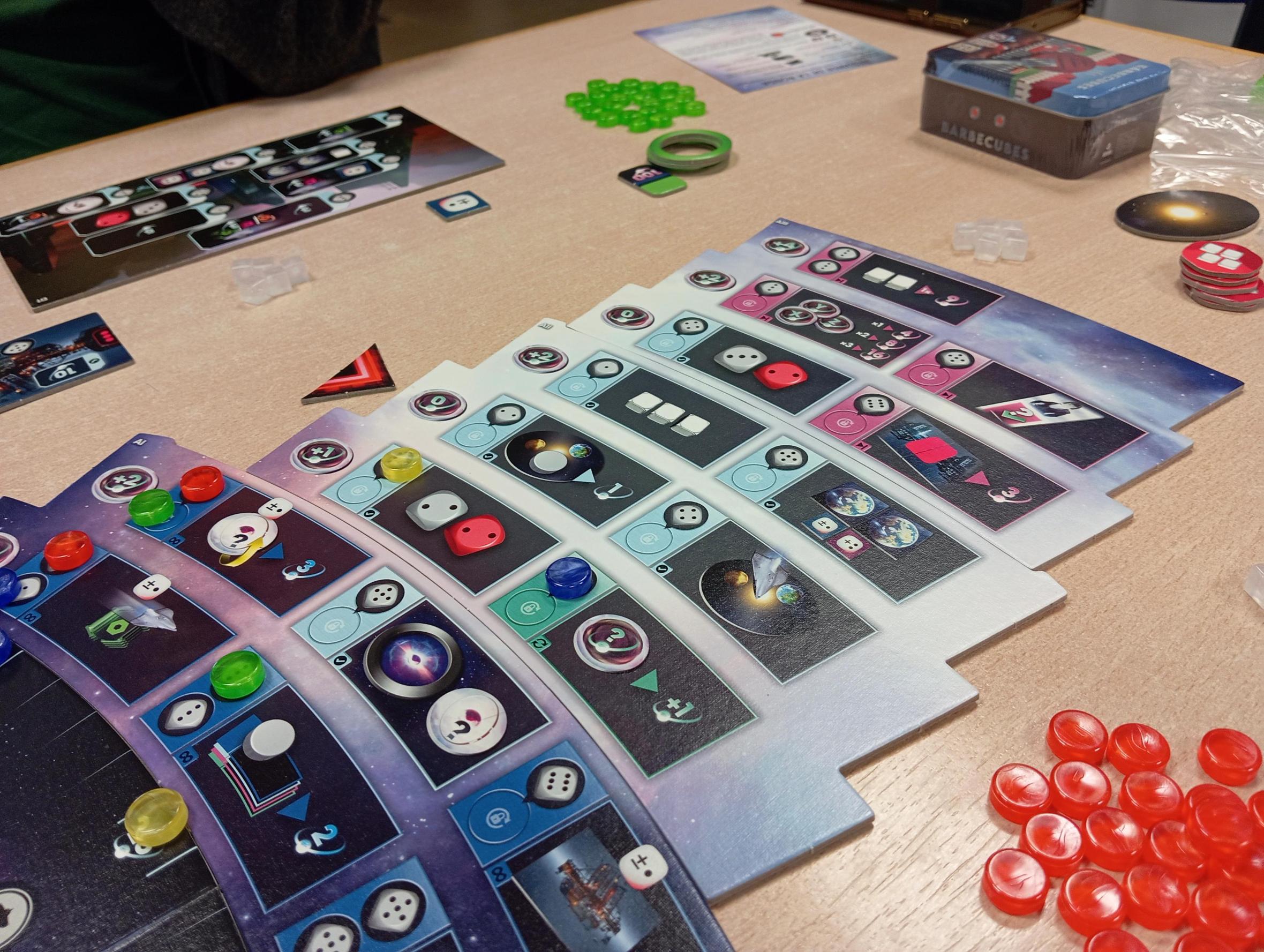
在 Ludoya 的牌桌上
在 Ludoya 中查看完整统计- 210
- 已记录对局
- 316
- 玩家
- 1h 55m
- 平均时长
- 117
- 收藏数
- 26
- 愿望清单数
8.0/10
基于 54 条 Ludoya 评测
Evan10.0 This is one of those tight worker placement point engine games. You get two actions per turn, and those actions are dependent on the values of dice you draft from the display at the start of the round. There are also clever ways to unlock a third die each round if you've planned well and lined yourself up properly. There are asymmetric actions on your player boards, different public goals each game, and even different action spots that slowly unlock as the game timer clicks down. The core of the game however is to not get too distracted by this shinny, because the most action intense activity in the game, claiming and activating pulsar spots on the map, is a process that pays out tons of points at the end of each round. the trick is to efficiently set up your points income while making sure to get that extra action every round. It's possible that a player who gets a good lead early on might never get caught up to, although the game provides many large one time scoring opportunities which gives you the chance to make up a difference. I'm enjoying the game a lot because it has hits the sweet spot of being excited for your next move while simultaneously knowing you won't get to do half of what you want to do while also being happy with what you accomplished on a previous turn. :star: Art, Iconography and components functional :star: Clever or interesting mechanisms :star: Reasonably low downtime between turns with mildly AP players :star: Multiple plays stay interesting :star: Low or mitigatable luck elements :star::star::star::star::star: Raw enjoyment
- Base -
Fernando6.0 1 partida. Debería jugarlo otra vez para valorarlo mejor, porque, como suele ocurrir con muchos juegos, en la primera partida vas haciendo acciones sin saber muy bien cuáles serán mejores y vas un poco perdido. De todos modos hay cosas que no me gustaron, como que hay caminos con más salidas que otros... sobretodo hay zonas que te quedas muy cerrado. Tampoco me gusta que haya tantas opciones. Aunque, lo dicho, haría falta otra partida y también estás más despejado, porque lo jugamos muy tarde y estaba un poco zombie.


规则问题
由 Ludoya 的规则助手根据规则书回答。
How do I determine the median after rolling the dice, and what does it do when we take dice?
Line the rolled silver dice in order; the median is the middle die and you place the median marker on it (if more dice sit to one side, move the marker one space toward that side so it sits between spaces). When you take a die you move either your initiative or engineering counter left or right relative to the median marker by the number of die spaces between the marker and the die you took, which affects play order and cube income later (p.7-8).
When I fly my survey ship, do I have to move the exact number of segments and can I retrace segments?
A flight must use exactly the number of segments equal to the die you pay (possibly modified) and you may not use any flight segment more than once during that single flight; flights of distance zero are not allowed and isolated pulsars with no connecting segments cannot be flown to (p.10).
If I only pass through a planetary system, can I still take the blue-planet exploration bonus?
No — if you only pass through a system you must place your token on a lifeless planet if one is available and you get no exploration bonus; you receive an exploration bonus only when your flight ends at the system and you establish a station on a blue planet (p.11).
How do gyrodyne tiles get placed, completed, and when do they score points?
You must first claim a pulsar, then take a gyrodyne tile (taking costs: 1 for small, 2 for medium, 4 for large), place it on your claimed pulsar to start construction, and later spend the tile's completion die (3 for small, 5 for medium, 6 for large) to flip it so it is spinning; spinning gyrodynes produce points each Production Phase equal to the gyrodyne's face plus the value of the current technology row (p.12, p.16).
How do transmitter links work and when do I get the red bonus die from them?
When you take transmitter tiles you decide immediately whether to link them end-to-end into an array (links are permanent) and you must pay each printed die cost to flip a transmitter online (one cost is covered when you take it); if you have two linked transmitters that are flipped online you gain the red bonus die formed by their link, which you may use as your bonus die that turn (p.13, p.15).























游戏信息(人数、游戏时长、年龄、制作人员)来自 BoardGameGeek。