
2013 · Wirtschaft
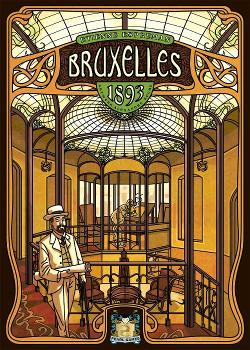
Bruxelles 1893
Die Spieler schlüpfen in die Rolle von Architekten des späten 19. Jahrhunderts, die darum wetteifern, das beeindruckendste Art-Nouveau-Gebäude zu errichten und Kunstwerke zu schaffen. Das Spiel nutzt Worker Placement mit Biet- und Mehrheitskontroll-Elementen auf einem modularen Aktionsbrett, sodass die verfügbaren Aktionen sich von Runde zu Runde ändern. Arbeiter werden eingesetzt, um bezahlte Aktionen auszuführen (Material kaufen, weitere Stockwerke an ein persönliches Haus anbauen, Mäzene anwerben, Kunst schaffen oder verkaufen) oder kostenlose Aktionen, bei denen man riskieren kann, einen Arbeiter zu verlieren (minderwertige Materialien beschaffen, Mäzene aktivieren, die Börse besuchen oder eine Aktion ausführen, die normalerweise Geld kostet). Die Runden enden, wenn alle Spieler passen; danach folgt eine Ausstellungsphase, in der Kunst verkauft und Prestige- oder Bonuskarten vergeben werden. Nach fünf Runden gibt es eine Schlusswertung für das Architektenlevel, vollendete Werke, Bonuskarten und das vorhandene Geld.
- Spieler
- 2–5 am besten mit 4
- Spielzeit
- 50–125 Min.
- Alter
- 13+
- Komplexität
- 3,6 / 5
Über das Spiel
- Autoren
- Illustration
- Publisher


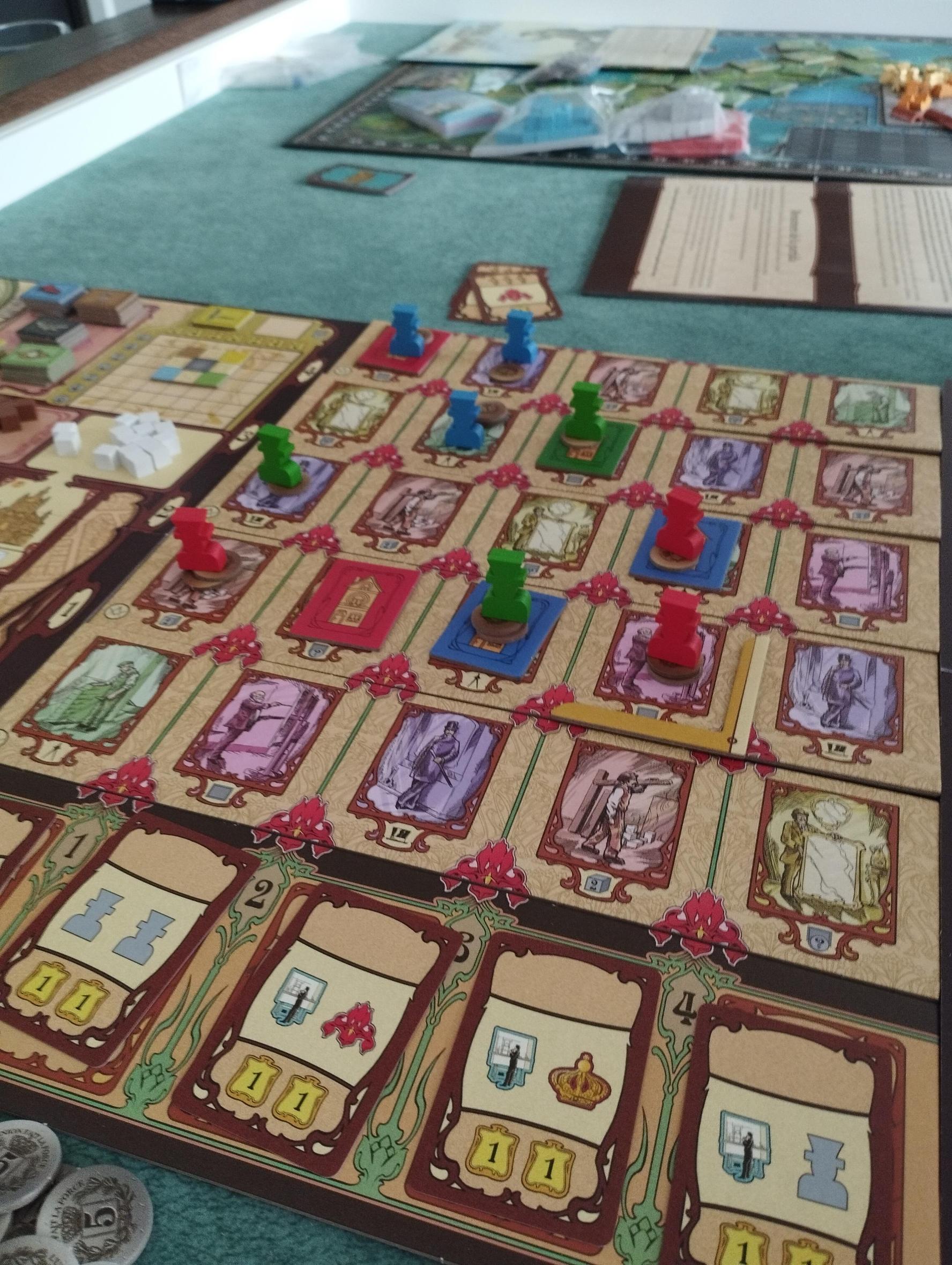
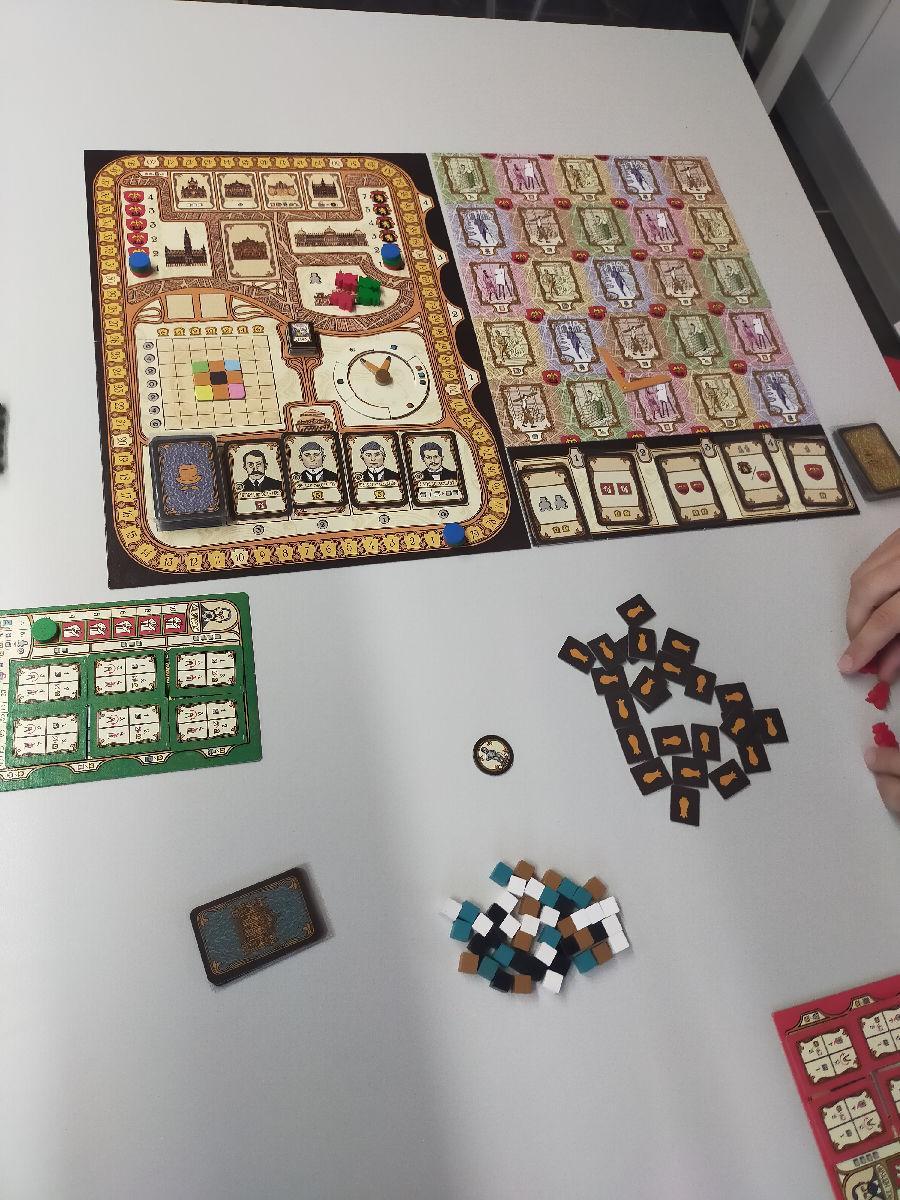
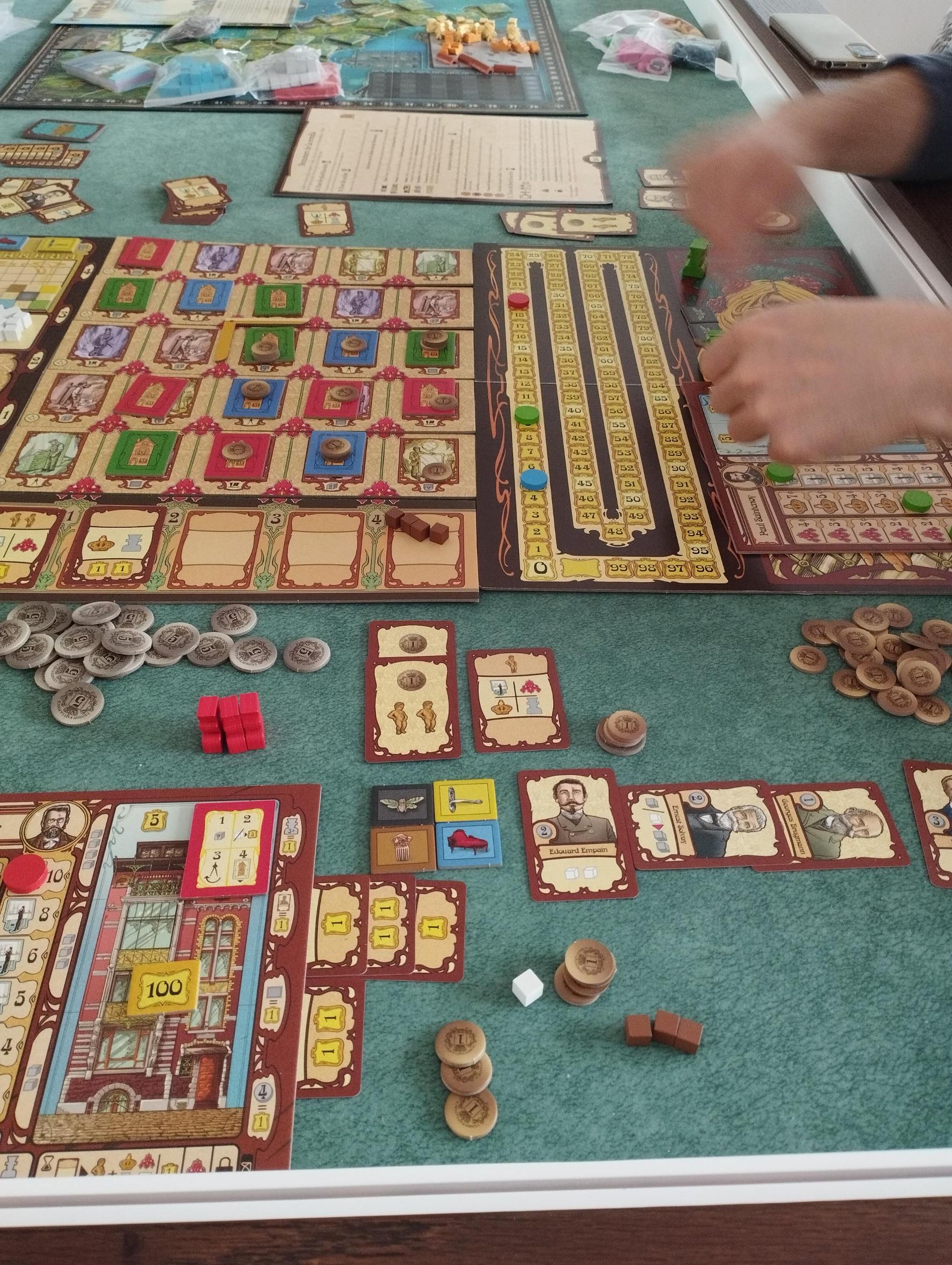
Fotos von Ludoya-Tischen
Alle Fotos in Ludoya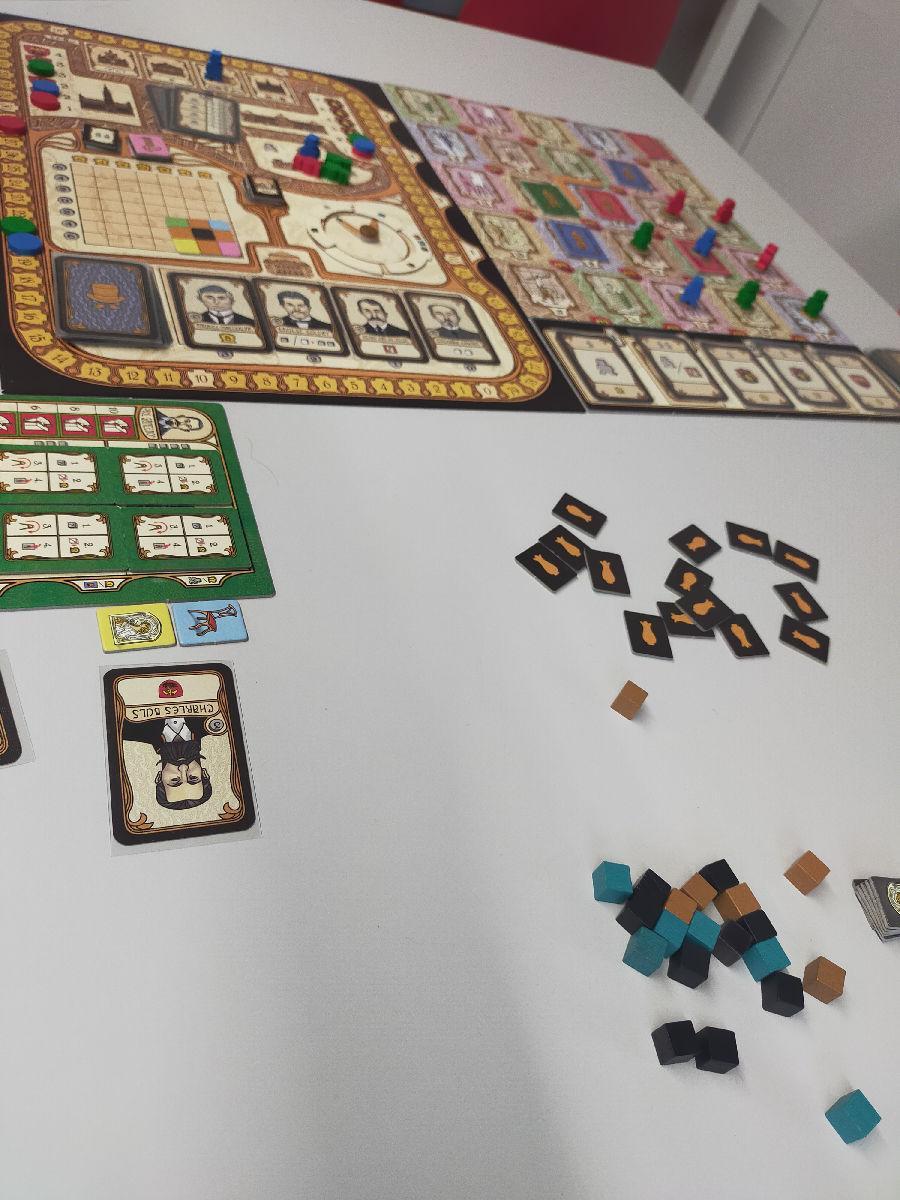
Wo kaufen
Shop-Preise und gebrauchte Exemplare, täglich geprüft.
An Ludoyas Tischen
Alle Statistiken in Ludoya- 126
- Erfasste Partien
- 168
- Spieler
- 1h 47m
- Durchschnittliche Partie
- 26
- In Sammlungen
- 11
- Auf Wunschlisten
6,8/10
aus 33 Ludoya-Rezensionen
Evan5,9 In this game, action spaces are laid out in a grid. When a player puts a meeple in a space to take the corresponding action, they do so along with some number of dollars. At the end of the action round, whichever player's collective bids in each column are the largest get the special card at the bottom. The card can then be used for it's powerful central buff, or it can be tucked under a player mat to amplify one of the end game scoring category multipliers. Add to that, at the end of each round, there's a little majority scoring amongst who occupies the most worker spots surrounding the shield icons, and then add the fact that players can put their own claim markers on buildings which means they get a cool benefit when someone else uses that spot, and you've got one of the most interesting, and player interactive worker placement games I've ever seen. There's more to it than just that, there are actually multiple paths to victory, and cool cards to combo and basically everything I could ever want from a game like this, short of a more nicely illustrated board. :star: Art, Iconography and components functional :star: Clever or interesting mechanisms :star: Reasonably low downtime between turns with mildly AP players :star: Multiple plays stay interesting :star: Low or mitigatable luck elements :star::star::nostar::nostar::nostar: Raw enjoyment
Regelfragen
Aus der Spielanleitung beantwortet von Ludoyas Regelassistenten.
How do I pick the City of Brussels shield from the Stock Exchange card and set the playable area on the Art Nouveau board?
On the revealed Stock Exchange card read the line for your player count, pick one of the two shield coordinates shown, place the Bracket on that shield and orient it to designate the largest of the four quadrants; that quadrant (bounded by the horizontal and vertical lines through the chosen shield) is the playable area for the round (page 4).
If I place an Assistant on the Art Nouveau board do I have to perform that action or can I just bid to compete for the Bonus card?
You are not required to carry out the action after placing an Assistant on the Art Nouveau board — you may place an Assistant and bid solely to participate in the auction for the Bonus card (page 5).
When I build a Building tile, what must I pay according to the compass needles?
You must pay using both construction units indicated by the two compass needles (they always point to two different spaces); if one needle is the “empty” space you must pay the entire cost with the other unit, and if one is the “1 noble material” you may use any noble material for that unit but still must pay at least one unit of the other needle’s type (page 6).
When I sell a Work of Art, can I sell a color already visible in the shop, and how do I get money and VPs?
You cannot sell a work whose color is already visible in the two shop slots; to sell you move the Workshop cursor a number of spaces equal to how many works you currently own, then collect the money and VPs indicated by the cursor dot that matches the color you sold (row = money, column = VPs), and place the sold tile onto one of the two shop spaces (page 5).
What happens when I pass — who gets the Exhibition tile and what income do players receive?
The first player to pass takes the Exhibition tile and immediately receives 1 BF plus 1 BF per color of Work of Art they own (up to 6 BF); other players who pass later each receive 1 BF per color of Work of Art they own (up to 5 BF) (page 7).
At the end of the game how do kept Public Figure cards affect scoring if I can't pay their cost?
At game end each player must pay the amounts on the Public Figure cards they kept; for each card they cannot pay they lose that card and also lose 5 VPs (page 10).











Kostenlos, im Web, für Android und iOS
Spiel Bruxelles 1893 mit Ludoya
- Hab es in deiner SammlungVerwalte dein Exemplar und seine Erweiterungen, leih es Freunden oder setz es auf deine Wunschliste und erfahre, wenn der Preis fällt.Zur Sammlung hinzufügen
- Erfasse jede PartiePunkte, Sieger, Timer und Fotos, dann deine Statistiken: Siegquote, liebste Spielerzahl, beste Punktzahl.Partie erfassen
- Regelfragen klärenFrag alles zu den Regeln und erhalte eine Antwort aus der Spielanleitung, mit der Seite zum Nachprüfen.Den Regelassistenten fragen
- Finde Leute, mit denen du es spielstClubs, Spieleabende und Veranstaltungen in deiner Nähe, bei denen dieses Spiel auf den Tisch kommt.Veranstaltungen ansehen
Spieldaten (Spieler, Spielzeit, Alter, Mitwirkende) von BoardGameGeek.