
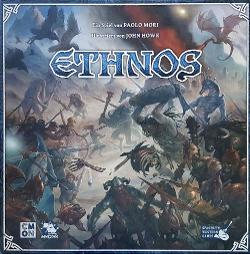
2017 · Fantasy
Ethnos
Spieler rufen die Hilfe von Fantasy-Völkern herbei – Riesen, Meervolk, Halblinge, Minotauren und andere –, um um die Kontrolle über Regionen zu kämpfen und Ruhm zu erlangen. Ein individuelles Deck wird aus sechs ausgewählten Völkern zusammengestellt und in einen gemeinsamen Markt sowie einen Nachziehstapel verteilt. In einem Zug nimmt ein Spieler entweder eine Karte aus dem Markt oder vom Nachziehstapel auf die Hand oder spielt einen Trupp von Verbündeten aus der Hand, die entweder nach Volk oder nach Farbe zusammenpassen, und wirft dann die übrigen Handkarten ab. Beim Ausspielen wird ein Marker in der Region platziert, die der Farbe der obersten Karte entspricht, und die Volksfähigkeit dieser Karte wird ausgelöst. Nach jedem Zeitalter vergeben die Regionen Ruhm an die Spieler mit den meisten Markern (in späteren Zeitaltern werden mehr Plätze frei); nach dem letzten Zeitalter gewinnt der Spieler mit dem meisten Ruhm.
- Spieler
- 2–6 am besten mit 4
- Spielzeit
- 45–60 Min.
- Alter
- 14+
- Komplexität
- 2,1 / 5
Über das Spiel
- Autoren
- Illustration




Erweiterungen
In Ludoya ansehen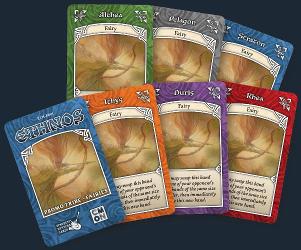
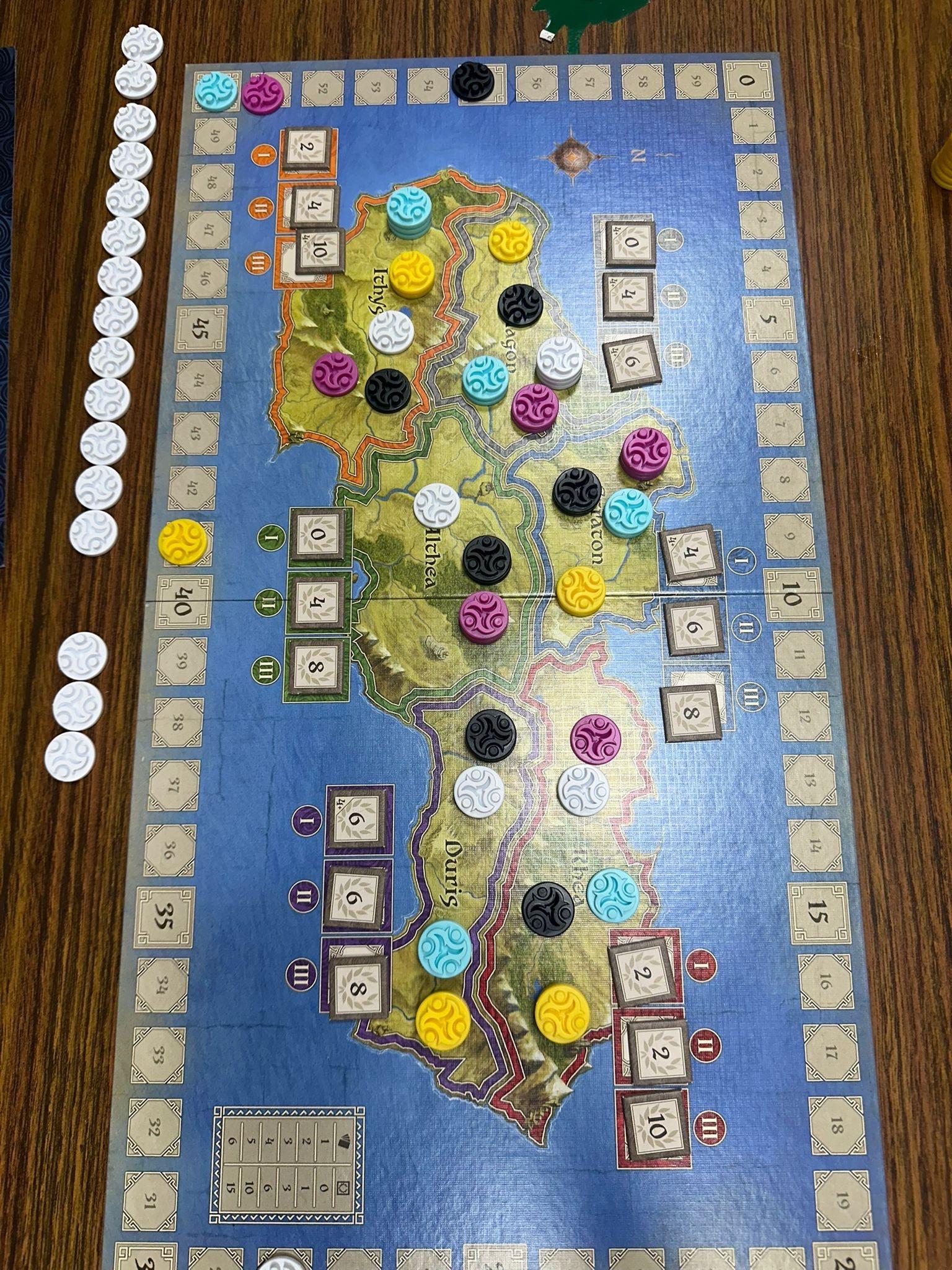
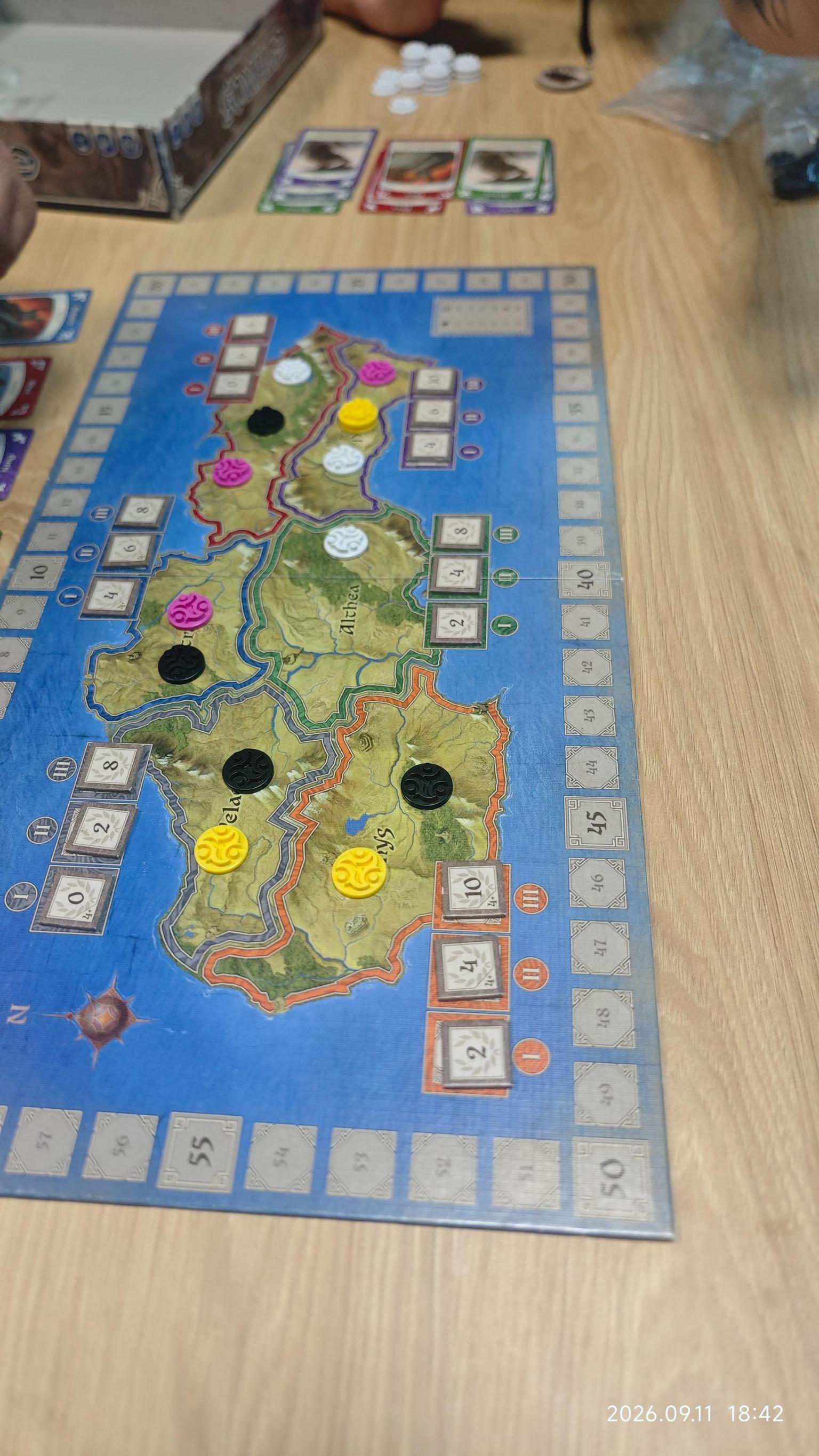
Fotos von Ludoya-Tischen
Alle Fotos in Ludoya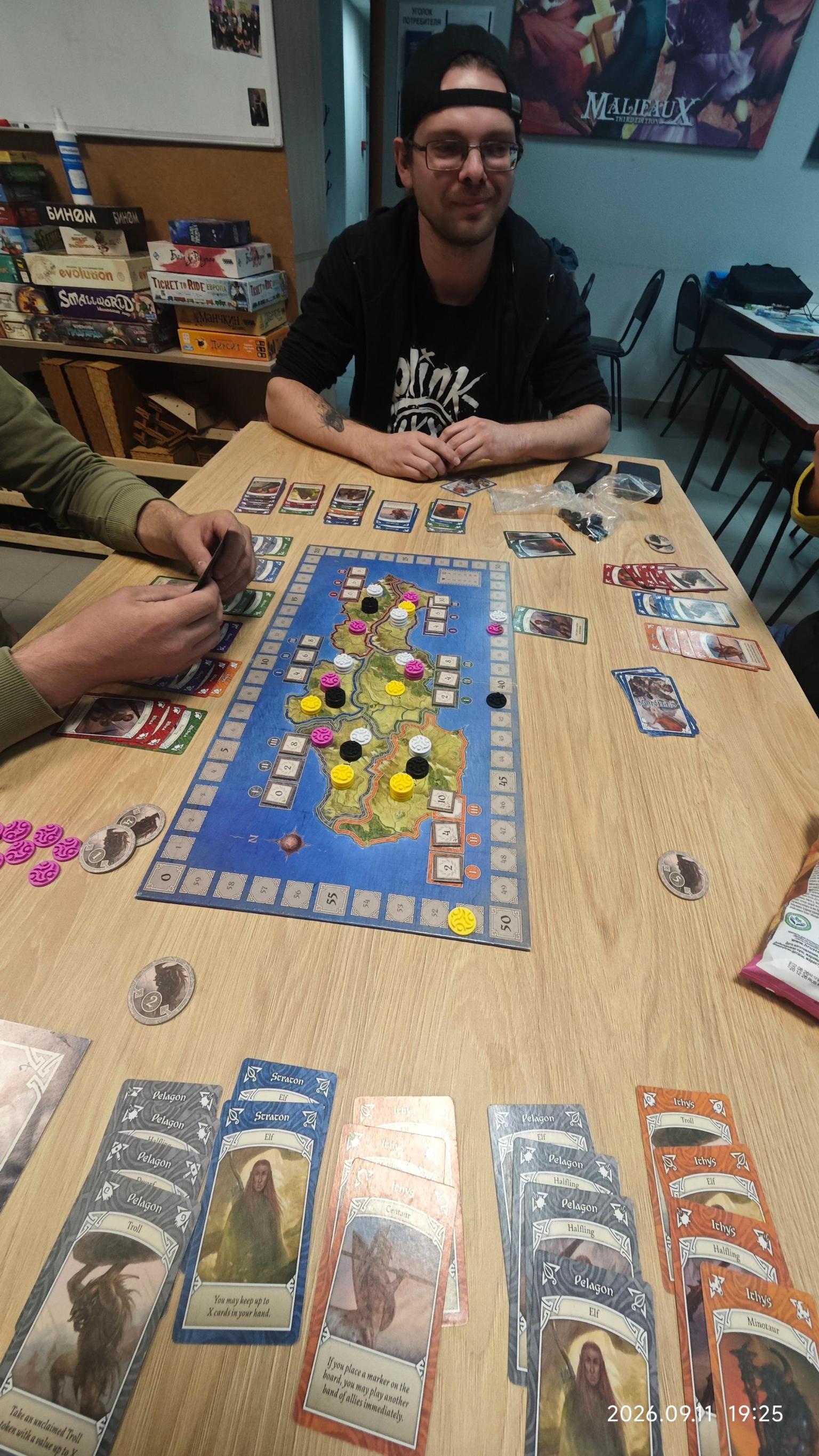
Wo kaufen
Shop-Preise und gebrauchte Exemplare, täglich geprüft.
- Board Game BlissAuf Lager 39.95 $
- Cardhaus GamesAuf Lager 31.99 $
- ReflexshopAuf Lager 14990 Ft
- Atomic EmpireAuf Lager 31.99 $
- Dungeon MarvelsVorbestellung 32.3 €
- La GameriaAuf Lager 34 €
- Goblin Trader BarcelonaVorbestellung 34.2 €
- Juegos de la Mesa RedondaAusverkauft 35.96 €
An Ludoyas Tischen
Alle Statistiken in Ludoya- 487
- Erfasste Partien
- 737
- Spieler
- 59m 50s
- Durchschnittliche Partie
- 108
- In Sammlungen
- 19
- Auf Wunschlisten
6,4/10
aus 80 Ludoya-Rezensionen
Garfield3,0 #AreaControl #SetCollection #PressYourLuck I wanted to like this game. I like area control, I like fantasy. But what I don't like is too much luck. And this game is 80-90% luck. For example, the centaur card lets you play another card, it's like you get another turn. If you're not lucky, you never get one and have several turns less than others. This game is just about drawing cards, luck, luck, luck, yuck! There's no interaction, you can't kick someone out of an area. [c] Theme: :nostar::nostar::nostar::nostar::nostar: <!-- size 7]Abstract --> Gameplay: :star::nostar::nostar::nostar::nostar: <!-- size 7]Drawing cards, drawing more cards, drawing another card --> Interaction: :star::nostar::nostar::nostar::nostar: <!-- size 7]You can't harm others --> Artwork: :star::star::nostar::nostar::nostar: <!-- size 7]Really not my taste of fantasy artwork --> Luck: :star::star::star::star::star: <!-- size 7]Luck is your best friend in this game --> Strategy: :star::nostar::nostar::nostar::nostar: <!-- size 7]Depends on your card drawing luck --> Components: :star::star::star::nostar::nostar: <!-- size 7]ok, nothing special --> Play duration: :star::star::nostar::nostar::nostar: <!-- size 7]Would be ok if half of the time --> Easy to teach: :star::star::star::nostar::nostar: <!-- size 7]Easy, but you have to teach every faction --> Setup time: :star::star::star::star::nostar: <!-- size 7]Fast --> No downtime: :star::star::star::star::nostar: <!-- size 7]Plays very fast --> Replay value: :star::star::star::nostar::nostar: <!-- size 7]Different factions --> [/c]
Evan4,6 This is an area majorities flip luck heavy game that genuinely manages to be compelling, which is an unusual thing for me to encounter. The idea is this; the central board has different regions that do a majority scoring each round. On your turn you draw one card from either the faceup display or the top of the facedown deck, or you play one or more cards that either all have the same color, or have the same fantasy race, and then you discard the rest of your unplayed hand to the display for other players to pick over. If the cards you played were greater than the number of tokens you have in the region of matching color, you get to add one new token. You also get to use the special power of the top card in the set played, and this is where the game gets really interesting. Despite how luck of the draw it is, you actually wind up with interesting puzzles in your hand as you have to choose what you want to go for, faction ability, color, and which province you are aiming for. Then you also have an aspect of pushing your luck, knowing that each time you blind draw to improve your set, you're running the risk of improving other player's draws. The rounds can end suddenly, as three dragon cards get seeded in the bottom half of the deck. This can often create some frustration as players might have been lining up a great move right before the round suddenly ends, and they're forced to discard their hands. It's an interesting tension, that I perhaps would like a lot less in a longer game, but in this format it seems fine. The faction powers are all really interesting, and they interact with each other in compelling ways depending on the setup, as you don't see every power every game. Another compelling aspect of this game is that there's also the option to ignore the board state, and focus on getting larger sets of cards, which can score big points at the end of the round. I don't see this game becoming a favorite, but it's a really nice light ride. :star: Art, Iconography and components functional :star: Clever or interesting mechanisms :star: Reasonably low downtime between turns with mildly AP players :star: Multiple plays stay interesting :nostar: Low or mitigatable luck elements :star::star::nostar::nostar::nostar: Raw enjoyment
Javo7,0 La nueva edición el diseño es impresionante. No obstante, no conecto con el juego. Prefiero otro tipo de juegos de mayorías. Hay facciones muy poderosas que si van a ellas de forma constante hacen que sea imposible pillarlos luego.
Regelfragen
Aus der Spielanleitung beantwortet von Ludoyas Regelassistenten.
If I play a Band, do I have to discard the rest of my hand?
Yes — after you play a Band, if you have any cards left in your hand you must discard all of them face up next to the board (these discarded cards can later be recruited). (page 7)
How many cards do I need in a Band to place a Control marker in a Kingdom?
You may place a Control marker in the Kingdom that matches your Leader only if the number of cards in the Band is greater than the number of your control markers already in that Kingdom (so 1 card for your first marker there, 2 for your second, etc.). (page 7; example page 8)
What happens when a Dragon card is drawn?
Reveal any Dragon you draw immediately and then draw another card; the first two Dragons have no effect, but when the third Dragon is drawn the Age ends immediately and the third Dragon stays with the player who drew it to help break future first-player ties. (page 7)
When the Age ends, do we keep our hands or discard them?
When the third Dragon is revealed the Age ends immediately and all players must discard all cards left in their hands (Allies Scatter) before scoring. (page 9)
How is Glory for each Kingdom awarded, and what about ties?
At each Age you award Glory from each Kingdom according to that Age’s I/II/III token positions (first Age: only the I token; second: I and II for first/second; third: I/II/III for first/second/third), and if players tie for most Control markers their combined Glory is added and divided equally (rounded down). (page 9)
How much Glory do my Bands score at the end of the Age?
Each Band scores based on its size: 1 card = 0 Glory, 2 = 1, 3 = 3, 4 = 6, 5 = 10, and 6 or more = 15 Glory. (page 10)






Kostenlos, im Web, für Android und iOS
Spiel Ethnos mit Ludoya
- Hab es in deiner SammlungVerwalte dein Exemplar und seine Erweiterungen, leih es Freunden oder setz es auf deine Wunschliste und erfahre, wenn der Preis fällt.Zur Sammlung hinzufügen
- Erfasse jede PartiePunkte, Sieger, Timer und Fotos, dann deine Statistiken: Siegquote, liebste Spielerzahl, beste Punktzahl.Partie erfassen
- Regelfragen klärenFrag alles zu den Regeln und erhalte eine Antwort aus der Spielanleitung, mit der Seite zum Nachprüfen.Den Regelassistenten fragen
- Finde Leute, mit denen du es spielstClubs, Spieleabende und Veranstaltungen in deiner Nähe, bei denen dieses Spiel auf den Tisch kommt.Veranstaltungen ansehen
Spieldaten (Spieler, Spielzeit, Alter, Mitwirkende) von BoardGameGeek.