
2018 · Gebietsaufbau
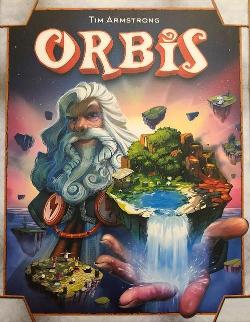
Orbis
Die Spieler übernehmen die Rolle von Gottheiten und draften Regionen- und Gottheitentiles, um eine eigene Welt aufzubauen und Schöpfungspunkte zu sammeln. In jedem Zug nimmt ein Spieler entweder eines von neun gemeinsamen Regionentiles oder ein verfügbares Gotttile (jeder Spieler darf höchstens ein Gotttile beanspruchen) und legt dann Regionentiles unter bestimmten Platzierungsregeln auf sein Tableau. Wenn man ein Regiontile nimmt, setzt man Anhänger dieser Farbe auf benachbarte Tiles, was die zukünftigen Werte der Tiles verändert und die Entscheidungen der Gegner beeinflusst. Einige Länder bieten besondere Boni oder Endwertungen, und Spieler geben Anhänger aus, um mächtigere Regionen zu erwerben. Nach einer festen Anzahl von Runden zählen die Spieler ihre Schöpfungspunkte, vergeben Boni und vergleichen ihre Gesamtsummen, um den Gewinner zu bestimmen.
- Spieler
- 2–4 am besten mit 3
- Spielzeit
- 45 Min.
- Alter
- 10+
- Komplexität
- 2 / 5
Über das Spiel
- Autoren
- Illustration
- Publisher


Wo kaufen
Shop-Preise und gebrauchte Exemplare, täglich geprüft.
An Ludoyas Tischen
Alle Statistiken in Ludoya- 46
- Erfasste Partien
- 80
- Spieler
- 30m 49s
- Durchschnittliche Partie
- 38
- In Sammlungen
- 5
- Auf Wunschlisten
4,6/10
aus 15 Ludoya-Rezensionen
Garfield3,0 It's way too difficult to match some tiles to score points. So the easiest way to get points are red and yellow tiles I think. [c] Theme: :star::nostar::nostar::nostar::nostar: <!-- size 7]Nope --> Gameplay: :star::star::nostar::nostar::nostar: <!-- size 7]Quite boring --> Interaction: :star::nostar::nostar::nostar::nostar: <!-- size 7]Nope --> Artwork: :star::star::nostar::nostar::nostar: <!-- size 7]Nothing special --> Luck: :star::star::star::nostar::nostar: <!-- size 7]Random tile drawing --> Strategy: :star::star::star::nostar::nostar: <!-- size 7]Obvious ones --> Components: :star::star::star::nostar::nostar: <!-- size 7]Nothing special --> Play duration: :star::star::star::nostar::nostar: <!-- size 7]Good --> Easy to teach: :star::star::star::nostar::nostar: <!-- size 7]Ok --> Rules quality: <!-- size 7]not read --> Setup time: :star::star::star::nostar::nostar: <!-- size 7]Not much to set up --> No downtime: :star::star::star::nostar::nostar: <!-- size 7]Ok --> Replay value: :star::star::nostar::nostar::nostar: <!-- size 7]Not really --> [/c]
Evan4,6 In this game you are building a pyramid of tiles, where tiles on upper levels have to color match one of the two tiles below it. Each color has a certain effect genre, so as you choose colors you are also picking your path to scoring. Tiles are selected from a 3x3 grid, and often cost recipes of colored cubes to take. When a tile gets taken, it drops colored cubes matching the color of the tile on each orthogonality adjacent tile in the selection grid, thereby making them more appealing for other players to take. Managing your cubes is crucial as if you can't pay for or place a tile on your turn, you take one anyway, and flip it over to it's -1 vp side where it becomes a rainbow color for placement rules. Once per game instead of taking a tile, players can take a god tile which is what will sit at the top of the pyramid and give you extra points if you met it's requirements. The game plays quickly, and has that good feeling of tough decisions. You have to watch what your opponents are going for, what they are likely to take, and where they are likely to drop what color of cubes on their turns to optimize your moves. Every choice feels both good, and totally wrong as you wall yourself in. The game does cap out after a few plays. Once you've followed each color path through the game once, there's not a ton left to see. That being said, the core game play is still quite enjoyable. :star: Art, Iconography and components functional :star: Clever or interesting mechanisms :star: Reasonably low downtime between turns with mildly AP players :nostar: Multiple plays stay interesting :star: Low or mitigatable luck elements :star::star::star::nostar::nostar: Raw enjoyment
An abstract puzzly game with nice aesthetics. PROS - The base idea is easy to grasp and works well within its abstract frame. - Iconography, graphic design and art are all quite good. The game is pretty easy to understand for its icons and it has a nice table presence. CONS - The game naturally constrains you, which is not bad in itself but leads to less and less possibilities and therefore decisions towards its end. - The design space seems to be underexplored, leading to some turns with little or not very meaningful decisions to make as many tiles offer kind of the same thing. - It just feels like there is nothing new here, the design doesn't feel innovative nor very exciting.




Kostenlos, im Web, für Android und iOS
Spiel Orbis mit Ludoya
- Hab es in deiner SammlungVerwalte dein Exemplar und seine Erweiterungen, leih es Freunden oder setz es auf deine Wunschliste und erfahre, wenn der Preis fällt.Zur Sammlung hinzufügen
- Erfasse jede PartiePunkte, Sieger, Timer und Fotos, dann deine Statistiken: Siegquote, liebste Spielerzahl, beste Punktzahl.Partie erfassen
- Werte ohne PapierNutze die Wertungsbögen und Spielhelfer der Community und lass Ludoya die Punkte zusammenzählen.Wertungsbögen finden
- Finde Leute, mit denen du es spielstClubs, Spieleabende und Veranstaltungen in deiner Nähe, bei denen dieses Spiel auf den Tisch kommt.Veranstaltungen ansehen
Spieldaten (Spieler, Spielzeit, Alter, Mitwirkende) von BoardGameGeek.