
2016 · Gebietsaufbau
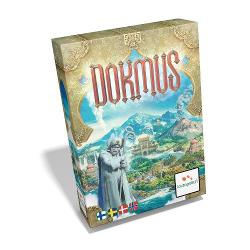
Dokmus
Die Spieler führen einen Stamm auf einer Expedition zu einer geheimnisvollen Insel, die aus acht doppelseitigen Kartenteilen besteht, die in einem 3×3-Raster mit leerem Zentrum angeordnet sind. Wächter werden jede Runde durch Draft-Karten dargestellt; der gewählte Wächter bestimmt die Zugreihenfolge und gewährt eine einzigartige Fähigkeit, etwa das Verschieben oder Drehen von Plättchen, das Bewegen von Markern oder das Beanspruchen des Startspielermarkers für die nächste Runde. In einem Zug hat ein Spieler drei Marker, die er als Einfluss setzen, opfern kann, um Wasser zu überqueren oder Wälder zu betreten, oder in Vulkane werfen kann. Die Inselstruktur verändert sich, während Plättchen verschoben und gedreht werden, und die Wertung belohnt entdeckte Tempel und Ruinen sowie geopferte Marker.
- Spieler
- 2–4 am besten mit 4
- Spielzeit
- 20–40 Min.
- Alter
- 10+
- Komplexität
- 2,1 / 5
Über das Spiel
- Autoren
- Illustration


Erweiterungen
In Ludoya ansehen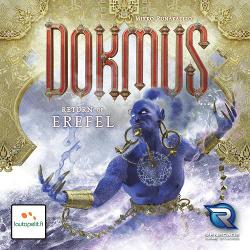
Wo kaufen
Shop-Preise und gebrauchte Exemplare, täglich geprüft.
An Ludoyas Tischen
Alle Statistiken in Ludoya- 27
- Erfasste Partien
- 50
- Spieler
- 55m 25s
- Durchschnittliche Partie
- 11
- In Sammlungen
- 5
- Auf Wunschlisten
7,1/10
aus 3 Ludoya-Rezensionen
Evan7,2 In this game you have a grid of landscape tiles. You start with a single settlement piece on a corner tile's edge. Each round players draft turn order tiles, with each one having a special power. On your turn you can place three settlement tiles adjacent to your existing ones, and use your special power in any order. The powers manipulate the grid by moving a tile, rotating a tile, letting you bump one of your settlement markers one space or just becoming starting player. Then, each of the different terrain types have a special rule to deal with it. The ultimate goal is to have settlement pieces next to the different temples scattered throughout the board. The game is very engaging and clever considering it's simplicity. There's a big reward for being on all the tiles, so players really compete with each other for the moves and rotates, trying to get the most of our your limited actions. Some times require pulling a piece off the board, for example, if you leave any settlement tokens on volcanoes, they have to be pulled off. This isn't bad because these tokens are considered sacrifices to the gods, and there's a majority endgame scoring for most sacrificed. This is also fine from a scoring standpoint, since you really only care about being next to temples, so if some of your connecting pieces have to flay away to get there, it's no sweat off your back. It also helps the boards from getting impossibly clogged. I'm very impressed with this game, and I'm excited to see more. :star: Art, Iconography and components functional :star: Clever or interesting mechanisms :star: Reasonably low downtime between turns with mildly AP players :star: Multiple plays stay interesting :star: Low or mitigatable luck elements :star::star::star::nostar::nostar: Raw enjoyment




Kostenlos, im Web, für Android und iOS
Spiel Dokmus mit Ludoya
- Hab es in deiner SammlungVerwalte dein Exemplar und seine Erweiterungen, leih es Freunden oder setz es auf deine Wunschliste und erfahre, wenn der Preis fällt.Zur Sammlung hinzufügen
- Erfasse jede PartiePunkte, Sieger, Timer und Fotos, dann deine Statistiken: Siegquote, liebste Spielerzahl, beste Punktzahl.Partie erfassen
- Werte ohne PapierNutze die Wertungsbögen und Spielhelfer der Community und lass Ludoya die Punkte zusammenzählen.Wertungsbögen finden
- Finde Leute, mit denen du es spielstClubs, Spieleabende und Veranstaltungen in deiner Nähe, bei denen dieses Spiel auf den Tisch kommt.Veranstaltungen ansehen
Spieldaten (Spieler, Spielzeit, Alter, Mitwirkende) von BoardGameGeek.