
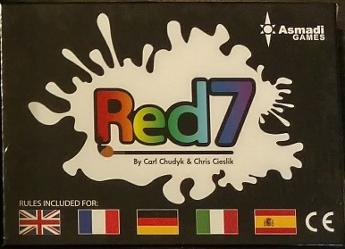
2014 · Kartenspiel
Red7
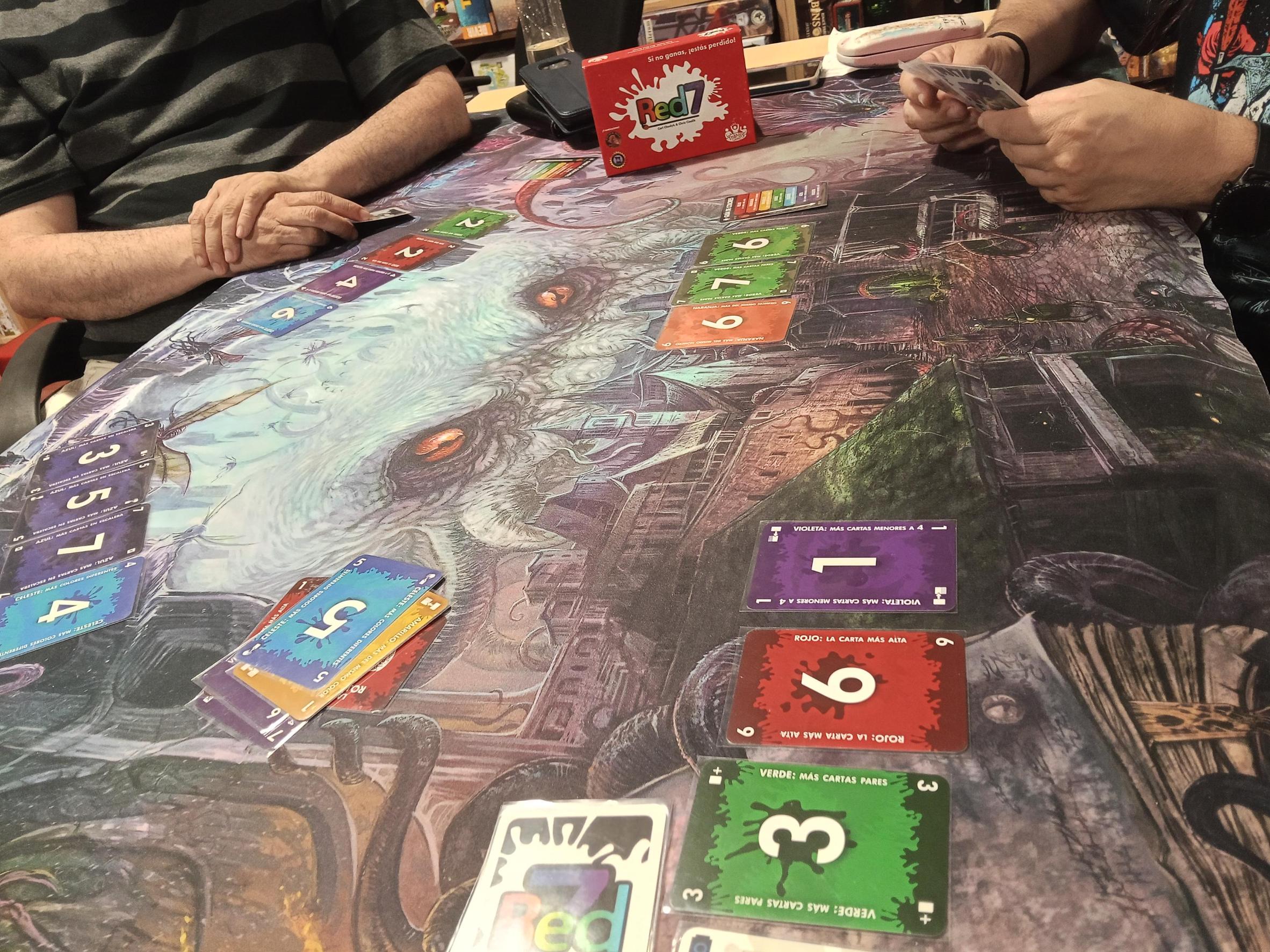
Die Spieler treten in schnellen Runden gegeneinander an, wobei die aktuelle Regel bestimmt, welche Karten gewinnen. Jede Karte hat eine Farbe (sieben Farben) und eine Zahl (1–7), und durch das Ausspielen oder Abwerfen von Karten kann sich die aktive Regel oder die aktuelle Gewinnbedingung ändern. In seinem Zug zieht oder spielt ein Spieler, um nach der aktuellen Regel vorne zu liegen; wenn ein Spieler am Ende seines Zuges nicht gewinnt, scheidet er aus. Die Runden enden, wenn nur noch ein Spieler übrig ist. Das Deck besteht aus 49 Farb-Zahl-Karten, und die Partien sind in wenigen Minuten vorbei.
- Spieler
- 2–4 am besten mit 4
- Spielzeit
- 5–30 Min.
- Alter
- 9+
- Komplexität
- 1,7 / 5
Über das Spiel
- Autoren
- Illustration
- Publisher



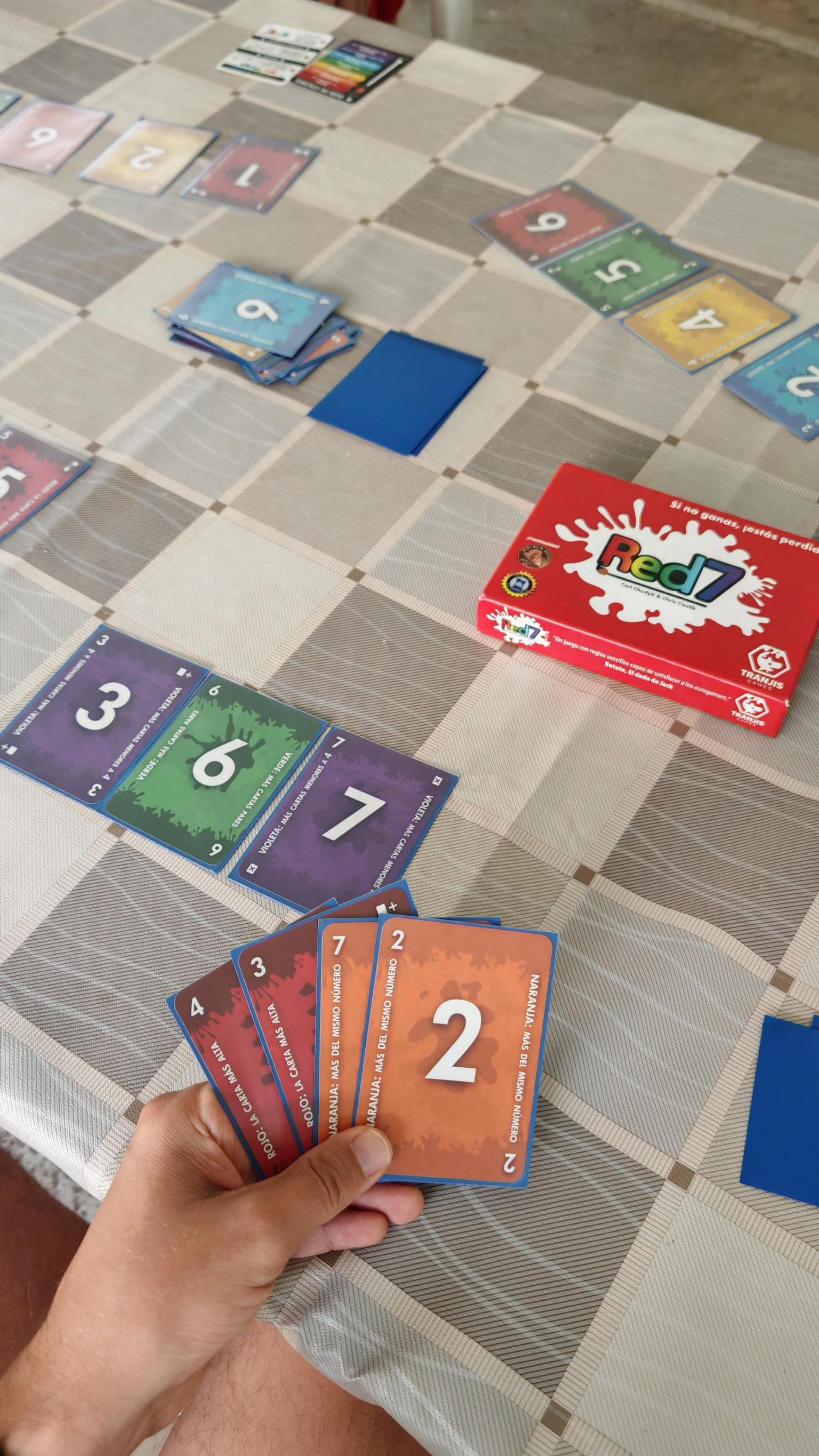
Fotos von Ludoya-Tischen
Alle Fotos in Ludoya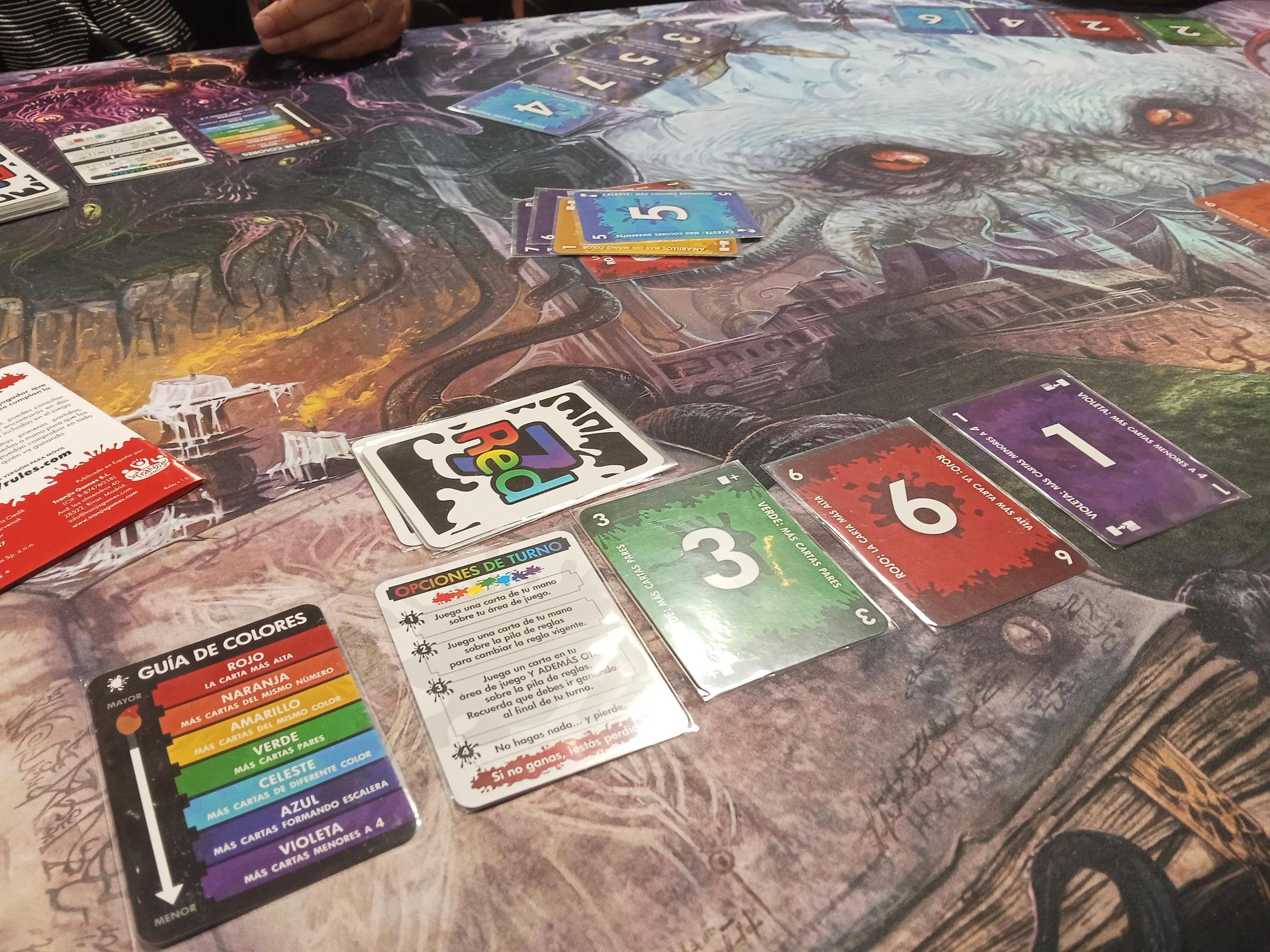
Wo kaufen
Shop-Preise und gebrauchte Exemplare, täglich geprüft.
An Ludoyas Tischen
Alle Statistiken in Ludoya- 1.349
- Erfasste Partien
- 743
- Spieler
- 22m 41s
- Durchschnittliche Partie
- 236
- In Sammlungen
- 5
- Auf Wunschlisten
- 1
- Vorbestellt
6,3/10
aus 121 Ludoya-Rezensionen
Jan Solo6,5 FILLER
Очередной клон UNO
Mestremuten5,0 Rating: 3/5 Production value: 2/4 Is the game in my collection/Love to have?: 0/1


Regelfragen
Aus der Spielanleitung beantwortet von Ludoyas Regelassistenten.
How many cards do I get and who goes first?
Each player is dealt a seven‑card hand and one faceup card to start their Palette; the Canvas starts with the ‘You are Playing Red’ card, and the player to the left of whoever has the highest Palette card goes first (page 2).
Do I have to be winning at the end of my turn?
Yes—if you are not winning the current game at the end of your turn you lose and are out of the round (page 3).
What exactly does ‘winning the game’ mean and how are ties broken?
You are winning if your Palette contains more cards that meet the Canvas rule than any other player; in a tie, the highest card among the cards that meet the rule wins, using the color order if needed (Red→Violet) (pages 3 and 2).
Can I discard a card to the Canvas to change the rule even if that leaves me not winning?
No—when you discard a card to the Canvas to change the rule, you must be winning the new game after you do this (page 3).
What if my hand is empty or I choose to do nothing on my turn?
If your hand is empty at the start of your turn you lose and are out of the round; doing nothing is also a legal action that causes you to lose (page 3).
What do the icons on the 1, 3, 5, and 7 mean—are those actions mandatory?
The corner icons are an optional Action Rule set; if you use them then when you play a 1, 3, 5, or 7 to your Palette you MUST perform that card’s action if you can (page 4).





















Kostenlos, im Web, für Android und iOS
Spiel Red7 mit Ludoya
- Hab es in deiner SammlungVerwalte dein Exemplar und seine Erweiterungen, leih es Freunden oder setz es auf deine Wunschliste und erfahre, wenn der Preis fällt.Zur Sammlung hinzufügen
- Erfasse jede PartiePunkte, Sieger, Timer und Fotos, dann deine Statistiken: Siegquote, liebste Spielerzahl, beste Punktzahl.Partie erfassen
- Regelfragen klärenFrag alles zu den Regeln und erhalte eine Antwort aus der Spielanleitung, mit der Seite zum Nachprüfen.Den Regelassistenten fragen
- Finde Leute, mit denen du es spielstClubs, Spieleabende und Veranstaltungen in deiner Nähe, bei denen dieses Spiel auf den Tisch kommt.Veranstaltungen ansehen
Spieldaten (Spieler, Spielzeit, Alter, Mitwirkende) von BoardGameGeek.