
2004 · Gebietsaufbau
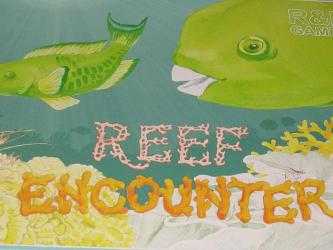
Reef Encounter
Die Spieler kultivieren Polypenkolonien, um verzweigende Korallen über ein gemeinsames Riff wachsen zu lassen, und setzen eine begrenzte Anzahl an Garnelenmarkern ein, um Strukturen zu sperren oder zu schützen. Korallen können benachbarte Kolonien angreifen und deren Polypen fressen; die gefressenen Polypen werden zu einer Ressource, die für Aktionen wie das Umdrehen oder Sperren von Korallenplättchen und das Verändern von Korallenwerten ausgegeben wird. Das Spiel dreht sich um Flächenwachstum, taktische Platzierung und Ressourcenmanagement, während die Spieler Expansion und Verteidigung ausbalancieren und gefressene Polypen nutzen, um die Wertung am Spielende zu beeinflussen.
- Spieler
- 2–4 am besten mit 3
- Spielzeit
- 60–120 Min.
- Alter
- 10+
- Komplexität
- 3,7 / 5
Über das Spiel
- Autoren
- Illustration
- Publisher



Erweiterungen
In Ludoya ansehen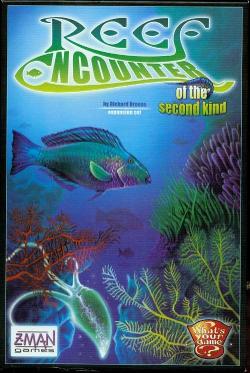
Wo kaufen
Shop-Preise und gebrauchte Exemplare, täglich geprüft.
An Ludoyas Tischen
Alle Statistiken in Ludoya- 55
- Erfasste Partien
- 47
- Spieler
- 1h 6m
- Durchschnittliche Partie
- 12
- In Sammlungen
- 5
- Auf Wunschlisten
5,6/10
aus 9 Ludoya-Rezensionen
Evan4,6 This is a stocks game where instead of doing the train thing, you are fish eating coral. In the game you take turns placing tiles, moving your claim markers (which take the form of cute shrimps), or banking tiles from the board as stocks. When tiles get banked with that action, you have to throw away the first four back to the bag, so there's lots of incentive to play inefficiently and try to grow your chain of tiles out beyond what you can properly protect. There are a number of value tiles in the central board which determine the endgame value of each tile banked. The trick to the game is that so long as certain conditions get met, when you place tiles you can replace other tiles already on the board. Tiles you've replaced to to the front of your player screen and give you a lot of needed flexibility in your actions, and most importantly, they can be spent to lock one of the value tiles, preventing other players from flipping them over. The game ends when someone has banked tiles for the fourth time, or when all the value indicator tiles have been locked. The game provides an interesting logistical puzzle in the way tile chains can grow, be replaced, or banked, but the game is really hurt by over complicated rules and a lack of visual clarity to the design. It feels overwrought compared to the much smoother experiences that you'd get from Chicago Express or Sheepland. The rulebook is impossibly poor, and I wouldn't recommend trying to learn the game from it. :nostar: Art, Iconography and components functional :star: Clever or interesting mechanisms :star: Reasonably low downtime between turns with mildly AP players :nostar: Multiple plays stay interesting :star: Low or mitigatable luck elements :star::star::star::nostar::nostar: Raw enjoyment
Mestremuten3,0 Rating: 1/5 Production value: 2/4 Is the game in my collection/Love to have?: 0/1
andycted8,7 Solid tile laying game with many original ideas and well integrated mechanics. Shame about the manual, bad iconography and colours and probably that it is a tiny bit too opaque to be played lightly











Kostenlos, im Web, für Android und iOS
Spiel Reef Encounter mit Ludoya
- Hab es in deiner SammlungVerwalte dein Exemplar und seine Erweiterungen, leih es Freunden oder setz es auf deine Wunschliste und erfahre, wenn der Preis fällt.Zur Sammlung hinzufügen
- Erfasse jede PartiePunkte, Sieger, Timer und Fotos, dann deine Statistiken: Siegquote, liebste Spielerzahl, beste Punktzahl.Partie erfassen
- Werte ohne PapierNutze die Wertungsbögen und Spielhelfer der Community und lass Ludoya die Punkte zusammenzählen.Wertungsbögen finden
- Finde Leute, mit denen du es spielstClubs, Spieleabende und Veranstaltungen in deiner Nähe, bei denen dieses Spiel auf den Tisch kommt.Veranstaltungen ansehen
Spieldaten (Spieler, Spielzeit, Alter, Mitwirkende) von BoardGameGeek.