
2021 · Wirtschaft
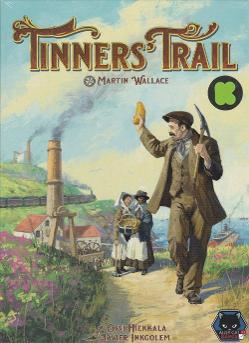
Tinners' Trail: Expanded Edition
Die Spieler führen Bergbauunternehmen im Cornwall des 19. Jahrhunderts, kaufen Land in Auktionen, vermessen Parzellen auf Zinn und Kupfer und verwalten Arbeitsmarker und Geld, um Erz zu erschließen und abzubauen. Die Minen werden tiefer und im Betrieb immer teurer, also bauen die Spieler Verbesserungen wie Häfen, Bahnhöfe und Stollen, um die Förderkosten zu senken und ihre Verkäufe so zu timen, dass sie von schwankenden Marktpreisen profitieren. Der erweiterte Inhalt fügt eine Arsen-Ressource und ein Auswanderungsmodul hinzu, das Bergleute ins Ausland schickt; diese Edition erhöht die Spielerzahl auf 1–5, ersetzt das Würfel-Setup durch Plättchenplatzierung für weniger Zufall und nutzt Karten mit Doppelfunktion, um Auktionen und Effekte nach den Auktionen zu beeinflussen. Siegpunkte gibt es durch Investitionen der Gewinne in Industrien außerhalb Cornwalls sowie durch effizienten Bergbau und Ausbau.
- Spieler
- 1–5 am besten mit 3
- Spielzeit
- 60–90 Min.
- Alter
- 14+
- Komplexität
- 3 / 5
Über das Spiel
- Autoren
- Illustration



An Ludoyas Tischen
Alle Statistiken in Ludoya- 3
- Erfasste Partien
- 5
- Spieler
- 7
- In Sammlungen
3,5/10
aus 1 Ludoya-Rezension
Evan3,5 First edition of the game was a bit too random for my taste. The value of each type of cube is randomized at the beginning of the round through a die roll. Then, the way to get the cubes is through bidding on regions with facedown tiles that populate the space when won, not knowing quite what you are bidding for in most cases. This can turn things a bit wonky when the game rewards more for converting resources to money to points earlier in the game than it does in the late game. The best part of the game is the action system where you spend a variable amount of time points to take different actions, then the player who spent the least time goes next. This can lead to some very interesting timing considerations. Particularly as with an action you can start a bid for a region someone else wants and let them buy it after bidding it up, costing them more than they'd like to, at which point they are the ones who have to spend their time points and you get to start another action in a less contested position. I was hoping the changes for the second edition would solve the luck issues and polish the game up with some replayability. Unfortunately, while there's an improvement, it still leaves a lot to be desired. The map is too small for the number of cubes that need to fit into each area. The game adds cards that the player who starts an auction for a region can pay to play in addition to the cost of winning a bid to peek at the tile before placing their bid. Then, if they don't win the auction they get half the money of the winning bid. This helps, but it can be a little disappointing as the cards are locked to being used in specific regions, which means you'll only realistically be able to use half your cards as the other elements of the game reward bunching up your controlled spaces. Otherwise the luck of the game is largely unchanged. The mini expansions that come with the kickstarter unbalance the game completely. One allows you to send a meeple to a separate board for a huge payout of points, or an extra building, or money income. It's wildly powerful, but everything is first come first serve, and players are in a turn order competition for a very limited supply of the meeples. The other expansion adds a new type of cube that can be gobbled by the starting player and sent to another separate board for a massive money payout in exchange for not being able to use as many action points for the rest of the game. Given that money lets you win all the map spaces plus having money early still rewards substantially more early game than late game on the victory points conversion chart, this can create a runaway leader round 1.







Kostenlos, im Web, für Android und iOS
Spiel Tinners' Trail: Expanded Edition mit Ludoya
- Hab es in deiner SammlungVerwalte dein Exemplar und seine Erweiterungen, leih es Freunden oder setz es auf deine Wunschliste und erfahre, wenn der Preis fällt.Zur Sammlung hinzufügen
- Erfasse jede PartiePunkte, Sieger, Timer und Fotos, dann deine Statistiken: Siegquote, liebste Spielerzahl, beste Punktzahl.Partie erfassen
- Werte ohne PapierNutze die Wertungsbögen und Spielhelfer der Community und lass Ludoya die Punkte zusammenzählen.Wertungsbögen finden
- Finde Leute, mit denen du es spielstClubs, Spieleabende und Veranstaltungen in deiner Nähe, bei denen dieses Spiel auf den Tisch kommt.Veranstaltungen ansehen
Spieldaten (Spieler, Spielzeit, Alter, Mitwirkende) von BoardGameGeek.