
2018 · Wirtschaft
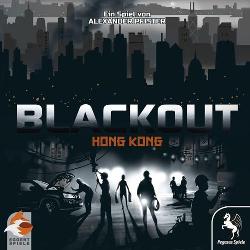
Blackout: Hong Kong
Ein plötzlicher stadtweiter Blackout versetzt die städtischen Systeme ins Chaos und bringt konkurrierende Gruppen dazu, die Ordnung wiederherzustellen. Die Spieler rekrutieren und setzen Spezialisten ein, sammeln und geben schwankende Ressourcen aus und erledigen Aufgaben, um Stadtviertel und wichtige Infrastruktur zu stabilisieren. Das Spiel nutzt wechselnde Ressourcenverfügbarkeit und einen gemeinsamen Markt, um jede Runde Anpassungen zu erzwingen. Die Spieler balancieren kurzfristige Hilfsaktionen gegen langfristigen Einfluss, nutzen Spezialfähigkeiten, um Effekte aneinanderzuketten, und kämpfen um die Kontrolle über wichtige Orte, während sich die Stadt erholt.
- Spieler
- 1–4 am besten mit 3
- Spielzeit
- 75–150 Min.
- Alter
- 14+
- Komplexität
- 3,5 / 5
Über das Spiel
- Autoren
- Illustration
- Publisher



Fotos von Ludoya-Tischen
Alle Fotos in Ludoya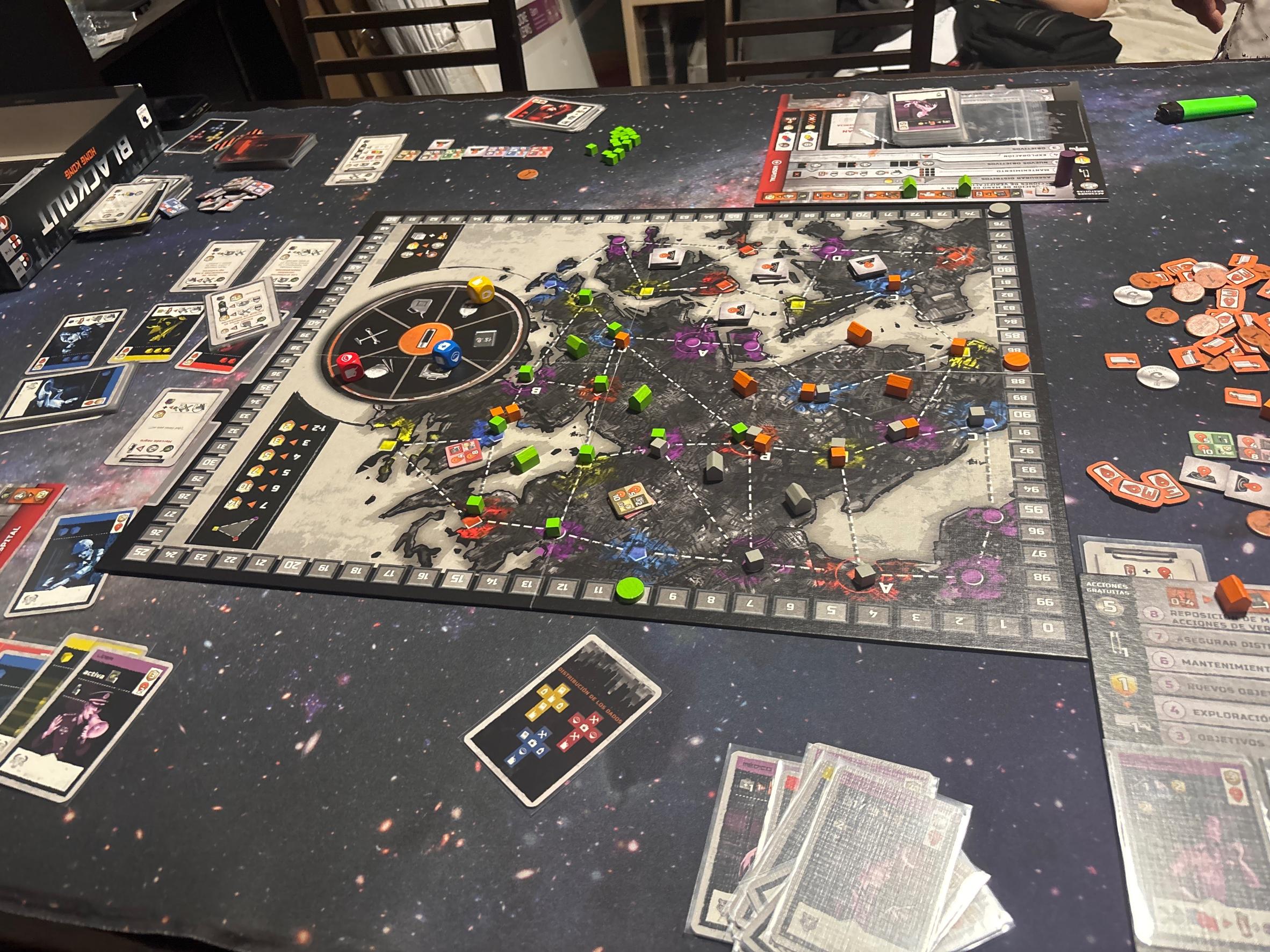
Wo kaufen
Shop-Preise und gebrauchte Exemplare, täglich geprüft.
An Ludoyas Tischen
Alle Statistiken in Ludoya- 177
- Erfasste Partien
- 134
- Spieler
- 1h 45m
- Durchschnittliche Partie
- 59
- In Sammlungen
- 12
- Auf Wunschlisten
6,7/10
aus 31 Ludoya-Rezensionen
Poteet7,8 Not my favorite Pfister, but still a solid game.
Evan5,9 Each round, the start player rolls three dice and places them on the resource area matching the icon on the die. Players get what start as symmetrical decks of cards where the majority of the cards are played for their cube icons. Each cube icon on a card produces a cube into the box where the die of the matching color currently resides. Once players resolve their cards, they take turns completing goals. The goals tend to give you a cube on the central map, and a new card for your hand for future rounds, although two of them are printed on your board and give you the ability to reset your hand faster, or play one additional card each round. Then players select a pile of facedown tokens. The tokens have different difficulty ratings on them and if you meet the requirement to claim one, you shuffle up the cards that contributed to taking the token and place one at random in the "hospital" area of your board. This can serve to cull cards from your deck, but each player also has a doctor card that retrieves one of the injured cards and additionally produces that card's value in victory points. There's some tensions here as to wanting your best guys to get hurt so you can score the healing process, but then they're not available to be played in the next turn while they're injured. Lastly, players can buy new goal cards from the faceup display next to the board. The order the cards come out is totally random, so navigating this fliplucky process is both an interesting challenge and a somewhat frustrating one. A row replenishes immediately when it runs out of cards. Money is tight in the game, and cards cost more depending on the number of cards taken from that row. The central board has regions that score once one player has a cube on every node surrounding the area, and then there's endgame scoring for having a set of explore tokens that all have a different type of reward. The game is really hard to boil down to it's core ideas. In fact, in the process of playing it, what a good move looks like and why feels a bit hard to focus on. There's some good planning that can be done, but despite numerous luck mitigation mechanisms, the dice and the cards in the purchasable array will sometimes favor you and sometimes they don't. Engine building elements are minimal. Player interaction is also minimal. I want to play this a little more to see if I can get a better sense of it, but it hasn't been the immediate hit that Mombasa and Great Western Trail were. ★ Art, Iconography and components functional ★ Clever or interesting mechanisms ★ Reasonably low downtime between turns with mildly AP players ★ Multiple plays stay interesting ★ Low or mitigatable luck elements ★★☆☆☆ Raw enjoyment
Garfield7,0 Too dry too keep it. Unfortunately a little bit multiplayer-solitaire. But really good mechanism. The theme is not really good. I expected quests to turn on the lights again. It's too abstract. [c] Theme: ★★☆☆☆ <!-- size 7]Not really good --> Gameplay: ★★★★☆ <!-- size 7]Right amount of choices --> Interaction: ★★☆☆☆ <!-- size 7]Just 'fighting' for be the first who encloses an area --> Artwork: ★★★☆☆ <!-- size 7]Ok, nothing special --> Luck: ★★☆☆☆ <!-- size 7]Dice rolling --> Strategy: ★★☆☆☆ <!-- size 7]Not many strategies possible --> Components: ★★★☆☆ <!-- size 7]Nothing special --> Play duration: ★★★☆☆ <!-- size 7]Ok --> Easy to teach: ★★★☆☆ <!-- size 7]Really ok for such a game --> Rules quality: ★★★★★ <!-- size 7]Almost perfect --> Setup time: ★★☆☆☆ <!-- size 7]A lot, but still ok --> No downtime: ★★★★☆ <!-- size 7]Little to none, because you can play simultaneously --> Replay value: ★★☆☆☆ <!-- size 7]Not much I can think of --> [/c]












Kostenlos, im Web, für Android und iOS
Spiel Blackout: Hong Kong mit Ludoya
- Hab es in deiner SammlungVerwalte dein Exemplar und seine Erweiterungen, leih es Freunden oder setz es auf deine Wunschliste und erfahre, wenn der Preis fällt.Zur Sammlung hinzufügen
- Erfasse jede PartiePunkte, Sieger, Timer und Fotos, dann deine Statistiken: Siegquote, liebste Spielerzahl, beste Punktzahl.Partie erfassen
- Werte ohne PapierNutze die Wertungsbögen und Spielhelfer der Community und lass Ludoya die Punkte zusammenzählen.Wertungsbögen finden
- Finde Leute, mit denen du es spielstClubs, Spieleabende und Veranstaltungen in deiner Nähe, bei denen dieses Spiel auf den Tisch kommt.Veranstaltungen ansehen
Spieldaten (Spieler, Spielzeit, Alter, Mitwirkende) von BoardGameGeek.