
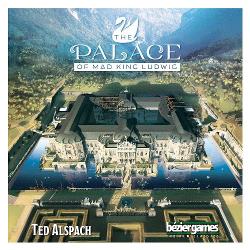
2017 · Post-napoléonien
The Palace of Mad King Ludwig
Placez des salles pour construire ensemble un grand palais fantastique pour le roi Ludwig. Les joueurs ajoutent des tuiles Salle à un palais commun, gagnent des récompenses et utilisent des jetons Cygne multicolores comme monnaie, points et clés donnant accès à des capacités spéciales. Au fur et à mesure de la construction, des douves se forment autour du palais ; lorsqu’elles se referment, la partie prend fin et le joueur qui a le plus contribué l’emporte.
- Joueurs
- 2–4 idéal à 2
- Temps de jeu
- 75 min
- Âge
- 13+
- Complexité
- 2,8 / 5
À propos du jeu
- Auteurs
- Illustration


Où l'acheter
Prix des boutiques et exemplaires d'occasion, vérifiés chaque jour.
Sur les tables de Ludoya
Toutes les statistiques dans Ludoya- 14
- Parties enregistrées
- 27
- Joueurs
- 1h 36m
- Partie moyenne
- 9
- Dans des collections
- 1
- Dans des listes de souhaits
3,7/10
sur 3 avis Ludoya
Evan3,5 On your turn you select and pay for a tile in the display, and add it to the central board. If you connect two doors of the same color, you get a bonus swan token, as does the owner of the building you connect to. Then you place one of your tiny claim tokens on the tile, and advance the tiny marker on your player board one space up on the track matching the type of your building. Rather than take a tile, you can spend three swan tokens to take a tile and click it into the sides of your player board, which either gives you a new endgame scoring objective or an ongoing ability. As piles of tiles run out, you begin to wall of areas with water tiles. The game ends when the water on one side meets the water on the other. Much of this game is about trying to line up completion bonuses on tiles you own. If every door on a tile leads to another door, you get a special effect, similar to the way it works in the plural game "Castles of Mad King Ludwig". Here, since multiple players are working on the same map, you do have a lot of blocking of other player's rooms, either with room placements, or more often with aggressive water expansion. I enjoy a similar mechanism to closing things off with a border in Carcassonne: The City, but in Carc: the City, walls finish areas, and also you can stand meeples on the walls which opens up new scoring opportunities. Here, the water wall just cruds things up, which feels a little bad. Particularly later in the game when each player is adding 3-4 water pieces with each room completion. Let's say a player has a hallway with one open end that leads to an orange room with no open ends. Late in the game that means as much as 8 water tiles will be placed in that single turn, so an area you were working on that you felt was pretty far from the danger of getting watered out of completion potential is suddenly ruined in terms of completion bonuses. Another oddity of the game is that many of the objectives in the game seem to want 'fewest' criteria. Fewest swans of a particular color, fewest rooms of a particular type. The game rewards you for sets of different swans and sets of different buildings, so it feels quite negative to push for scoring those criteria. Additionally, since swans can be spent, and some swan tokens are taken and held face down, the randomness of this feels quite punitive. Most or fewest buildings of a type feels overly dependent on flip luck, and most or fewest swans of a type fees overly dependent on turn order and hidden information. To add to this problem, the orange tiles all provide additional scoring criteria for the player who claims them. The tiles are small, and the icons on the tiles even smaller, and the claim tokens even smaller, and since the claim tokens never wipe, the board has an incredibly cluttered look by the point you are worried about who is scoring for what. I think overall, this isn't a bad game. I'd say, play it with 2 or 3 players to reduce the chaos a little. I do think you really have to give up worrying about score, since it's too difficult to track during the course of the game. Even at the end of the game, tallying the scores is a frustrating experience. Maybe just go play Carcassonne: The City and then also Castles of Mad King Ludwig and leave this one be. ☆ Art, Iconography and components functional ★ Clever or interesting mechanisms ★ Reasonably low downtime between turns with mildly AP players ★ Multiple plays stay interesting ☆ Low or mitigatable luck elements ★★☆☆☆ Raw enjoyment
Jeux similaires
 Castles of Mad King Ludwig: Collector's Edition2022
 Castles of Mad King Ludwig: Les extravagants châteaux de Bavière2023
 Blueprints of Mad King Ludwig2024
 The Castles of Burgundy: Special Edition2023
 Between Two Castles of Mad King Ludwig2019
 Paris2020
 The Castles of Burgundy2020
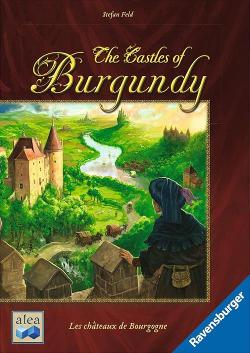 The Castles of Burgundy2011
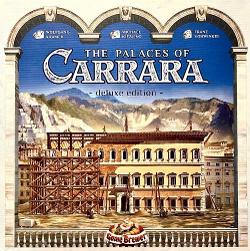 The Palaces of Carrara2022
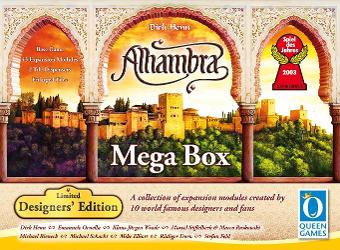 Alhambra: Mega Box2019
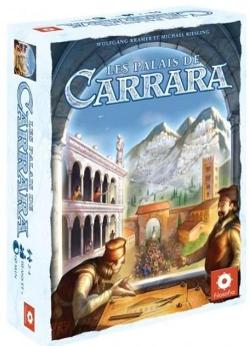 Les palais de Carrara2012
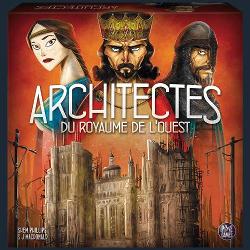 Architectes du Royaume de l'Ouest2018
Ceux qui l'ont possèdent aussi
Castles of Mad King Ludwig: Les extravagants châteaux de Bavière2023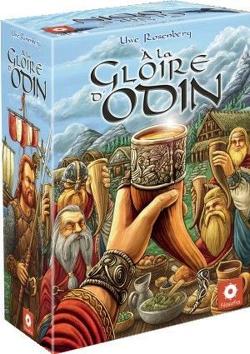 À la gloire d'Odin2016
 Sherlock Holmes Détective Conseil2011
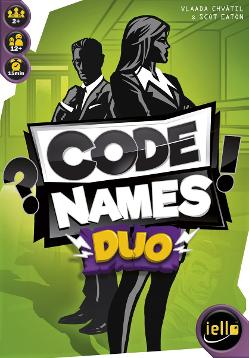 Codenames: Duo2017
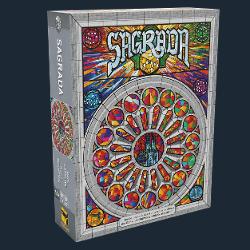 Sagrada2018
 Tzolk'in: le calendrier maya2012
 Takenoko2021
 Just One2018
 Viticulture Edition Essentielle2017
 Dixit2014
 Ark Nova2022
 Patchwork: Edition 10ème Anniversaire2024
Gratuit, sur le web, Android et iOS
Jouez à The Palace of Mad King Ludwig avec Ludoya
- Gardez-le dans votre collectionSuivez votre exemplaire et ses extensions, prêtez-le à vos amis ou ajoutez-le à votre liste de souhaits et soyez prévenu quand le prix baisse.Ajouter à votre collection
- Enregistrez chaque partieScores, gagnants, minuteurs et photos, puis vos statistiques : taux de victoire, nombre de joueurs préféré, meilleur score.Enregistrer une partie
- Comptez les points sans papierUtilisez les feuilles de score et les aides de jeu de la communauté, et laissez Ludoya additionner les points.Trouver des feuilles de score
- Trouvez des gens avec qui y jouerClubs, soirées jeux et événements près de chez vous qui mettent ce jeu sur la table.Voir les événements
Données du jeu (joueurs, durée, âge, crédits) issues de BoardGameGeek.