
2018 · Économique
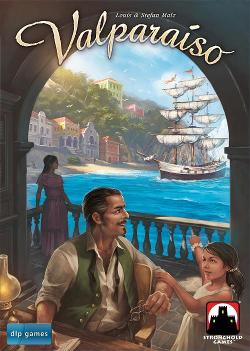
Valparaíso
Les joueurs incarnent des citoyens influents qui façonnent une ville côtière marchande au début du XIXe siècle. Ils envoient des marchands dans l’arrière-pays pour acquérir des marchandises d’exportation, construisent des maisons et des infrastructures, et dépêchent des navires pour obtenir des réussites outre-mer. La planification se fait simultanément : les joueurs définissent à l’avance l’ordre de leurs actions, puis les exécutent en s’adaptant aux coups de leurs adversaires. Les actions modifient les coûts du marché et les possibilités de commerce, et changer l’ordre prévu entraîne une pénalité. Le jeu met l’accent sur l’anticipation, le choix du bon moment pour commercer et la capacité à réagir rapidement à l’évolution de la situation ; une variante facultative avec sablier ajoute une pression en temps réel pour les groupes expérimentés.
- Joueurs
- 2–5 idéal à 4
- Temps de jeu
- 45–90 min
- Âge
- 12+
- Complexité
- 2,8 / 5
À propos du jeu
- Auteurs
- Illustration
- Publisher



Photos des tables de Ludoya
Toutes les photos dans Ludoya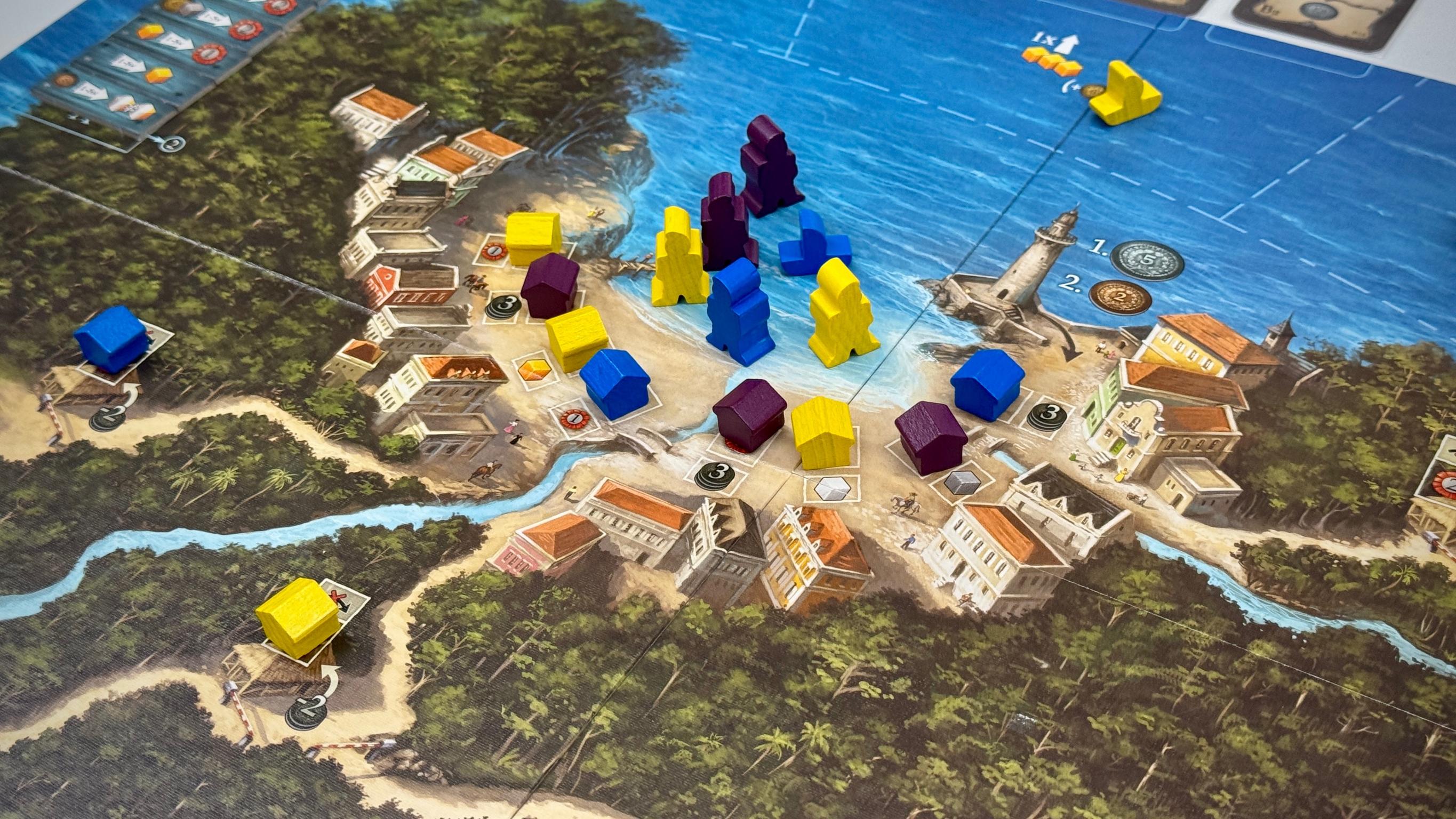
Où l'acheter
Prix des boutiques et exemplaires d'occasion, vérifiés chaque jour.
Sur les tables de Ludoya
Toutes les statistiques dans Ludoya- 32
- Parties enregistrées
- 57
- Joueurs
- 1h 38m
- Partie moyenne
- 29
- Dans des collections
- 2
- Dans des listes de souhaits
5,4/10
sur 12 avis Ludoya
Evan4,6 In this game each player gets a symmetrical set of action cards. At the start of the round everyone simultaneously programs their actions face down into their action slots. You begin with 4, plus one you can pay $5 to use. Then there's one additional one you can unlock through building your first two houses. Players then reveal all their cards and take turns activating the next one in their program. You can pay to change the order as well, which is an interesting tactical wrinkle. Your goal is to generate cubes, and then turn those cubes into points or into action cards that give you improved versions of the actions. One of the main features in the game is interacting with market stalls in the forest. They require you walk meeples over to them, and then you can use their ability a number of times according to how many meeples and houses you have in the space, keeping in mind each has a cap on the maximum number of transactions. Once an ability is used, it goes to a belt of ability tiles, and then the next one slides down. This makes for some fantastic tension as you really need to be mindful of where everyone else is and what market tiles they're interested in using. The tiles are seeded in an order where at first they provide cubes, then they consume cubes for points for sets of similar. Then they consume cubes for points for sets of different. Using these markets gets especially interesting as if another player has pieces in that space, you have to pay them $1 for each piece they have there. In some cases, you also have to pay players to walk past their houses along the paths. The game ends when someone hits 18 points, so this is a fairly low scoring game. Delightfully intense. Tons of player interaction, and a great cocktail of mechanisms I enjoy. ★ Art, Iconography and components functional ★ Clever or interesting mechanisms ★ Reasonably low downtime between turns with mildly AP players :Nostar: Multiple plays stay interesting ★ Low or mitigatable luck elements ★★☆☆☆ Raw enjoyment



Gratuit, sur le web, Android et iOS
Jouez à Valparaíso avec Ludoya
- Gardez-le dans votre collectionSuivez votre exemplaire et ses extensions, prêtez-le à vos amis ou ajoutez-le à votre liste de souhaits et soyez prévenu quand le prix baisse.Ajouter à votre collection
- Enregistrez chaque partieScores, gagnants, minuteurs et photos, puis vos statistiques : taux de victoire, nombre de joueurs préféré, meilleur score.Enregistrer une partie
- Comptez les points sans papierUtilisez les feuilles de score et les aides de jeu de la communauté, et laissez Ludoya additionner les points.Trouver des feuilles de score
- Trouvez des gens avec qui y jouerClubs, soirées jeux et événements près de chez vous qui mettent ce jeu sur la table.Voir les événements
Données du jeu (joueurs, durée, âge, crédits) issues de BoardGameGeek.