
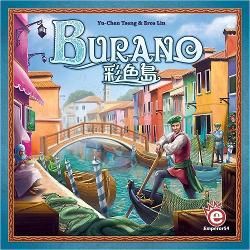
2015 · Construção de cidades
Burano
Os jogadores lideram uma família em uma pequena ilha veneziana ao longo de quatro estações, designando membros para trabalhar, desenvolver e vender produtos. As ações incluem enviar homens para pescar, enviar mulheres para produzir renda para exportação e colocar telhados ou pintar casas ao longo dos canais. A jogabilidade usa um mecanismo de pirâmide de cubos: os jogadores pagam moedas para operar uma pirâmide codificada por cores que aciona ações específicas a cada rodada. Recursos e ações rendem pontos de vitória por meio da produção, das vendas e de melhorias nas construções ao longo de 14 rodadas. O jogo se concentra em otimizar a alocação dos trabalhadores, escolher o momento certo para operar a pirâmide e equilibrar a renda com a reputação a longo prazo.
- Jogadores
- 2–4 melhor com 3
- Tempo de jogo
- 90–120 min
- Idade
- 12+
- Complexidade
- 3,8 / 5
Sobre o jogo
- Design
- Arte
- Editora


Onde comprar
Preços das lojas e cópias usadas, verificados todos os dias.
Nas mesas da Ludoya
Todas as estatísticas na Ludoya- 9
- Partidas registradas
- 14
- Jogadores
- 1h 47m
- Partida média
- 17
- Em ludotecas
- 1
- Em listas de desejos
5,7/10
de 8 avaliações na Ludoya
Evan5,0 Placing delightful colored cubes next to each other or on top of each other as an action selection method is really delightful. It's an interesting and colorful puzzle I fully enjoy. I wish I could say the same about the rest of the game. From what I've read, the second edition of the game solves a lot of the problems I've read about in the first edition, but the game still has a few issues. There appears to be a strong first player advantage. It's not hard for the first player in turn order to grab up a few majorities and drop some big scoring roof tiles before anyone has a reasonable chance to contest them. There's no difference in starting positions for players later in turn order, and they don't have these same opportunities for scoring without battling anyone. The house cards that are earned for placing roof tiles are of wildly different levels of usefulness. For example, all the cards that give you points are points locked in for the rest of the game, except one type of card that gives you points for each person you have in a contestable area. This appears to be an unintentional weakening from a change from 1st to 2nd edition that was paid no attention. The game does have a lot of flip luck, in terms of what fish cards come up, which house cards are available at any given time, and what color roof tiles you randomly draw. The last thing is the actions that you take just aren't that compelling. On your turn you get 1-4 actions, and each action you take means you spend more money. A compelling idea, but when half your actions consist of moving a cube from your pyramid to your "ready area", the efficiency and opportunities for clever moves is overshadowed by a stale feeling. Overall, the game isn't bad for a tactical game, but it doesn't shine as a strategy game, which is a real pity as I love putting bricks on top of other bricks. ★ Art, Iconography and components functional ★ Clever or interesting mechanisms ☆ Reasonably low downtime between turns with mildly AP players ★ Multiple plays stay interesting ★ Low or mitigatable luck elements ★☆☆☆☆ Raw enjoyment
Primeiras impressões · 1 partida









Grátis, na web, Android e iOS
Jogue Burano com a Ludoya
- Tenha na sua ludotecaAcompanhe sua cópia e suas expansões, empreste para os amigos ou coloque na lista de desejos e seja avisado quando o preço cair.Adicionar à sua ludoteca
- Registre cada partidaPontuações, vencedores, cronômetros e fotos, e depois suas estatísticas: taxa de vitórias, número de jogadores favorito, melhor pontuação.Registrar uma partida
- Marque os pontos sem papelUse as folhas de pontuação e os ajudantes de jogo da comunidade e deixe a Ludoya somar os pontos.Encontrar folhas de pontuação
- Encontre gente para jogarClubes, noites de jogos e eventos perto de você que levam este jogo para a mesa.Ver eventos
Dados do jogo (jogadores, tempo de jogo, idade, créditos) do BoardGameGeek.