
1997 · Verhandlung
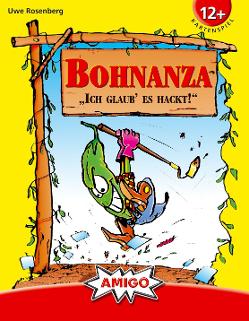
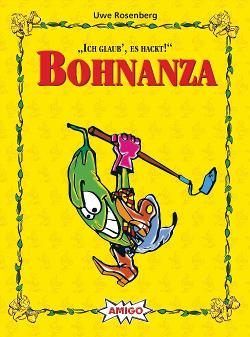
Bohnanza
Die Spieler kultivieren eine Hand mit verschiedenen Bohnenkarten, pflanzen sie in ihre eigenen Felder und ernten sie, um Bohnensets in Münzen umzuwandeln. Die Handkarten bleiben in ihrer Reihenfolge, also müssen die Spieler in ihrem Zug die ersten ein oder zwei Karten pflanzen, mit den begrenzten Feldplätzen haushalten, in denen nur jeweils eine Bohnensorte liegen kann, und manchmal ernten, um Platz zu schaffen. Nach dem Pflanzen deckt der aktive Spieler zusätzliche Karten auf und darf aufgedeckte Karten oder Karten aus der Hand mit anderen tauschen, wobei sogar Versprechen für spätere Tauschgeschäfte gemacht werden können. Geerntete Bohnen bringen Münzen gemäß der Auszahlungs-Tabelle jeder Bohnenart; der Stapel wird mehrmals wieder ins Spiel gemischt, und der Spieler mit den meisten Münzen am Ende gewinnt.
- Spieler
- 3–7 am besten mit 5
- Spielzeit
- 45 Min.
- Alter
- 12+
- Komplexität
- 1,7 / 5
Über das Spiel
- Autoren
- Publisher




Erweiterungen
In Ludoya ansehen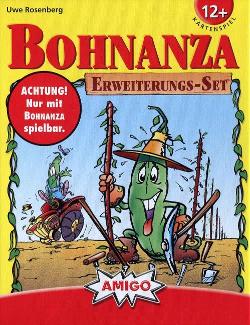 Bohnanza Erweiterungs-Set (Revised Edition)2001
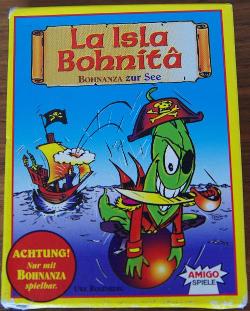 Bohnanza: La Isla Bohnitâ1998
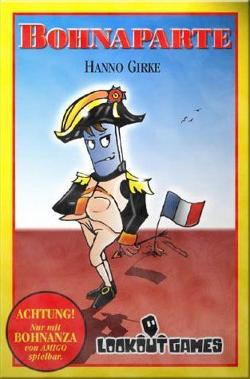 Bohnaparte2003
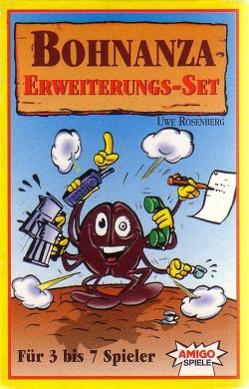 Bohnanza Erweiterungs-Set1997
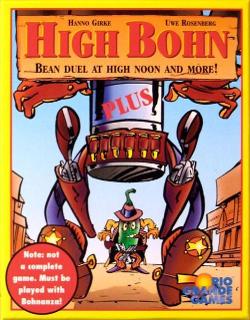 High Bohn Plus2004
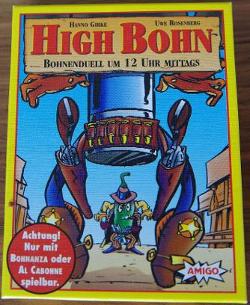 High Bohn
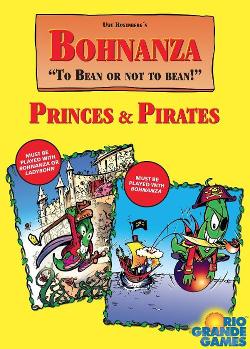 Bohnanza: Princes & Pirates2015
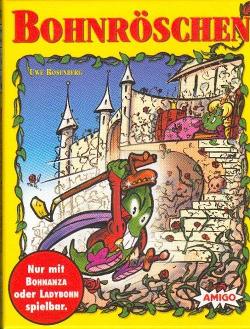 Bohnröschen2007
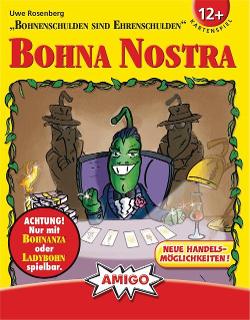 Bohna Nostra2019
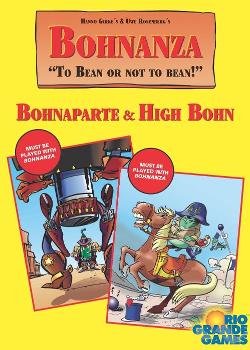 Bohnanza: Bohnaparte & High Bohn2015
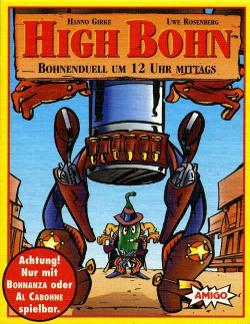 High Bohn: Bohnenduell um 12 Uhr mittags2001
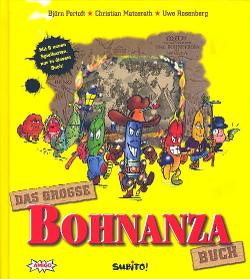 Bohnanza: Spiderbeans2007
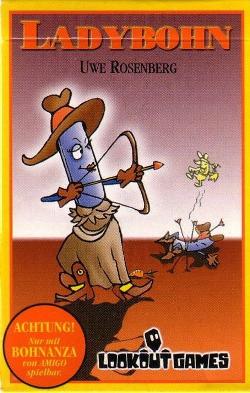 Ladybohn2002
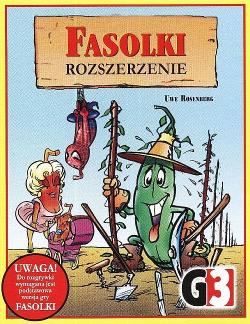 Fasolki: Rozszerzenie2010
 Brettspiel Adventskalender 20152015
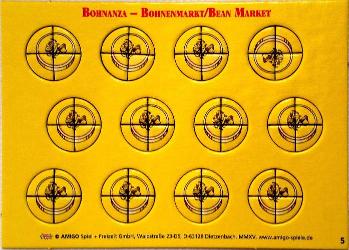 Bohnanza: Bean Market2015
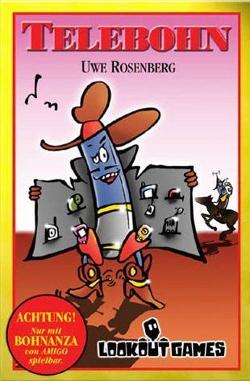 Telebohn2004
 Bohnedikt2016
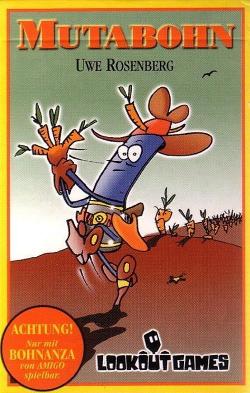 Mutabohn2001
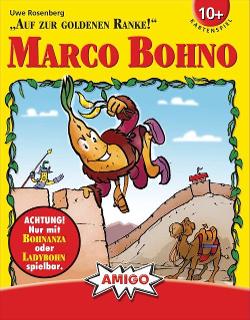 Marco Bohno2018
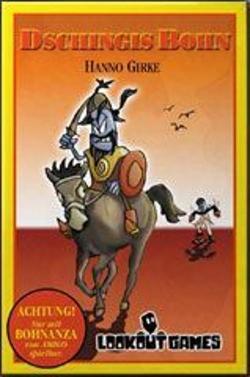 Dschingis Bohn2003
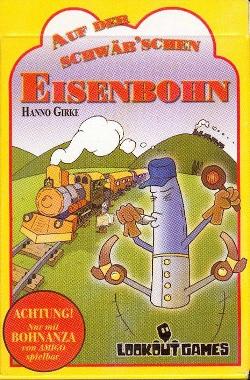 Auf der schwäb'schen Eisenbohn2008
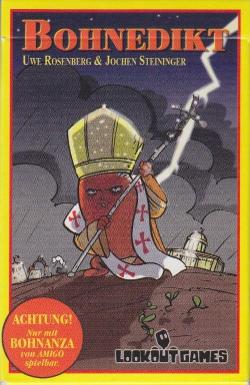 Bohnedikt2009
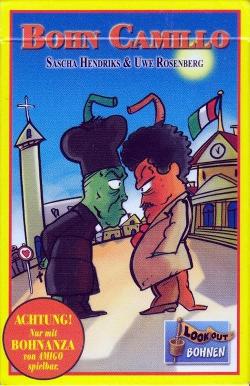 Bohn Camillo2011
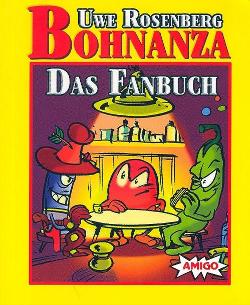 Bohnanza: Das Fanbuch2007
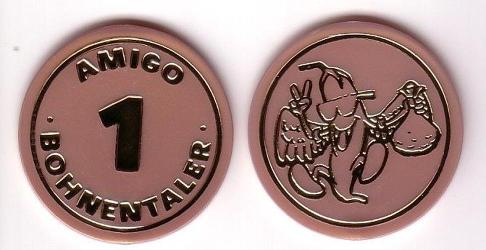 Bohnanza: Amigo Bohnentaler2004
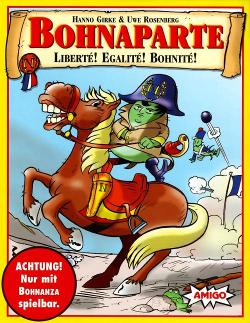 Bohnaparte: Liberté! Egalité! Bohnité!2004
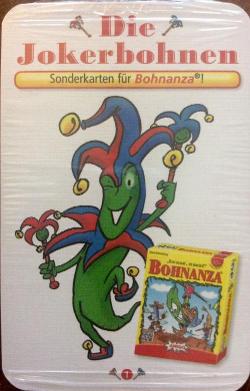 Bohnanza: Die Jokerbohnen2016
Wo kaufen
Shop-Preise und gebrauchte Exemplare, täglich geprüft.
An Ludoyas Tischen
Alle Statistiken in Ludoya- 808
- Erfasste Partien
- 763
- Spieler
- 45m 39s
- Durchschnittliche Partie
- 263
- In Sammlungen
- 18
- Auf Wunschlisten
6,9/10
aus 126 Ludoya-Rezensionen
Kaskagues8,5 Small box, very good for travelling. Replayability is good enough. The game is simple yet engaging and will fit any table at least a couple of times. PROS - The game mechanics are based on card availability and social interaction so you will see that some people will take it as a casual/party game while others can still count cards and be a bit more hardcore. A short of Jaipur (push your luck) + Catan (social trading). COULD BE BETTER (Not actually cons) - I wasn't the biggest fan of the artwork as it was the first thing that made me doubt the game, but you eventually don't mind it that much. I would love an art revisit. - You eventually could feel like you always do the same thing every time you play. That's why I think replayability is good if you don't plan to play very often. For example, once every couple of months or while on holidays.
Alexandre MATHIS10,0 On a dû l'acheter une dizaine de fois, en allemand, en français, en version 7 joueurs, en cadeaux. Un jeu de référence pour la coopération et l'échange à table. Encore acheté récemment pour la ludothèque de notre travail !
Mestremuten6,0 Rating: 3/5 Production value: 2/4 Is the game in my collection/Love to have?: 1/1


Regelfragen
Aus der Spielanleitung beantwortet von Ludoyas Regelassistenten.
Can I reorder my hand or sort my cards between turns?
No — you may never change the order of the cards in your hand; the first card dealt is the first card in your hand and must remain visible at the front (page 2).
Do I have to plant the first card in my hand every turn?
Yes — in Phase 1 you must plant the first (visible) card from your hand, and you may optionally plant the new first card that becomes visible, but you cannot plant a third card then (page 3).
Who is allowed to trade, and can we use any cards from our hands in trades?
Only the active player may conduct trades with the other players (others may not trade among themselves); everyone may offer cards from their hands regardless of where they sit in the hand, and the active player may also use the two turned-over cards — but you may not trade cards already in your fields or cards you just received in a trade (page 4).
If I win a trade, do traded cards go into my hand immediately?
No — cards you receive in trade are placed horizontally next to your fields (not added to your hand) and must be planted during Phase 3 (pages 4–5).
Can I harvest only part of a field or harvest a single-card field while another field has multiple cards?
You must harvest an entire field (you cannot harvest only part of a field), and the Bean Protection Rule forbids harvesting a single-card field as long as you have another field containing more than one bean card (pages 5–6).
When I draw at the end of my turn where do the cards go, and what happens when the draw pile runs out?
In Phase 4 you draw three cards one after the other and place them at the back of your hand in the order drawn (page 5); if the draw pile is emptied you reshuffle the discard pile to form a new draw pile, and the game ends after the draw pile has run out for the third time (page 6).










Kostenlos, im Web, für Android und iOS
Spiel Bohnanza mit Ludoya
- Hab es in deiner SammlungVerwalte dein Exemplar und seine Erweiterungen, leih es Freunden oder setz es auf deine Wunschliste und erfahre, wenn der Preis fällt.Zur Sammlung hinzufügen
- Erfasse jede PartiePunkte, Sieger, Timer und Fotos, dann deine Statistiken: Siegquote, liebste Spielerzahl, beste Punktzahl.Partie erfassen
- Regelfragen klärenFrag alles zu den Regeln und erhalte eine Antwort aus der Spielanleitung, mit der Seite zum Nachprüfen.Den Regelassistenten fragen
- Finde Leute, mit denen du es spielstClubs, Spieleabende und Veranstaltungen in deiner Nähe, bei denen dieses Spiel auf den Tisch kommt.Veranstaltungen ansehen
Spieldaten (Spieler, Spielzeit, Alter, Mitwirkende) von BoardGameGeek.