

2010 · Deduktion
Hanabi
Die Spieler arbeiten zusammen, um fünf farbige Kartenreihen von 1 bis 5 aufzubauen, die ein Feuerwerk darstellen. Jeder Spieler hält seine Karten so, dass sie zum Tisch zeigen und nur die anderen sie sehen können, und gibt nur begrenzte Hinweise entweder zur Farbe oder zur Zahl einer Karte, um die Züge und das Abwerfen der Teammitglieder zu lenken. Teamwork und gutes Gedächtnis sind nötig, um die Karten in der richtigen Reihenfolge zu spielen und Fehler zu vermeiden, bevor der Nachziehstapel leer ist. Ein optionaler Regenbogen-Suit bietet eine Variante für fortgeschritteneres Spiel.
- Spieler
- 2–5 am besten mit 4
- Spielzeit
- 25 Min.
- Alter
- 8+
- Komplexität
- 1,7 / 5
Über das Spiel
- Autoren






Erweiterungen
In Ludoya ansehen

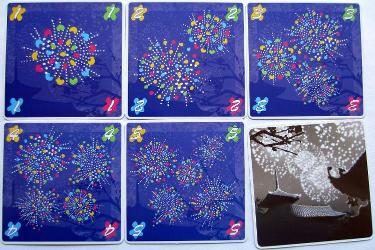
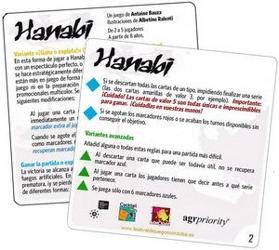
Fotos von Ludoya-Tischen
Alle Fotos in Ludoya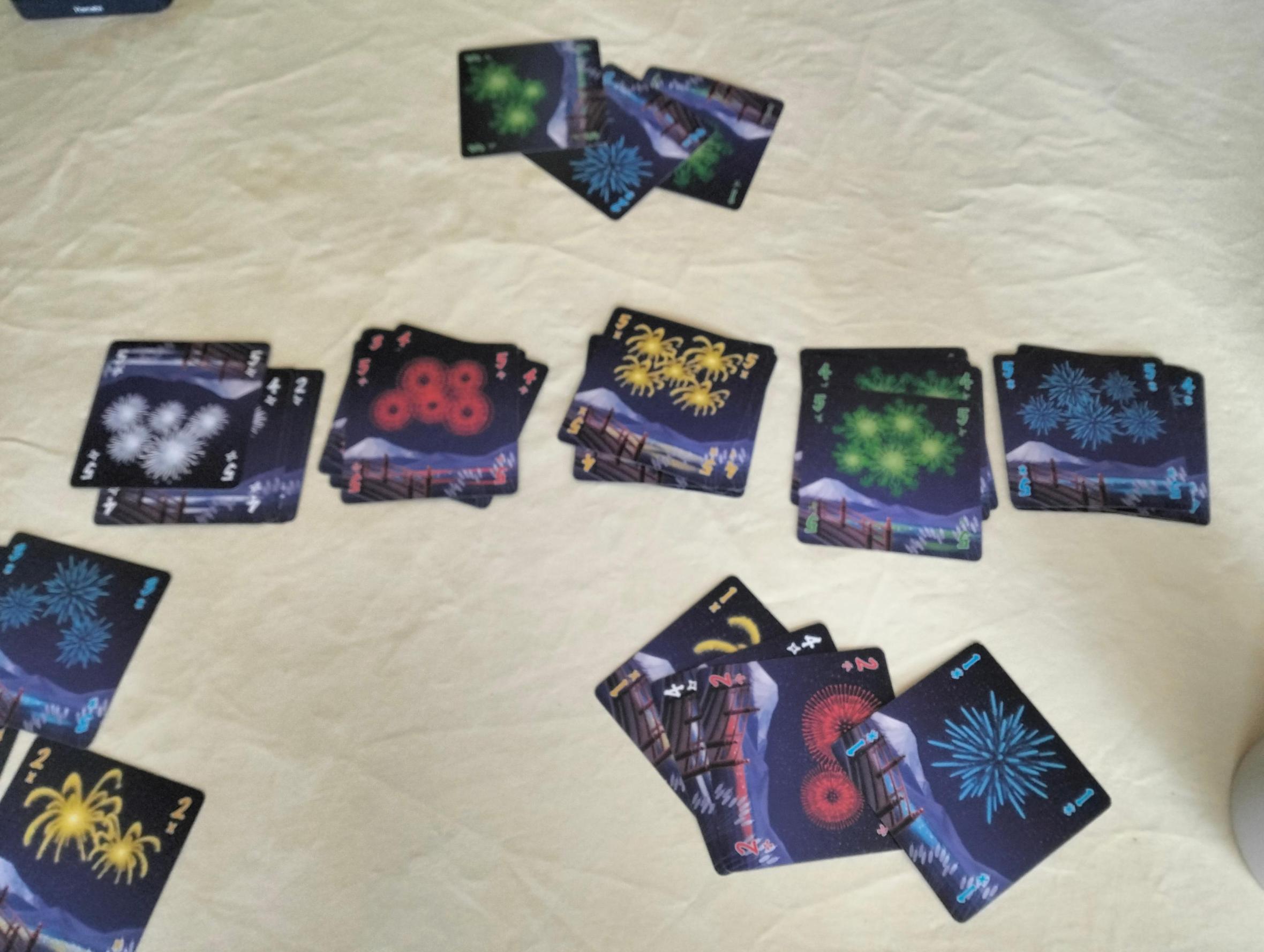
Wo kaufen
Shop-Preise und gebrauchte Exemplare, täglich geprüft.
An Ludoyas Tischen
Alle Statistiken in Ludoya- 6.459
- Erfasste Partien
- 1.287
- Spieler
- 19m 34s
- Durchschnittliche Partie
- 431
- In Sammlungen
- 17
- Auf Wunschlisten
6,6/10
aus 192 Ludoya-Rezensionen
Martin Peral6,0 Me parece un diseño curioso, pero se me hace muy directo y con una toma de decisión escasa. Quizás no haya tenido las mejores partidas grupales, quizás el que la memoria sea un factor importante o puede que tan simplemente, que la gravedad de los errores decante tanto las partidas hace que no me llegue a funcionar
Iván Sanin7,0 Imagina un solitario de toda la vida a las cartas. Imagina además que lo juegas en equipo. Imagina también que tus cartas no las ves y que los demás no te pueden hacer más que algunas indicaciones no determinantes para que puedas elegir qué carta tirar. Si juntas todo esto en un juego bien estructurado, rápido y muy satisfactorio, obtienes este Hanabi, que para mi es una preciosidad. Muy recomendable.
Mestremuten6,0 Rating: 3/5 Production value: 3/4 Is the game in my collection/Love to have?: 0/1


Regelfragen
Aus der Spielanleitung beantwortet von Ludoyas Regelassistenten.
Can I look at the fronts of the cards in my hand?
No — players MUST NOT look at the fronts of the cards they were dealt; you hold them so others can see the fronts while you only see the backs (page 2).
What exactly am I allowed to say when I give information — can I say a color and a number at once?
You may give only one type of information on your turn: either a single color or a single value, and you must clearly point to the card(s) concerned (page 2).
If a player has multiple cards of the same color or number, do I have to indicate all of them?
Yes — information must be complete: if a player has, for example, two green cards you must point to BOTH green cards, not just one (page 2).
Can I tell someone “you have none” of a color or number, or point to nothing as a clue?
No — the informer must point to the actual card(s) being referenced, so saying someone has zero of something or pointing to nothing is not allowed (page 2).
What happens if I play a card that doesn’t fit the fireworks?
If a played card cannot begin, add to, or complete a firework it is discarded and you remove the top black fuse token to the lid (and the third fuse placed ends the game as a loss) (page 2).
How do we regain information tokens, and how does the game end and get scored?
You regain a blue token by discarding a card (it returns a token to the table) or as a bonus when a firework is completed (playing a 5 returns a token if not already full); the game ends immediately on the third fuse (loss), immediately if all fireworks are completed (25 points), or after the final round when the deck is exhausted, and scoring is the sum of the highest card for each firework (page 2).




















Kostenlos, im Web, für Android und iOS
Spiel Hanabi mit Ludoya
- Hab es in deiner SammlungVerwalte dein Exemplar und seine Erweiterungen, leih es Freunden oder setz es auf deine Wunschliste und erfahre, wenn der Preis fällt.Zur Sammlung hinzufügen
- Erfasse jede PartiePunkte, Sieger, Timer und Fotos, dann deine Statistiken: Siegquote, liebste Spielerzahl, beste Punktzahl.Partie erfassen
- Regelfragen klärenFrag alles zu den Regeln und erhalte eine Antwort aus der Spielanleitung, mit der Seite zum Nachprüfen.Den Regelassistenten fragen
- Finde Leute, mit denen du es spielstClubs, Spieleabende und Veranstaltungen in deiner Nähe, bei denen dieses Spiel auf den Tisch kommt.Veranstaltungen ansehen
Spieldaten (Spieler, Spielzeit, Alter, Mitwirkende) von BoardGameGeek.