
2025 · Rätsel
Eternal Decks
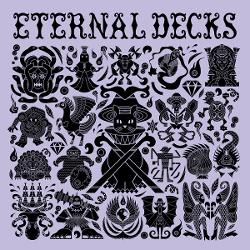
Die Spieler arbeiten mit begrenzter Kommunikation zusammen, um eine Abfolge von Stufen zu meistern, bevor ein Spieler keine Aktionen mehr ausführen kann. Jeder Spieler verwaltet ein persönliches Deck und kann in seinem Zug eine Karte auf das Feld oder den Fluss spielen, eine Kartenfähigkeit nutzen, ein Juwel erzeugen oder einem Teammitglied eine Karte geben. Die Karten stammen aus einem gemeinsamen Pool von Charakterdecks mit jeweils unterschiedlichen Acht-Karten-Profile, und das Ausspielen von Karten unterliegt Platzierungsregeln: Benachbarte Karten in den drei Feldreihen dürfen weder dieselbe Farbe noch dieselbe Zahl haben, und jede Stufe bringt zusätzliche zeilenbezogene Regeln mit sich. Juwelen gleichen negative Effekte der Charaktere aus. Die Kampagne umfasst sechs Stufen mit unterschiedlichen Zielen – Punkten, Überleben, Labyrinthnavigation, Bosskämpfe und ähnliche Herausforderungen – und erfordert Koordination beim Kartenausspielen und beim Einsatz von Ressourcen, um erfolgreich zu sein.
- Spieler
- 1–4 am besten mit 4
- Spielzeit
- 30–40 Min.
- Alter
- 10+
- Komplexität
- 2,8 / 5
Über das Spiel
- Autoren
- Illustration
- Verlage




Fotos von Ludoya-Tischen
Alle Fotos in Ludoya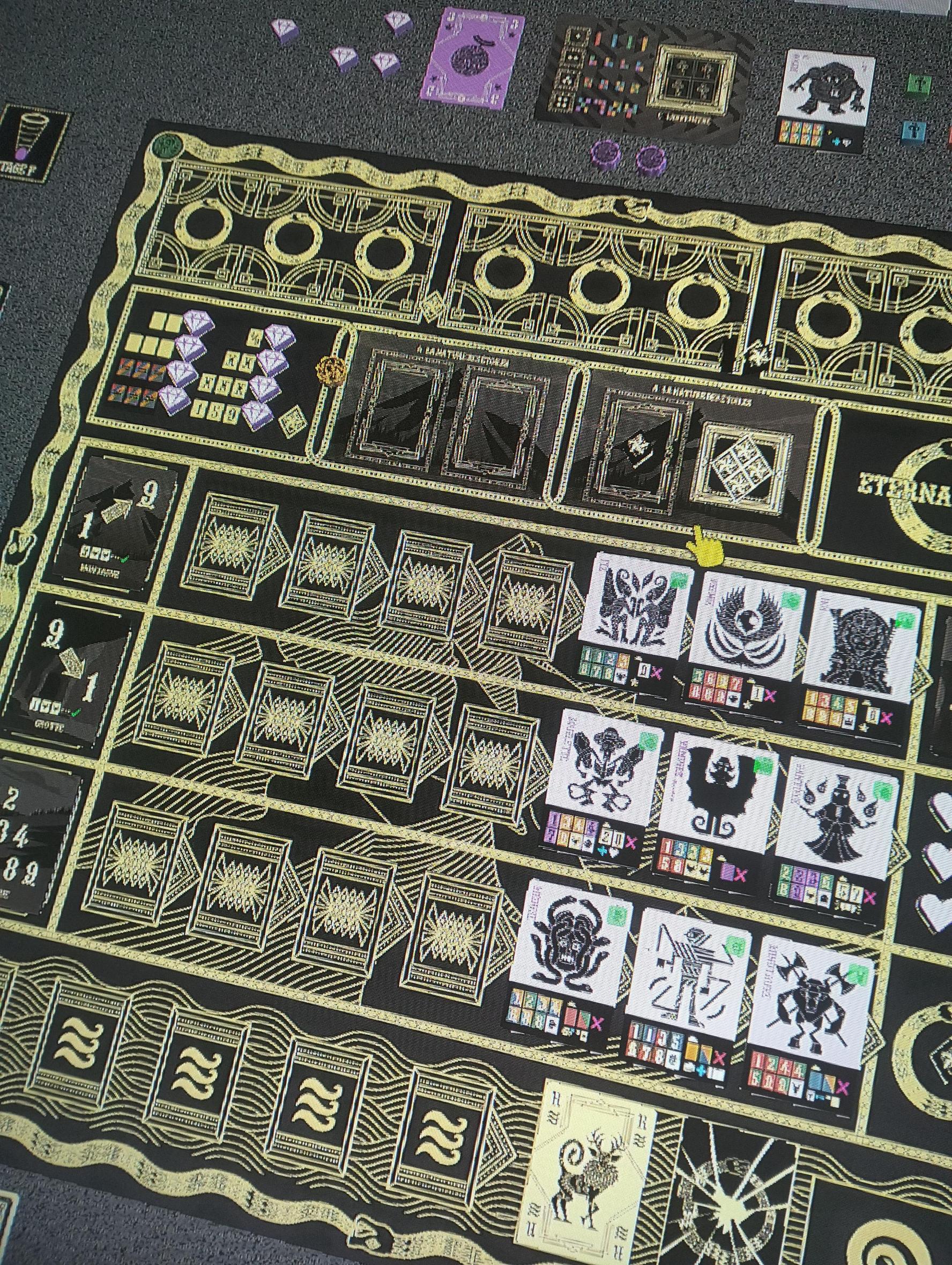
Wo kaufen
Shop-Preise und gebrauchte Exemplare, täglich geprüft.
An Ludoyas Tischen
Alle Statistiken in Ludoya- 80
- Erfasste Partien
- 68
- Spieler
- 44m 3s
- Durchschnittliche Partie
- 19
- In Sammlungen
- 49
- Auf Wunschlisten
- 10
- Vorbestellt
8,0/10
aus 10 Ludoya-Rezensionen
Regelfragen
Aus der Spielanleitung beantwortet von Ludoyas Regelassistenten.
Can I say "I have a 1" or "I have a yellow card" out loud to my team?
You cannot directly state the number or color of Number Cards in your hand, though you may talk about Rare/Ability cards or cards already played; indirect hints and Communication Discs are encouraged (page 20).
Where exactly can I place common, Field, Two‑Color and Rare cards on the rows?
Follow the Common Placement Rules (no same color or same number adjacent), then the specific Field card rule for that row (e.g., Mountain ascending, Cave descending); Two‑Color cards may be rotated but cannot be adjacent to the same color on either side when placed; Rare cards ignore both common and Field placement restrictions (see pages 10–11).
What happens when an Eternal is revived — do we move cards or get curses?
When a player completes a row next to the Eternals they flip one Eternal into the Revival Area and place that Eternal’s eight‑card mini‑deck under their Player Deck, then clear the row to the Discard Area; reviving an Eternal also activates its Curse which prevents playing certain cards to the Field until the Curse is removed (pages 12–13).
What does playing cards to the River do, and can the River end the game?
There are no placement rules for the River; when the 5th card is played you take a River Rare as the River Bonus and then move those cards to the Discard Area, but if there are no River Rare cards left the active player receives a Game Over and everyone immediately loses (page 15).
How do I generate Jewels and do the cards used for Jewels count toward the River?
You use hand cards to complete one of eight Jewel recipes (each recipe is used once) and give the produced Jewel to a Revived Eternal to cover its Curse; cards used for a Jewel are played to the River (they can trigger the River Bonus), and cursed cards, Two‑Color and Rare/Ability cards have specific rules for recipes (page 16).











Kostenlos, im Web, für Android und iOS
Spiel Eternal Decks mit Ludoya
- Hab es in deiner SammlungVerwalte dein Exemplar und seine Erweiterungen, leih es Freunden oder setz es auf deine Wunschliste und erfahre, wenn der Preis fällt.Zur Sammlung hinzufügen
- Erfasse jede PartiePunkte, Sieger, Timer und Fotos, dann deine Statistiken: Siegquote, liebste Spielerzahl, beste Punktzahl.Partie erfassen
- Regelfragen klärenFrag alles zu den Regeln und erhalte eine Antwort aus der Spielanleitung, mit der Seite zum Nachprüfen.Den Regelassistenten fragen
- Finde Leute, mit denen du es spielstClubs, Spieleabende und Veranstaltungen in deiner Nähe, bei denen dieses Spiel auf den Tisch kommt.Veranstaltungen ansehen
Spieldaten (Spieler, Spielzeit, Alter, Mitwirkende) von BoardGameGeek.