
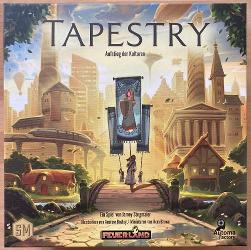
2019 · Gebietsaufbau
Tapestry
Erschaffe eine Zivilisation, die sich von der Vorgeschichte bis in eine spekulative Zukunft entwickelt, durch eine Mischung aus kulturellen und technologischen Fortschritten. Spieler schreiten auf vier unterschiedlichen Leisten voran – Wissenschaft, Technologie, Erkundung und Militär – um Boni freizuschalten, ihr Einkommen zu verbessern und eine Hauptstadt zu errichten, während sie asymmetrische Spielerfähigkeiten einsetzen. Das Spiel kombiniert das Voranschreiten auf den Leisten, den Aufbau eines Tableaus mit Tapestry-Karten, die die Geschichte jeder Zivilisation erzählen, Einkommensmanagement und Wertungsentscheidungen, um über eine typische Spielzeit von zwei Stunden für 1–5 Spieler die meisten Siegpunkte zu sammeln.
- Spieler
- 1–5 am besten mit 3
- Spielzeit
- 90–120 Min.
- Alter
- 12+
- Komplexität
- 3 / 5
Über das Spiel
- Autoren
- Illustration
- Publisher



Erweiterungen
In Ludoya ansehen

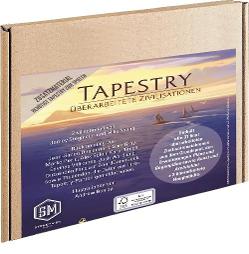
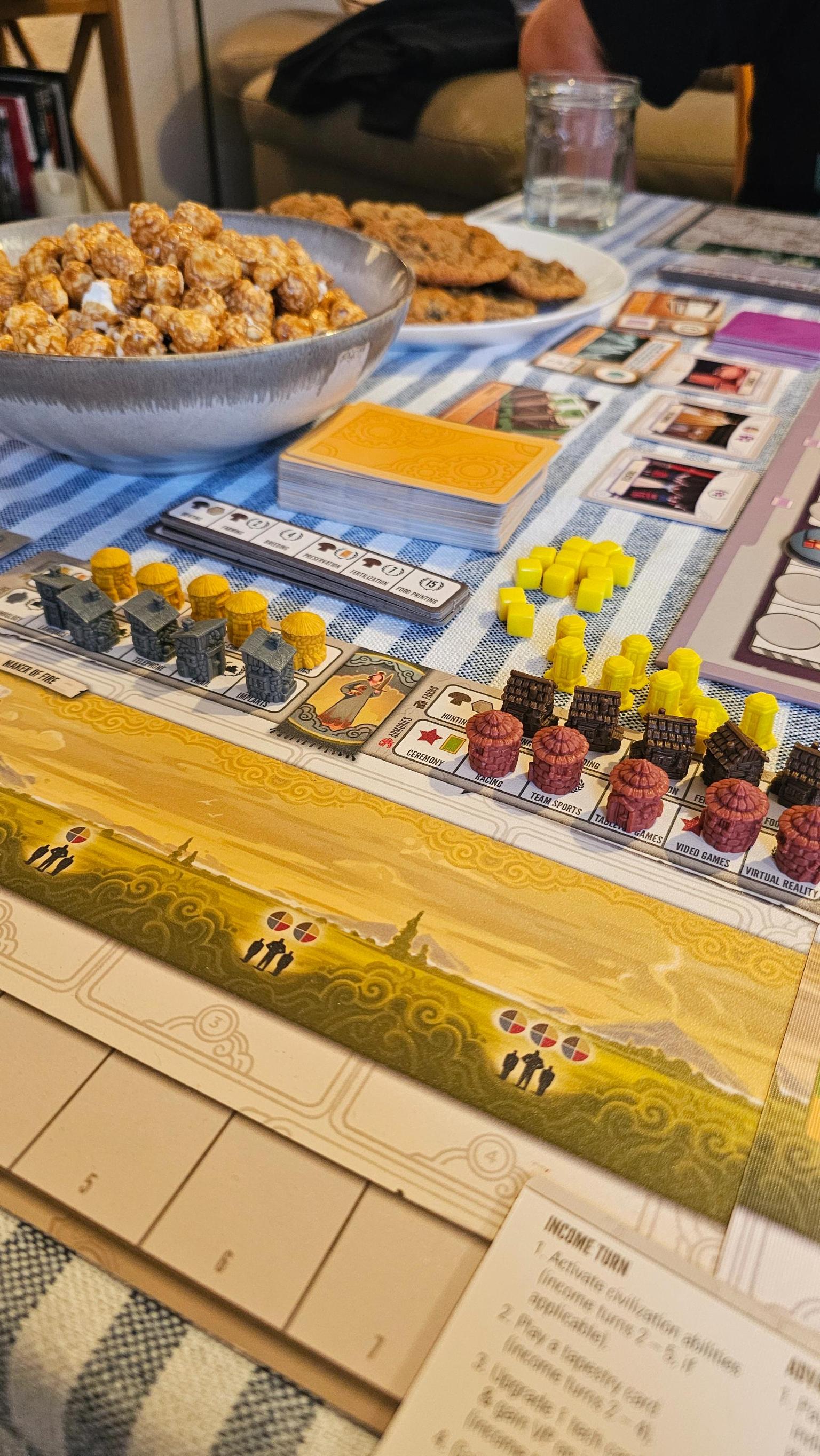
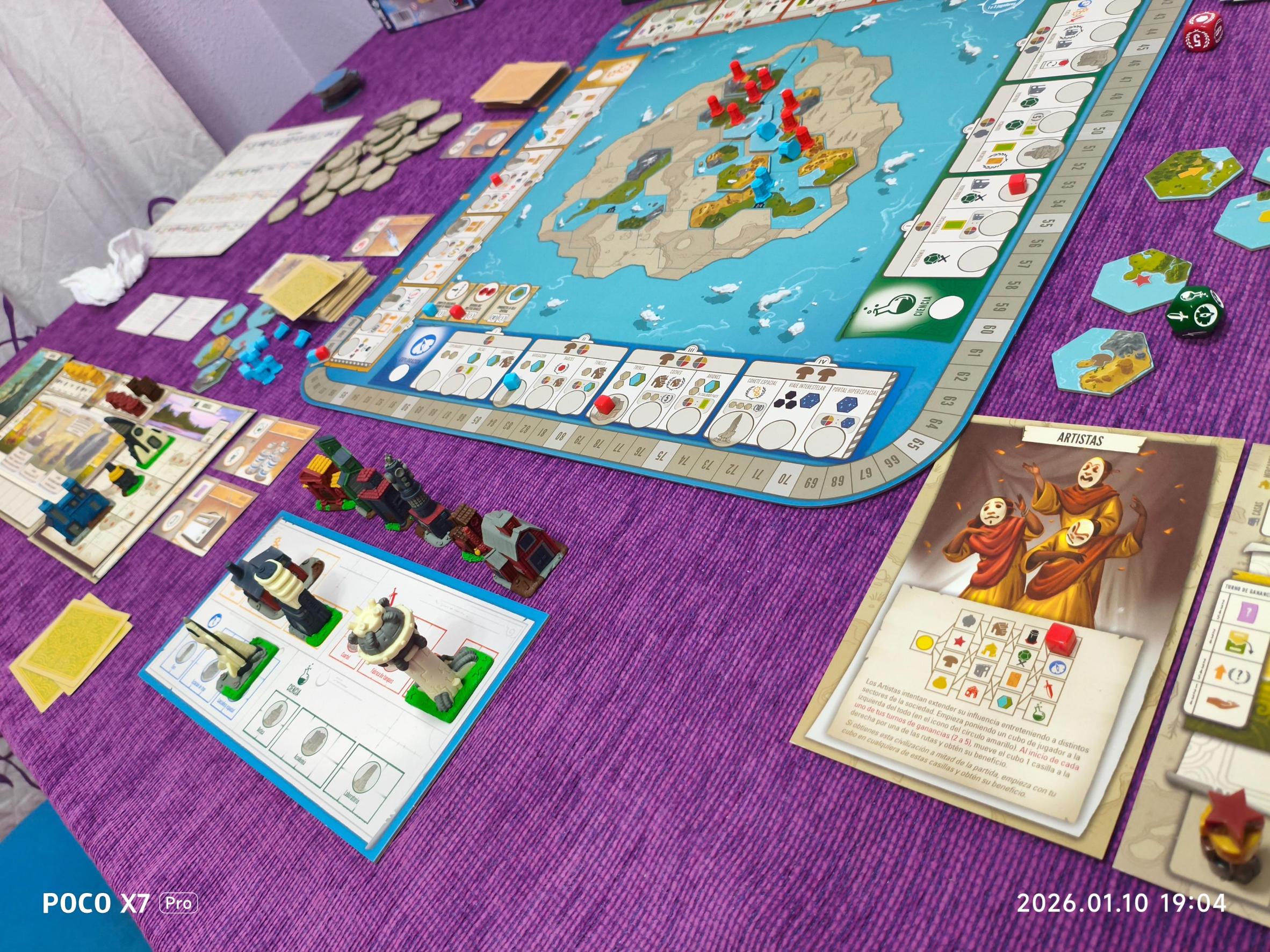
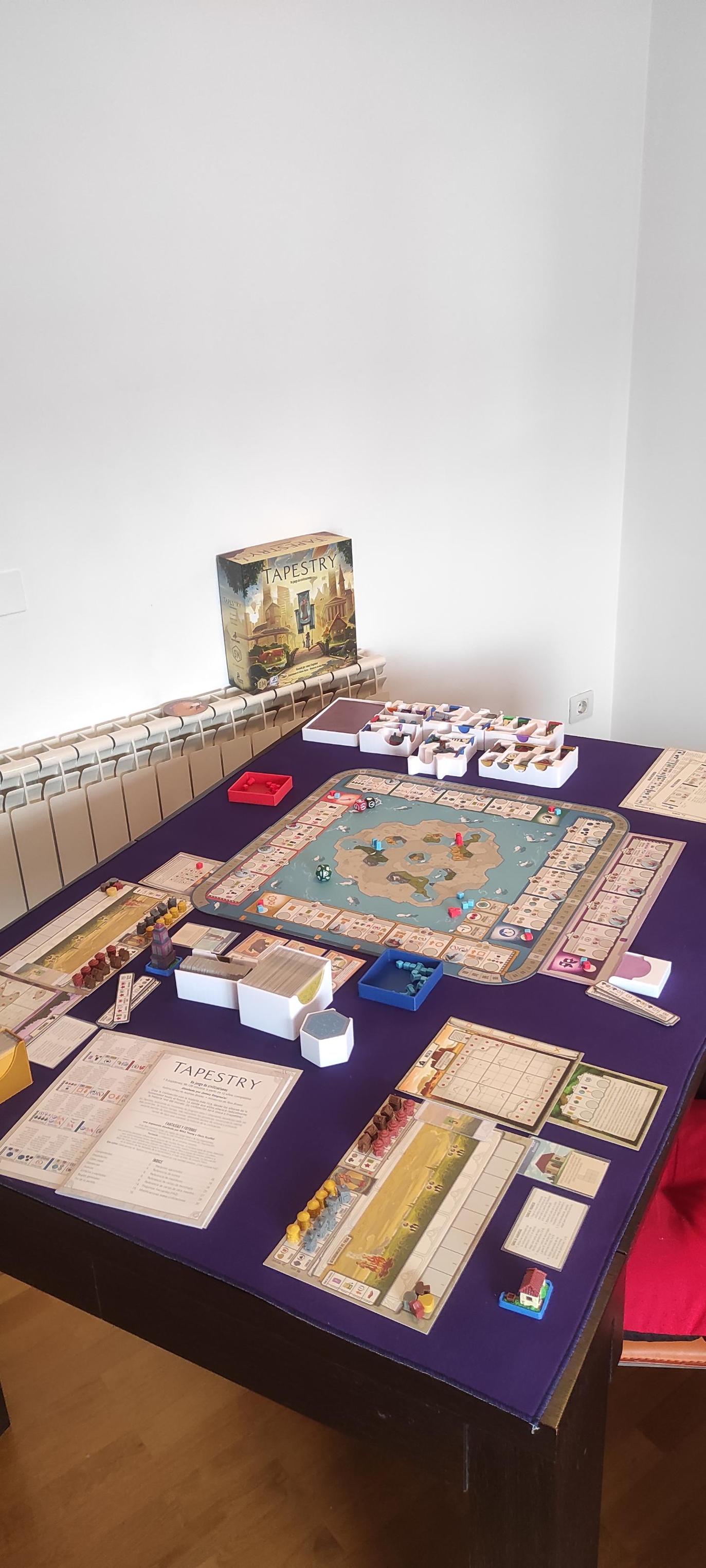
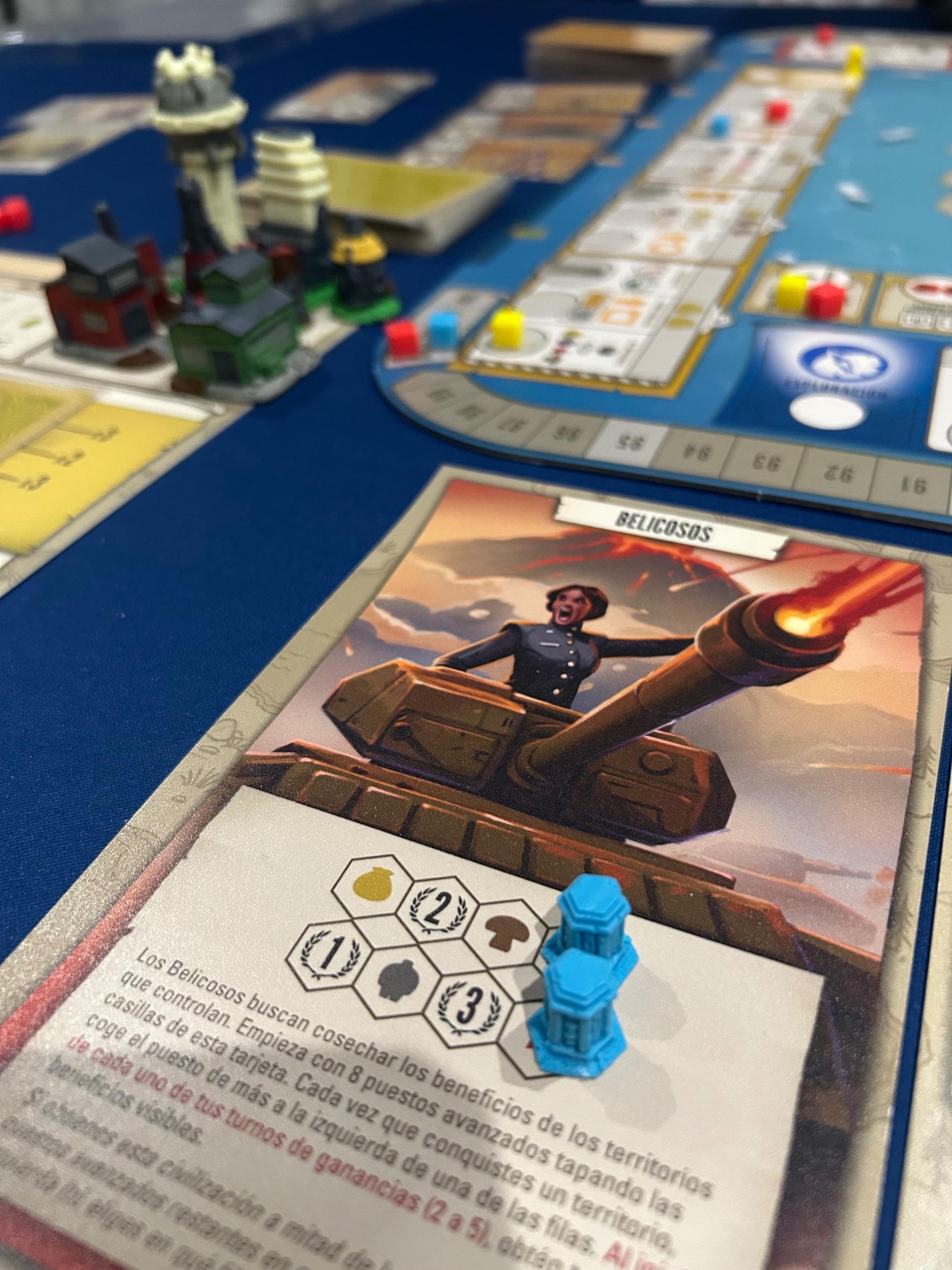
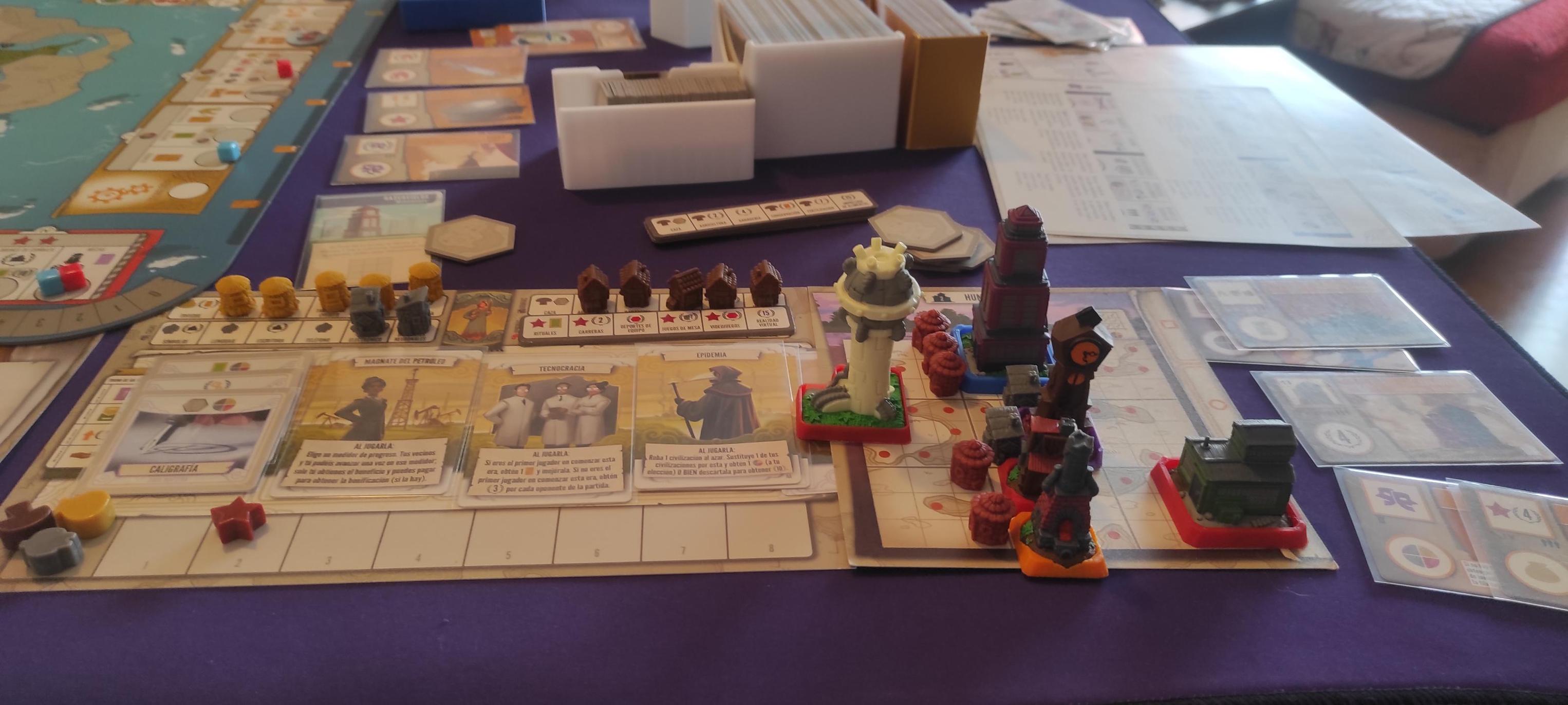
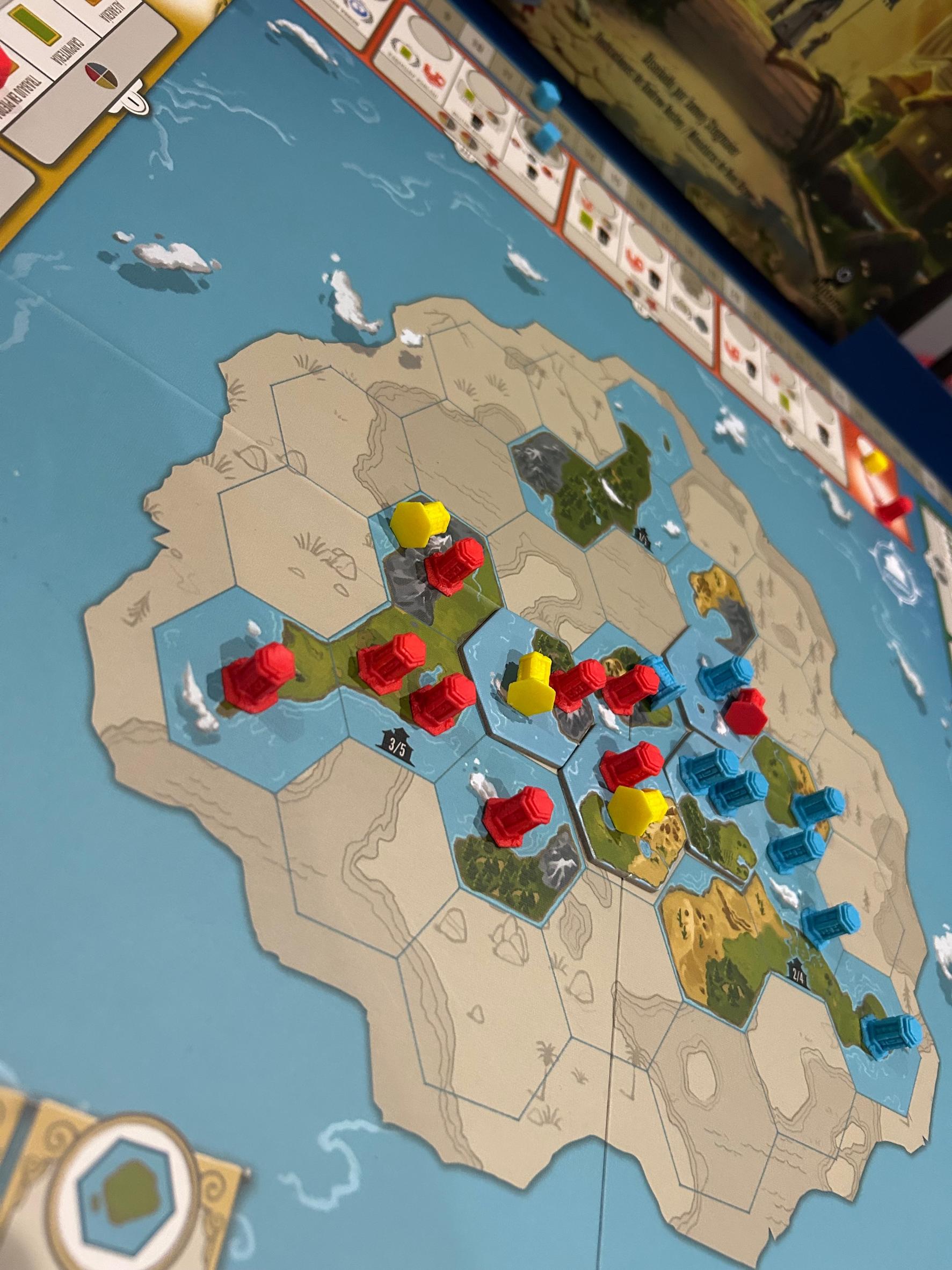
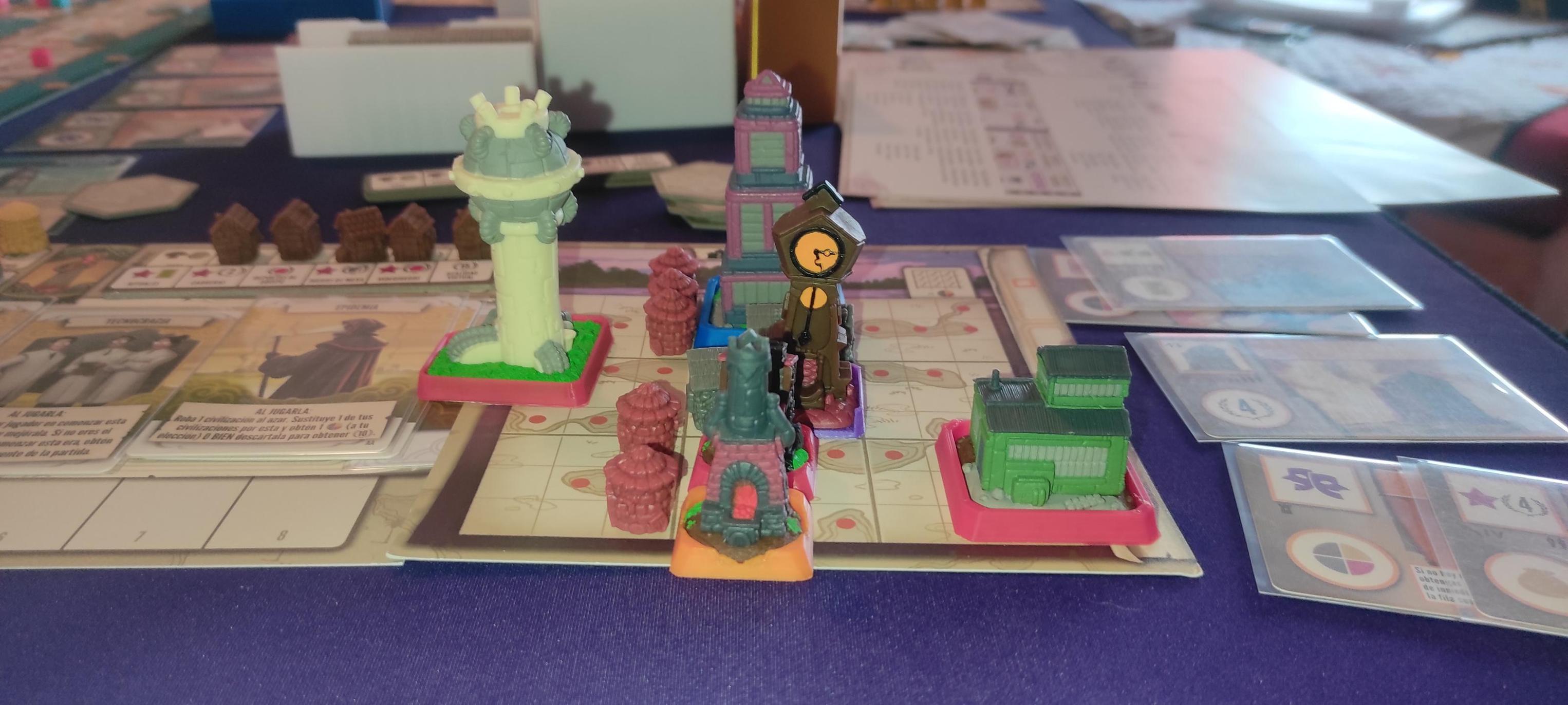
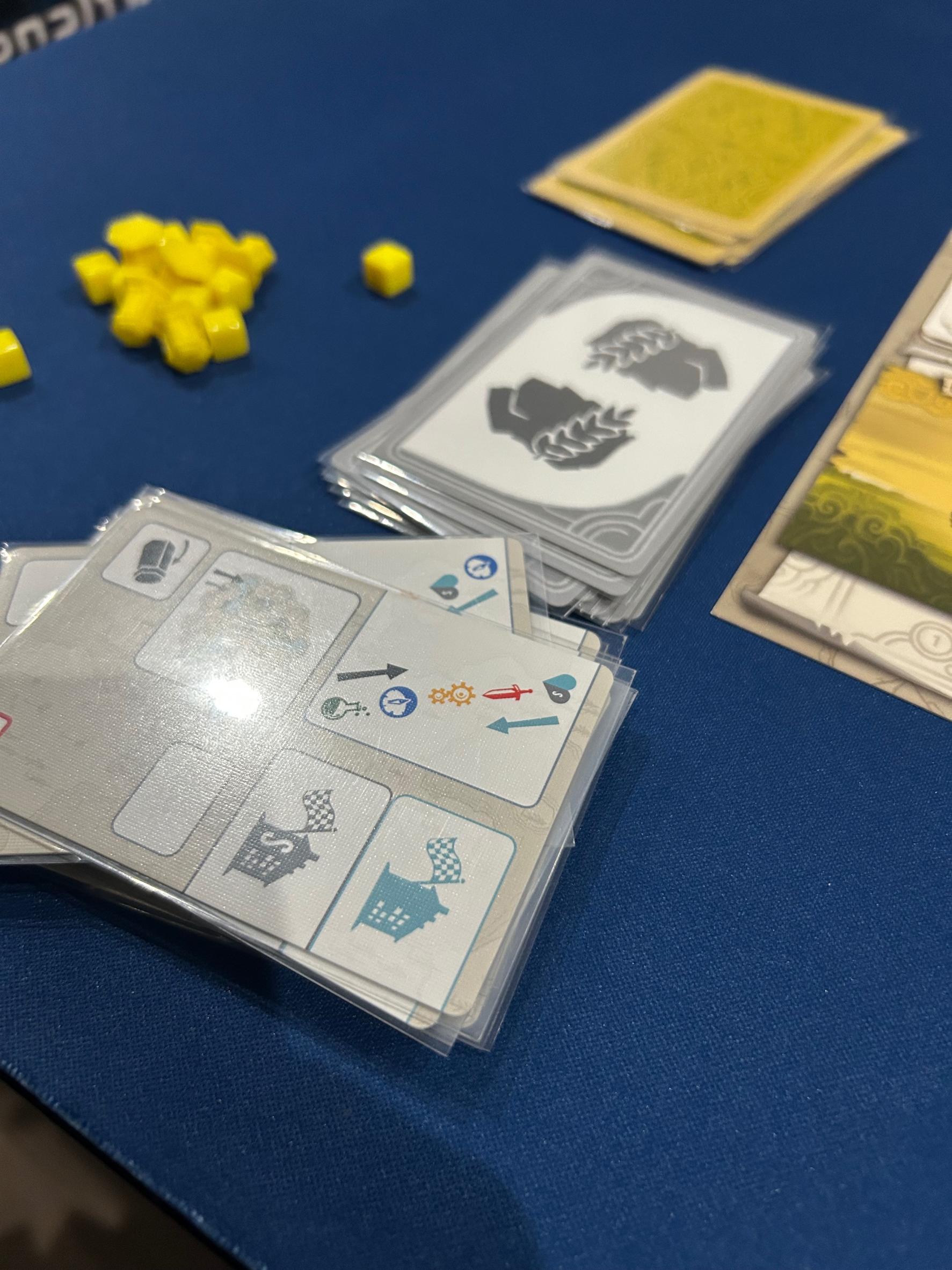
Fotos von Ludoya-Tischen
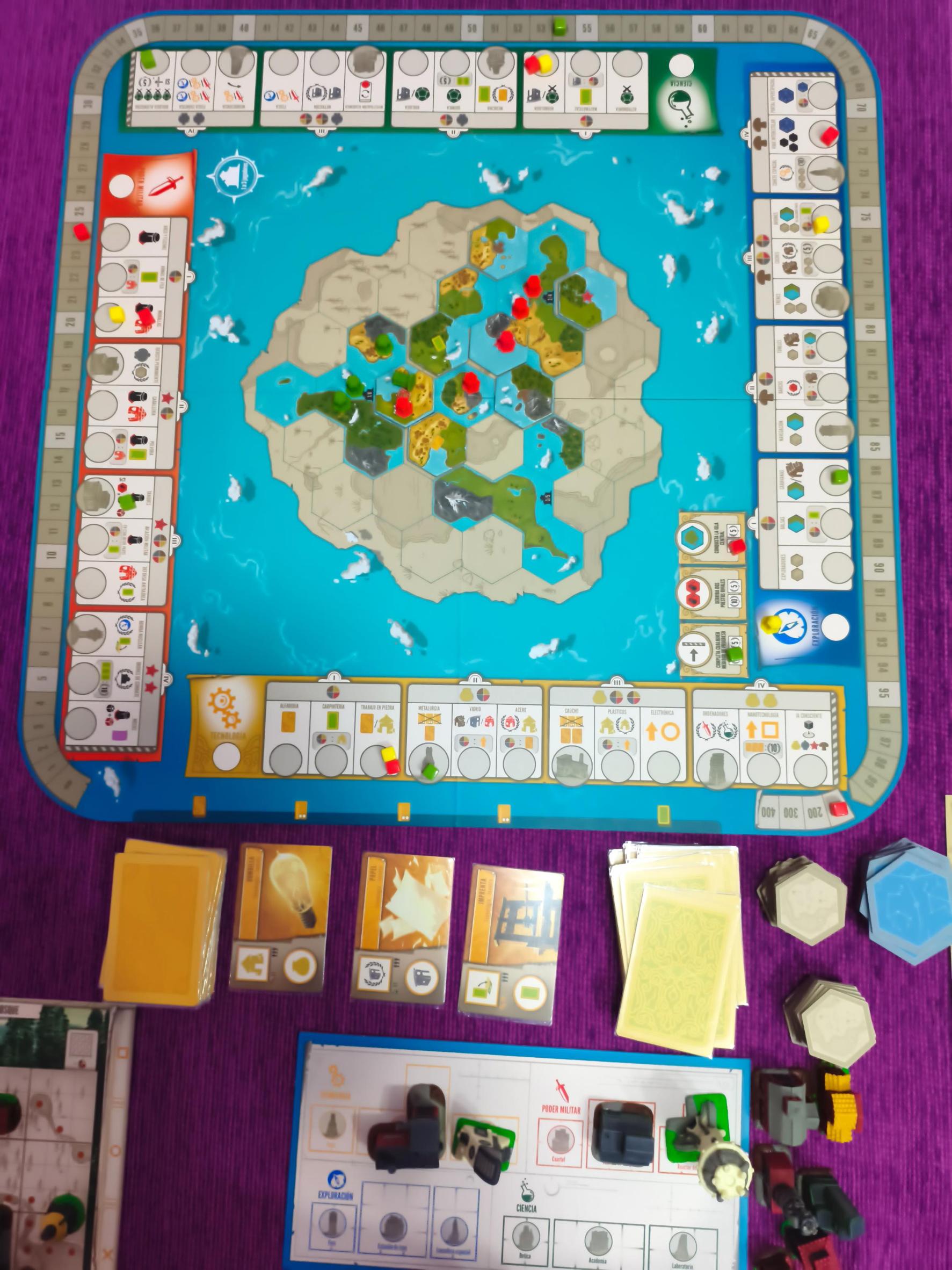
Alle Fotos in Ludoya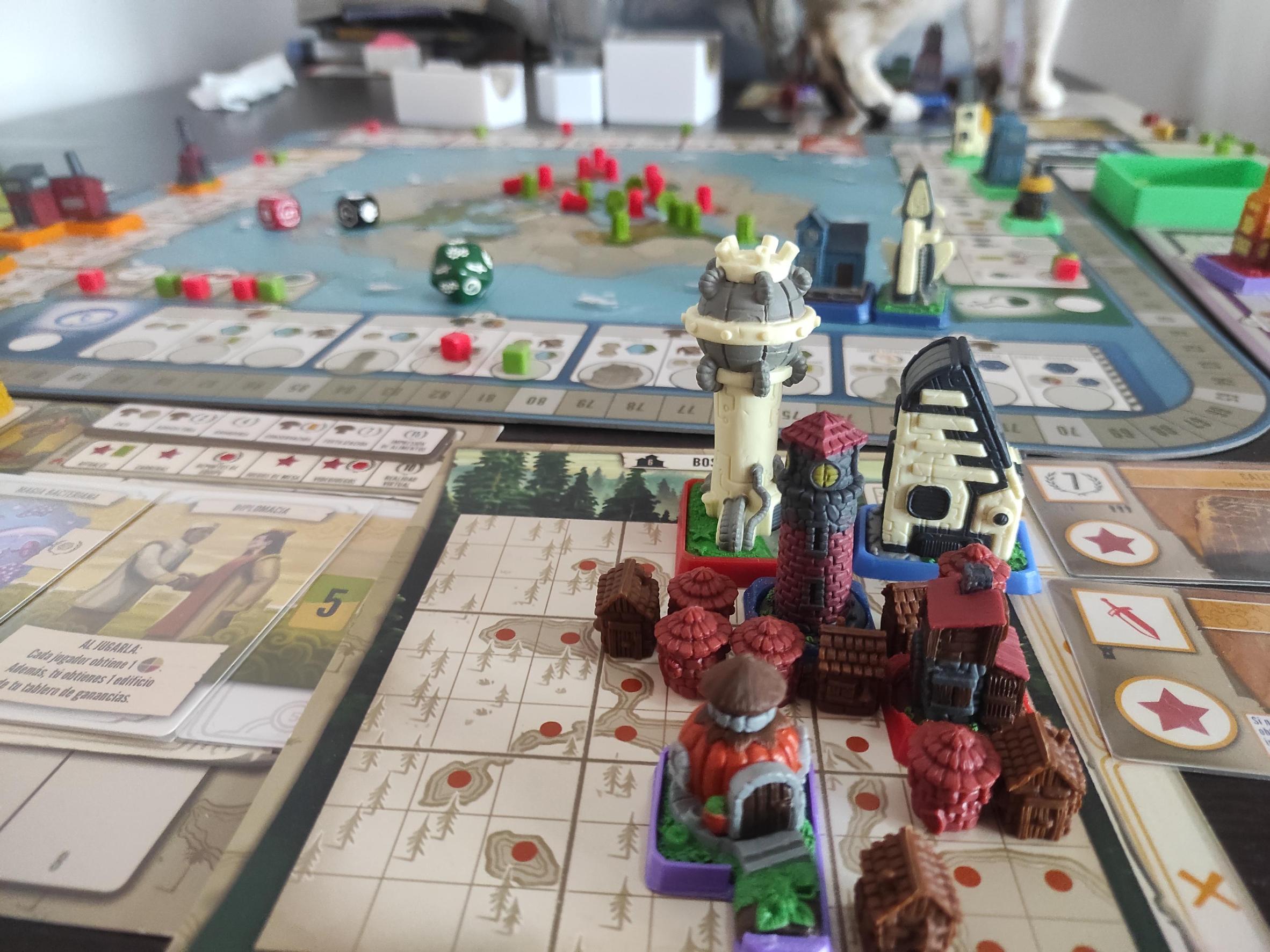

Wo kaufen
Shop-Preise und gebrauchte Exemplare, täglich geprüft.
An Ludoyas Tischen
Alle Statistiken in Ludoya- 646
- Erfasste Partien
- 643
- Spieler
- 2h 2m
- Durchschnittliche Partie
- 159
- In Sammlungen
- 25
- Auf Wunschlisten
7,0/10
aus 87 Ludoya-Rezensionen
Jan Solo8,0 Excelente juego de civilizaciones en un tiempo contenido. Personalmente no siento en absoluto el desarrollo de mi civilización pero disfruto mucho con el puzzle que supone la gestión de acciones. Básicamente consta de 4 tracks por los que ir subiendo casillas. Cada una de ellas es una acción. JAN SOLO RULES: -Coloca puestos rivales en los 8 hexágonos más alejados. -Al ganar un monumento tapa otro del mismo nivel o inferior que no podrás obtener -No obtienes recursos al inicio de era. -A efectos de resolver cartas te puedes considerar rival (ej. Copia una carta de tu rival = una tuya) Impro-Reseña⇒ https://youtu.be/ZfpcBL7nBEs
Balleflass2,0 Felt very restrictive and boring. If you're not lucky enough to draw a trap card, you're doomed to get your piece of the land toppled if you explore too close to other players. There are at least 5 other major problems in my opinion with the game but I only felt like listing one of them. Very overproduced. Very high cost for such low amount of game and replayability.
Evan7,2 This is a euro-civ game with a very unique and intuitive action selection process. The game has four tracks. On your turn you pay the resource cost indicated at the top of the bracket to advance your marker to the next step in the track, then resolve the effect of the space. Each track relates to a different strategy through the game. Deciding where to focus and what order to push which track makes for a very compelling puzzle. Each track also has three firsties bonuses at set points of the tracks which must be taken into consideration when you see your opponents pushing up the same tracks you have been working on. Of course as you bump higher on the tracks the costs grow but so do the rewards. In particular, the last step of the tracks tend to have an ability that lend themselves more to a mid-game build-up effect than an end of the game hoorah. If you run out of resources to spend, or you decide you want to pass, you can take a reset action, with causes your player board tracks to generate points and resources for you depending on how many production buildings your track actions removed. You get five resets per game, with the first being your very first turn of the game and your last being your very last turn of the game, so realistically, everything about your ability to generate the resources you need to succeed come from only three production moments. The game gives you the ability to pick up an odd resource here or there, but often also temps you away from it with the option to instead get a die roll worth of victory points that could land between 4 and 7. I found it's not uncommon to be sitting late game and realizing you spent one too many of a specific resource to be able to hit that last track step you desperately want. What this all amounts to is an intense experience where you always feel like next time you'd be able to do a better job. There are other elements that feed into this feeling as well such as doing a bad job planning out your city board for the multi-space buildings earned from firsties bonuses. I happen to love games that give me the feeling of failure in this way. It teases me with the promise that with slightly more focused or more efficient play, great things will happen for me. The game is not without it's problems. There's a decent amount of flip-luck involved with the game. The effects of the cards and the tiles you encounter from the flip luck piles have a pretty wide range of usefulness. The special pre-painted building minis the game comes with are a little hard to read in terms of what size their base is for purpose of covering the player mat. Each player also has an asymmetric power, and those seem to vary in terms of quality, or at least some are substantially more intuitive to play. Overall though, I'm having a fantastic time with the game. There's not a lot to be done about the flip-luck, but it's a random element I enjoy tactically reacting to, even if at times card luck could mean a substantial point differential.

Regelfragen
Aus der Spielanleitung beantwortet von Ludoyas Regelassistenten.
Muss ich in meiner Einkommenphase eine Tapisserie-Karte ausspielen?
Ja – in einem Einkommenszug musst du eine Tapisserie-Karte aus deiner Hand auf das am weitesten links liegende leere Feld deiner Einkommensmatte legen. Wenn du keine Tapisserie-Karten auf der Hand hast, lege die oberste Karte des Tapisserie-Decks verdeckt dorthin (Seite 2).
Wenn ich als Erste:r in eine neue Stufe vorrücke, bekomme ich dann automatisch das Wahrzeichen?
Ja – wenn du der erste Spieler bist, der auf irgendeine Weise in eine neue Stufe (I–IV) vorrückt, erhältst du das entsprechende Wahrzeichen und platzierst es in deiner Hauptstadt (Seite 2).
Wenn ich ein Gebietsplättchen erkunde, wie zähle ich die Siegpunkte für die Seiten des Plättchens – spielen Flüsse oder die Ausrichtung eine Rolle?
Du erhältst 1 SP für jede Seite des erkundeten Gebiets, an der mindestens ein passendes Gelände anliegt (maximal 6 SP); ignoriere dekorative Flüsse, und du darfst das Hexfeld beim Platzieren beliebig drehen (Seite 3).
Wenn ich den Wissenschaftswürfel würfle und er ein X zeigt, bekomme ich dann trotzdem den Vorteil oder Bonus?
Nein – wenn das Forschungssymbol mit einem X markiert ist, erhältst du weder den Vorteil noch den Bonus; wenn es kein X hat, darfst du kostenlos vorrücken, den Vorteil erhalten und optional für den Bonus bezahlen (Seite 3).
Kann ich ein Hexfeld erobern, auf dem sich bereits zwei Außenposten befinden oder das ich bereits kontrolliere?
Nein – du darfst einen Außenposten nur auf einem Gebiet platzieren, das höchstens ein Plättchen enthält und an ein von dir kontrolliertes Gebiet angrenzt, und du kannst keine Gebiete erobern, die du bereits kontrollierst; wenn du den Außenposten eines Gegners umstürzt und dadurch zwei Plättchen übrig bleiben, kann das Gebiet nicht erneut erobert werden, und du darfst keine Gebiete mehr erobern, sobald alle deine Außenposten auf dem Spielplan stehen (Seite 3).





Wer es hat, hat auch


Kostenlos, im Web, für Android und iOS
Spiel Tapestry mit Ludoya
- Hab es in deiner SammlungVerwalte dein Exemplar und seine Erweiterungen, leih es Freunden oder setz es auf deine Wunschliste und erfahre, wenn der Preis fällt.Zur Sammlung hinzufügen
- Erfasse jede PartiePunkte, Sieger, Timer und Fotos, dann deine Statistiken: Siegquote, liebste Spielerzahl, beste Punktzahl.Partie erfassen
- Regelfragen klärenFrag alles zu den Regeln und erhalte eine Antwort aus der Spielanleitung, mit der Seite zum Nachprüfen.Den Regelassistenten fragen
- Finde Leute, mit denen du es spielstClubs, Spieleabende und Veranstaltungen in deiner Nähe, bei denen dieses Spiel auf den Tisch kommt.Veranstaltungen ansehen
Spieldaten (Spieler, Spielzeit, Alter, Mitwirkende) von BoardGameGeek.