
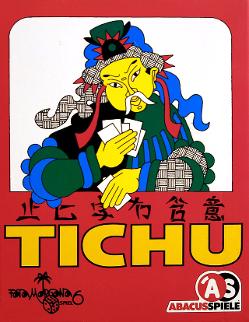
1991 · Kartenspiel
Tichu
Ein Partnerschafts-Kletterkartenspiel, bei dem Teams versuchen, als Erste ihre Hand leer zu bekommen und dabei Punkte zu sammeln. Spieler legen Kombinationen aus – Einzelkarten, Paare, Straßen, Full Houses usw. – indem sie entweder die aktuelle Top-Kombination überbieten oder passen; wenn alle bis zurück zum Führenden passen, gewinnt dieser den Stich und eröffnet den nächsten. Runden bringen Punkte für bestimmte Karten ein, die in Stichen gewonnen wurden, und der letzte Spieler mit Karten gibt seine restlichen Karten an die Gegner ab, was die Wertung beeinflusst. Vor dem Spiel können die Spieler riskante Bonuswetten ansagen, die bei Erfolg oder Misserfolg viele Punkte bringen oder kosten. Das erste Team, das die Zielpunktzahl erreicht, gewinnt.
- Spieler
- 3–10 am besten mit 4
- Spielzeit
- 30–90 Min.
- Alter
- 10+
- Komplexität
- 2,3 / 5
Über das Spiel
- Autoren
- Illustration
- Verlage






Erweiterungen
In Ludoya ansehen
Fotos von Ludoya-Tischen
Alle Fotos in Ludoya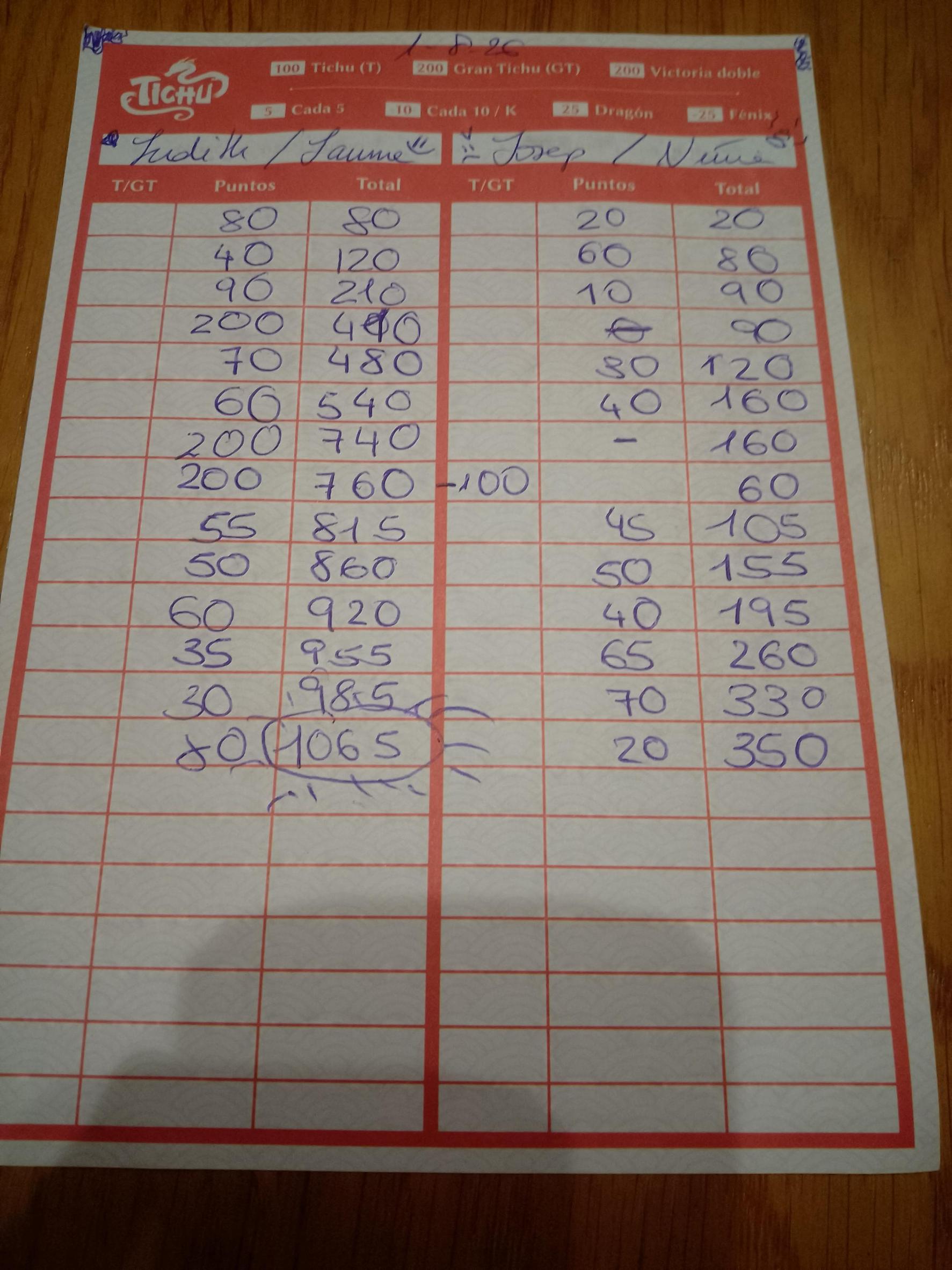

Wo kaufen
Shop-Preise und gebrauchte Exemplare, täglich geprüft.
An Ludoyas Tischen
Alle Statistiken in Ludoya- 660
- Erfasste Partien
- 588
- Spieler
- 1h 23m
- Durchschnittliche Partie
- 181
- In Sammlungen
- 11
- Auf Wunschlisten
7,6/10
aus 59 Ludoya-Rezensionen
Aya_Zholvax7,5 Molt divertit, mirar de jugar amb diferents grups per no agafar tics
Mestremuten8,0 Rating: 4/5 Production value: 3/4 Is the game in my collection/Love to have?: 1/1
Garfield6,0 #9 It's funny, but I wouldn't play it very often. It's based too much on luck and it can last for 2 hours!
Regelfragen
Aus der Spielanleitung beantwortet von Ludoyas Regelassistenten.
When and how do we pass the three cards at the start — do we pick them up before playing?
After each player has taken 14 cards, every player pushes 3 cards face down — one to each other player — and then may pick up the three cards that were pushed to him, adding them to his hand (p.1).
What combinations can I lead and how are they beaten?
You may lead singles, pairs, sequences of pairs, three-of-a-kind, full houses (trio+pair), or sequences of length at least 5; each combination can only be beaten by the same kind of higher combination (except bombs), and sequences must be the same length to beat (p.1).
How does the Mah Jong wish work — when must someone play the wished rank?
When the Mah Jong is played its owner may wish a normal rank (not a special card); the next player who actually has that rank and can lawfully play it must play it on his ordinary turn, but players who play bombs out of turn do not have to fulfill the wish — if a bomb wins the trick the new winner must fulfill the wish when leading next (p.1, p.3).
What exactly do the Phoenix, Dragon and Hound do?
The Phoenix is a joker in combinations (not for bombs), counts as half a rank higher when played as a single (and is worth −25 points), the Dragon is the highest single card worth +25 and, when it wins a trick, its holder gives that trick to an opponent of his choice, and the Hound has no trick-taking power — when led it simply transfers the right to lead to the player's partner (p.2).
When can bombs be played and can they beat the Dragon or take the Hound?
Bombs (either five-or-more consecutive cards in the same suit or four-of-a-kind) may be played at any time, even out of turn, and beat any non-bomb (including the Dragon); however, bombs cannot be used to take the Hound (they cannot be used to take the Hound and its transfer of lead) (p.2, p.3).
How is the round scored and what happens with the last trick (Dragon & Phoenix effects)?
The round ends when only one player has cards left; tricks are revealed and score +10 per king/ten, +5 per five, +25 for the Dragon and −25 for the Phoenix (total 100 points per deal), and although the last trick ends immediately when the third-last player finishes, it is still awarded to whoever wins it (and the Dragon, if it wins, still gives that trick to an opponent) (p.2, p.3).















Kostenlos, im Web, für Android und iOS
Spiel Tichu mit Ludoya
- Hab es in deiner SammlungVerwalte dein Exemplar und seine Erweiterungen, leih es Freunden oder setz es auf deine Wunschliste und erfahre, wenn der Preis fällt.Zur Sammlung hinzufügen
- Erfasse jede PartiePunkte, Sieger, Timer und Fotos, dann deine Statistiken: Siegquote, liebste Spielerzahl, beste Punktzahl.Partie erfassen
- Regelfragen klärenFrag alles zu den Regeln und erhalte eine Antwort aus der Spielanleitung, mit der Seite zum Nachprüfen.Den Regelassistenten fragen
- Finde Leute, mit denen du es spielstClubs, Spieleabende und Veranstaltungen in deiner Nähe, bei denen dieses Spiel auf den Tisch kommt.Veranstaltungen ansehen
Spieldaten (Spieler, Spielzeit, Alter, Mitwirkende) von BoardGameGeek.