
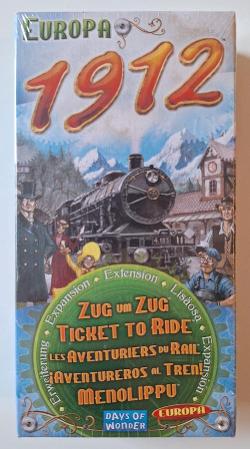
2009 · Erweiterung für das Basisspiel
Ticket to Ride: Europa 1912
Eine Erweiterung, die 55 neue Zielkarten zur bestehenden Europakarte hinzufügt, wodurch der Gesamtstapel auf 101 kommt und drei alternative Varianten ermöglicht werden: ein erweitertes Europa mit 19 zusätzlichen Strecken, eine Big-Cities-Variante mit Fokus auf neun wichtige Knotenpunkte und ein Mega-Europe-Modus, der alle Strecken und Karten kombiniert. Außerdem führt sie Lagerhäuser und Holzdepots als neue Spielfiguren und Regeln ein, die mit jeder Karte verwendet werden können. Die Spieler platzieren Depots auf Städten, sammeln Eisenbahnkarten in ihren persönlichen Lagerhäusern und punkten, indem sie beim Bauen von Strecken das richtige Timing erwischen, um Karten aus den Depots zu sichern. Das Platzieren der Depots und das Verwalten der Lagerhäuser bringen eine zusätzliche strategische Ebene in die Streckenplanung und das Kartensammeln.
- Spieler
- 2–5 am besten mit 4
- Spielzeit
- 30–60 Min.
- Alter
- 8+
- Komplexität
- 1,9 / 5
Über das Spiel
- Autoren
- Illustration


Erweiterung für
In Ludoya ansehen Zug um Zug2011
 Zug um Zug: Europa2013
 Zug um Zug: Skandinavien2008
 Ticket to Ride Map Collection 2: India & Switzerland2020
 Ticket to Ride Map Collection 5: United Kingdom & Pennsylvania2025
 Ticket to Ride Map Collection 1: Asia + Legendary Asia2022
 Ticket to Ride: Rails & Sails2016
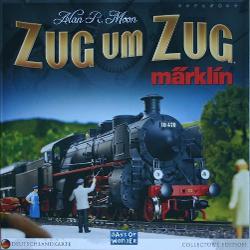 Zug um Zug: Märklin2006
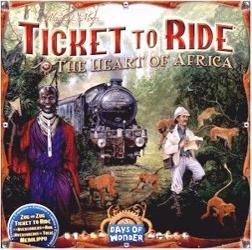 Ticket to Ride Map Collection 3: The Heart of Africa2012
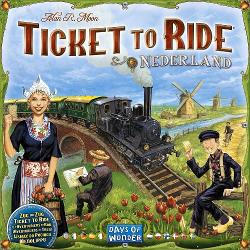 Ticket to Ride Map Collection 4: Nederland2013
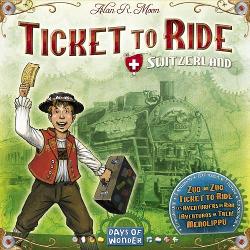 Ticket to Ride: Switzerland2007
 Ticket to Ride: Germany2017
 Zug um Zug: Deutschland2012
Wo kaufen
Shop-Preise und gebrauchte Exemplare, täglich geprüft.
An Ludoyas Tischen
Alle Statistiken in Ludoya- 32
- Erfasste Partien
- 26
- Spieler
- 56m
- Durchschnittliche Partie
- 100
- In Sammlungen
- 5
- Auf Wunschlisten
- 1
- Vorbestellt
7,7/10
aus 22 Ludoya-Rezensionen
FazerGD8,0 +
Mohasz7,0 You don't need this expansion if you don't play the base game too regularly. It doubles the number of tickets which can freshen the experience and also has a new variant (Big Cities) that makes the 2-3p-games more cut-throat. I find the Warhouses & Depots variant quite unnecessary, it only makes the package more pricey than it should be.
Guaskan7,0 Trampes

Regelfragen
Aus der Spielanleitung beantwortet von Ludoyas Regelassistenten.
Who places the 5th Depot on the board at setup, and in what order do players place them?
After players receive Train cards and choose Tickets, each player gets a Warehouse and 5 Depots; place 4 next to your Warehouse and the 5th on any city on the board starting with the player who will go last and proceeding counter‑clockwise (page 2).
When I take the Draw Train Car cards action, do I have to put a card into a Warehouse first?
Yes — each time you use your turn to Draw Train Car cards you must first draw the top card from the Train Car deck and place it (face down) into a Warehouse (yours or another player's) without looking at it, then continue drawing your Train cards (page 2).
If I claim a route into a city with another player’s Depot, can I take their Warehouse cards and what does it cost?
When you claim a route into a city containing another player’s Depot you may take all Train cards from that player's Warehouse, but you must discard one of your own Depots from beside your Warehouse back into the box to do so (page 2).
Can I take cards from my own Warehouse or from two Warehouses in one turn?
Yes — you may pick cards from your own Warehouse when claiming a route into a city with your Depot, and you may pick from two Warehouses when claiming a route that connects two cities each with a Depot, but to do that you must discard two of your own Depots (page 3).
When and where can I place Depots, and can they be moved or removed later?
You may always as a Free Action place one or more Depots still next to your Warehouse onto any empty cities; once placed a Depot can never be moved or removed, there can never be more than one Depot in a city, and Depots on the board cannot be discarded to take cards from a Warehouse (pages 2–3).
Do unused Depots score at the end of the game?
Yes — at the end of the game the player(s) with the most unused Depot(s) next to their Warehouse score 10 points, and all tied players receive the bonus (page 2).
Kostenlos, im Web, für Android und iOS
Spiel Ticket to Ride: Europa 1912 mit Ludoya
- Hab es in deiner SammlungVerwalte dein Exemplar und seine Erweiterungen, leih es Freunden oder setz es auf deine Wunschliste und erfahre, wenn der Preis fällt.Zur Sammlung hinzufügen
- Erfasse jede PartiePunkte, Sieger, Timer und Fotos, dann deine Statistiken: Siegquote, liebste Spielerzahl, beste Punktzahl.Partie erfassen
- Regelfragen klärenFrag alles zu den Regeln und erhalte eine Antwort aus der Spielanleitung, mit der Seite zum Nachprüfen.Den Regelassistenten fragen
- Finde Leute, mit denen du es spielstClubs, Spieleabende und Veranstaltungen in deiner Nähe, bei denen dieses Spiel auf den Tisch kommt.Veranstaltungen ansehen
Spieldaten (Spieler, Spielzeit, Alter, Mitwirkende) von BoardGameGeek.