
2016 · Städtebau
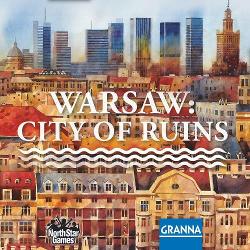
Warsaw: City of Ruins
Die Spieler rekonstruieren gemeinsam eine Stadt über sechs Epochen hinweg, die jeweils eine andere historische Periode repräsentieren – vom frühen Status als Hauptstadt bis zur Moderne. In jedem Zug draften die Spieler Stadtplättchen und decken sie gleichzeitig auf. Dann wirft man entweder ein Plättchen ab, um Münzen zu erhalten, oder bezahlt die Kosten, um es in seinen persönlichen Bezirk zu legen. Plättchen können auf freie Felder gelegt oder auf bereits vorhandene Plättchen gebaut werden, um sie aufzuwerten, wobei sich die Kosten des neuen Plättchens um den Wert des bedeckten Plättchens verringern. Die Bezirke sind auf eine Fläche von 3×4 oder 4×3 begrenzt, und die Plättchen sind in verschiedene Gebäudetypen unterteilt; öffentliche Gebäude und Meilensteine belegen ganze Plättchen. Am Ende jeder Epoche setzen die Spieler Meilensteine, erhalten Einkommen und Siegpunkte, wobei Kriege das Spiel in den Epochen der Mitte beeinflussen.
- Spieler
- 2–4 am besten mit 4
- Spielzeit
- 60 Min.
- Alter
- 10+
- Komplexität
- 2,2 / 5
Über das Spiel
- Autoren
- Illustration
- Verlag

An Ludoyas Tischen
Alle Statistiken in Ludoya- 27
- Erfasste Partien
- 20
- Spieler
- 1h
- Durchschnittliche Partie
- 8
- In Sammlungen
- 3
- Auf Wunschlisten
5,7/10
aus 5 Ludoya-Rezensionen
Bart Henry6,0 Prosta, ale wymagająca gra. Podoba do Suburbii - też trzeba na początku budować maszynkę do zdobywania monet, żeby na końcu mieć możliwość budowy punktujących budynków.
Evan4,6 This is a short city building game where each round players draft four tiles. At the end of the round a powerful bonus tile gets assigned to the player who best met it's requirement. Your building grid is only 4x3, but the game allows you to build on top of previously placed tiles, paying the difference in cost. During each round's scoring phase one contiguous blobs of park scores for each adjacent red area touching it, so it's challenging to snake the park around while trying to break the reds into different sections so they don't count as a single blob. Strategy largely depends on drafting and then being able to afford one or two of a small handful of extremely strong special building tiles. It'a also important to note that while the buildings have english text on them, the text is often misleading as to what the building actually does according to the rulebook. The overall is I like a lot of the core mechanisms and I like the tile laying puzzle, but multiple plays start to feel similar very quickly. ☆ Art, Iconography and components functional ★ Clever or interesting mechanisms ★ Reasonably low downtime between turns with mildly AP players ☆ Multiple plays stay interesting ★ Low or mitigatable luck elements ★★★☆☆ Raw enjoyment
Koki Leiva7,4 Excellent tiles and drafting game. You need to think and adapt your strategy every time and see what your opponent are placing.



Kostenlos, im Web, für Android und iOS
Spiel Warsaw: City of Ruins mit Ludoya
- Hab es in deiner SammlungVerwalte dein Exemplar und seine Erweiterungen, leih es Freunden oder setz es auf deine Wunschliste und erfahre, wenn der Preis fällt.Zur Sammlung hinzufügen
- Erfasse jede PartiePunkte, Sieger, Timer und Fotos, dann deine Statistiken: Siegquote, liebste Spielerzahl, beste Punktzahl.Partie erfassen
- Werte ohne PapierNutze die Wertungsbögen und Spielhelfer der Community und lass Ludoya die Punkte zusammenzählen.Wertungsbögen finden
- Finde Leute, mit denen du es spielstClubs, Spieleabende und Veranstaltungen in deiner Nähe, bei denen dieses Spiel auf den Tisch kommt.Veranstaltungen ansehen
Spieldaten (Spieler, Spielzeit, Alter, Mitwirkende) von BoardGameGeek.