
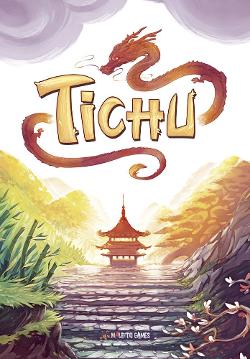
1991 · Juego de cartas
Tichu
Un juego de cartas de escalada por parejas en el que los equipos intentan ser los primeros en vaciar sus manos mientras acumulan puntos. Los jugadores juegan combinaciones —cartas sueltas, parejas, escaleras, full houses, etc.— ya sea superando la combinación más alta actual o pasando; cuando todos pasan de vuelta al líder, ese jugador gana la baza y lidera la siguiente. Las rondas otorgan puntos por cartas específicas ganadas en las bazas, y el último en quedarse sin cartas entrega las cartas restantes a los oponentes, lo que afecta la puntuación. Antes de empezar, los jugadores pueden declarar apuestas de riesgo-recompensa que otorgan o penalizan muchos puntos si tienen éxito o fracasan. El primer equipo en alcanzar la puntuación objetivo gana.
- Jugadores
- 3–10 mejor con 4
- Duración
- 30–90 min
- Edad
- 10+
- Complejidad
- 2,3 / 5
Sobre el juego
- Diseño
- Editoriales






Expansiones
Verlas en Ludoya
Fotos de mesas de Ludoya
Todas las fotos en Ludoya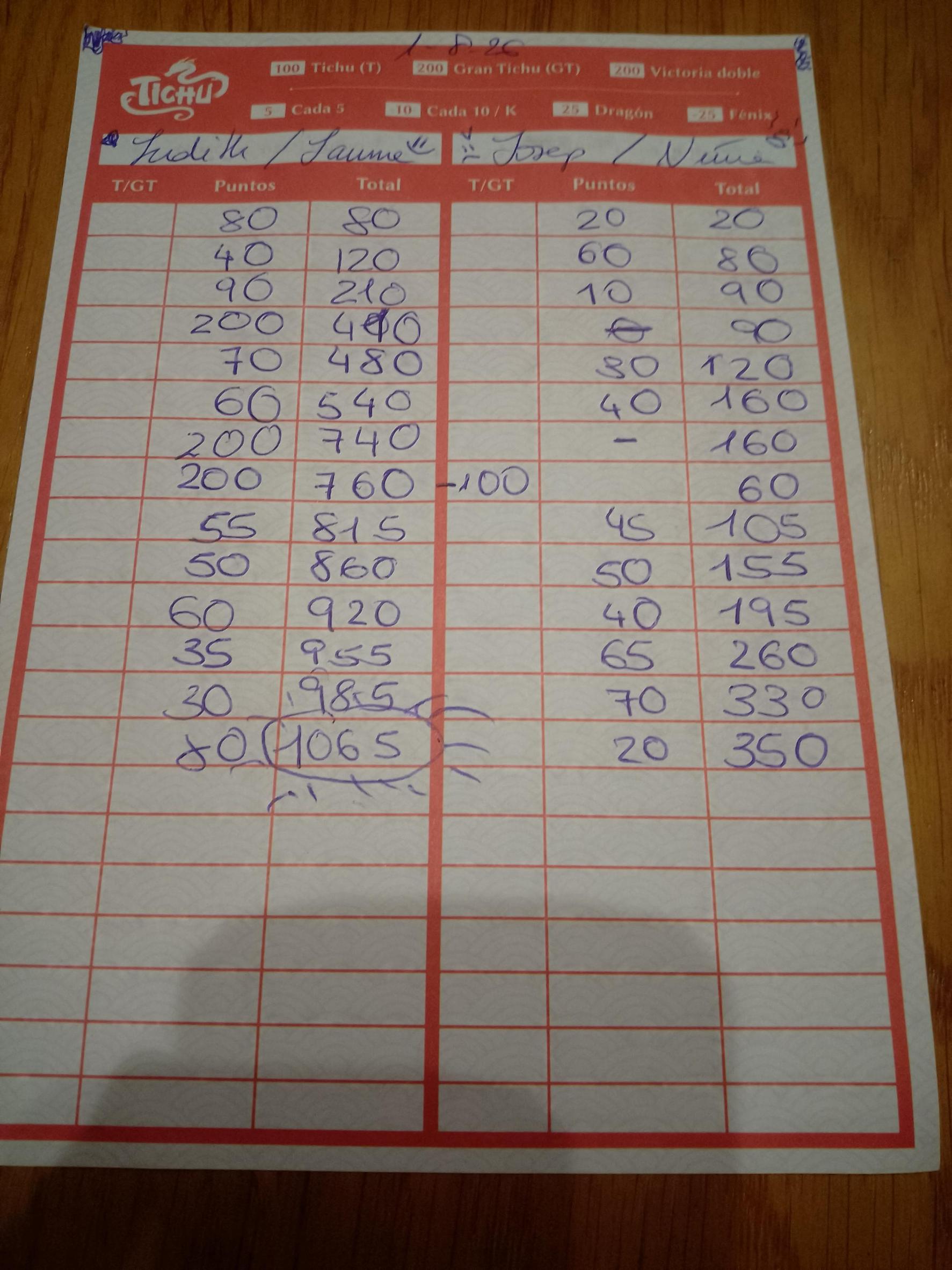

Dónde comprarlo
Precios de tiendas y copias de segunda mano, revisados cada día.
En las mesas de Ludoya
Todas las estadísticas en Ludoya- 660
- Partidas registradas
- 588
- Jugadores
- 1h 23m
- Partida media
- 182
- En colecciones
- 11
- En listas de deseos
7,6/10
de 59 reseñas en Ludoya
setropo9,0 ECDE #24 Todavía me queda mucho por aprender XD
Aya_Zholvax7,5 Molt divertit, mirar de jugar amb diferents grups per no agafar tics
Mestremuten8,0 Rating: 4/5 Production value: 3/4 Is the game in my collection/Love to have?: 1/1

Dudas de reglas
Respondidas a partir del reglamento por el asistente de reglas de Ludoya.
When and how do we pass the three cards at the start — do we pick them up before playing?
After each player has taken 14 cards, every player pushes 3 cards face down — one to each other player — and then may pick up the three cards that were pushed to him, adding them to his hand (p.1).
What combinations can I lead and how are they beaten?
You may lead singles, pairs, sequences of pairs, three-of-a-kind, full houses (trio+pair), or sequences of length at least 5; each combination can only be beaten by the same kind of higher combination (except bombs), and sequences must be the same length to beat (p.1).
How does the Mah Jong wish work — when must someone play the wished rank?
When the Mah Jong is played its owner may wish a normal rank (not a special card); the next player who actually has that rank and can lawfully play it must play it on his ordinary turn, but players who play bombs out of turn do not have to fulfill the wish — if a bomb wins the trick the new winner must fulfill the wish when leading next (p.1, p.3).
What exactly do the Phoenix, Dragon and Hound do?
The Phoenix is a joker in combinations (not for bombs), counts as half a rank higher when played as a single (and is worth −25 points), the Dragon is the highest single card worth +25 and, when it wins a trick, its holder gives that trick to an opponent of his choice, and the Hound has no trick-taking power — when led it simply transfers the right to lead to the player's partner (p.2).
When can bombs be played and can they beat the Dragon or take the Hound?
Bombs (either five-or-more consecutive cards in the same suit or four-of-a-kind) may be played at any time, even out of turn, and beat any non-bomb (including the Dragon); however, bombs cannot be used to take the Hound (they cannot be used to take the Hound and its transfer of lead) (p.2, p.3).
How is the round scored and what happens with the last trick (Dragon & Phoenix effects)?
The round ends when only one player has cards left; tricks are revealed and score +10 per king/ten, +5 per five, +25 for the Dragon and −25 for the Phoenix (total 100 points per deal), and although the last trick ends immediately when the third-last player finishes, it is still awarded to whoever wins it (and the Dragon, if it wins, still gives that trick to an opponent) (p.2, p.3).










Gratis, en web, Android e iOS
Juega a Tichu con Ludoya
- Tenlo en tu colecciónControla tu copia y sus expansiones, préstala a tus amigos o ponla en tu lista de deseos y te avisamos cuando baje de precio.Añadirlo a tu colección
- Registra cada partidaPuntuaciones, ganadores, temporizadores y fotos, y luego tus estadísticas: porcentaje de victorias, número de jugadores favorito, mejor puntuación.Registrar una partida
- Resuelve dudas de reglasPregunta lo que quieras sobre las reglas y obtén una respuesta sacada del reglamento, con la página donde comprobarla.Preguntar al asistente de reglas
- Encuentra gente con quien jugarloClubes, noches de juegos y eventos cerca de ti que sacan este juego a la mesa.Ver eventos
Datos del juego (jugadores, duración, edad, créditos) de BoardGameGeek.