

1995 · Juego de cartas
High Society
Los jugadores compiten por adquirir artículos de lujo y ventajas sociales pujando entre sí, consiguiendo cartas de valor positivo y multiplicador mientras evitan cartas de valor negativo y divisor. Las pujas se hacen con una reserva limitada de dinero; los jugadores deben equilibrar cuánto gastan para ganar cartas deseables con la necesidad de conservar efectivo, ya que el jugador con menos dinero restante queda excluido de ganar al final de la partida. Las rondas avanzan mediante subastas sucesivas hasta que se agota el mazo; entonces se calculan las puntuaciones a partir de las cartas recopiladas para determinar al ganador entre los jugadores elegibles.
- Jugadores
- 3–5 mejor con 4
- Duración
- 15–30 min
- Edad
- 10+
- Complejidad
- 1,5 / 5
Sobre el juego
- Diseño
- Publisher


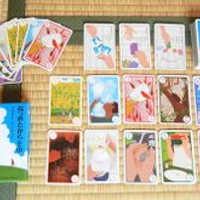



Fotos de mesas de Ludoya
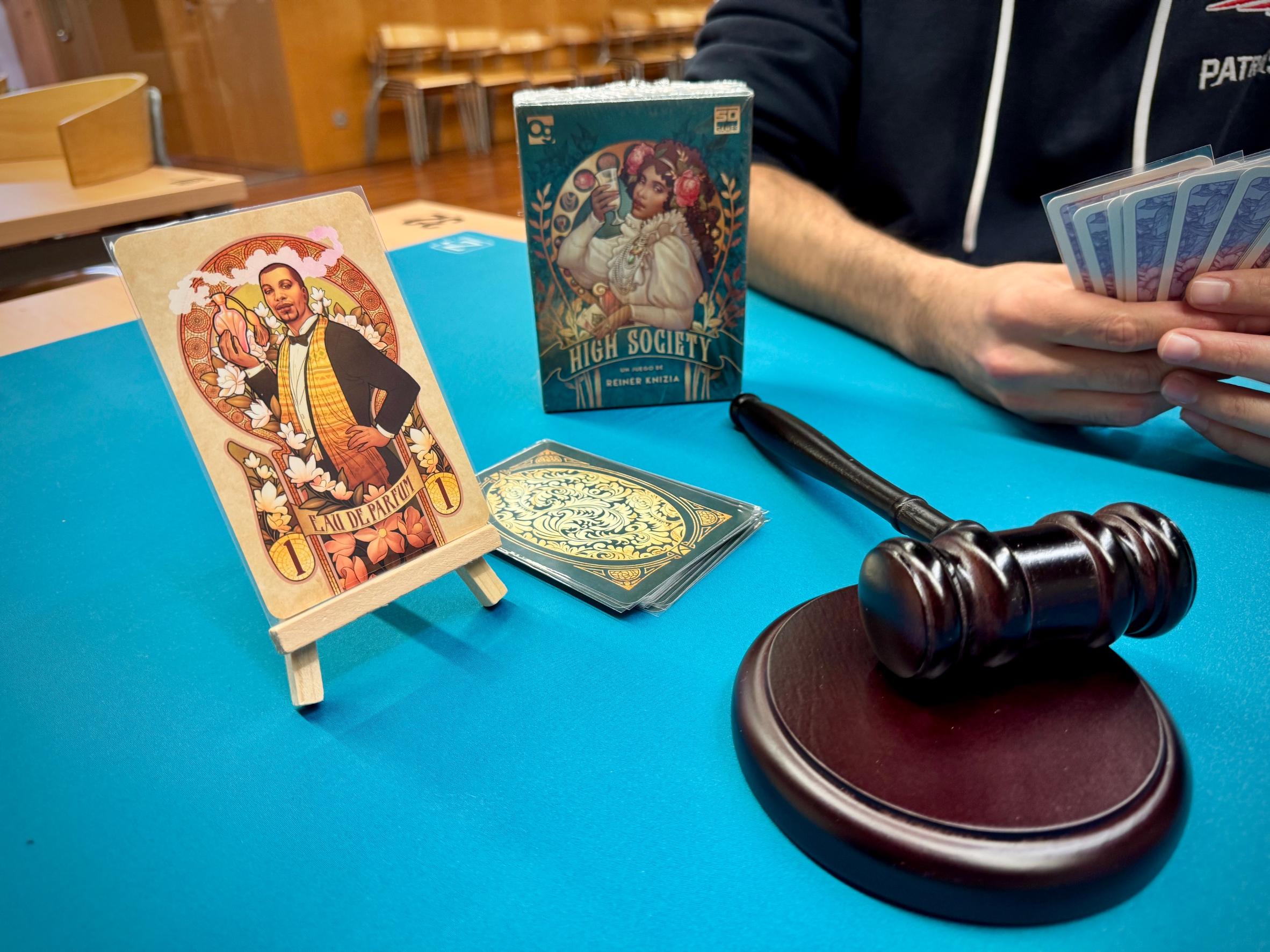
Todas las fotos en Ludoya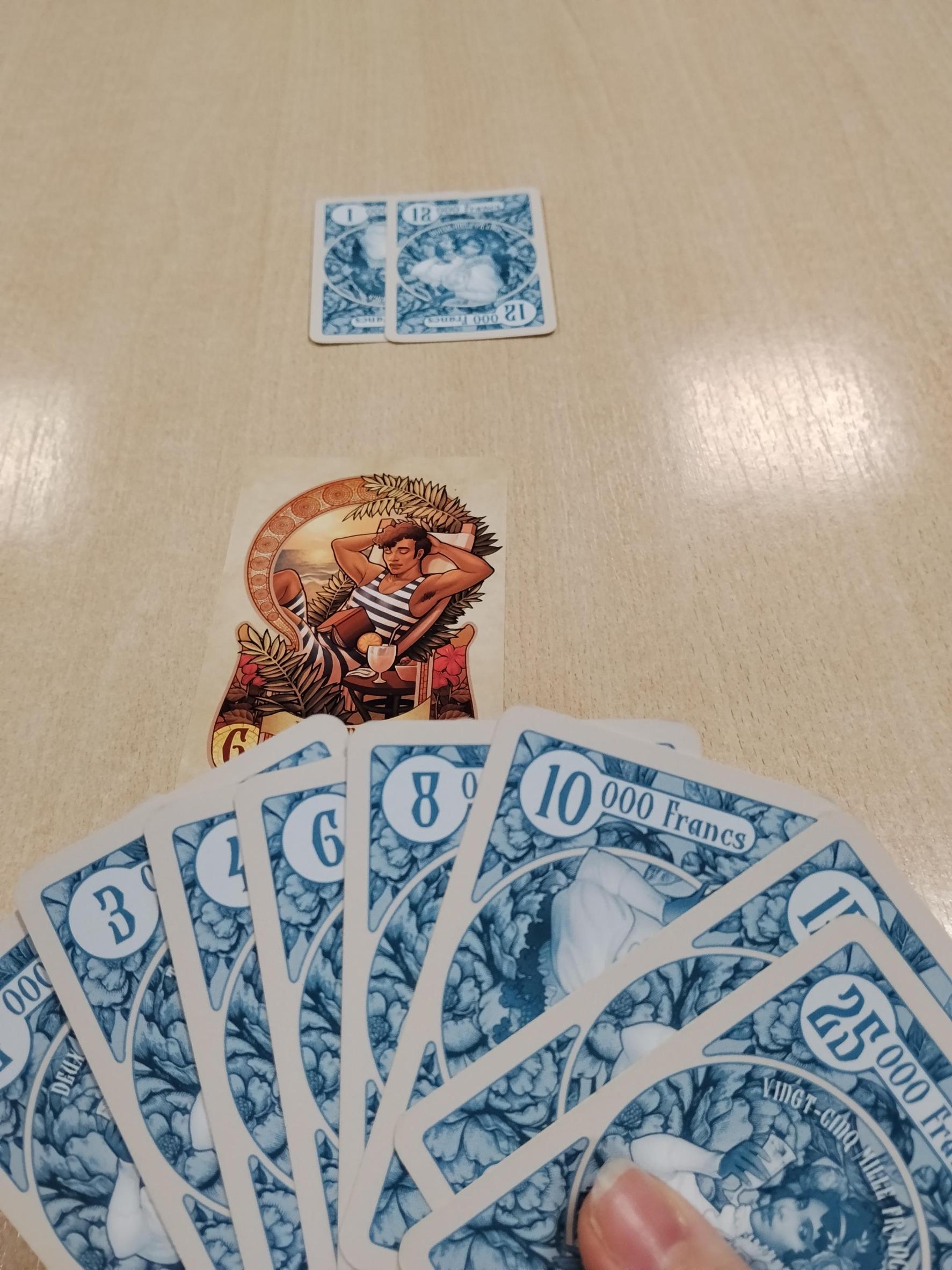
Dónde comprarlo
Precios de tiendas y copias de segunda mano, revisados cada día.
En las mesas de Ludoya
Todas las estadísticas en Ludoya- 1434
- Partidas registradas
- 1286
- Jugadores
- 19m 39s
- Partida media
- 238
- En colecciones
- 24
- En listas de deseos
7,6/10
de 123 reseñas en Ludoya
Vic Granell8,0 Greatly designed auction game where you may lose without expecting it!
Nacho Ramírez10,0 Sin duda alguna mi juego favorito de subastas, y he probado varios. Tiene las ventajas de ser fácil de entender, tiemoi denjuego preciso, muy social, portable, hermoso e inmersivo. Los piques son muchísimos. Modern Art es un gran juego, pero creo que por todo lo expuesto, HS es bastante superior.
Plaisant, dès 7 ans, on le retrouve avec plaisir dans une éditions bien plus jolie de nos jours ! Enchères et bluff sauce Knizia, ça passe encore très bien en 2019



Dudas de reglas
Respondidas a partir del reglamento por el asistente de reglas de Ludoya.
Can I pick up money cards I've already played to increase my bid?
No — you cannot pick up cards you have already played; you may only increase your bid by adding new money cards to the ones already on the table (page 4).
If I pass after placing a bid, do I get my money back?
Yes — if you have already bid and then pass you return all your face-up money cards to your hand, but you may no longer bid that round (page 4).
What changes when the revealed card is a disgrace? How does that auction work?
You are bidding to avoid taking the disgrace: the round ends as soon as any one player passes, that passing player picks up their money cards and must take the disgrace, while all other players discard their money cards face-down; the passing player starts the next round (page 5).
If I take the Faux Pas card, what do I have to discard?
If you take the Faux Pas you must immediately discard one luxury card you have in front of you (or the next luxury you receive if you have none), and once a luxury has been discarded the Faux Pas card itself is discarded (page 5).
When does the game end and what does 'cast out' mean?
The game ends immediately when the fourth dark-green card (the three prestige cards and the Scandale) is revealed — there is no bidding for that card — then all players reveal their hands and the player(s) with the least remaining money are cast out and cannot win (page 6).
How is final status calculated and how are ties broken?
Add up luxury card values, apply prestige multipliers (each prestige doubles your status; two = ×4, three = ×8) and apply disgrace effects (e.g., Passé −5, Scandale halves status); the highest status among players not cast out wins, with ties broken by most money left and then by the single most valuable luxury card (pages 5–6).


















Gratis, en web, Android e iOS
Juega a High Society con Ludoya
- Tenlo en tu colecciónControla tu copia y sus expansiones, préstala a tus amigos o ponla en tu lista de deseos y te avisamos cuando baje de precio.Añadirlo a tu colección
- Registra cada partidaPuntuaciones, ganadores, temporizadores y fotos, y luego tus estadísticas: porcentaje de victorias, número de jugadores favorito, mejor puntuación.Registrar una partida
- Resuelve dudas de reglasPregunta lo que quieras sobre las reglas y obtén una respuesta sacada del reglamento, con la página donde comprobarla.Preguntar al asistente de reglas
- Encuentra gente con quien jugarloClubes, noches de juegos y eventos cerca de ti que sacan este juego a la mesa.Ver eventos
Datos del juego (jugadores, duración, edad, créditos) de BoardGameGeek.