
1997 · Negociación
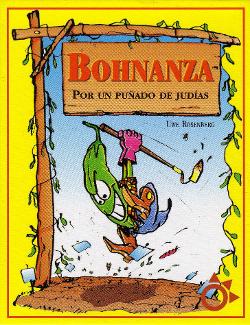
Bohnanza
Los jugadores cultivan una mano de distintas cartas de judías, las plantan en sus campos personales y cosechan para convertir grupos de judías en monedas. Las manos mantienen el orden de las cartas, así que los jugadores deben plantar la primera o las dos primeras cartas en su turno, gestionar espacios limitados en los campos que solo pueden contener un tipo de judía, y a veces cosechar para hacer sitio. Después de plantar, el jugador activo revela cartas extra y puede intercambiar cartas reveladas o de su mano con los demás, incluso haciendo promesas para futuros intercambios. Las judías cosechadas dan monedas según la tabla de puntuación de cada tipo de judía; el mazo se baraja y vuelve a entrar en juego varias veces, y gana el jugador con más monedas al final.
- Jugadores
- 3–7 mejor con 5
- Duración
- 45 min
- Edad
- 12+
- Complejidad
- 1,7 / 5
Sobre el juego
- Diseño
- Publisher




Expansiones
Verlas en Ludoya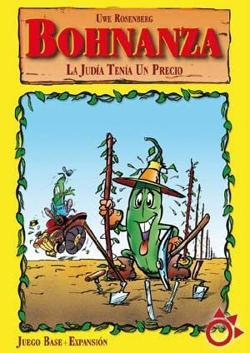 Bohnanza: La Judía Tenía Un Precio2013
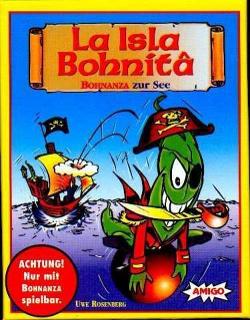 Bohnanza: La Isla Bohnitâ1998
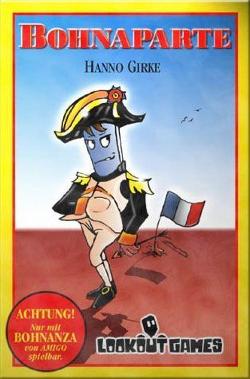 Bohnaparte2004
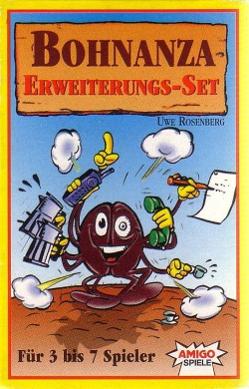 Bohnanza Erweiterungs-Set1997
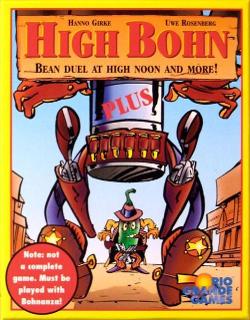 High Bohn Plus2004
 High Bohn2000
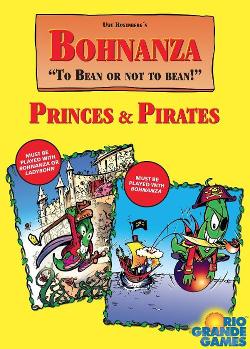 Bohnanza: Princes & Pirates2015
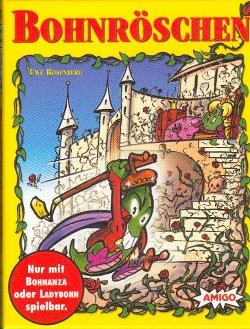 Bohnröschen2007
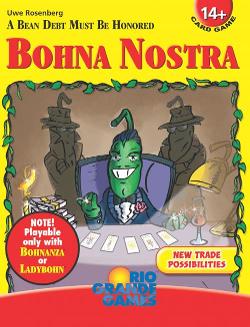 Bohna Nostra2019
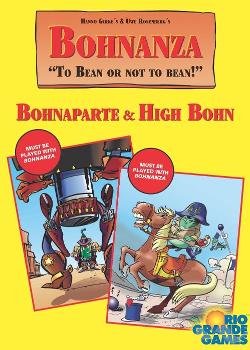 Bohnanza: Bohnaparte & High Bohn2015
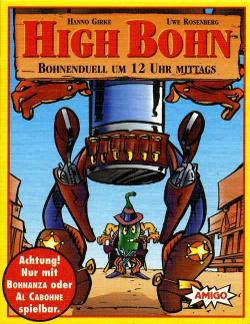 High Bohn: Bohnenduell um 12 Uhr mittags2001
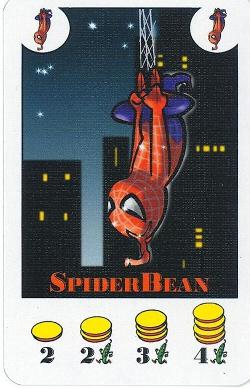 Bohnanza: Spiderbeans2007
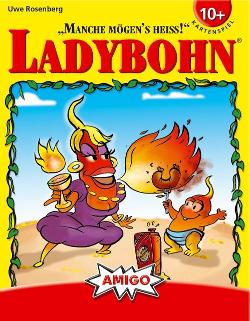
 Ladybohn2002
 Fasolki: Rozszerzenie2010
 Brettspiel Adventskalender 20152015
 Bohnanza: Bean Market2015
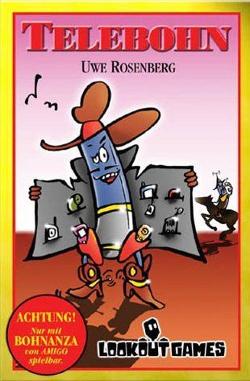 Telebohn2004
 Bohnedikt2016
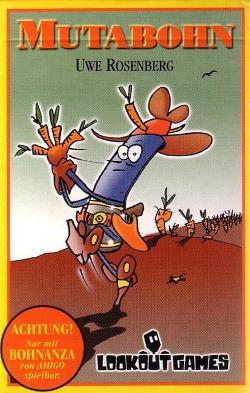 Mutabohn2001
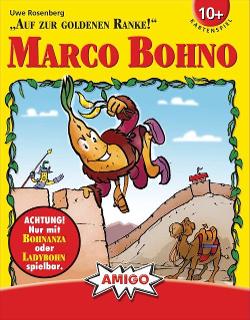 Marco Bohno2018
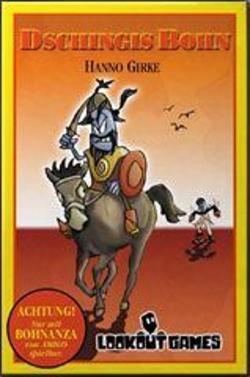 Dschingis Bohn2003
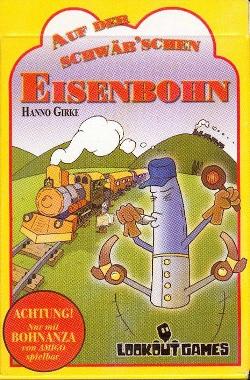 Auf der schwäb'schen Eisenbohn2008
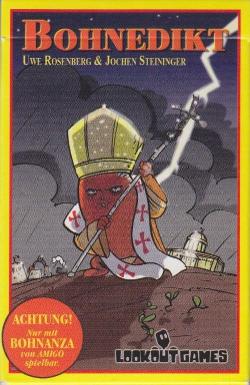 Bohnedikt2009
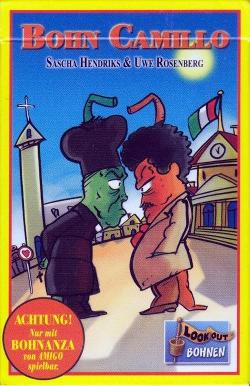 Bohn Camillo2011
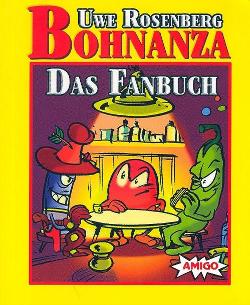 Bohnanza: Das Fanbuch2007
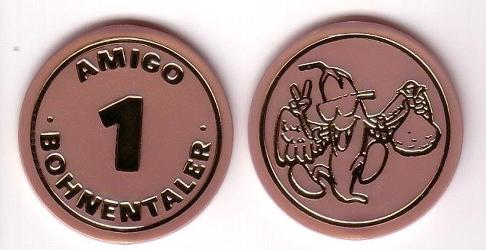 Bohnanza: Amigo Bohnentaler2004
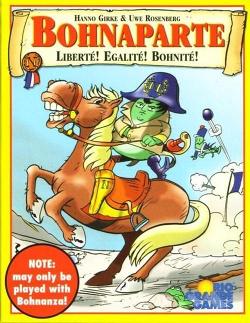 Bohnaparte: Liberté! Egalité! Bohnité!2004
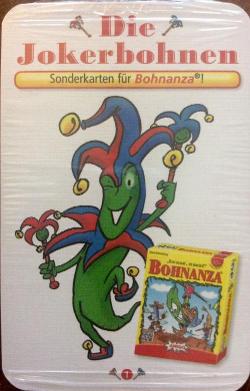 Bohnanza: Die Jokerbohnen2016
Dónde comprarlo
Precios de tiendas y copias de segunda mano, revisados cada día.
En las mesas de Ludoya
Todas las estadísticas en Ludoya- 808
- Partidas registradas
- 763
- Jugadores
- 45m 39s
- Partida media
- 263
- En colecciones
- 18
- En listas de deseos
6,9/10
de 126 reseñas en Ludoya
Kaskagues8,5 Small box, very good for travelling. Replayability is good enough. The game is simple yet engaging and will fit any table at least a couple of times. PROS - The game mechanics are based on card availability and social interaction so you will see that some people will take it as a casual/party game while others can still count cards and be a bit more hardcore. A short of Jaipur (push your luck) + Catan (social trading). COULD BE BETTER (Not actually cons) - I wasn't the biggest fan of the artwork as it was the first thing that made me doubt the game, but you eventually don't mind it that much. I would love an art revisit. - You eventually could feel like you always do the same thing every time you play. That's why I think replayability is good if you don't plan to play very often. For example, once every couple of months or while on holidays.
Alexandre MATHIS10,0 On a dû l'acheter une dizaine de fois, en allemand, en français, en version 7 joueurs, en cadeaux. Un jeu de référence pour la coopération et l'échange à table. Encore acheté récemment pour la ludothèque de notre travail !
Mestremuten6,0 Rating: 3/5 Production value: 2/4 Is the game in my collection/Love to have?: 1/1


Dudas de reglas
Respondidas a partir del reglamento por el asistente de reglas de Ludoya.
Can I reorder my hand or sort my cards between turns?
No — you may never change the order of the cards in your hand; the first card dealt is the first card in your hand and must remain visible at the front (page 2).
Do I have to plant the first card in my hand every turn?
Yes — in Phase 1 you must plant the first (visible) card from your hand, and you may optionally plant the new first card that becomes visible, but you cannot plant a third card then (page 3).
Who is allowed to trade, and can we use any cards from our hands in trades?
Only the active player may conduct trades with the other players (others may not trade among themselves); everyone may offer cards from their hands regardless of where they sit in the hand, and the active player may also use the two turned-over cards — but you may not trade cards already in your fields or cards you just received in a trade (page 4).
If I win a trade, do traded cards go into my hand immediately?
No — cards you receive in trade are placed horizontally next to your fields (not added to your hand) and must be planted during Phase 3 (pages 4–5).
Can I harvest only part of a field or harvest a single-card field while another field has multiple cards?
You must harvest an entire field (you cannot harvest only part of a field), and the Bean Protection Rule forbids harvesting a single-card field as long as you have another field containing more than one bean card (pages 5–6).
When I draw at the end of my turn where do the cards go, and what happens when the draw pile runs out?
In Phase 4 you draw three cards one after the other and place them at the back of your hand in the order drawn (page 5); if the draw pile is emptied you reshuffle the discard pile to form a new draw pile, and the game ends after the draw pile has run out for the third time (page 6).








Gratis, en web, Android e iOS
Juega a Bohnanza con Ludoya
- Tenlo en tu colecciónControla tu copia y sus expansiones, préstala a tus amigos o ponla en tu lista de deseos y te avisamos cuando baje de precio.Añadirlo a tu colección
- Registra cada partidaPuntuaciones, ganadores, temporizadores y fotos, y luego tus estadísticas: porcentaje de victorias, número de jugadores favorito, mejor puntuación.Registrar una partida
- Resuelve dudas de reglasPregunta lo que quieras sobre las reglas y obtén una respuesta sacada del reglamento, con la página donde comprobarla.Preguntar al asistente de reglas
- Encuentra gente con quien jugarloClubes, noches de juegos y eventos cerca de ti que sacan este juego a la mesa.Ver eventos
Datos del juego (jugadores, duración, edad, créditos) de BoardGameGeek.