
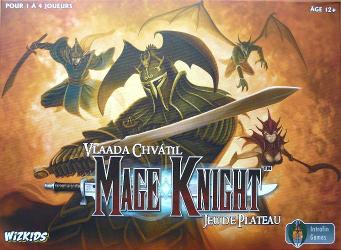
2011 · Fantasy
Mage Knight: Jeu de Plateau
Players take the role of powerful mage-knights exploring and subduing a peninsula of the Atlantean Empire. They move across a modular map, recruit units, learn skills, and customize a deck of spells, abilities, and artifacts to tackle castles, dungeons, and powerful foes. Combat uses cards and positioning; successful encounters grant experience, followers, and loot that expand options for future turns. Games support solo, cooperative, and competitive play, with players balancing exploration, city assaults, and interactions with other mage-knights as they grow in power and pursue strategic objectives.
- Joueurs
- 1–4 idéal à 1
- Temps de jeu
- 60–240 min
- Âge
- 14+
- Complexité
- 4,4 / 5
À propos du jeu
- Auteurs
- Illustration
- Éditeur




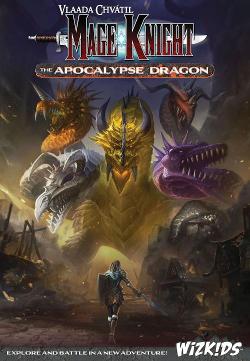
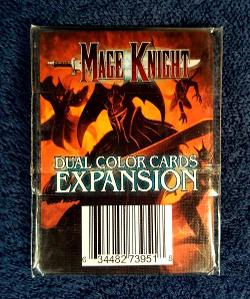
Extensions
Les voir dans Ludoya
Se joue avec
Les voir dans Ludoya
Où l'acheter
Prix des boutiques et exemplaires d'occasion, vérifiés chaque jour.
- Cardhaus GamesEn stock67.99 $
- Miniature MarketRupture de stock67.99 $
- GameplayVérifier le stock93.95 €
- PlayoteketVérifier le stock799 kr
- SpelexpertenEn stock895 kr
- Games EmpireRupture de stock139.99 $
- Fantasy ShopRupture de stock95.99 €
- FantasiapelitEn stock104 €
Sur les tables de Ludoya
Toutes les statistiques dans Ludoya- 474
- Parties enregistrées
- 162
- Joueurs
- 3h 7m
- Partie moyenne
- 124
- Dans des collections
- 33
- Dans des listes de souhaits
- 1
- Précommandé
6,7/10
sur 75 avis Ludoya
Jan Solo9,0 Eurogame duro. Exploración, gestión de mano y ligero deckbuilding. Eres un mago guerrero y deberás derrotar a enemigos, asaltar fortalezas, aprender conjuros, reclutar tropas, etc.
José [ホセー]10,0 Most wonderful adventure exploration game
Terumo10,0 NEV



Questions de règles
Réponses tirées du livret par l'assistant de règles de Ludoya.
When does my turn end — can I stop early or must I play all my cards?
You may end your turn by playing or discarding at least one card (or skip only if your hand is empty); if your Deed deck is empty you may forfeit your turn to announce the end of the round (you must announce if you also have no cards in hand) and other players get one last turn (page 1).
How do I move — do I spend mana or play cards to move, and how does exploring work?
You gain and spend move points from movement effects (cards/abilities) and play non-wound cards sideways for 1 Move each; spend move points according to terrain cost and you can spend 2 move points to explore and reveal an adjacent tile (pages 1).
How do wounds and healing work for my hero and for units?
Hero wounds are taken as Wound cards into your hand and can only be removed by spending healing (playing healing effects or buying healing at villages/monasteries); unit wounds are placed on the unit (making it unusable) and must be healed by paying the unit's healing cost (healing can be done any time on your turn except during combat) (page 2).
What's the sequence when resolving combat — what are the six combat steps?
Combat proceeds in six steps: 1) Reveal all enemies, 2) Ranged/Siege attacks, 3) Block, 4) Damage assignment, 5) Attack (melee) phase, and 6) Outcome/resolution (apply shields, rewards, removals, or withdrawals) (page 2).
Do I have to defeat every defender to conquer a city or keep?
A city is conquered when all its defenders are defeated (rampaging enemies do not count as defenders), after which shields/leader are awarded; fortified sites work similarly — defeat the site's defenders to place shields and mark the site (page 2).
When do I draw back up to my hand limit and can my keeps/cities change that limit?
At the end of your turn you discard any number of cards (you must discard if you didn't discard during the turn) and then draw until you reach your hand limit; being on or next to your own keeps or conquered cities can increase your hand limit (page 1).
Jeux similaires
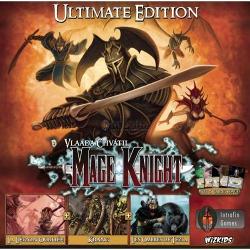 Mage Knight: Ultimate Edition2019
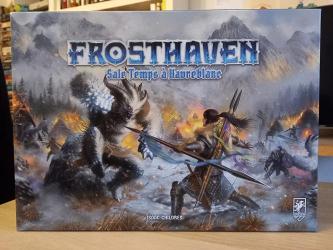 Frosthaven: Sale Temps à Havreblanc2025
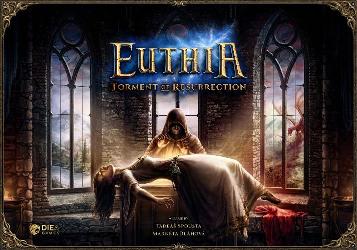 Euthia: Torment of Resurrection2021
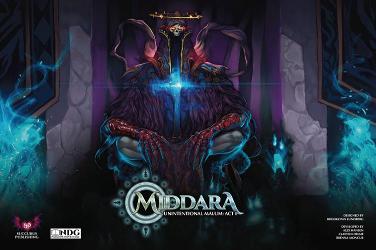 Middara: Unintentional Malum – Act 12019
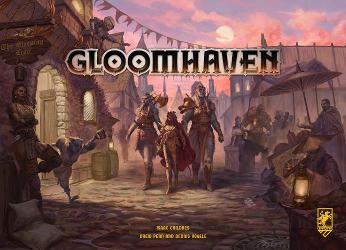 Gloomhaven (Second Edition)2025
 Sword & Sorcery: Ancient Chronicles2021
 Gloomhaven: Aventures à Havrenuit2019
 Tainted Grail: La Chute d'Avalon2020
 Black Rose Wars: Rebirth2022
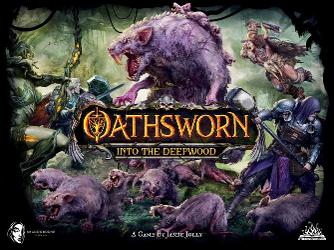 Oathsworn: Into the Deepwood2022
 Malhya: Lands of Legends2025
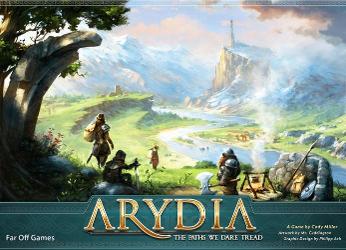 Arydia: The Paths We Dare Tread2025
Ceux qui l'ont possèdent aussi
Gratuit, sur le web, Android et iOS
Jouez à Mage Knight: Jeu de Plateau avec Ludoya
- Gardez-le dans votre collectionSuivez votre exemplaire et ses extensions, prêtez-le à vos amis ou ajoutez-le à votre liste de souhaits et soyez prévenu quand le prix baisse.Ajouter à votre collection
- Enregistrez chaque partieScores, gagnants, minuteurs et photos, puis vos statistiques : taux de victoire, nombre de joueurs préféré, meilleur score.Enregistrer une partie
- Réglez les questions de règlesPosez n'importe quelle question sur les règles et obtenez une réponse tirée du livret, avec la page pour vérifier.Demander à l'assistant de règles
- Trouvez des gens avec qui y jouerClubs, soirées jeux et événements près de chez vous qui mettent ce jeu sur la table.Voir les événements
Données du jeu (joueurs, durée, âge, crédits) issues de BoardGameGeek.