

2019 · Exploración espacial
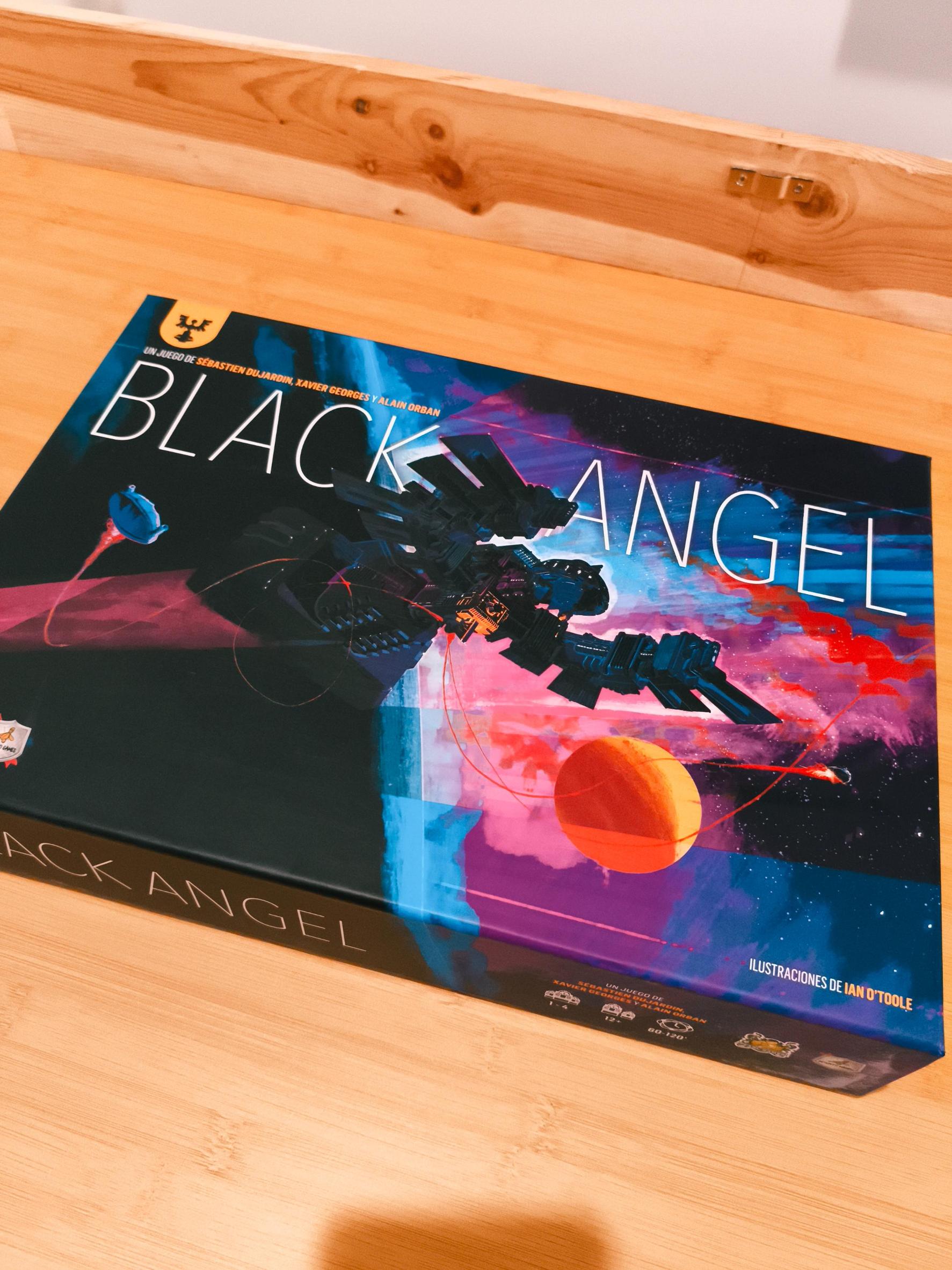
Black Angel
Players take the role of competing AIs co-managing a massive interstellar frigate carrying humanity’s genetic heritage after Earth becomes uninhabitable. On each turn players assign robot crew, play cards and roll dice to explore star systems, negotiate or clash with alien species, upgrade ship systems and fend off raiders. Game progress is tracked by a moving ship figure and a ravager deck; the game ends when the ship reaches the target world or the ravagers are exhausted, then players score points from missions completed, technologies developed, encounters resolved and other objectives. The highest-scoring AI wins.
- Jugadores
- 1–4 mejor con 3
- Duración
- 60–120 min
- Edad
- 12+
- Complejidad
- 3,9 / 5
Sobre el juego
- Publisher




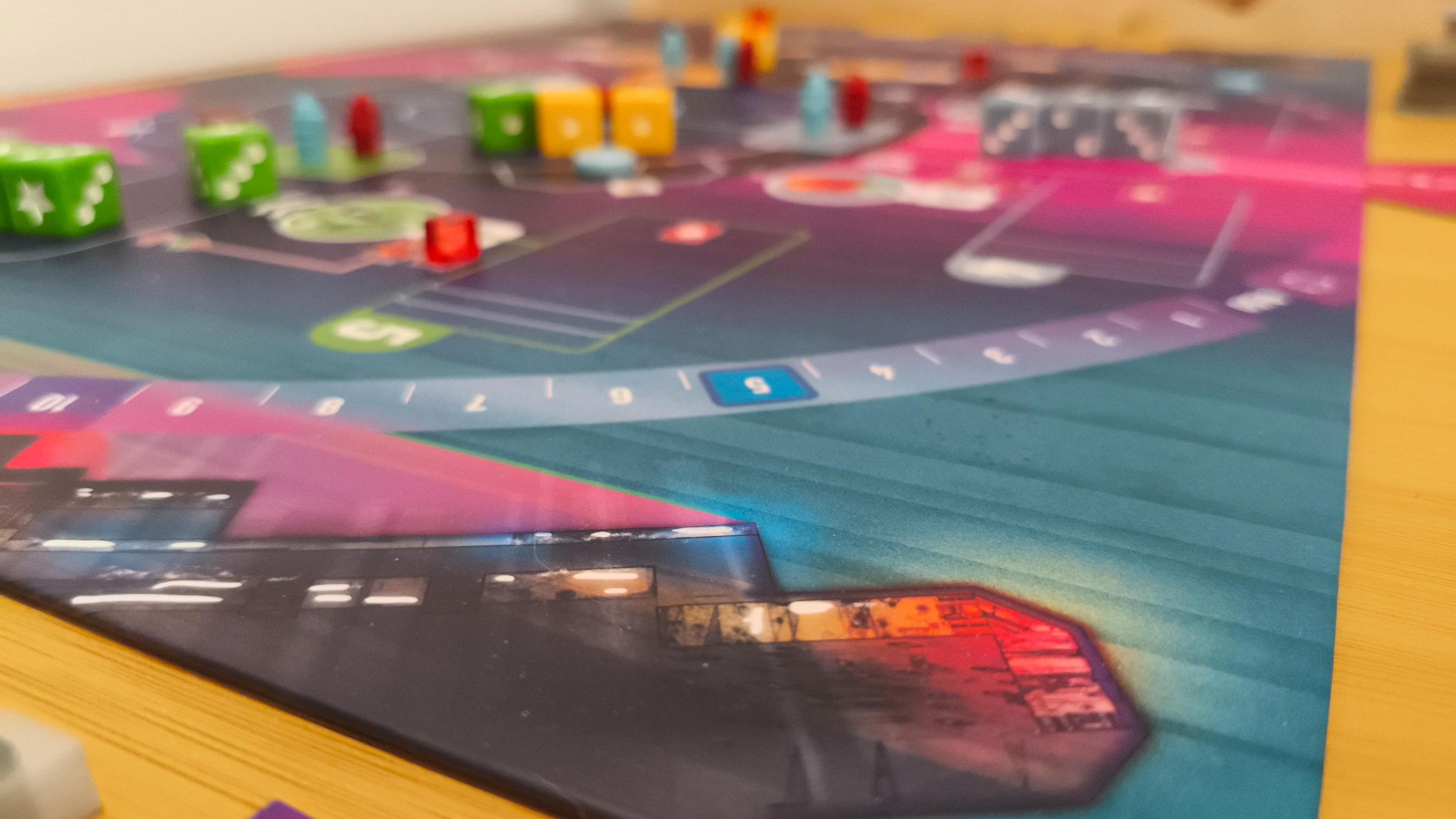
Fotos de mesas de Ludoya
Todas las fotos en Ludoya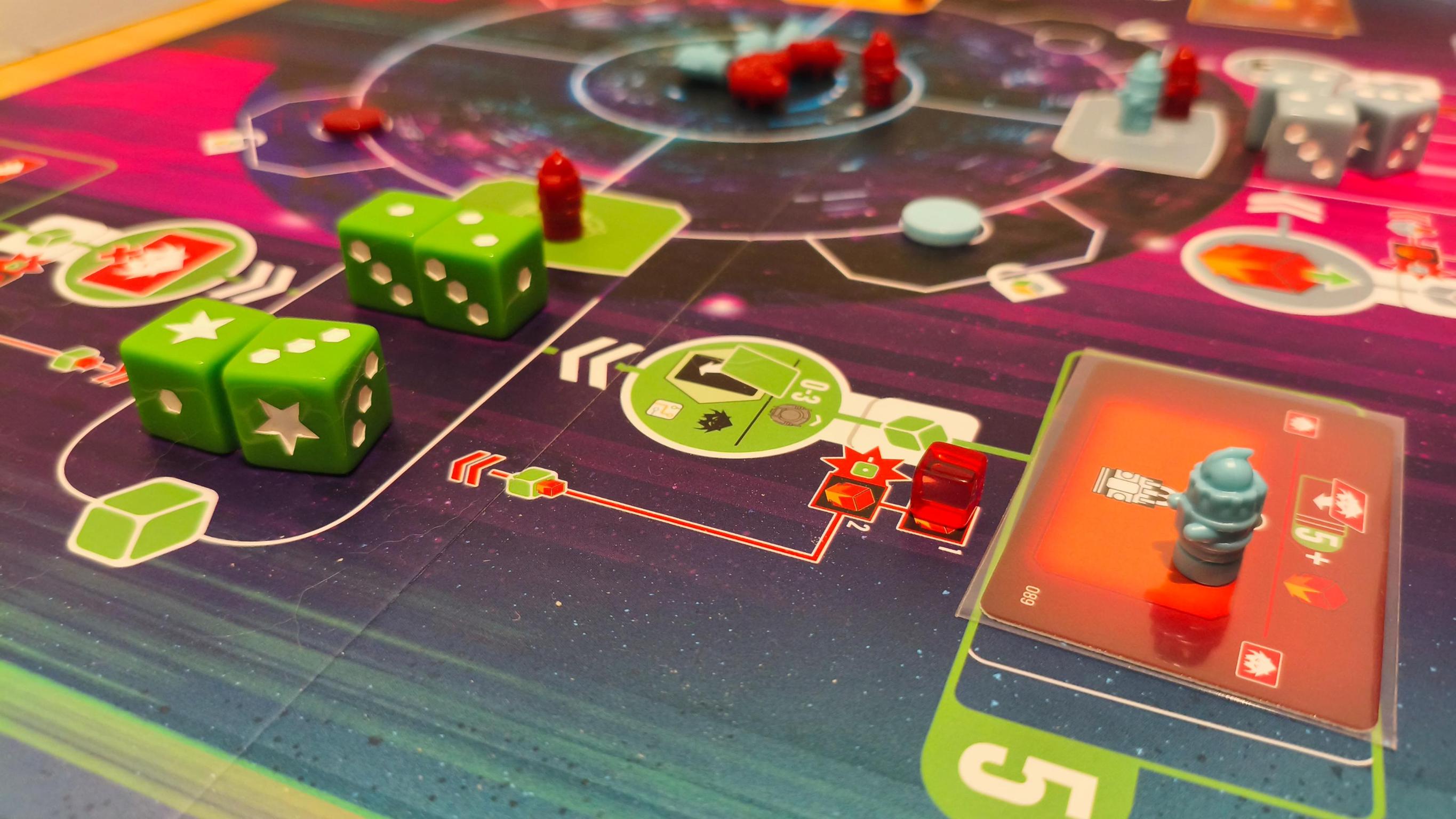
Dónde comprarlo
Precios de tiendas y copias de segunda mano, revisados cada día.
En las mesas de Ludoya
Todas las estadísticas en Ludoya- 104
- Partidas registradas
- 115
- Jugadores
- 1h 50m
- Partida media
- 89
- En colecciones
- 13
- En listas de deseos
6,4/10
de 21 reseñas en Ludoya
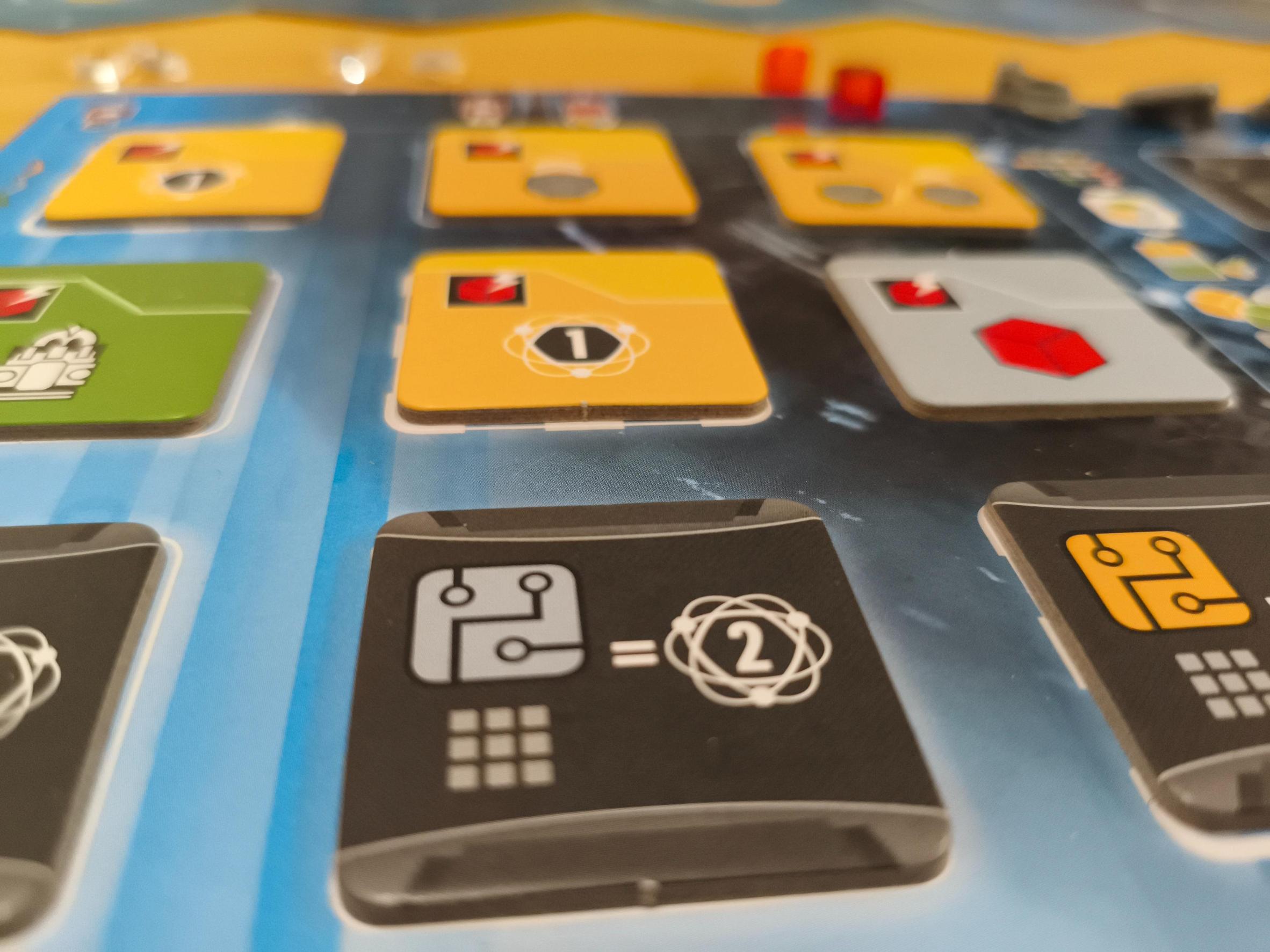
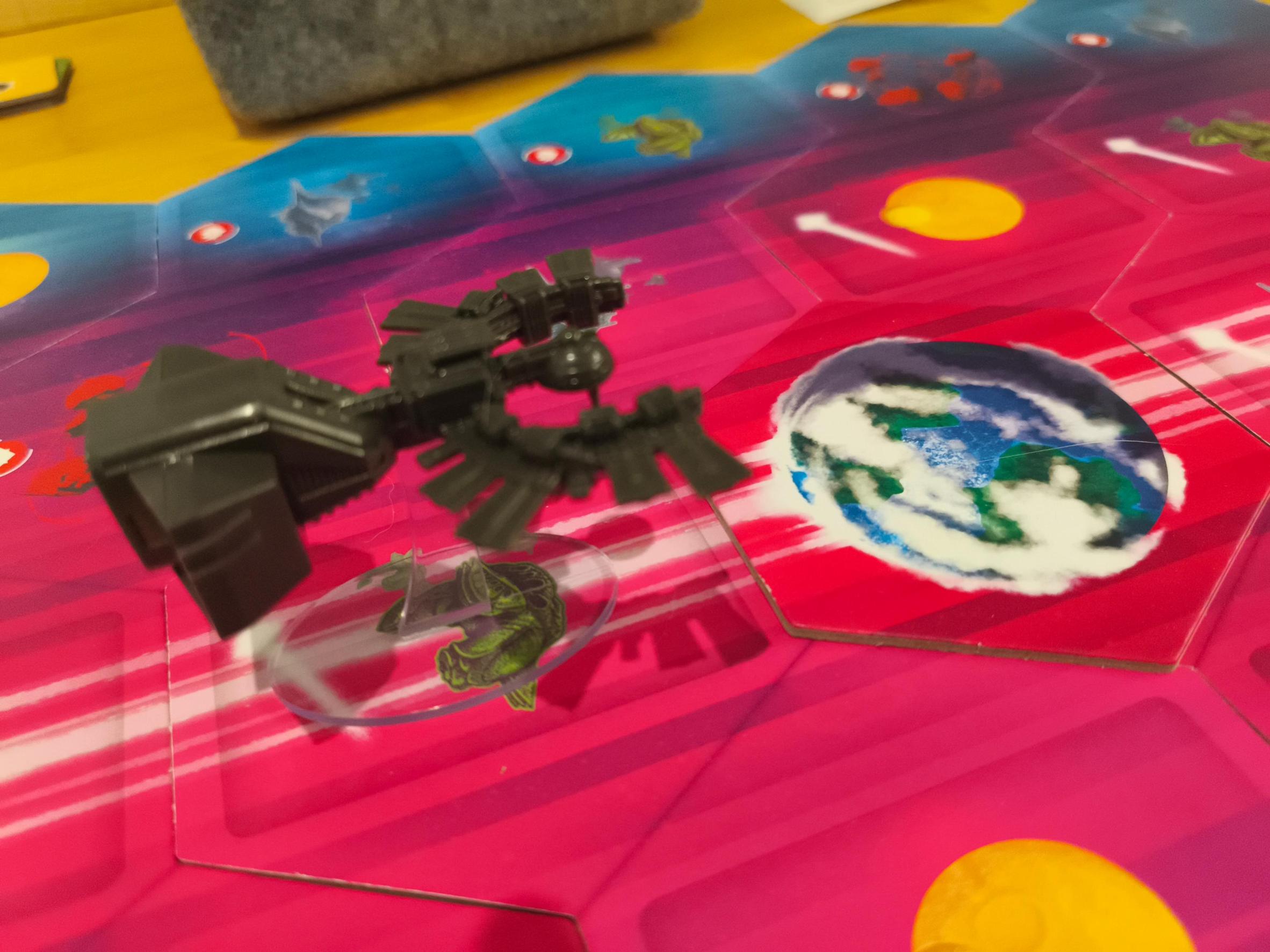
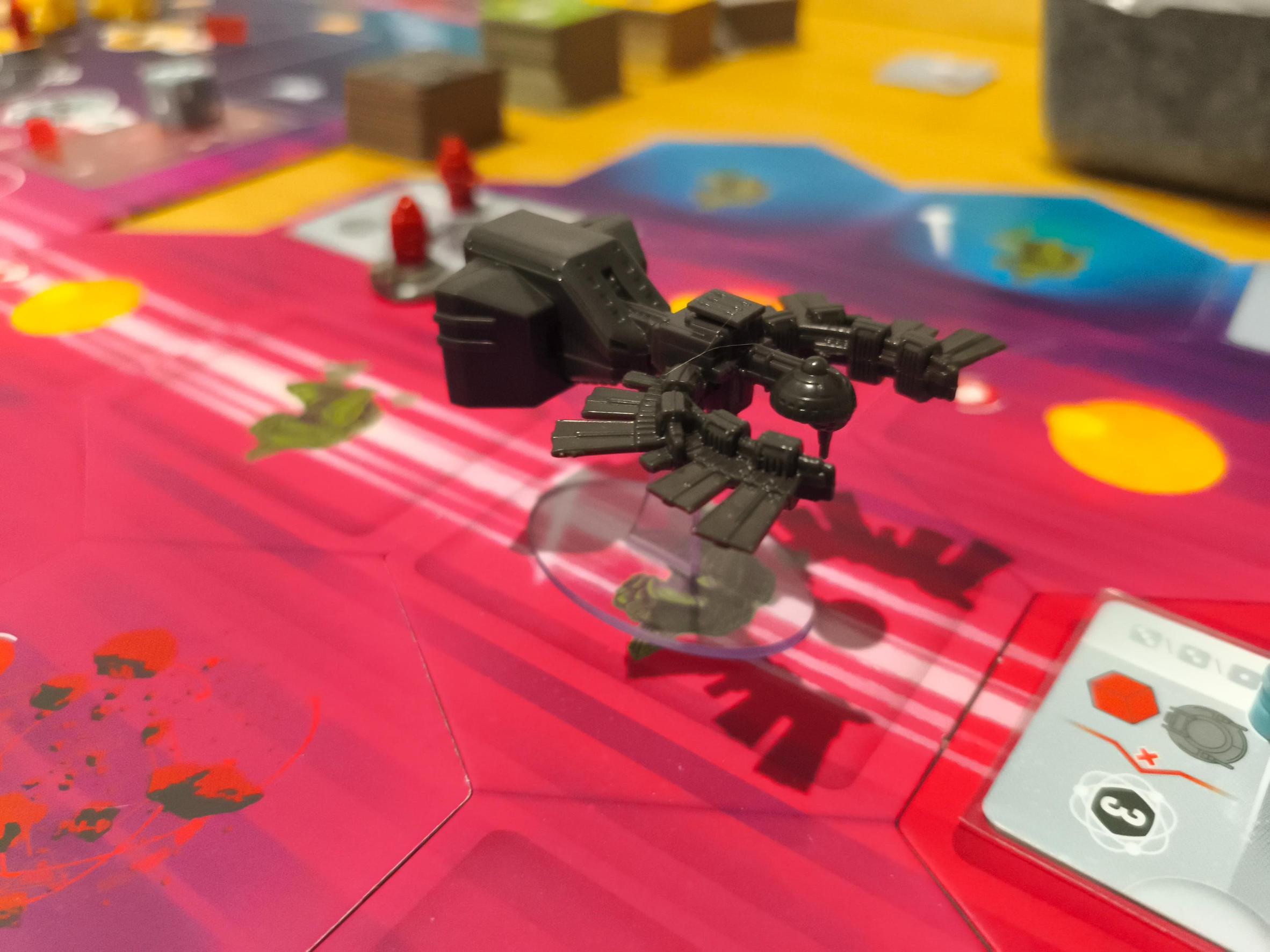
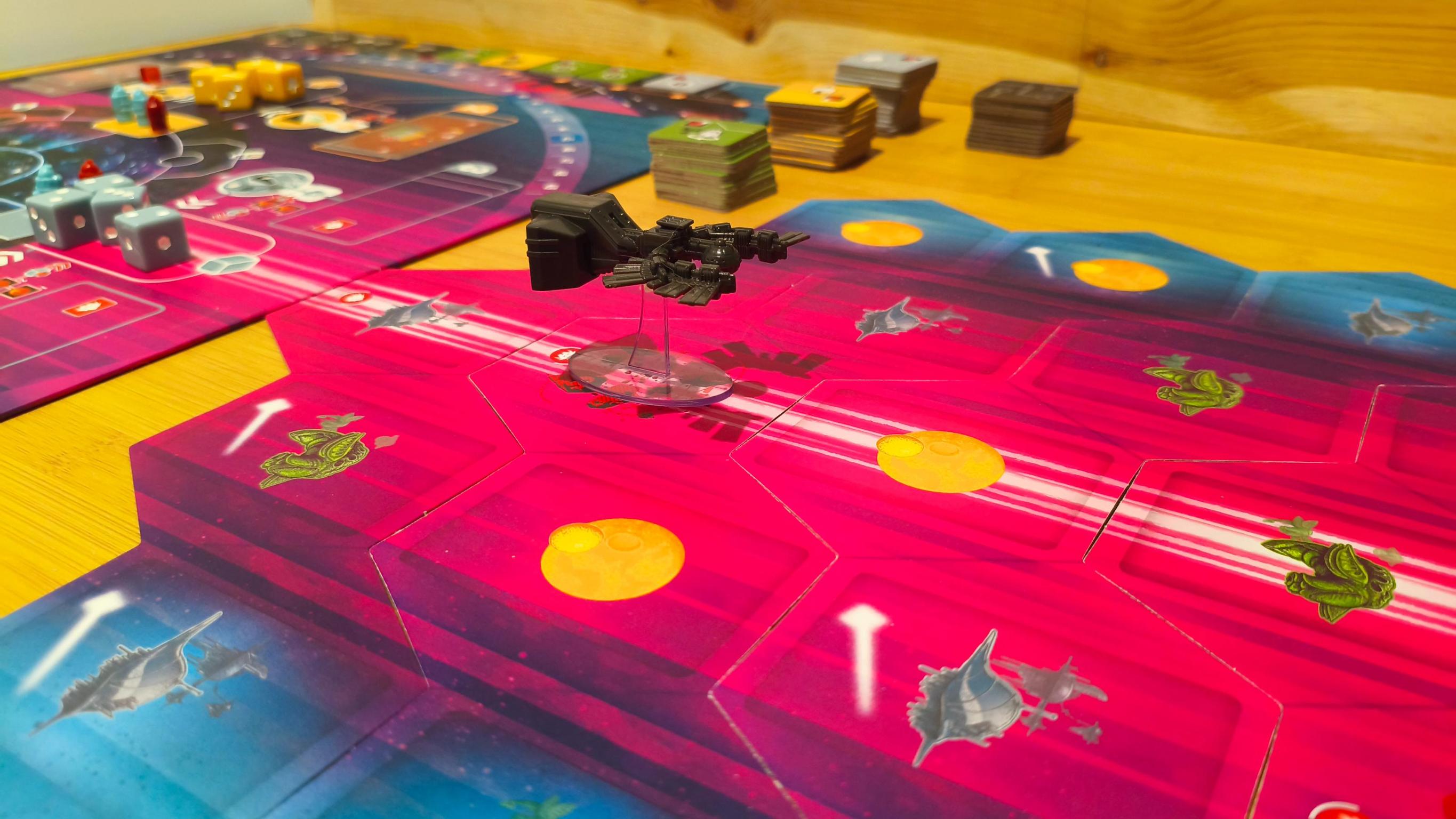
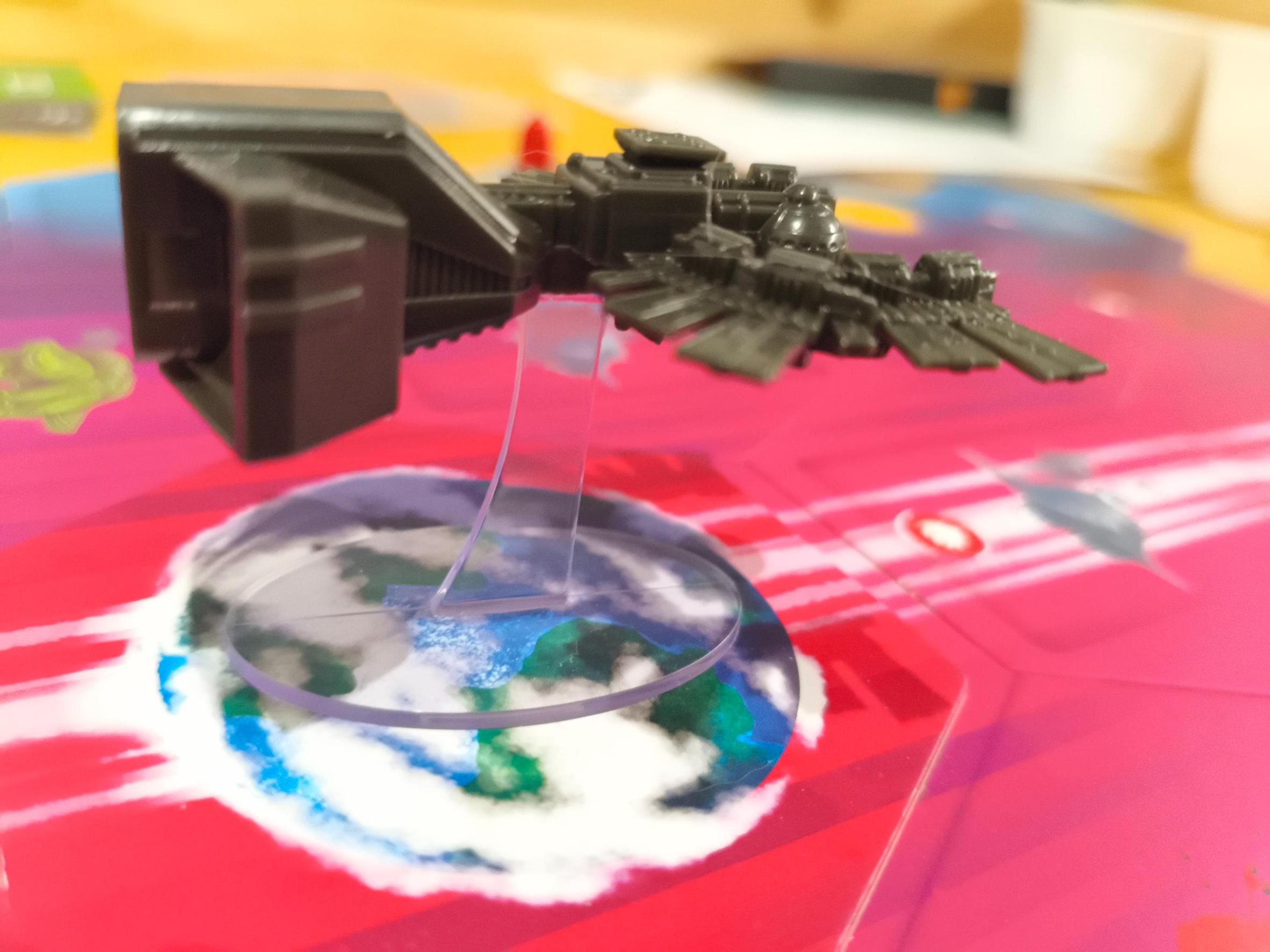
Evan5,9 At the start of the game players roll three dice, one each of the three colors of actions, and place them into their personal dice area in the ship board. Then going in turn order, each player may either select a die, and resolve the effect of a space that matches the color, a number of times equal to the pips on the die, with the dice ranging from 0-3 pips. Each of the three colors as one primary action, and one 'do things on the space map action'. For the primary actions, grey and green actions remove the two forms of damage the ship board takes on when players take space map actions. yellow dice build out your personal board of tiles. The personal board of tiles is a 3x3 grid for the tiles. New tiles slot in from the left or bottom, and if they meet another tile they push it along the chain, eventually possibly pushing tiles out of the grid entirely. The tiles come in two varieties, some are endgame scoring, some are special abilities that can be activated at the start of your turn, or when you put a damage cube on them after having taken a repair action. The most crucial thing about these tiles is that they provide you with a reliable way of getting the various resources in the game. More robots, or moving robots means you can get more dice. More spaceship tokens or moving space ship tokens means you can benefit more from the cards in your hand when you take space board actions. Then of course important luck mitigation resource production. Interestingly, the end game victory point tiles want to be pushed out, as when they sit on your grid they have a maximum scoring threshold of 4vp, but this gets increased when they get ejected. Die selection can be tricky, as you can take a die rolled by one of your opponents by paying them a crystal token. The value of the die you take can also be increased by 2 (to a maximum of 3 pips) if it's your own die being used. When you take a space action, you send out a cute little spaceship with one of your robots out into the hex board. If you end your movement on a planet matching the color of the die you used to take the action with, you can place a card from your hand that also matches the color of the space. The cards come in two varieties. Some give you a special bonus when they fall off the board as the main ship moves, others give you a new action opportunity to take with dice of the matching color. Once a player no longer can or wants to take actions, they instead reset. They discard any remaining dice, losing a point for each pip remaining, then clear the cards from the side of their board, bank the damage cubes they collected to get the extra tile activations with, then they gather the dice they deserve, roll them and place them into their area. They are allowed to lock a single die at this point, preventing that one die from being purchased by other players, by spending a crystal. Then the ship moves one tile forward, the rearmost tile falls off the world, maybe giving cool things to players sitting on the cards on that tile, then the tile is flipped and added to the front of the space map. Generally, resetting is rough. When you reset you don't get to do anything on your turn, and if you are the first player to reset, other players will often buy your dice out from under you by the time your turn comes back around. Getting their crystals is nice, but they are easy enough to come by that accelerating your next reset feels a bit frustrating. Yellow dice are also in impossibly high demand. Getting new and better tiles is an easy way to get victory points, or a crucial way to improve your engine. There are also some substantial flip luck elements in terns of how the cards that get played into space. A player with a good set of cards in their starting hand, really has a substantial advantage in the entire game. In the advanced rules it says when you have the opportunity to draw, you can draw 2 choose 1 instead of just top-deck, and this helps, but even so, there are late game cards and early game cards all shuffled in. That being said, despite the relative chaos, I find this game thrilling. I like the way the map scrolls, I like trying to manage my player board smartly and failing, I like flying through space in my little ships, I like planning what dice I need and when, and I like how the repair actions on the ships are rewarded in interesting ways. It's a heavily player driven game, and has gone differently each time. ★ Art, Iconography and components functional ★ Clever or interesting mechanisms ★ Reasonably low downtime between turns with mildly AP players ★ Multiple plays stay interesting ☆ Low or mitigatable luck elements ★★★☆☆ Raw enjoyment
Dudas de reglas
Respondidas a partir del reglamento por el asistente de reglas de Ludoya.
Si compro un dado de otro jugador, ¿puedo voltearlo gastando escombros para cambiar su cara?
No — no puedes voltear un dado que acabas de comprar; los escombros se pueden gastar para voltear dados en tu compartimento durante la Secuencia A, pero no un dado que compraste en ese turno (página 11).
Si activo la carta de misión de activación de otro jugador, ¿el dueño de la carta recibe algo?
Sí — después de resolver tus activaciones en una carta que no te pertenece, el propietario de la carta obtiene inmediatamente una activación gratis de esa carta (y solo una) sin usar un dado (página 11).
¿Puedo usar un dado de 0 (estrella) para mover naves cuando uso Ordenar tus naves?
Puedes usar un dado estrella (0) para la acción de Command Your Ships, pero no mueve una nave; aun así puedes completar los pasos restantes (y si usas un 0 debes colocar una carta de Misión) (páginas 7 y 9).
¿Un solo cubo de Daño en una acción de Black Angel reduce su valor de activación?
No — solo cuando una acción tiene 2 cubos de Daño el valor de activación de tu dado se reduce en 1; un solo cubo de Daño no afecta al valor de activación (página 7).
Cuando coloco una carta de Misión en el espacio, ¿cómo se aplican los Ravagers y los cubos de Daño?
Cuenta los iconos de nave Ravager adyacentes al hexágono y roba esa misma cantidad de cartas Ravager; coloca cada Ravager robado sobre la acción indicada del Black Angel y pon un cubo de Daño en el primer espacio de Daño vacío de esa acción — si la acción ya tiene 2 cubos de Daño, coloca el cubo sobre un dado de suministro del mismo color (o ignóralo si no hay un dado válido) (página 10).
¿Puedo elegir la Secuencia B aunque todavía tenga dados en mi compartimento, y qué pasa con esos dados?
Sí, puedes elegir la Secuencia B incluso con dados en tu compartimento, pero primero debes devolverlos a sus suministros y perder PV iguales al valor total que muestran esos dados; luego tomas y tiras dados según tus robots y puedes reservar uno pagando 1 recurso (páginas 6 y 12).
Juegos similares
 Anachrony2018
 Pulsar 28492018
 Andromeda's Edge: Deluxe Edition2024
 Alien Frontiers: Aurora2014
 Stars of Akarios2022
 SETI: En busca de vida extraterrestre2025
 ISS Vanguard2024
 Andromeda's Edge2025
 Circadians: Primera Luz2019
 Shackleton Base: Un viaje a la Luna2025
 Teotihuacán: Ciudad de Dioses – Edición completa2025
 Galaxy Postman2024







Gratis, en web, Android e iOS
Juega a Black Angel con Ludoya
- Tenlo en tu colecciónControla tu copia y sus expansiones, préstala a tus amigos o ponla en tu lista de deseos y te avisamos cuando baje de precio.Añadirlo a tu colección
- Registra cada partidaPuntuaciones, ganadores, temporizadores y fotos, y luego tus estadísticas: porcentaje de victorias, número de jugadores favorito, mejor puntuación.Registrar una partida
- Resuelve dudas de reglasPregunta lo que quieras sobre las reglas y obtén una respuesta sacada del reglamento, con la página donde comprobarla.Preguntar al asistente de reglas
- Encuentra gente con quien jugarloClubes, noches de juegos y eventos cerca de ti que sacan este juego a la mesa.Ver eventos
Datos del juego (jugadores, duración, edad, créditos) de BoardGameGeek.