
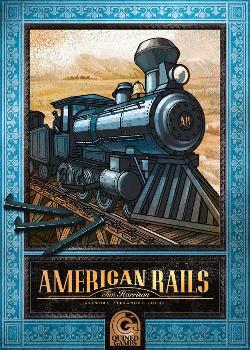
2009 · Économique
American Rails
Les joueurs incarnent de riches capitalistes qui gèrent des actions et des obligations dans six compagnies ferroviaires fictives à travers l’est des États-Unis. À chaque tour, ils achètent et vendent des titres, négocient avec les autres joueurs et répartissent leurs actions pour influencer la valeur des compagnies et leurs connexions ferroviaires. L’ordre des tours variable, la dilution des villes et les différentes configurations modifient les priorités stratégiques à chaque partie. La partie se termine lorsqu’une condition prédéfinie est remplie, et le joueur qui possède le plus d’argent gagne, après avoir augmenté la valeur de ses placements et établi le réseau ferroviaire le plus rentable.
- Joueurs
- 3–5 idéal à 4
- Temps de jeu
- 90 min
- Âge
- 14+
- Complexité
- 2,9 / 5
À propos du jeu
- Auteurs
- Illustration


Photos des tables de Ludoya
Toutes les photos dans Ludoya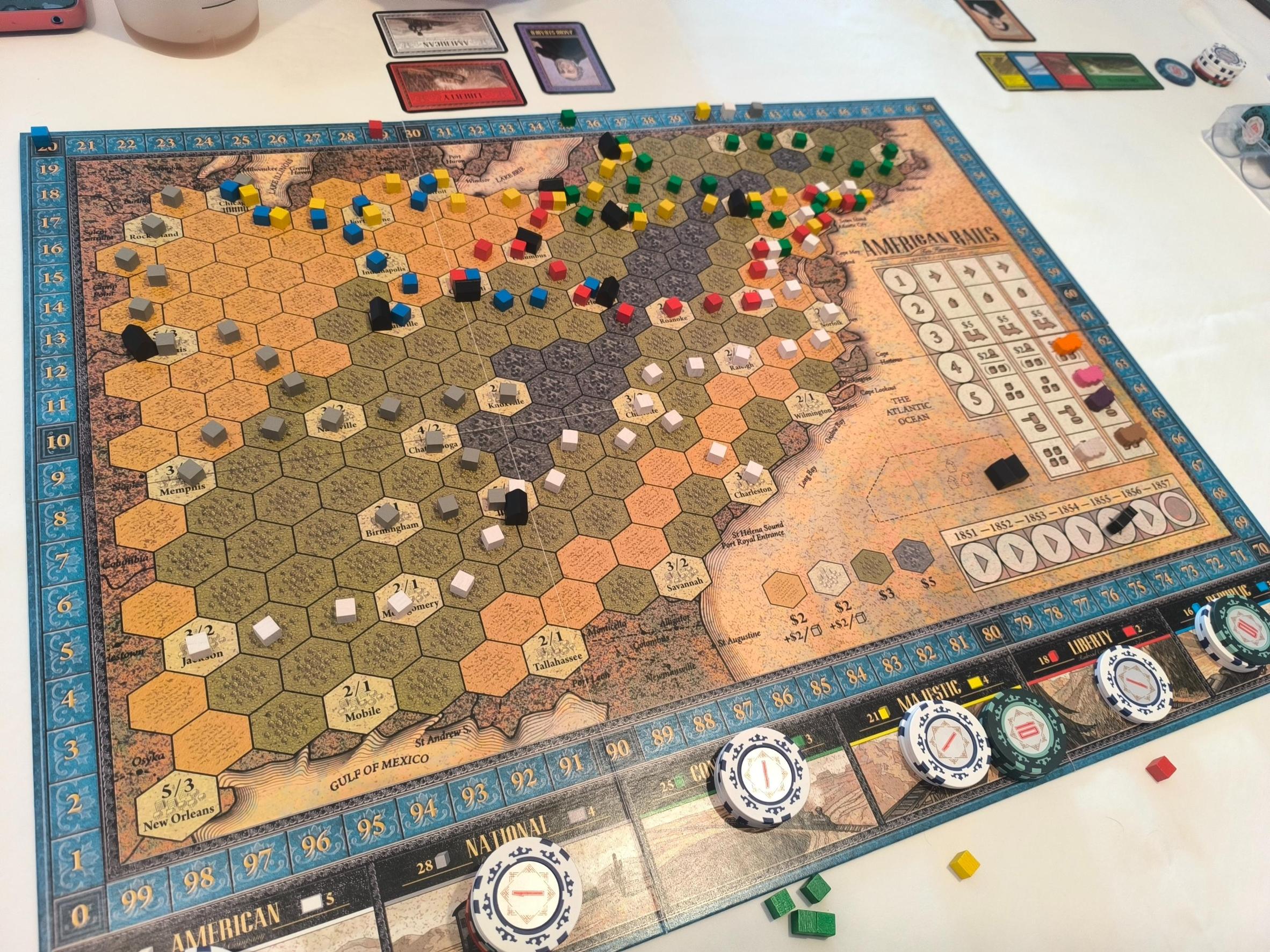
Sur les tables de Ludoya
Toutes les statistiques dans Ludoya- 25
- Parties enregistrées
- 57
- Joueurs
- 1h 47m
- Partie moyenne
- 7
- Dans des collections
- 2
- Dans des listes de souhaits
7,0/10
sur 6 avis Ludoya
Evan7,0 This game is not substantially different from Chicago Express and Paris Connection, but it does have the potential to go on longer than it's cousins. It's been just long enough since I played the other two games that I don't feel comfortable writing up a list of differences between the games, but from our one play it felt like the thing that makes this game really interesting and different is that you don't know quite when the end of the game will trigger, which makes your mental math about what stocks are worth difficult, since stocks pay out at the end of each round. I enjoyed the game quite a bit, but I've liked most train games I've played. One of my friends who likes Paris Connection because it's short, and likes 1846 because it's more about stocks than logistics for him, disliked this game a lot. He felt the game relies too much on players knowing what their own best interests are and then acting on them in order for the game to be stable and avoid a runaway leader. In fact, in our game, despite other players having the opportunity to stop me, I was able to buy both copies of the stock in the red company, which seemed like a fairly chumpy move since Red wasn't a large or impressive company, however, players had more or less left it alone all game, and since I was getting 100% of it's payout, this small company amounted to more money coming to me than other players were getting for their 30-50% of larger companies. ★ Art, Iconography and components functional ★ Clever or interesting mechanisms ★ Reasonably low downtime between turns with mildly AP players ★ Multiple plays stay interesting ★ Low or mitigatable luck elements ★★☆☆☆ Raw enjoyment
Premières impressions · 1 partie

















Gratuit, sur le web, Android et iOS
Jouez à American Rails avec Ludoya
- Gardez-le dans votre collectionSuivez votre exemplaire et ses extensions, prêtez-le à vos amis ou ajoutez-le à votre liste de souhaits et soyez prévenu quand le prix baisse.Ajouter à votre collection
- Enregistrez chaque partieScores, gagnants, minuteurs et photos, puis vos statistiques : taux de victoire, nombre de joueurs préféré, meilleur score.Enregistrer une partie
- Comptez les points sans papierUtilisez les feuilles de score et les aides de jeu de la communauté, et laissez Ludoya additionner les points.Trouver des feuilles de score
- Trouvez des gens avec qui y jouerClubs, soirées jeux et événements près de chez vous qui mettent ce jeu sur la table.Voir les événements
Données du jeu (joueurs, durée, âge, crédits) issues de BoardGameGeek.