
2015 · Civiltà
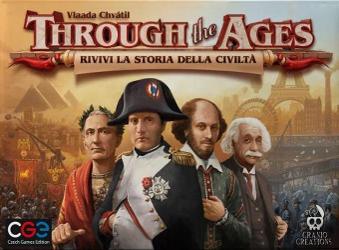
Through the Ages: Rivivi la Storia della Civiltà
I giocatori guidano una civiltà dall’antichità all’età moderna, sviluppando tecnologie, eleggendo leader, costruendo edifici e meraviglie e gestendo cibo, risorse e popolazione. Le carte per tecnologie, meraviglie e leader entrano in una linea condivisa di draft, dove col tempo diventano più facili da acquisire; acquisire e attivare le carte richiede di bilanciare scienza, cibo e minerale. La forza militare si costruisce tramite carte come le strutture civili e influenza gli avversari attraverso razzie che possono rubare risorse, uccidere leader, far perdere popolazione o cultura, anche se non c’è una mappa territoriale. Il giocatore con più cultura alla fine dell’età moderna vince.
- Giocatori
- 2–4 ideale in 3
- Tempo di gioco
- 120 min
- Età
- 14+
- Complessità
- 4,4 / 5
Il gioco
- Autori
- Illustrazioni
- Editore




Espansioni
Vedile in Ludoya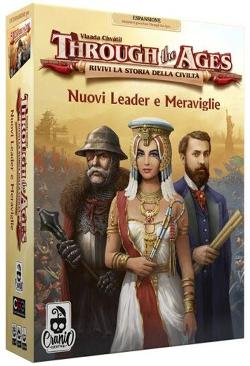
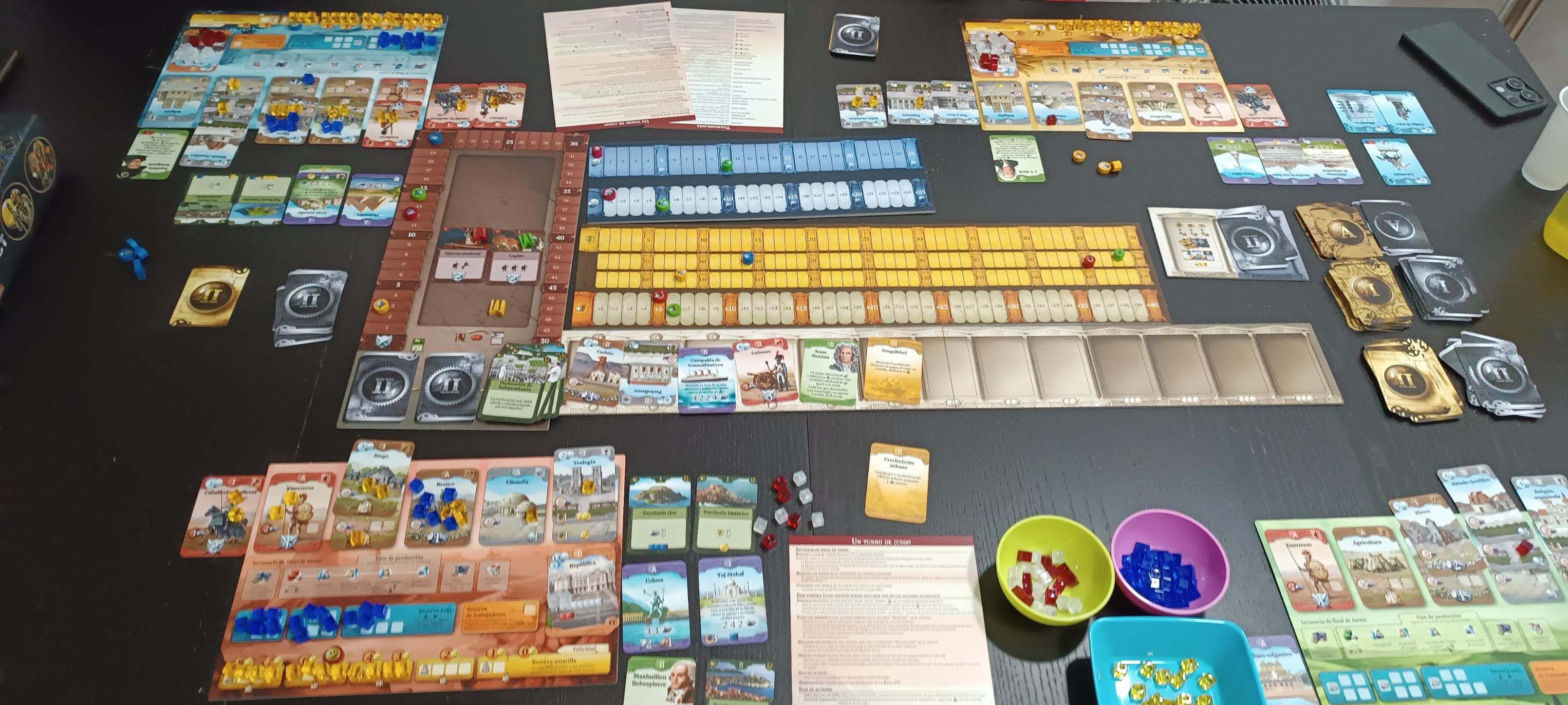
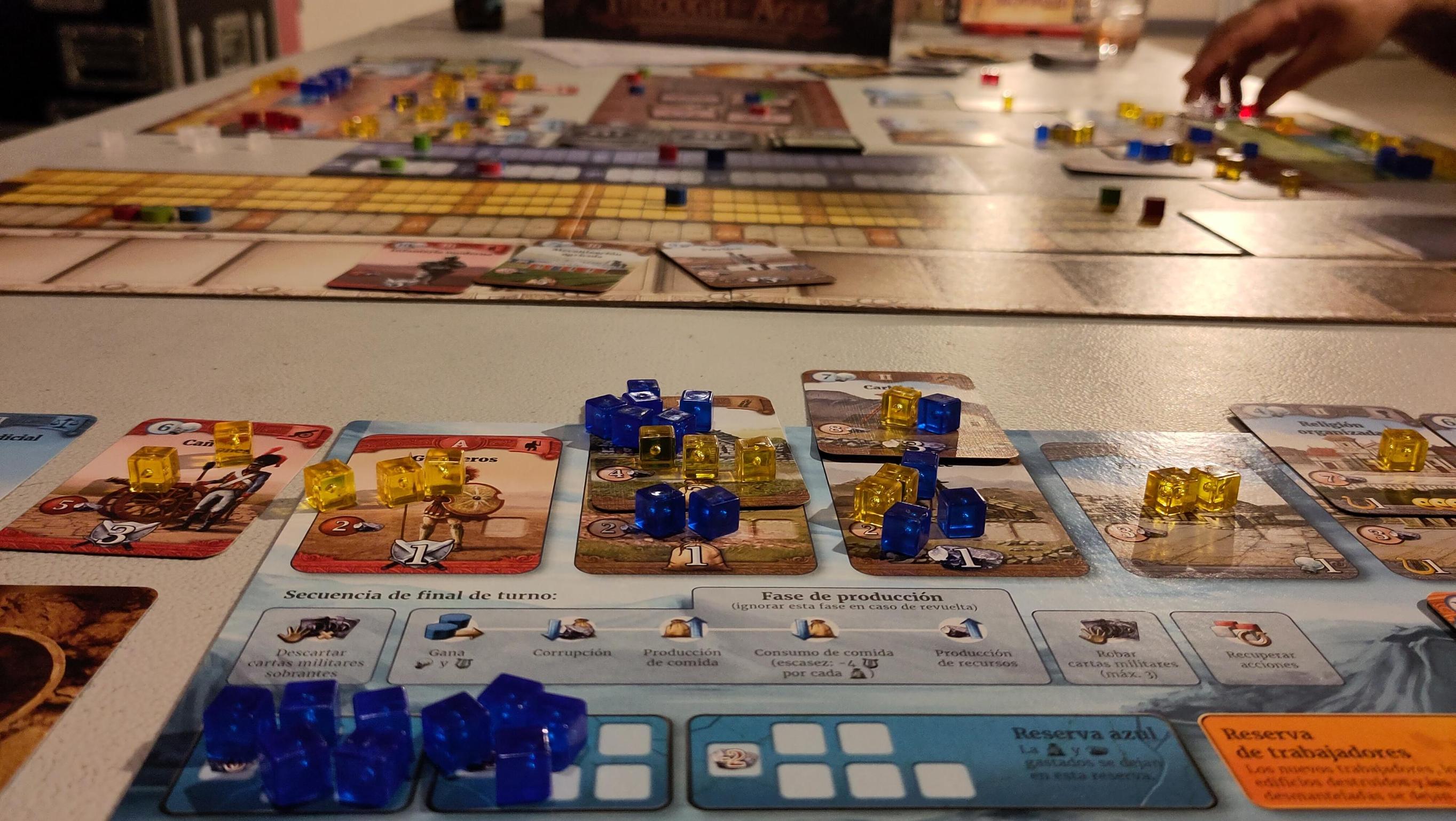
Foto dai tavoli di Ludoya
Tutte le foto in Ludoya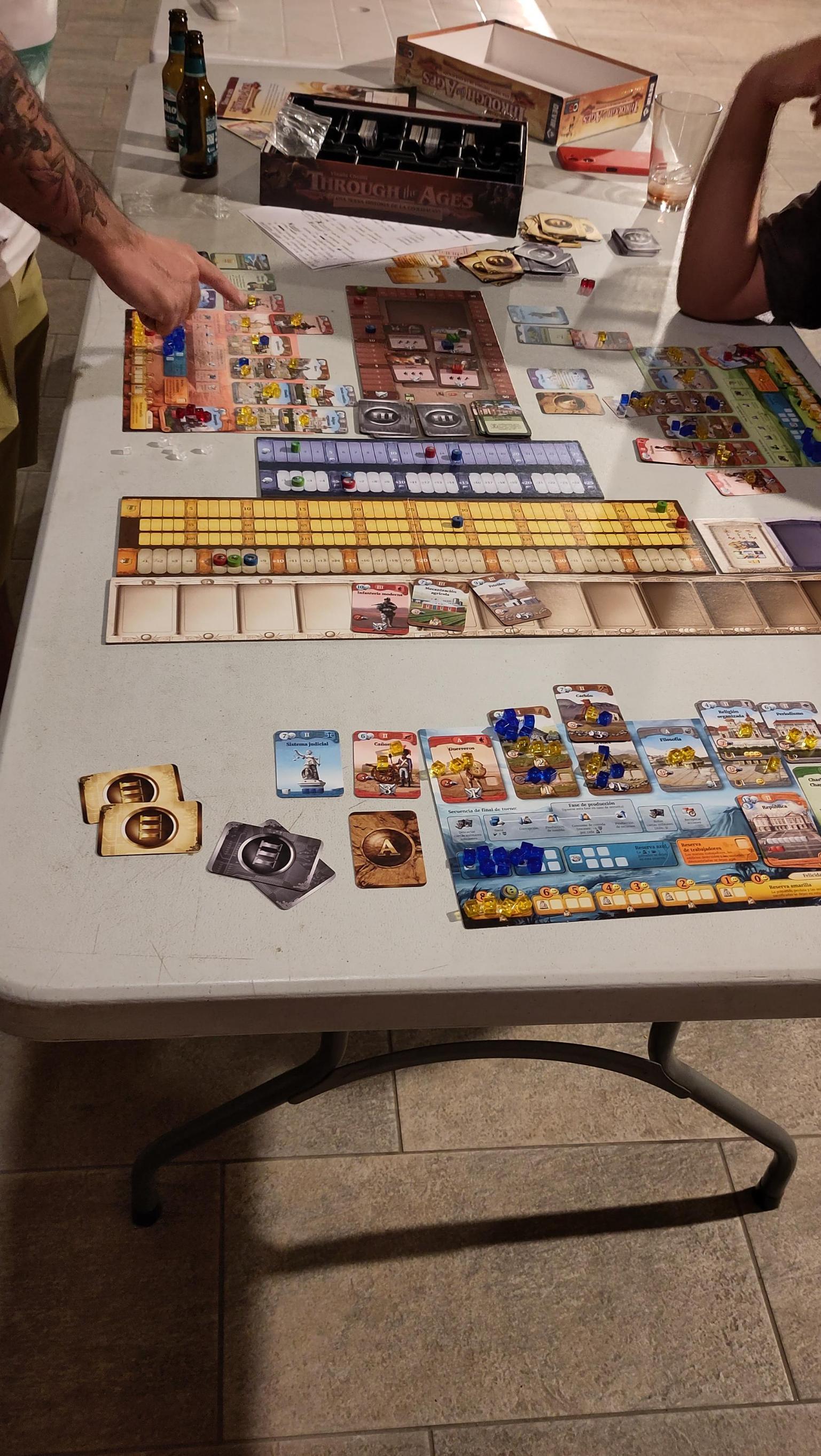
Dove comprarlo
Prezzi dei negozi e copie usate, controllati ogni giorno.
Sui tavoli di Ludoya
Tutte le statistiche in Ludoya- 1231
- Partite registrate
- 457
- Giocatori
- 3h 24m
- Partita media
- 220
- Nelle ludoteche
- 39
- Nelle liste dei desideri
- 2
- Preordinato
7,4/10
da 134 recensioni Ludoya
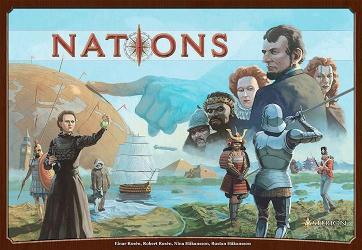
Balleflass7,0 Great game, very interestning mechanics, but the biggest gripe/problem is the downtime between players later in the game when people have a ton of cubes and upkeep to do. Stopped playing the physical edition because I prefer Nations as the physical game while playing a ton of TTA on the app.
Evan2,5 This is a card driven civilization game where players use a limited supply of action tokens to take cards and add them to their tableaus or spend them on cards in their tableaus to activate those cards. What you are essentially doing is trying to move your markers up on various tracks in relationship to other players. Then event cards reward you or punish you for your relative position. The most crucial track is the raw points income track. I found cards that give significant improvements on this track to be somewhat rare, and hard to construct when you did get them. Most of these cards require a lot of stone, which is a resource another type of building produces. My second play of this game took about 5.5 hours plus about an hour of rules with 2 players. In that play, I would up missing the 2 stone production building. I wasn’t worried, thinking I would grab the 3 stone building when it finally hit the conveyor belt of cards but due to the random element inherent in a card driven game, the 3 stone card didn’t come out until late into the pile, and despite having a ton of 1 stone production buildings, I fell impossibly behind my opponent in points income. To compensate, I pushed into Military, thinking that If I could hit my opponent with the negative effects of the events it would provide me a catch-up opportunity, but the game has a very odd mechanism for military. You get a separate, much smaller budget of action markers for recruiting military units, and spending to play military event cards. Additionally at the end of your turn, you draw new cards from the event deck equal to the number of unused military actions you have. This meant that I was spending my military actions to build up forces, and my opponent meanwhile was able to fill his hand with either high scoring non-military events he could seed into the events deck, or high value defense cards he could use to counter my aggression and war cards. The result was a lot of failed actions and frustration on my part, as I led on the military track through the entire game, but in 6 hours only got the benefits of hitting my opponent once. My opponent said that by not spending his military actions he also was drawing enough cards that he saw a lot of cards that would have been powerful for me go by and he was able to just discard them. Luck of the draw here also didn’t help me, as I often times would only draw peaceful events and I didn’t much to help my strategy. I enjoyed a lot of the process of this game. I liked the way the cubes moved around the board meaning different things in different places. I liked the card drafting mechanism. I enjoyed the theme. The game also reminded me of a lot of games I’ve really loved in the past, however the downtime between turns is extremely long, and for the overall length of the game I’m not thrilled with the luck driven elements. ★ Art, Iconography and components functional ★ Clever or interesting mechanisms ☆ Reasonably low downtime between turns with mildly AP players ★ Multiple plays stay interesting ☆ Low or mitigatable luck elements ★★☆☆☆ Raw enjoyment
Garfield8,0 #31 Never play it with 4 player! Takes way too long. Beside that it's a very interesting civ game. [c] Theme: ★★★★☆ <!-- size 7]Very good --> Gameplay: ★★★★☆ <!-- size 7]A lot of interesting decisions --> Interaction: ★★★☆☆ <!-- size 7]You can fight a little bit --> Artwork: ★★★☆☆ <!-- size 7]Could be nicer --> Luck: ★★☆☆☆ <!-- size 7]Little, random cards --> Strategy: ★★★★☆ <!-- size 7]Multiple strategies possible --> Components: ★★☆☆☆ <!-- size 7]Could be better --> Play duration: ★☆☆☆☆ <!-- size 7]Unfortunately very long --> Easy to teach: ★★☆☆☆ <!-- size 7]Ok (45min) --> Rules quality: <!-- size 7]not read --> Setup time: ★★★☆☆ <!-- size 7]Ok --> No downtime: ★★★☆☆ <!-- size 7]Ok --> Replay value: ★★★★☆ <!-- size 7]Different strategies possible, a lot of different cards --> [/c]
Prossimi eventi con questo gioco
Tutti gli eventiDomande sulle regole
Risposte tratte dal regolamento dall'assistente per le regole di Ludoya.
Come faccio a ottenere più lavoratori/popolazione: devo spendere un’azione civile e cibo?
Per aumentare la popolazione devi spendere un'azione civile e pagare il cibo richiesto; i nuovi lavoratori provengono dalla riserva/banca gialla dei lavoratori. (p. 9)
I leader e le meraviglie richiedono un’azione per essere giocati?
Prendere/giocare le carte Leader richiede un’azione civile (si acquisiscono come le altre carte civili), mentre piazzare/completare una meraviglia richiede pagare il relativo costo e seguire le regole di costruzione. (pp. 10–11)
Quando devo scartare le carte militari? Le scarto alla fine del mio turno?
Scarti le carte militari in eccesso durante la fase di scarto di fine turno ogni volta che hai più carte militari di quelle consentite. (p. 20)
Quando riduce la mia produzione la corruzione: immediatamente o alla fine del turno?
La corruzione viene applicata durante la fase di Produzione alla fine del tuo turno e riduce la tua produzione di risorse/punteggio come specificato nelle regole di produzione. (p. 20)
Perdo i miei gettoni gialli/coloni quando finisce un’Era?
Alla fine di un’Era perdi i gettoni gialli inutilizzati (e rimuovi i leader e le meraviglie non completate come descritto nella procedura di fine Era). (p. 21)
Come funzionano le tattiche e le carte militari: quando le scelgo/gioco e quando vengono risolte le battaglie?
Le tattiche vengono scelte e le carte militari vengono preparate nella fase politica/militare, poi rivelate e risolte durante la fase di eventi/risoluzione; consulta le regole della fase politica e delle tattiche per la scelta, la copia e la risoluzione delle tattiche e degli eserciti. (pp. 16, 18)



Gratis, sul web, Android e iOS
Gioca a Through the Ages: Rivivi la Storia della Civiltà con Ludoya
- Tienilo nella tua ludotecaTieni traccia della tua copia e delle sue espansioni, prestala agli amici o mettila nella lista dei desideri e ricevi un avviso quando il prezzo scende.Aggiungilo alla tua ludoteca
- Registra ogni partitaPunteggi, vincitori, timer e foto, poi le tue statistiche: percentuale di vittorie, numero di giocatori preferito, miglior punteggio.Registra una partita
- Risolvi i dubbi sulle regoleChiedi qualsiasi cosa sulle regole e ottieni una risposta dal regolamento, con la pagina per verificarla.Chiedi all'assistente per le regole
- Trova persone con cui giocarloClub, serate di gioco ed eventi vicino a te che portano questo gioco in tavola.Vedi gli eventi
Dati del gioco (giocatori, durata, età, crediti) da BoardGameGeek.