
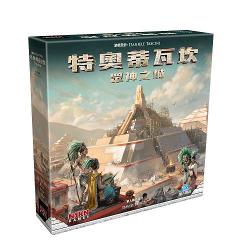
2018 · 城市建设
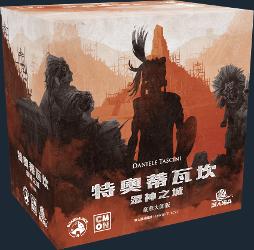
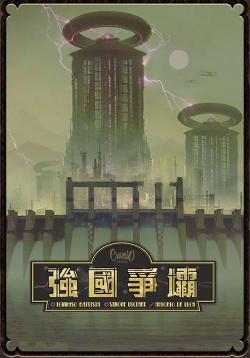
特奧蒂瓦坎:眾神之城
玩家控制会随着行动而变强的工人骰子,在一个模块化的城市版图上移动单个骰子,并执行每个板块上两个位置之一的行动。 轮到自己时,玩家可以选择:执行一个行动并升级那个工人,或者不升级、直接拿一个即时奖励,同时还要管理资源以及养活自己劳动力的需求。 可进行的行动包括:发展科技、建造住宅、在三座主要神庙上前进,以及在三个连续时代里为中央阶梯金字塔做贡献。胜负由定期结算后的累计声望来决定。
- 人数
- 1–4 最佳 4 人
- 游戏时长
- 90–120 分钟
- 年龄
- 14+
- 复杂性
- 3.8 / 5
关于这款游戏
- 出版社



 特奥蒂瓦坎文明余晖(特奧蒂瓦坎文明餘暉)2019
 特奧蒂瓦坎 希特爾之影2020
 特奥蒂瓦坎:开疆拓土2021
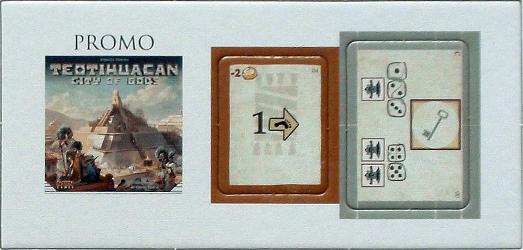 Teotihuacan: Dice Settlers Promo2018
 Teotihuacan: City of Gods – Pyramid Tile Promo, Red Temple2019
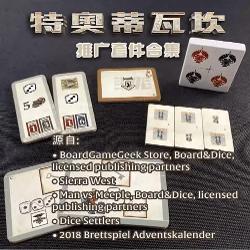 特奥蒂瓦坎:推广套件合集2019
 Teotihuacan: City of Gods – 5th Player Expansion2020
 Teotihuacan: City of Gods – Decoration Tiles2019
 Teotihuacan: Brettspiel Adventskalender 2018 Promo2018
 Loot Box #12022
 Teotihuacan: City of Gods – Man vs Meeple Promo2019
 Brettspiel Adventskalender 20182018
 Teotihuacan: Expert Challenges – Book 12021
 Teotihuacan: Expert Challenges – Book 22021
 Teotihuacan: Expert Challenges – Book 32022
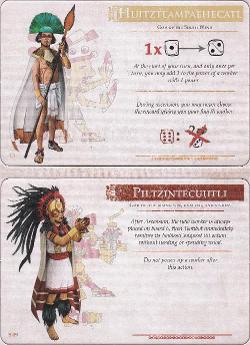 Teotihuacan: New Priests2024
 Teotihuacan: City of Gods – 5th Player Expansion2024
来自 Ludoya 牌桌的照片
在 Ludoya 中查看所有照片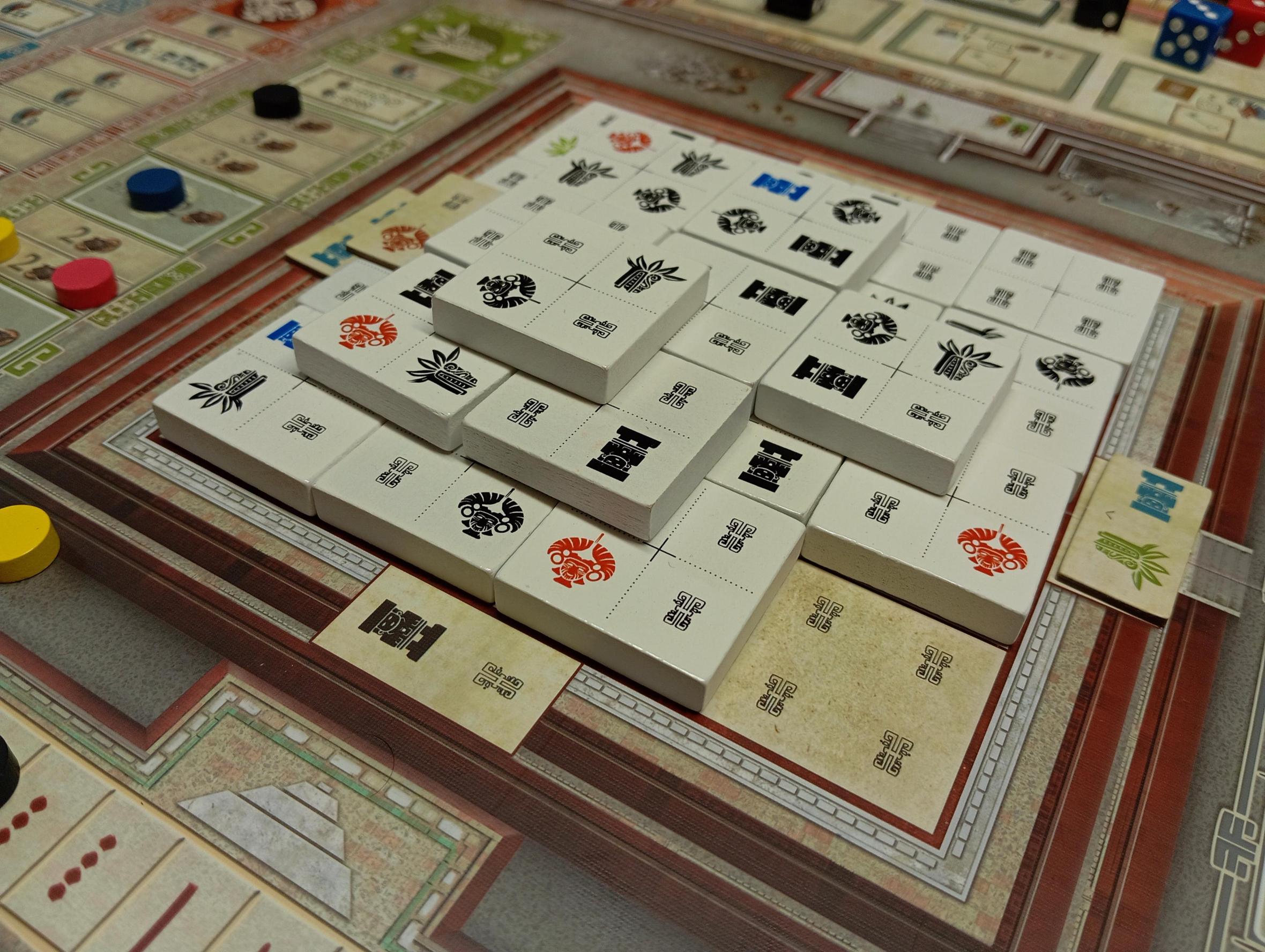
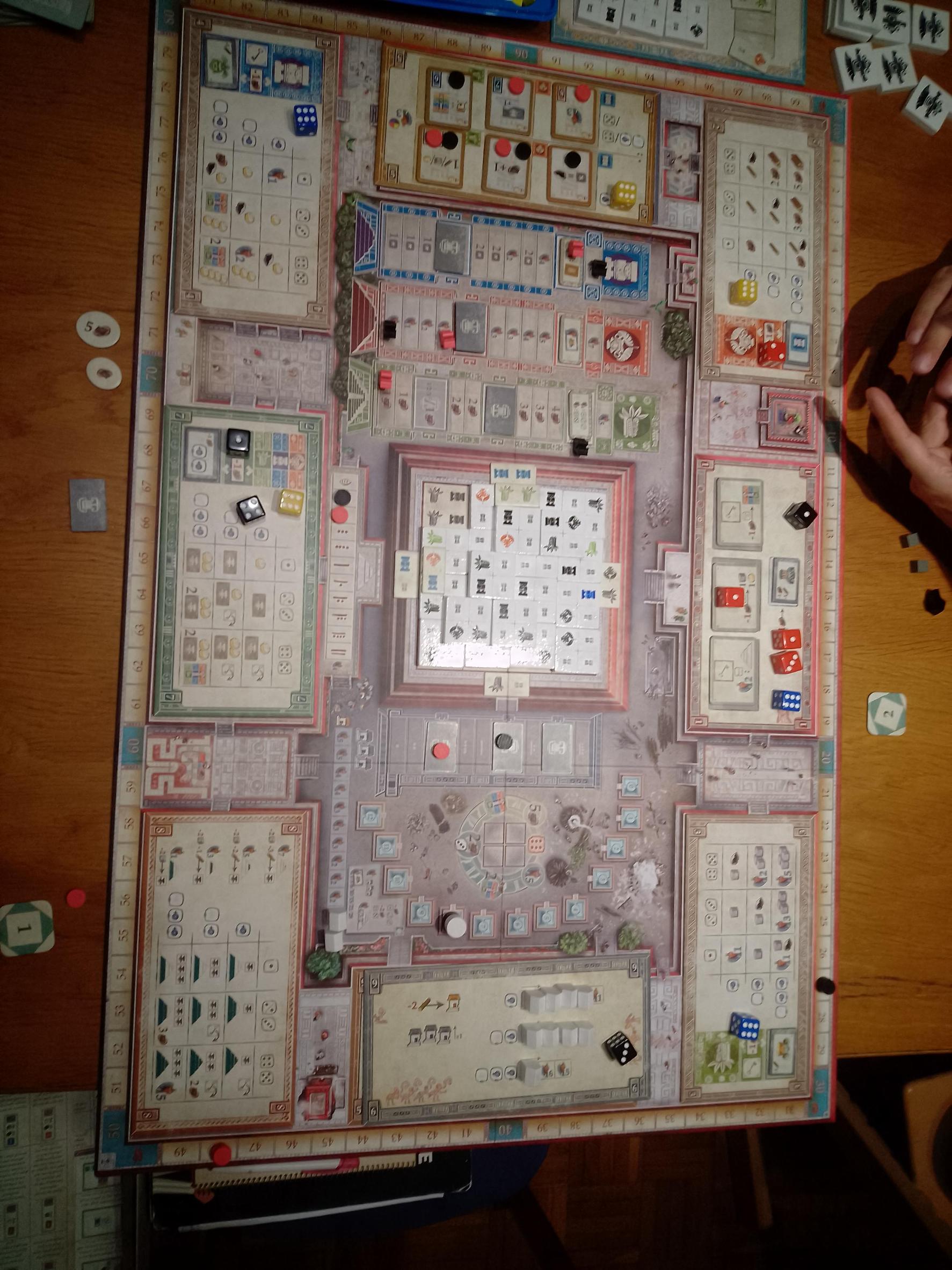
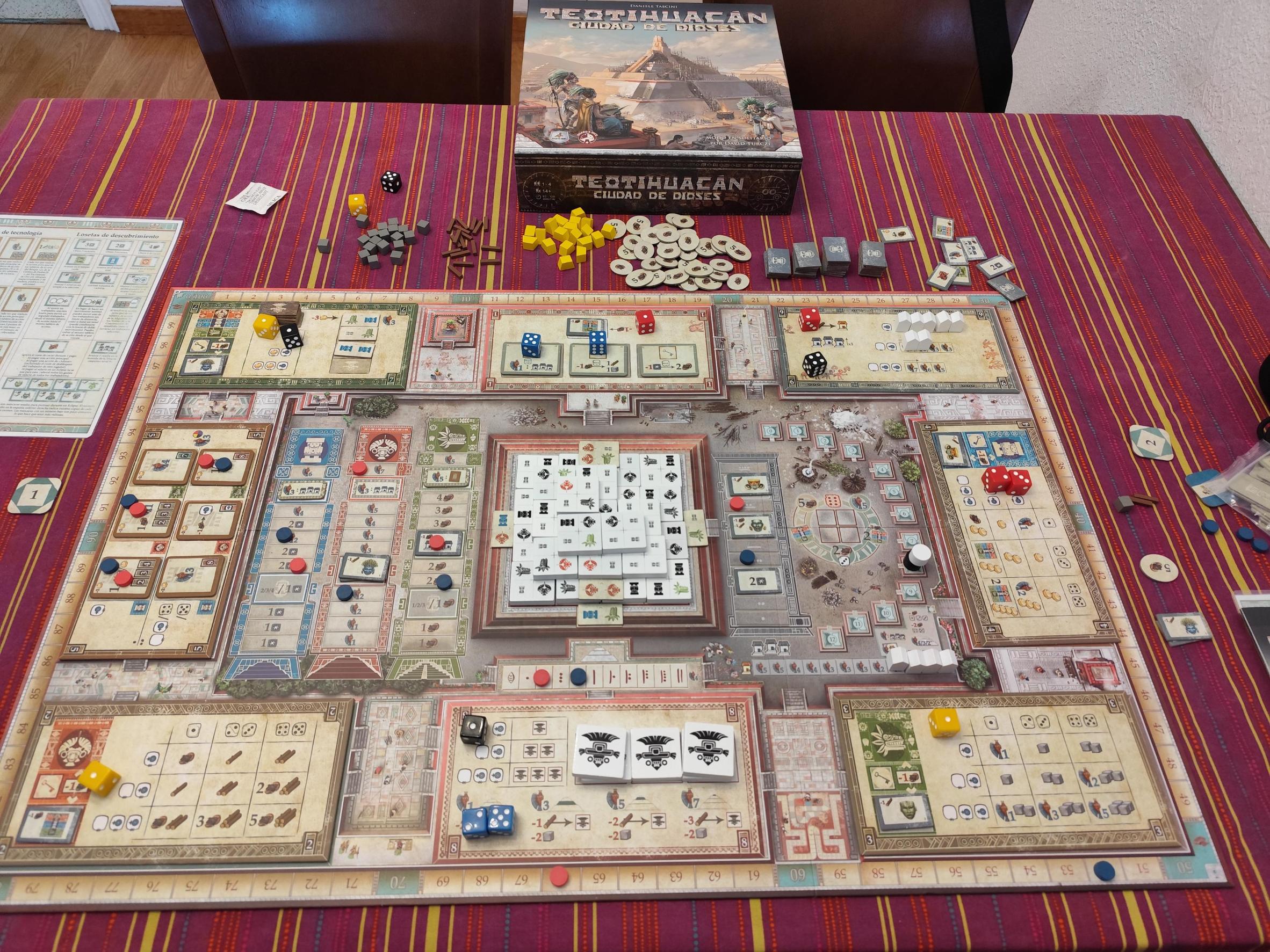
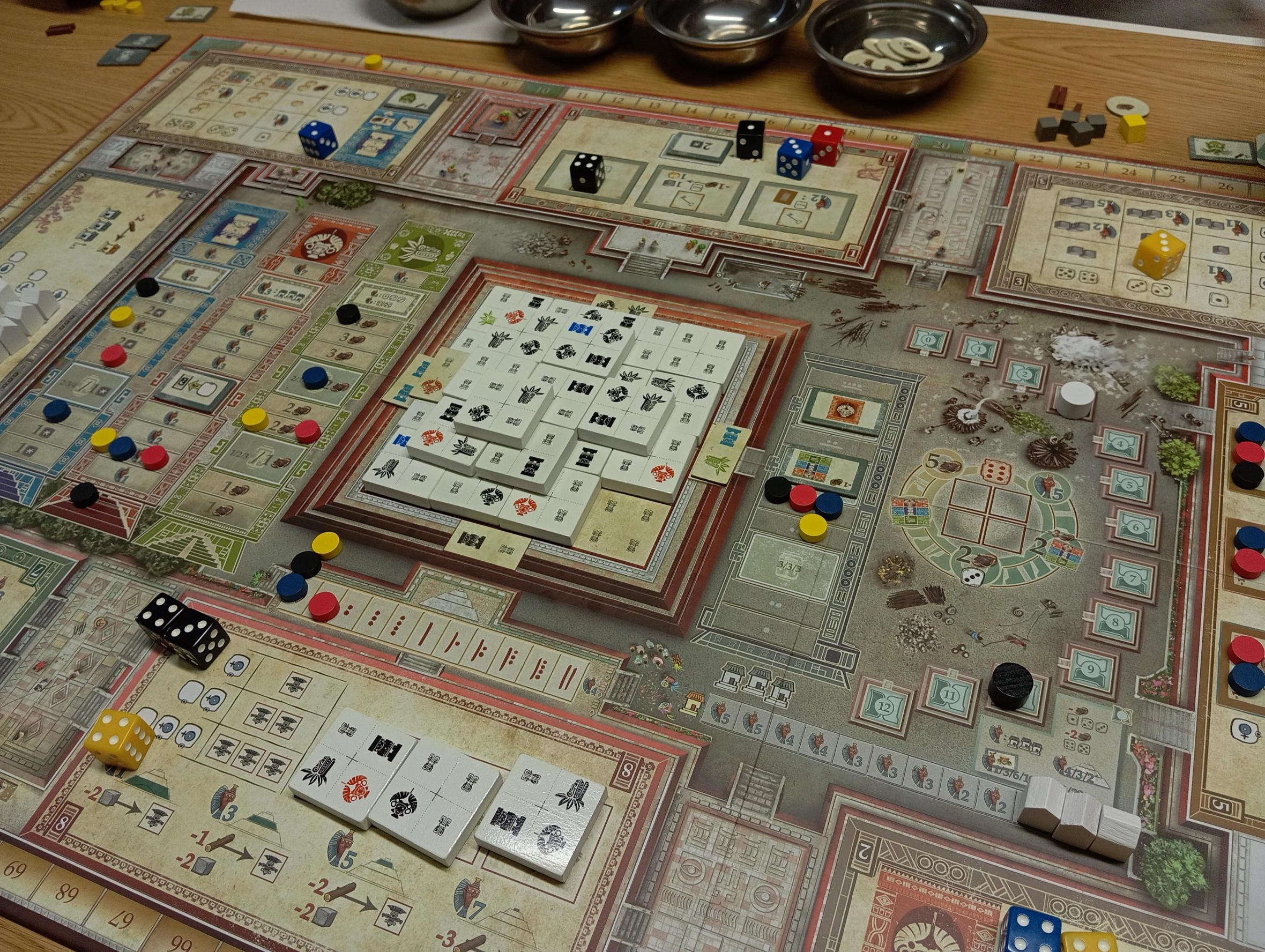
在 Ludoya 的牌桌上
在 Ludoya 中查看完整统计- 823
- 已记录对局
- 634
- 玩家
- 1h 53m
- 平均时长
- 183
- 收藏数
- 33
- 愿望清单数
- 1
- 已预购
6.3/10
基于 117 条 Ludoya 评测
Jan Solo8.0 Gran juego de gestión de recursos y construcción de la pirámide. Modo solitario interesante, pero a mi gusto excesivamente farragoso y lento.
Evan2.5 In this game you move one of your player markers around a roundel 1-3 spaces then resolve the action in the space you end at. Your makers are dice, and the effect of the action spaces is based on a table that looks for how many of your dice are in the space, then also what the pip value of your lowest die is. Often the effect of the space will then add pips to one or two of your dice. When a die hits 6, it resets to 1, and you gain a step on a track that produces points at the end of the round per step you have. Then you also gain a reward from a small wheel of options next to that track. Mostly what you are doing is collecting bricks and wood, then spending the bricks and wood to build the structure at the center of the board. There are extremely important technology tiles you can invest in to make your actions better. Another key thing to manage is the need to spend cacao tokens equal to the number of players in an action space to resolve the action. If you can't pay it, then you wind up skipping your action and instead getting the cacao tokens plus 1 instead. You can avoid this by taking gather actions more often, but since there's very little if any engine building in the game, it does feel like a large portion of your actions in the game work out to similar feeling gather then spend cycles. When you take the action to build the central structure, some but not all of the tiles have colored icons that give you a free step on the matching temple track in addition to the large number of points produced by the action normally. Ability to build is dependent on a substantial number of turns setup, getting the resouces and lining your dice up. Temple track steps are somewhat hard to come by and each step produces points, resources or cacao in addition to having high value endgame scoring criteria at the top, so when you are ready to build and all the pieces are totally colorless, and then you flip up colored pieces for the next person so they can spend exactly what you did only they get a substantial additional return doesn't feel great. Temple builds additionally come with steps on a track that gives bonus 4 points each round to the player who built the most. The track rests right next to the building space and is clearly tied to it. The problem here is that there is a second space that adds stair tokens to the temple, with a different cost, and a different place on the roundel, which makes it needlessly hard to see who has the potential to gain a step and when. Additionally, the stair tokens have a pointlessly specific orientation they need to be placed at because there is a tiny hard to see arrow on the tile that has to point inward. This is there to make matching the icons when you place the stair token more luck driven for no reason I can understand. Additionally these tiles can have either one or two bonus colored icon payouts that again, depend on luck of what's available, again rewarding players for lucking into situations they had no control over establishing. There's also a confusing action space that we rarely saw used. It awards some points, gives you a step on the death track, and then reduces the value of being on that track for everyone. Why have a space that invests in a track, and then simultaneously reduces the value of that same track? When a player's marker goes from 1 to 6, you also click ahead the round timer, which additionally moves after each player has had an action. The game has two modes, one where the round ends the moment the marker hits the end of the track producing uneven turns, or when it hits the end of the track each player gets one more turn. Neither of these is great, because if you age out one of your markers in the final round it effectively doesn't change the pace of the game. Why not just have even turns without playing a whole additional round? I suppose it's due to the fact that when a player is about to age out a die is very unpredictable, since when you resolve a space with two age icons, you can age the same die twice, rather than having to spread it across two dice. What this means is that it's vastly more influential to the flow of the game to age out early in the round than later in the round. More unevenness to the feel and flow of the game. I additionally was confused by one special reward tile that you can spend to ignore paying a food cost, even the totality of food required at the end of the round to feed your people. So, spend it now to avoid paying 3 or 4 food for a crowded action space, or spend it at the end of the round to avoid paying up to 8. There's a massive point hit for not feeding your people, it seems like a pretty core 'watch yourself' mechanism, that you can just ignore for a round by virtue of taking this tile. Very odd. I don't know, this is an ok game were everything feels just a little off. A few minor changes and I think this could have been great, it just doesn't feel very interesting or cohesive. Any of the little things I'm complaining about could probably be forgiven if the core mechanism was more interesting. ★ Art, Iconography and components functional ☆ Clever or interesting mechanisms ★ Reasonably low downtime between turns with mildly AP players ★ Multiple plays stay interesting ☆ Low or mitigatable luck elements ★☆☆☆☆ Raw enjoyment
Garfield8.0 #50 [c] Theme: ★★★★☆ <!-- size 7]The pyramide is great --> Gameplay: ★★★★★ <!-- size 7]Lots of meaningful decisions --> Interaction: ★★★☆☆ <!-- size 7]Where are the other dice placed --> Artwork: ★★★☆☆ <!-- size 7]Ok --> Luck: ★★☆☆☆ <!-- size 7]Pyramid tiles available at your turn --> Strategy: ★★★★☆ <!-- size 7]Different strategies possible --> Components: ★★★★☆ <!-- size 7]Pyramide tiles are great --> Play duration: ★★★☆☆ <!-- size 7]Ok --> Easy to teach: ★★★☆☆ <!-- size 7]Ok --> Rules quality: <!-- size 7]not read --> Setup time: ★★☆☆☆ <!-- size 7]A lot to setup --> No downtime: ★★★☆☆ <!-- size 7]Ok --> Replay value: ★★★★★ <!-- size 7]Modular board, different strategies --> [/c]

规则问题
由 Ludoya 的规则助手根据规则书回答。
当我执行主要行动时,如何计算工人数量,以及需要支付多少可可?被锁定的工人或我刚移动的工人算不算?
要确定可可豆费用,首先计算棋盘上已经存在的不同颜色的已解锁工人数量(忽略刚到达的工人以及任何锁定在崇拜区域的工人),并支付相应数量的可可豆(第7页)。随后结算主要行动效果时,计算你自己在该棋盘上的已解锁工人数量,包括你刚放置的工人,但效果计算最多只算3名(第7页)。
当我执行“收集可可”时,哪些工人会被计入?到达的工人或被锁定的工人算吗?
对于“收集可可”,你要数一下行动板上已经存在的不同颜色的未锁定工人数量(不计算刚到达的工人,也不计算任何锁定在崇拜区域的工人),然后获得该数量再加1个可可;接着将你移动的工人放入普通区域(第6页)。
当一个工人达到力量6(晋升)时,具体会发生什么?我需要立即触发一次日食吗?
当一个工人的点数提升到 6 时,立即触发飞升:在亡者大道上前进,将该骰子移到宫殿的普通区域并将其重置为点数 1,选择一个飞升奖励,然后在历法轨道上推进光盘(这可能会触发一次日食)——完整结算每次飞升,并且只有在回合结束后才触发日食(若适用)(第 9 页)。
金字塔和装饰的放置限制是如何运作的?金字塔完成后,游戏会在什么时候结束?
装饰板块只有在所需的金字塔底层和前置装饰都已具备时,才能放置在允许的空间上;覆盖板块时,图标匹配即可得分(第8页)。放置顶部(第四层)金字塔板块需要其下方完整的第三层,获得列出的胜利点,并立即将白色日历圆片移到黑色圆片所在的位置,触发最后一次日食并结束游戏(第8页)。
当我执行“崇拜”行动时,可以解锁其他玩家的工人,并同时执行崇拜能力和拿取发现板块吗?需要支付什么费用吗?
如果另一位玩家的工人占据了崇拜区域,你必须支付1个可可,将该工人解锁(移到一般区域),然后才能放置自己的工人;你不能用这种方式解锁自己的工人(第6页)。接着,你可以选择激活崇拜能力或获取发现板块;或者额外支付1个可可,两者都做(所有可可费用必须在结算任何收益前支付)。如果你获取了一个板块,还要支付其上标示的费用(第6页)。











免费,支持网页、Android 和 iOS
用 Ludoya 玩 特奧蒂瓦坎:眾神之城
游戏信息(人数、游戏时长、年龄、制作人员)来自 BoardGameGeek。