
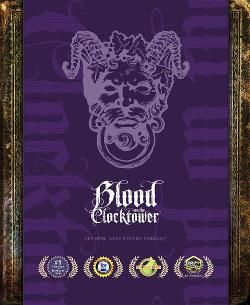
2022 · Partyspiel
Blood on the Clocktower
Ein Social-Deduction-Spiel mit versteckten Rollen, angesiedelt in einem verwunschenen Dorf, in dem ein übernatürlicher Killer nachts mordet und sich tagsüber unter den Lebenden versteckt. Die Spieler übernehmen einzigartige Charakterrollen mit besonderen Fähigkeiten; ein Moderator namens der Storyteller leitet die Nachtaktionen, verteilt Informationen und entscheidet über Effekte. Die Tagesphasen drehen sich um offene Diskussionen und private Flüstergespräche, um Wissen zu teilen oder auch zu erfinden, gefolgt von einer Abstimmung, die einen verdächtigen bösen Spieler hinrichten kann. Nachtphasen werden nacheinander abgehandelt, während der Storyteller einzelne Spieler weckt, damit sie Ermittlungen, Schutz, Manipulationen oder Kills ausführen. Ausgeschiedene Charaktere bleiben als Geister mit eingeschränkten Kräften aktiv, und spätere Mitspieler können als spezielle Traveller-Rollen dazukommen. Das Gute-Team versucht, die Dämonen und ihre Handlanger zu entlarven und hinzurichten, bevor das Böse die Oberhand gewinnt.
- Spieler
- 6–21 am besten mit 12
- Spielzeit
- 30–120 Min.
- Alter
- 15+
- Komplexität
- 3 / 5
Über das Spiel
- Autoren
- Publisher


Erweiterungen
In Ludoya ansehen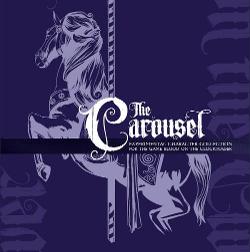
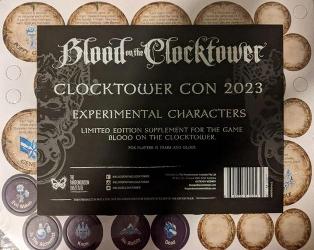
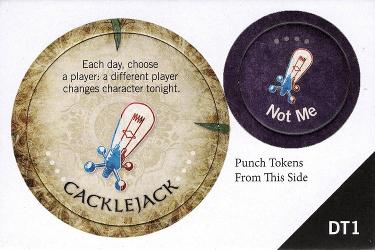
Fotos von Ludoya-Tischen
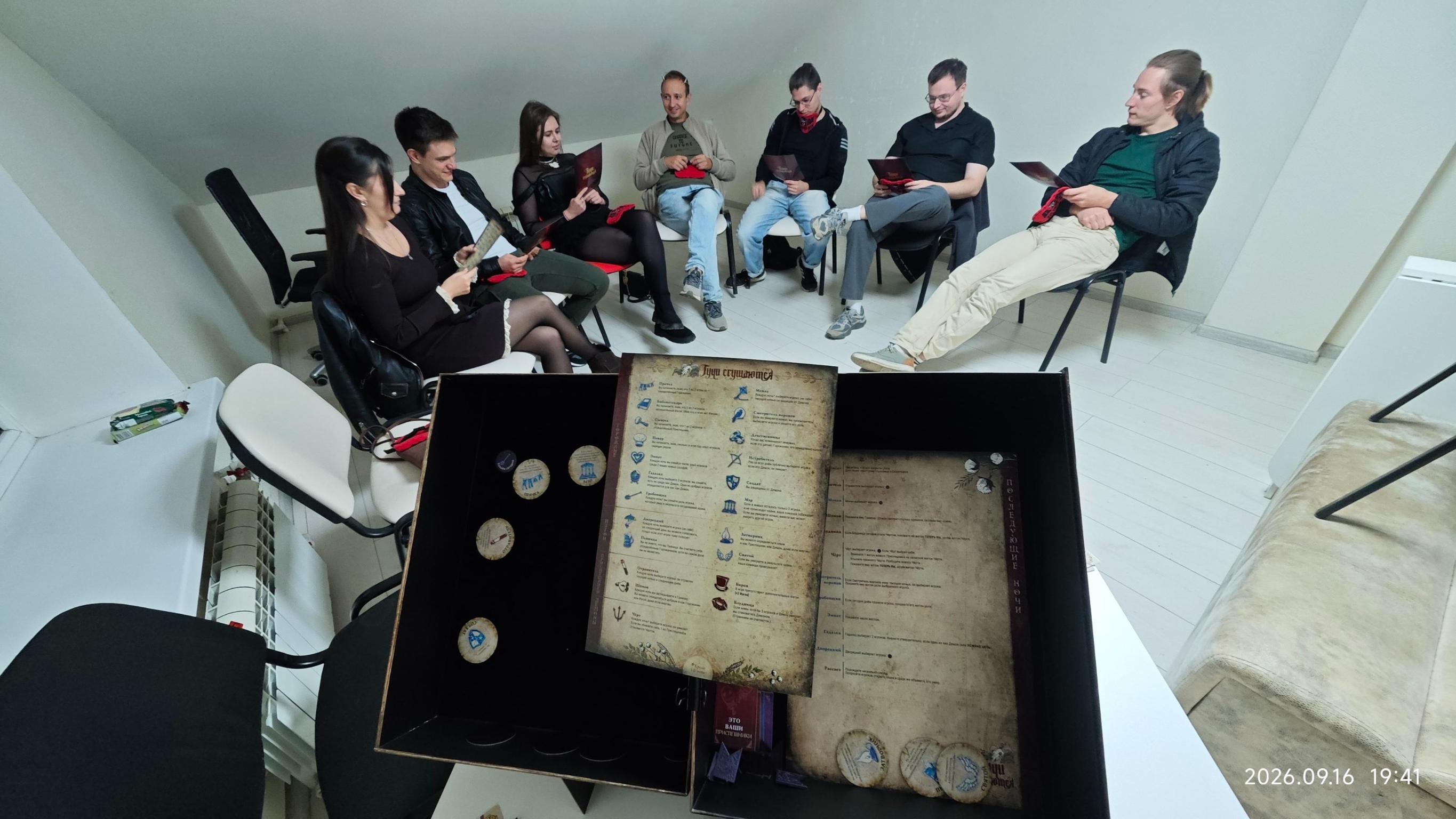
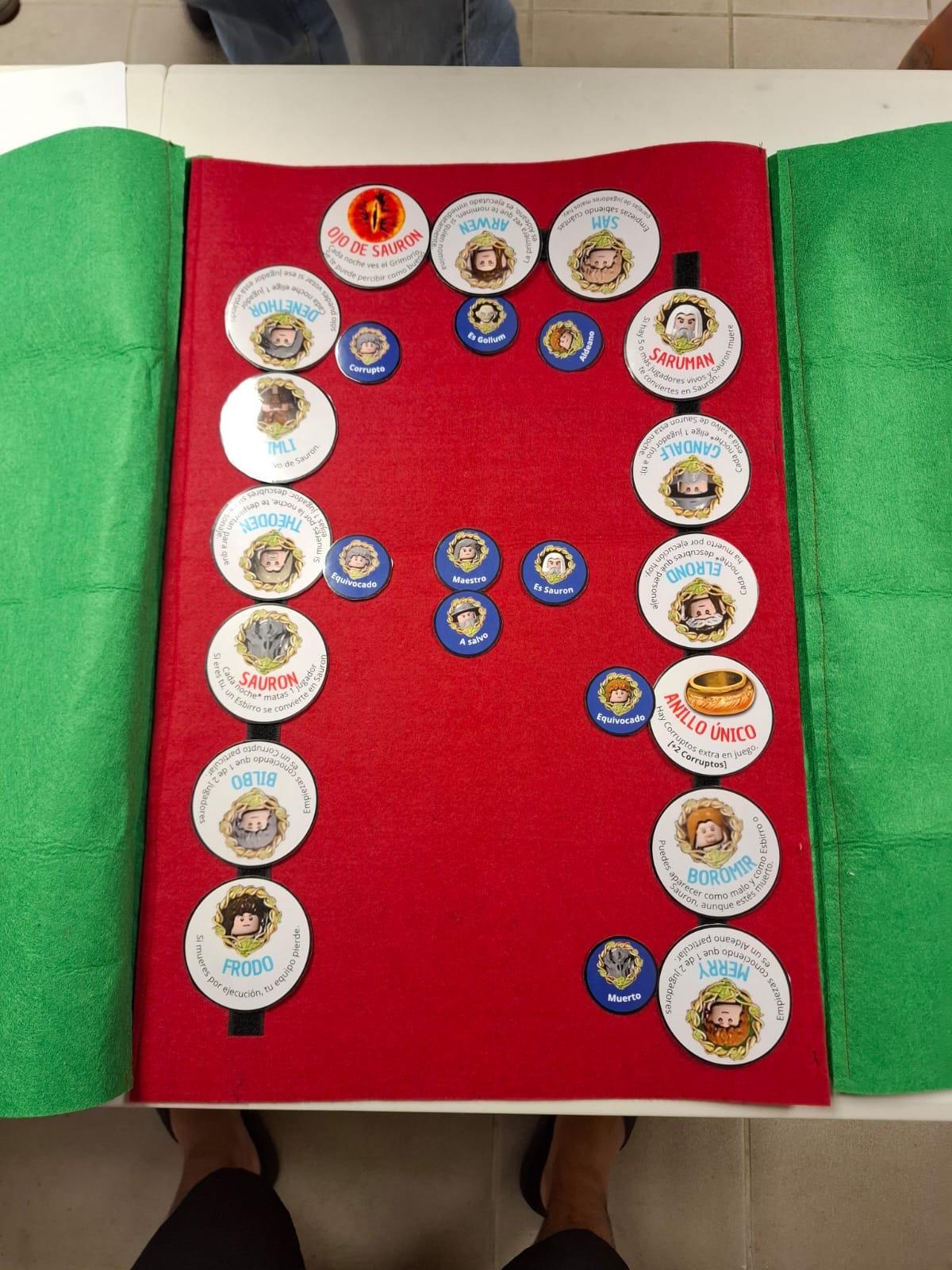
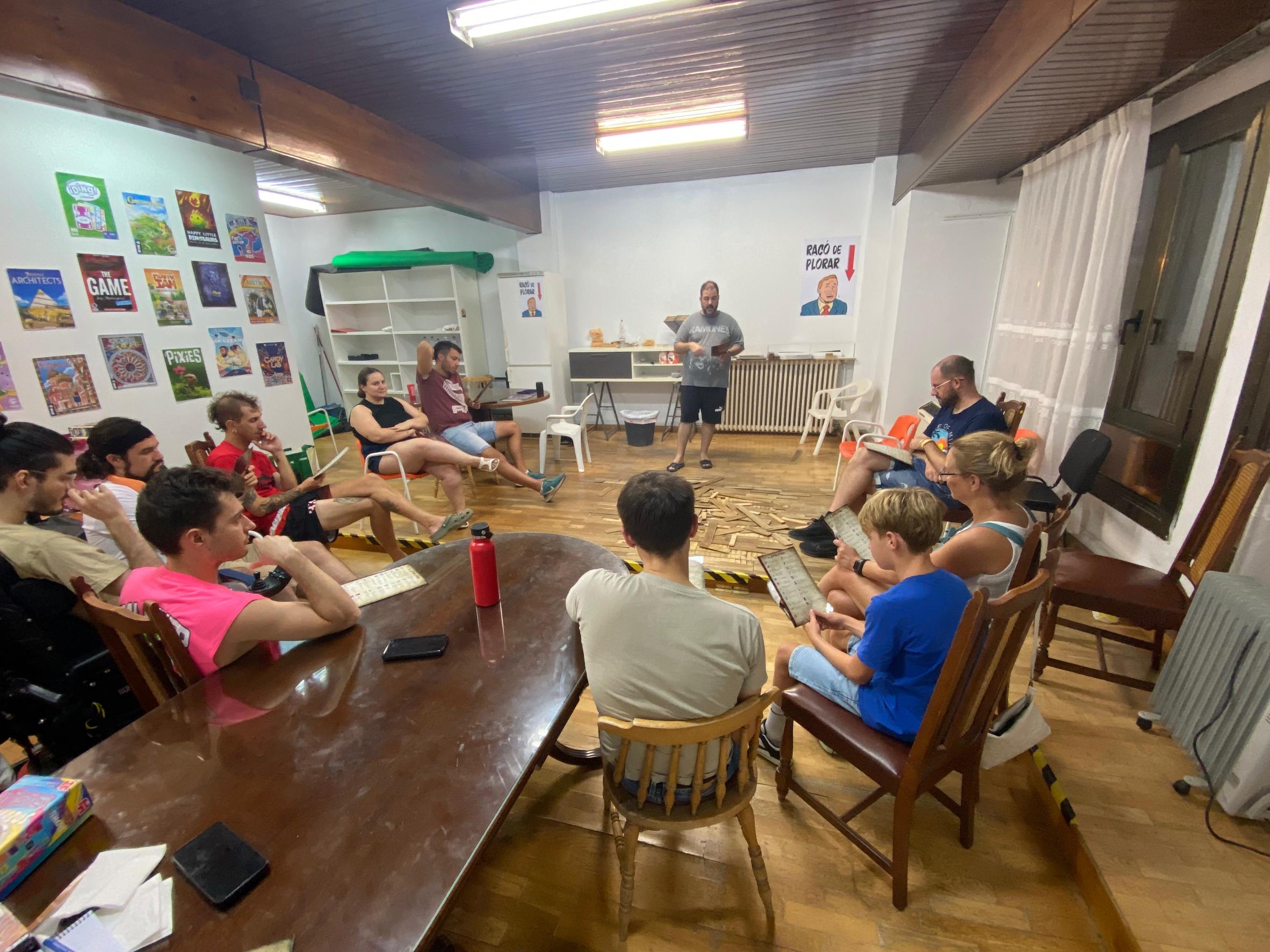
Alle Fotos in Ludoya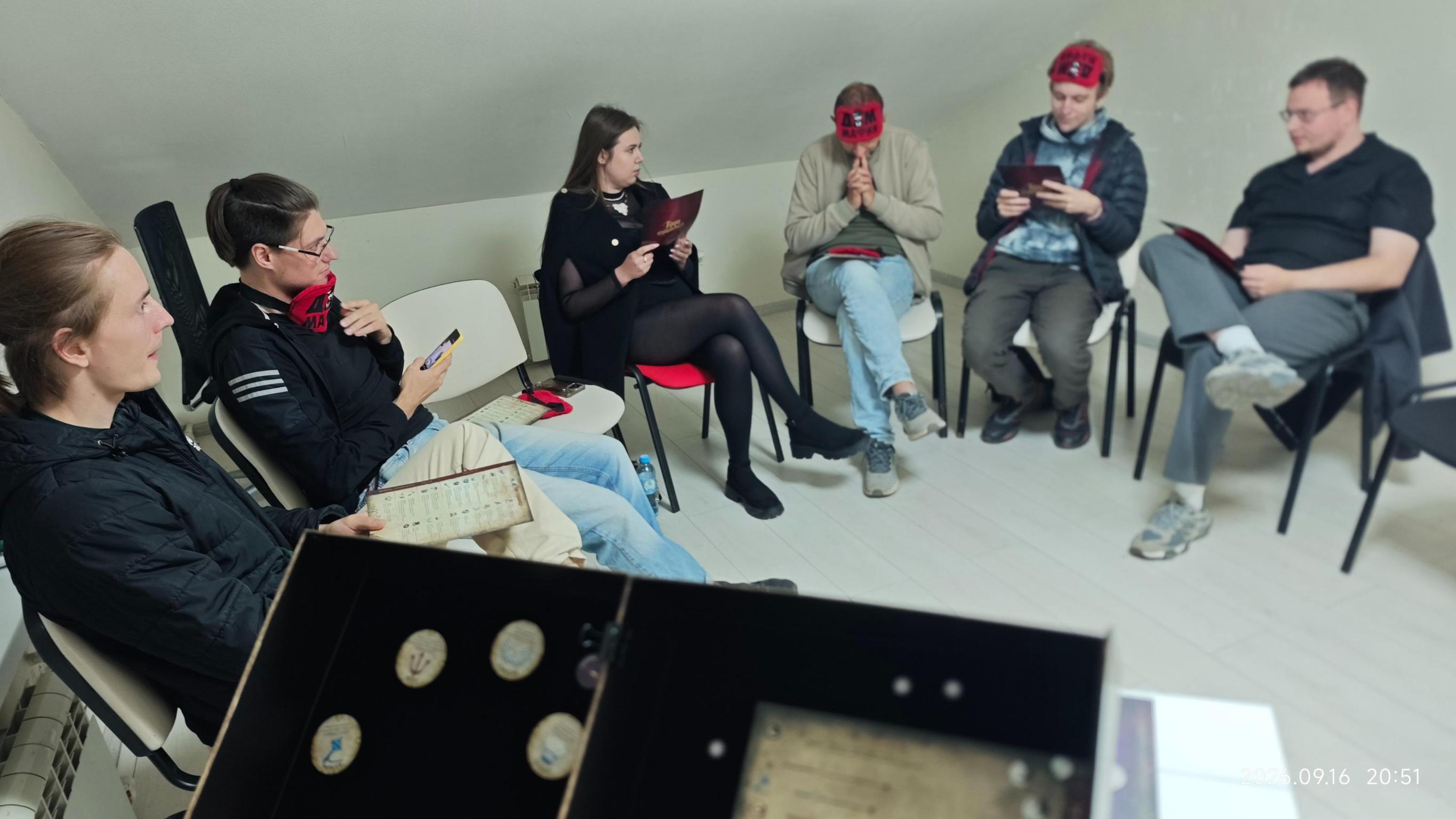
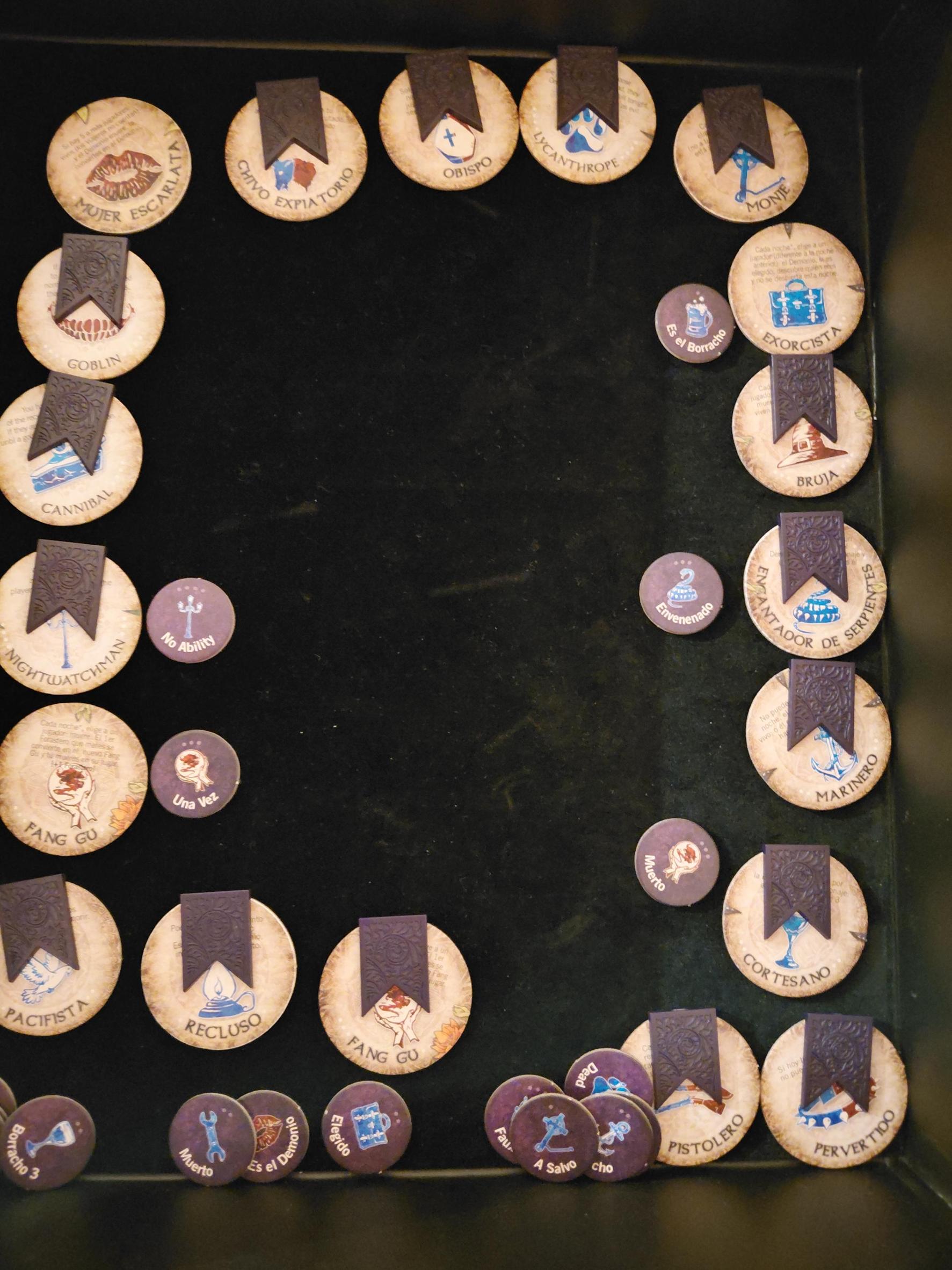
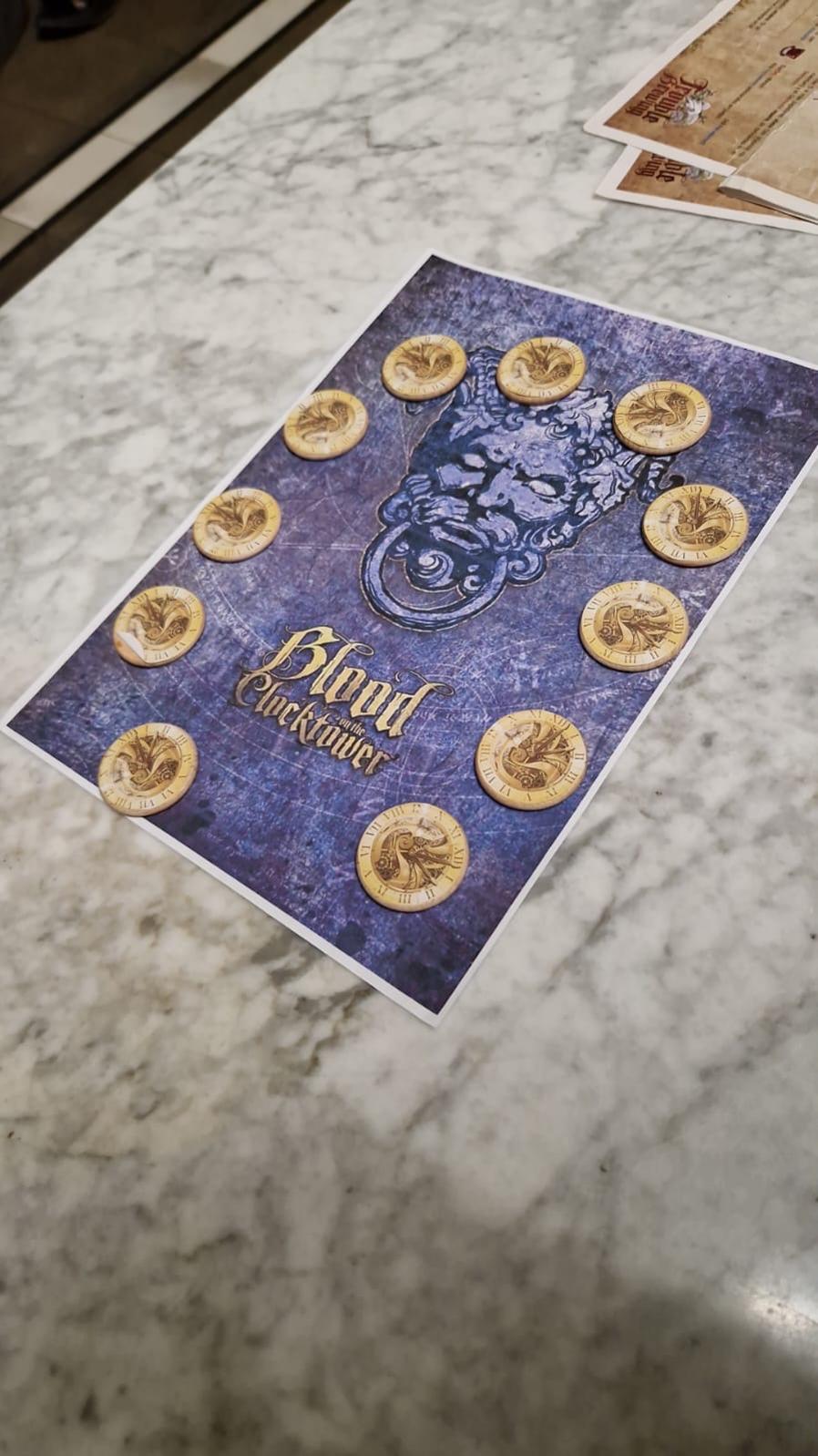
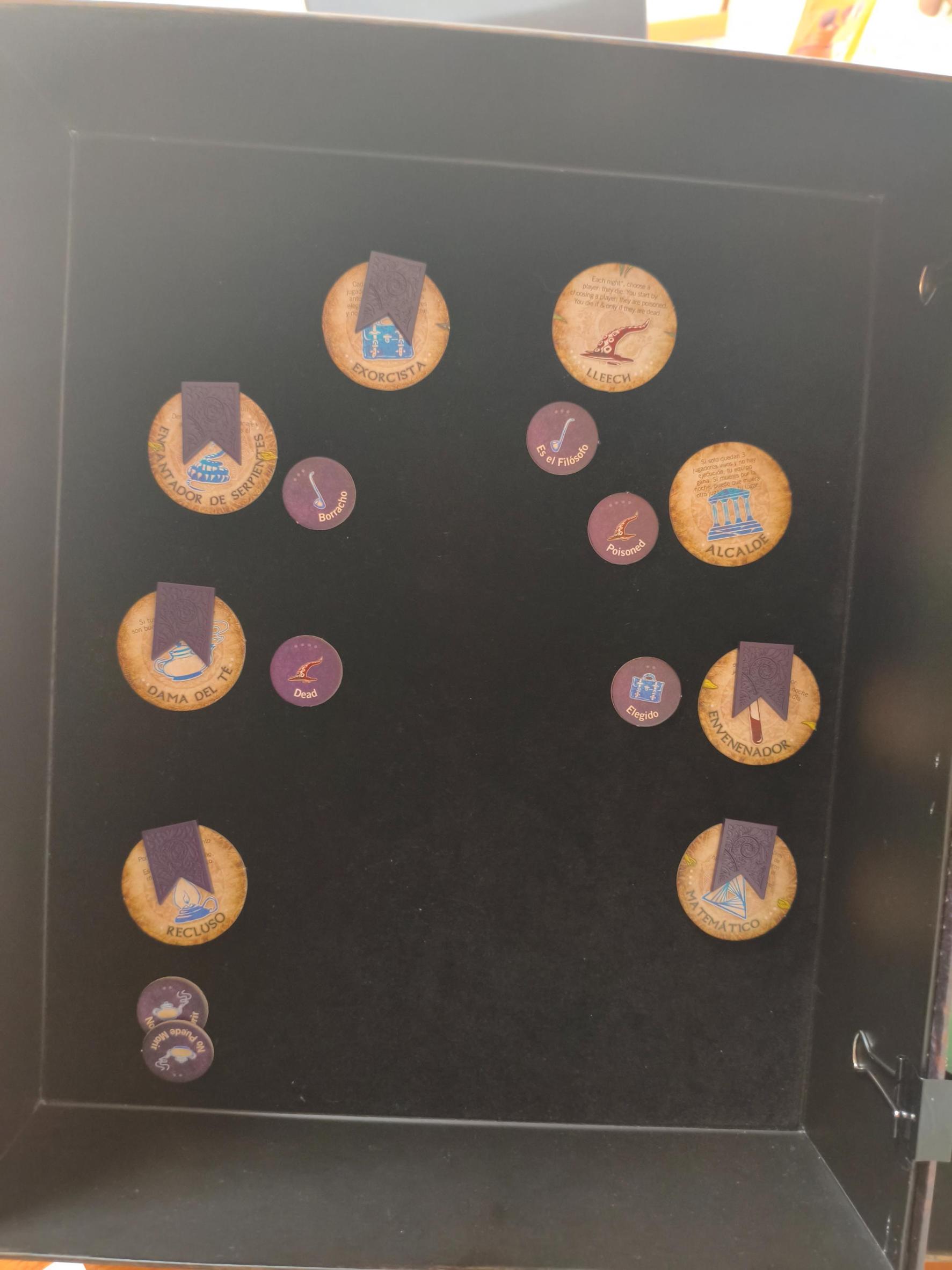
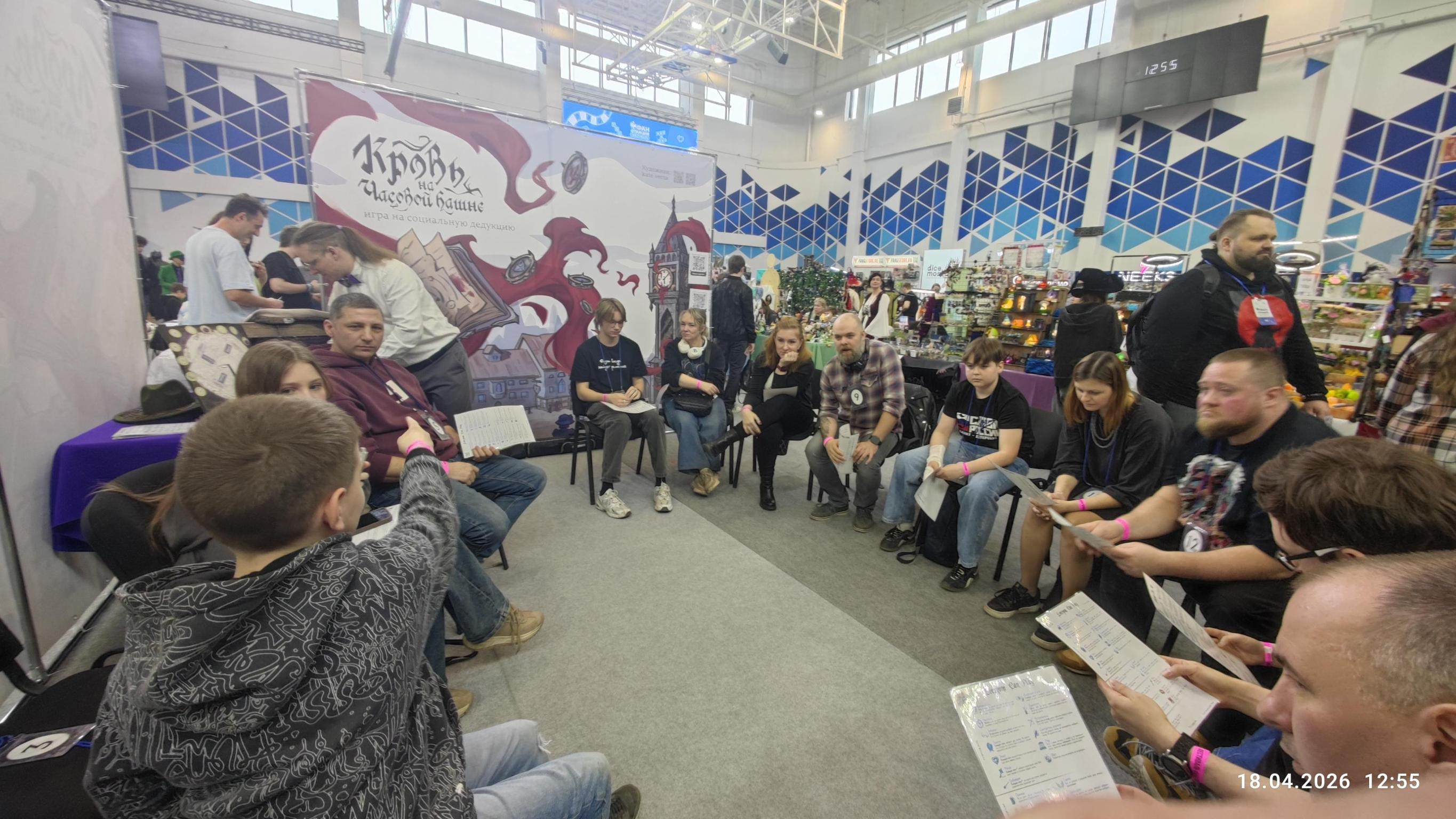
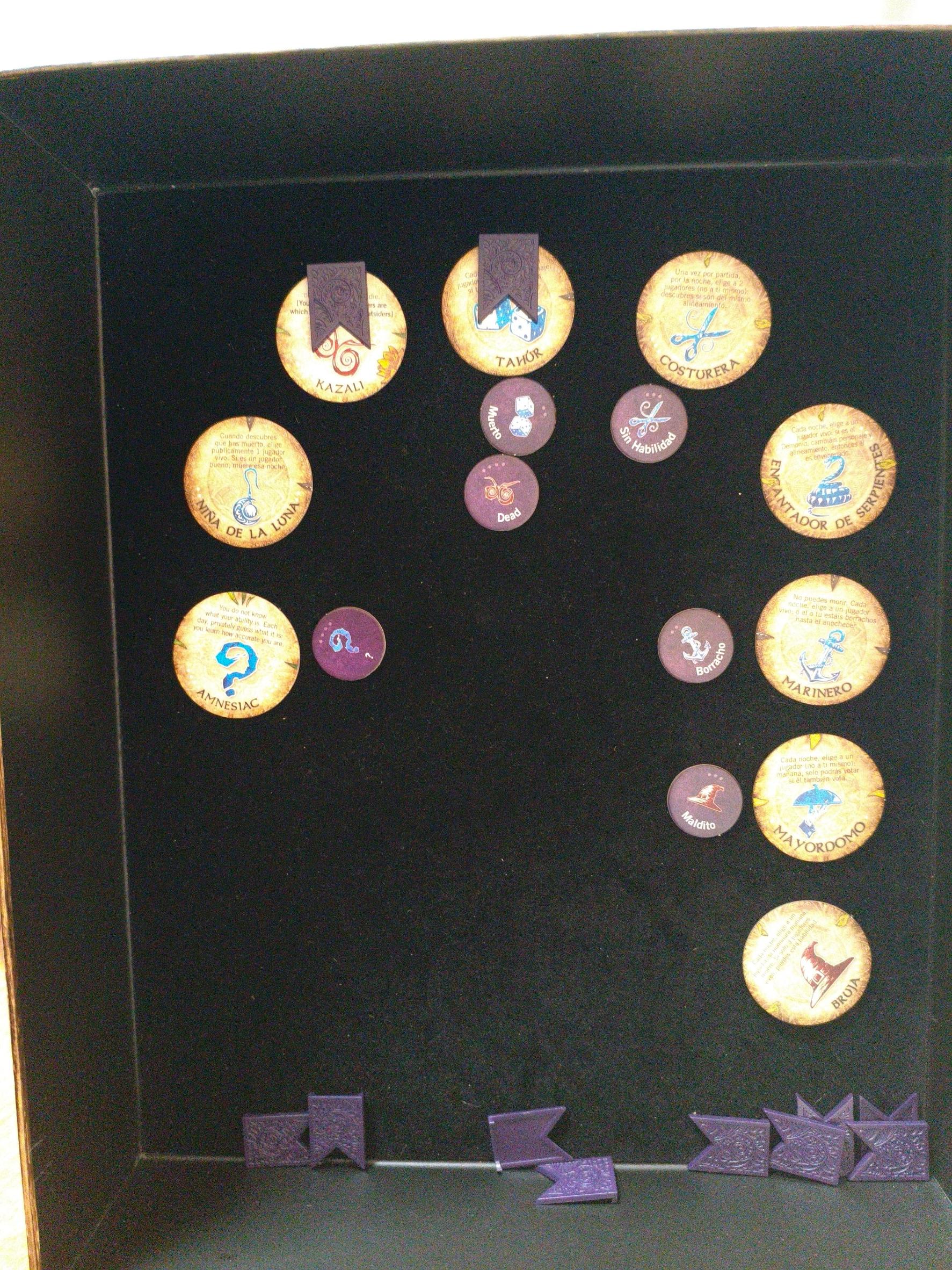
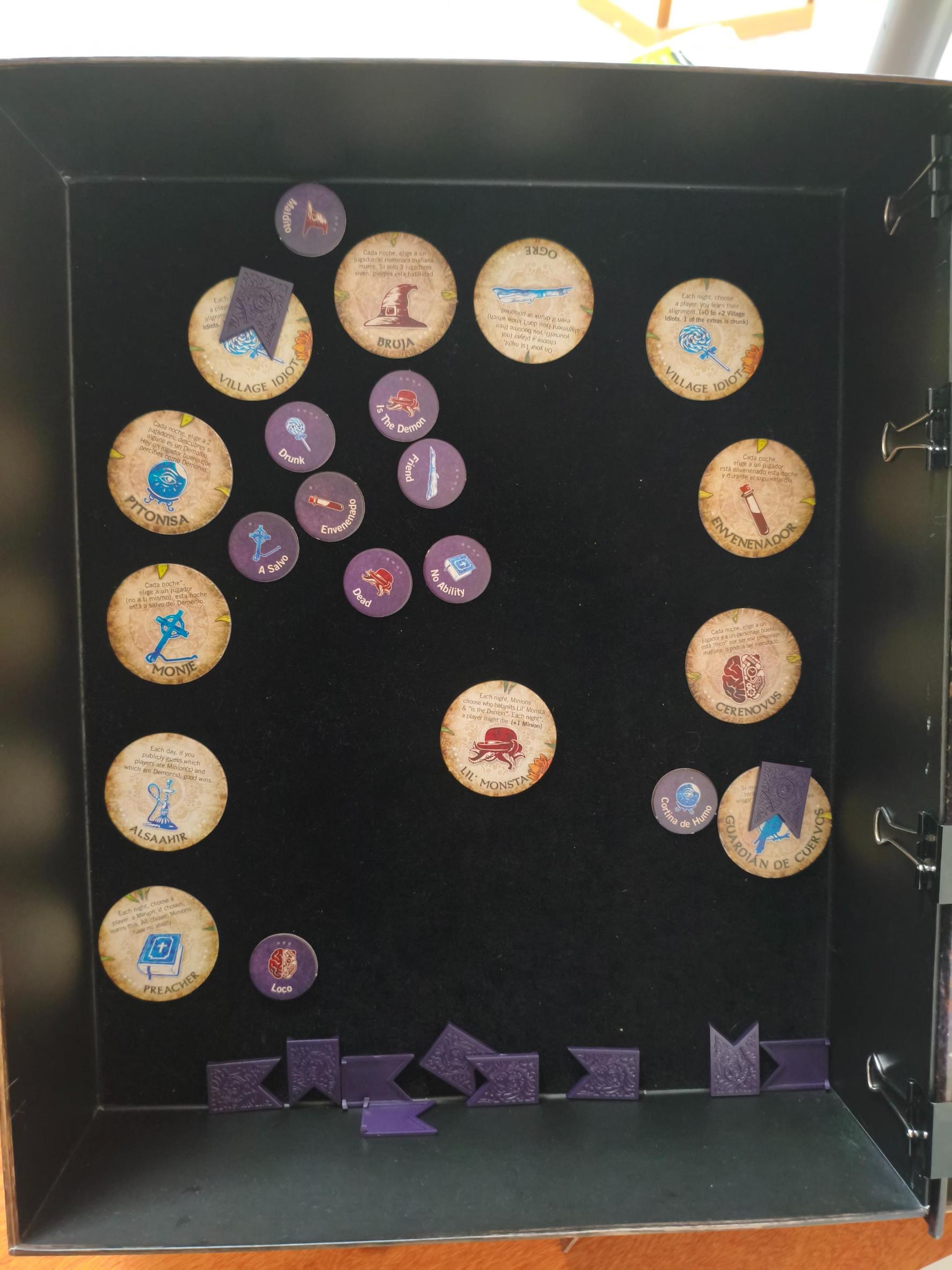
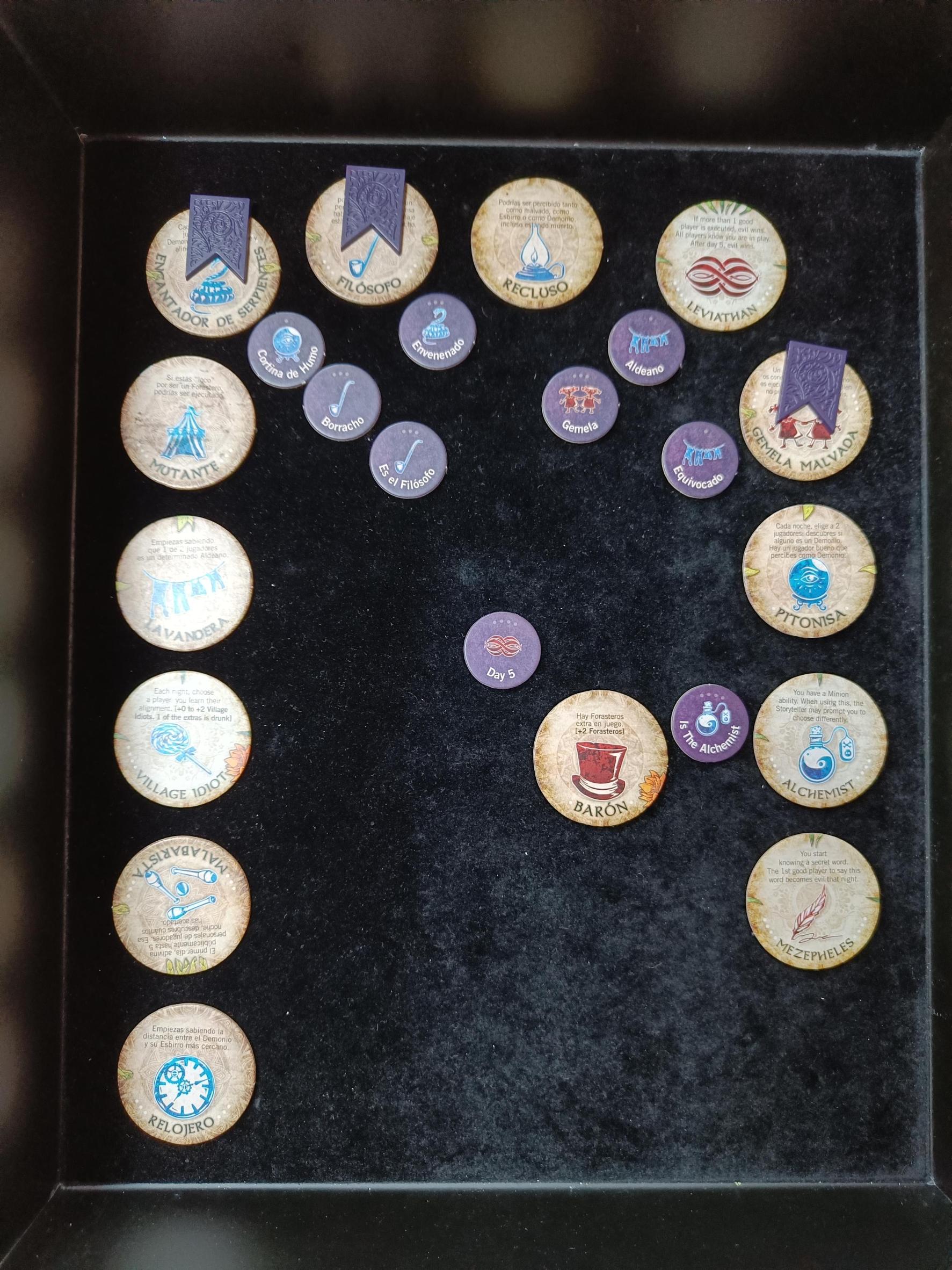
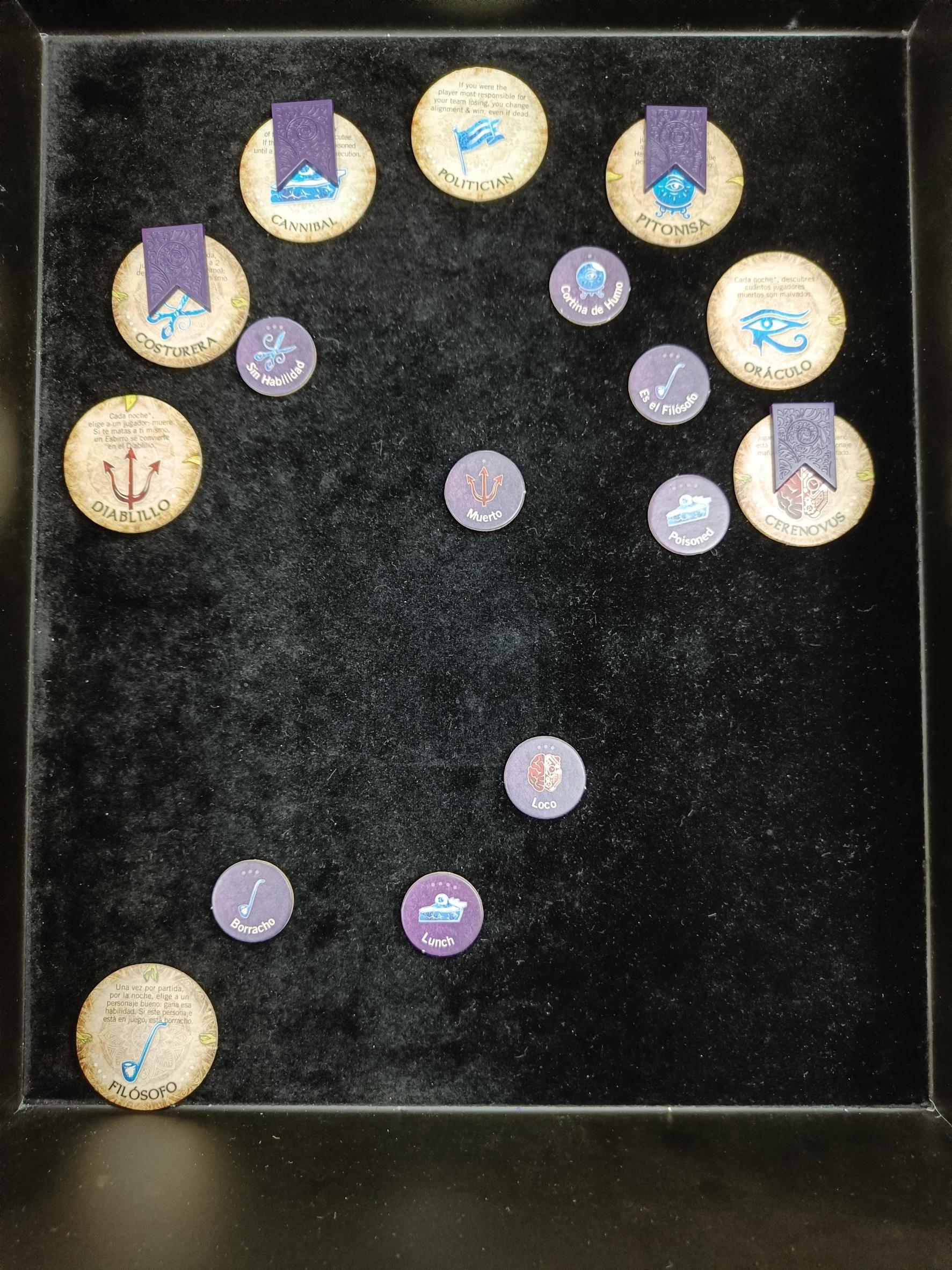
Wo kaufen
Shop-Preise und gebrauchte Exemplare, täglich geprüft.
An Ludoyas Tischen
Alle Statistiken in Ludoya- 4.421
- Erfasste Partien
- 2.872
- Spieler
- 1h 20m
- Durchschnittliche Partie
- 149
- In Sammlungen
- 57
- Auf Wunschlisten
- 3
- Vorbestellt
8,5/10
aus 102 Ludoya-Rezensionen
Martin Peral8,7 De momento me falta mucho por probar, pero lo que he visto me ha gustado mucho y todo lo que me falta por probar, me promete tanto que me emociona solo pensar en futuras partidas. Siento que puede ser un juego muy grupo dependiente y que incluso de una partida a otra puede cambiar mucho a nivel de sensaciones y en cuanto a tu propia agencia en la partida. No obstante, siento que la variabilidad tan alta que tiene de escenarios, personajes y de la narratividad que facilita a la persona narradora hacen que las partidas puedan brillar por encima de otros juegos de roles ocultos.
Dani10,0 The best social deduction game out there, lots of replayability even with the official scripts.
Way top group-dependant, but once you find it, the games gets brighter and brighter. Definitely it is going to kick out Secret Hitler in my #1 favourite social deduction games. Letting every player be active in every game is a brilliant idea

Kommende Veranstaltungen mit diesem Spiel
Alle VeranstaltungenRegelfragen
Aus der Spielanleitung beantwortet von Ludoyas Regelassistenten.
Can dead players still talk or vote?
Yes — dead players may talk as much as they like, but they immediately lose their ability, cannot nominate, and may only vote once for the rest of the game (remove their vote token when they use it) (p.17).
When someone dies, do we have to reveal their character?
No — a dead player’s identity remains secret; you place a shroud on their token and remove their ability, but you do not tell the group which character they were (p.17).
How does a nomination become an execution — what counts as enough votes?
A nomination succeeds if that nominated player has more votes than any other nominee that day and the number of votes is at least half the number of alive players; there is only one execution per day (pp.16–17).
If a player is killed at night, do they still get to wake and use their ability?
Usually no — if a character dies at night before they would wake, they do not wake to act; abilities take effect immediately when used and abilities are lost immediately on death (pp.14–15, 22).
What happens if I'm drunk or poisoned — do I still get my ability or correct information?
A drunk or poisoned player has no ability (they act as if dead) and can be given incorrect information by the Storyteller, though abilities targeting a drunk/poisoned player still resolve normally; drunkenness/poisoning remove abilities until the player becomes sober/healthy again (pp.22–24).
Does the game always end the moment the Demon dies?
Typically good wins when the Demon dies, but there are exceptions (e.g., Scarlet Woman can keep the game going, some scripts have multiple Demons, and all Demons must die for good to win), so the Demon’s death does not universally end the game (p.18).
Wertungsbögen und Spielhelfer
- Personajes por script
- Personajes
- Characters with Scripts






Kostenlos, im Web, für Android und iOS
Spiel Blood on the Clocktower mit Ludoya
- Hab es in deiner SammlungVerwalte dein Exemplar und seine Erweiterungen, leih es Freunden oder setz es auf deine Wunschliste und erfahre, wenn der Preis fällt.Zur Sammlung hinzufügen
- Erfasse jede PartiePunkte, Sieger, Timer und Fotos, dann deine Statistiken: Siegquote, liebste Spielerzahl, beste Punktzahl.Partie erfassen
- Regelfragen klärenFrag alles zu den Regeln und erhalte eine Antwort aus der Spielanleitung, mit der Seite zum Nachprüfen.Den Regelassistenten fragen
- Finde Leute, mit denen du es spielstClubs, Spieleabende und Veranstaltungen in deiner Nähe, bei denen dieses Spiel auf den Tisch kommt.Veranstaltungen ansehen
Spieldaten (Spieler, Spielzeit, Alter, Mitwirkende) von BoardGameGeek.