
2018 · Wirtschaft
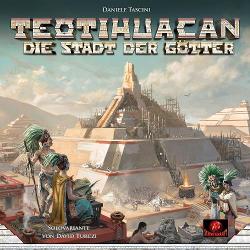
Teotihuacan: Die Stadt der Götter
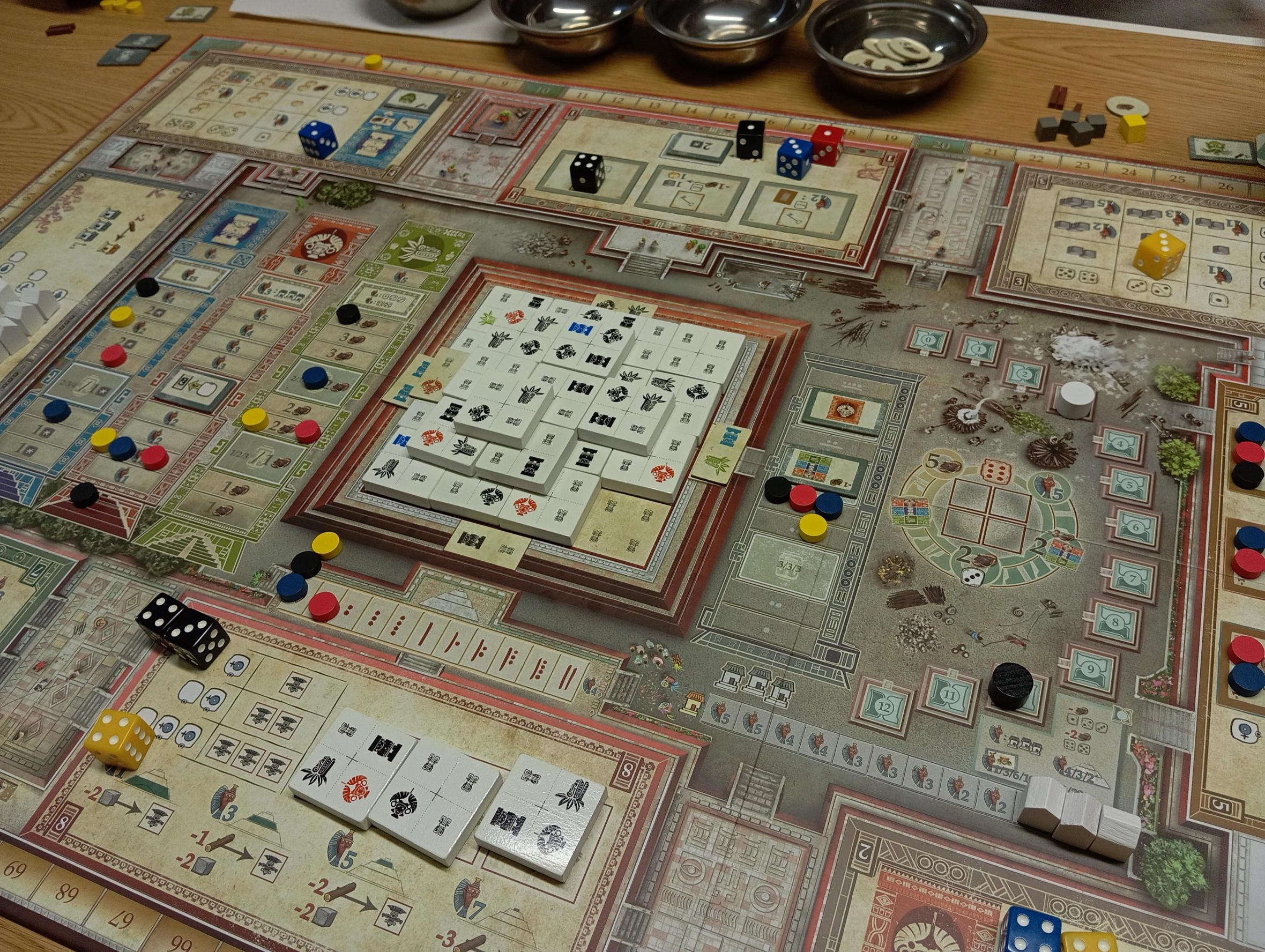
Die Spieler steuern Arbeiterwürfel, die mit jeder Aktion stärker werden, indem sie einen einzelnen Würfel über ein modulares Stadtbrett bewegen und die Aktion auf einem von zwei Feldern auf jedem Plättchen ausführen. In ihren Zügen wählen die Spieler entweder eine Aktion aus und verbessern dabei diesen Arbeiter, oder sie nehmen einen sofortigen Bonus ohne Verbesserung, während sie Ressourcen verwalten und gleichzeitig ihre Arbeiter versorgen müssen. Mit den Aktionen können Technologien entwickelt, Wohnraum gebaut, auf drei großen Tempeln vorangeschritten und über drei aufeinanderfolgende Zeitalter hinweg zum zentralen Stufenpyramidenbau beigetragen werden. Der Sieg wird durch angesammelten Ruhm nach regelmäßigen Wertungen entschieden.
- Spieler
- 1–4 am besten mit 4
- Spielzeit
- 90–120 Min.
- Alter
- 14+
- Komplexität
- 3,8 / 5
Über das Spiel
- Autoren
- Illustration
- Publisher



Erweiterungen
In Ludoya ansehen Teotihuacan: Späte Präklassik2019
 Teotihuacan: Im Schatten des Xitle2020
 Teotihuacan: Ausbreitungsperiode2021
 Teotihuacan: Dice Settlers Promo2018
 Teotihuacan: City of Gods – Pyramid Tile Promo, Red Temple2019
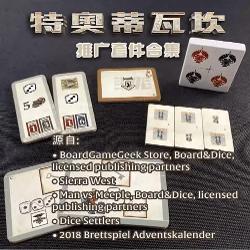 Teotihuacan: City of Gods – Promo Bundle2020
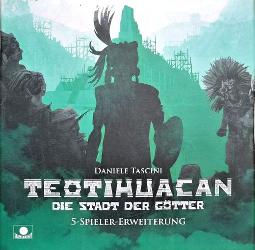 Teotihuacan: Die Stadt der Götter – 5-Spieler-Erweiterung2025
 Teotihuacan: City of Gods – Decoration Tiles2019
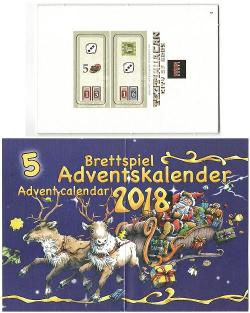 Teotihuacan: Brettspiel Adventskalender 2018 Promo2018
 Loot Box #12022
 Teotihuacan: City of Gods – Man vs Meeple Promo2019
 Brettspiel Adventskalender 20182018
 Teotihuacan: Expert Challenges – Book 12021
 Teotihuacan: Expert Challenges – Book 22021
 Teotihuacan: Expert Challenges – Book 32022
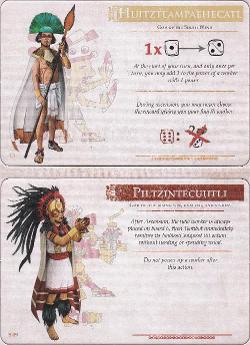 Teotihuacan: New Priests2024
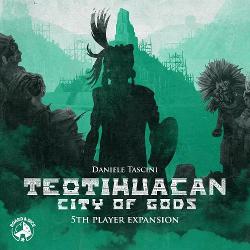 Teotihuacan: City of Gods – 5th Player Expansion2024
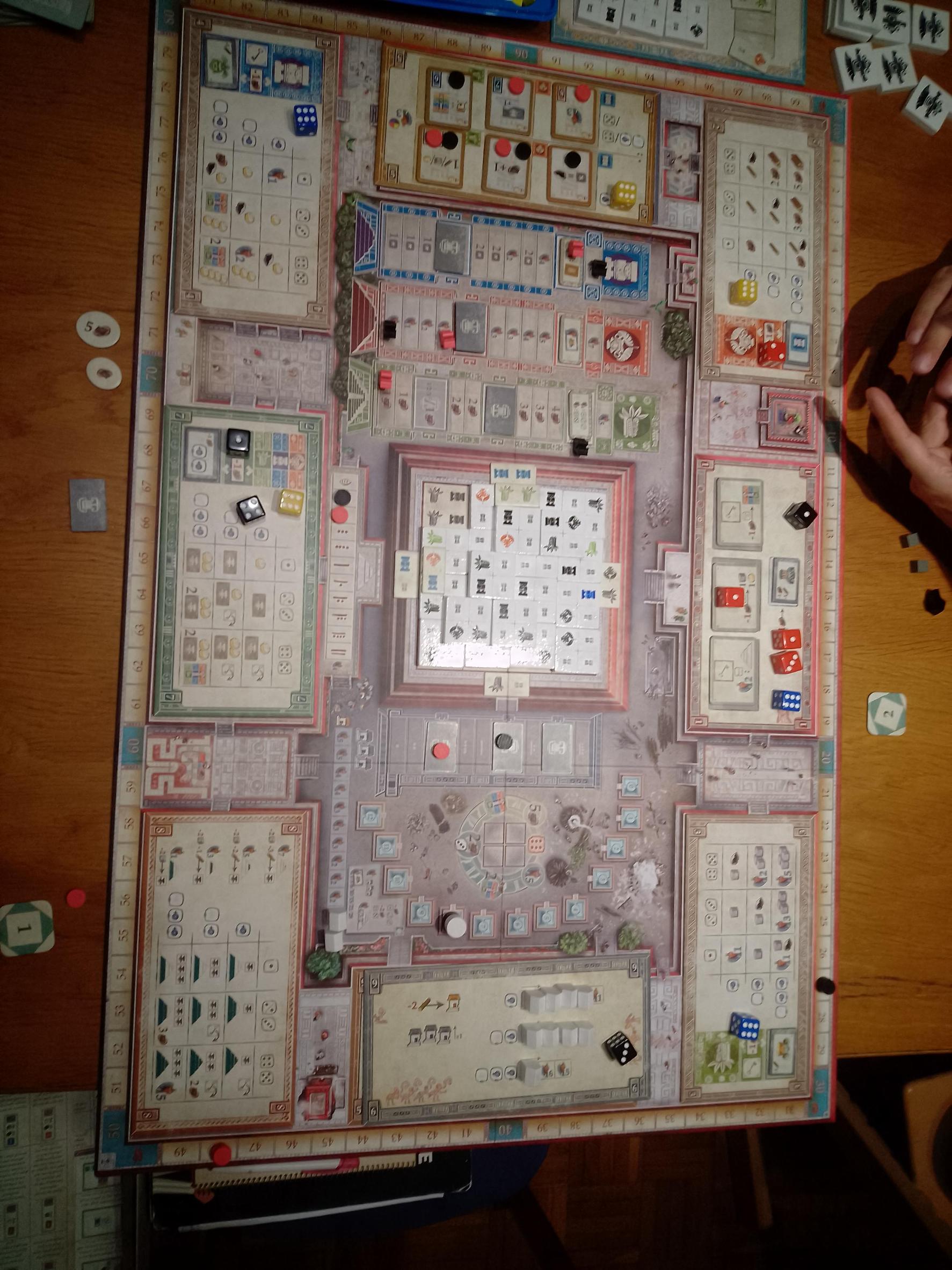
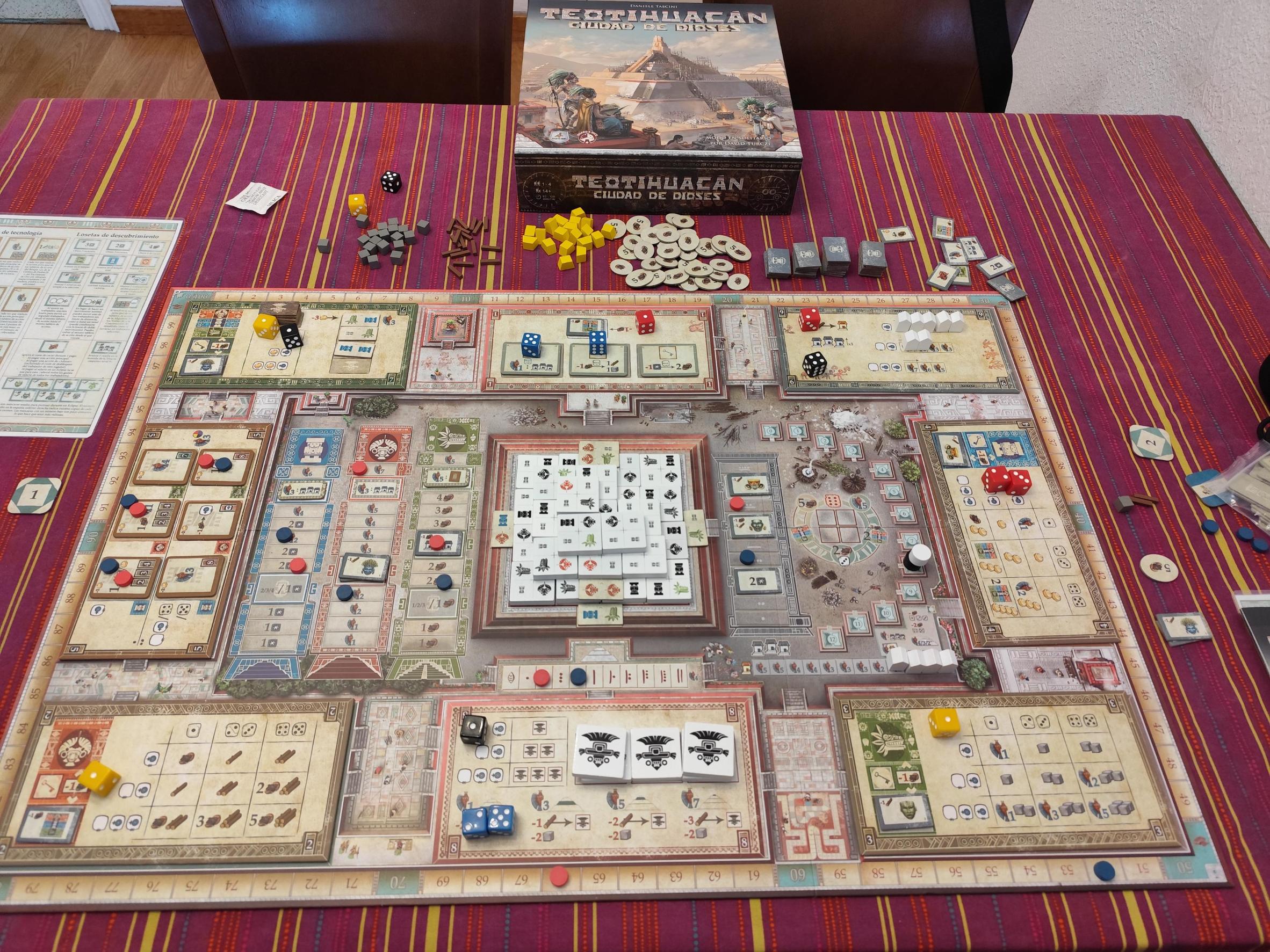
Fotos von Ludoya-Tischen
Alle Fotos in Ludoya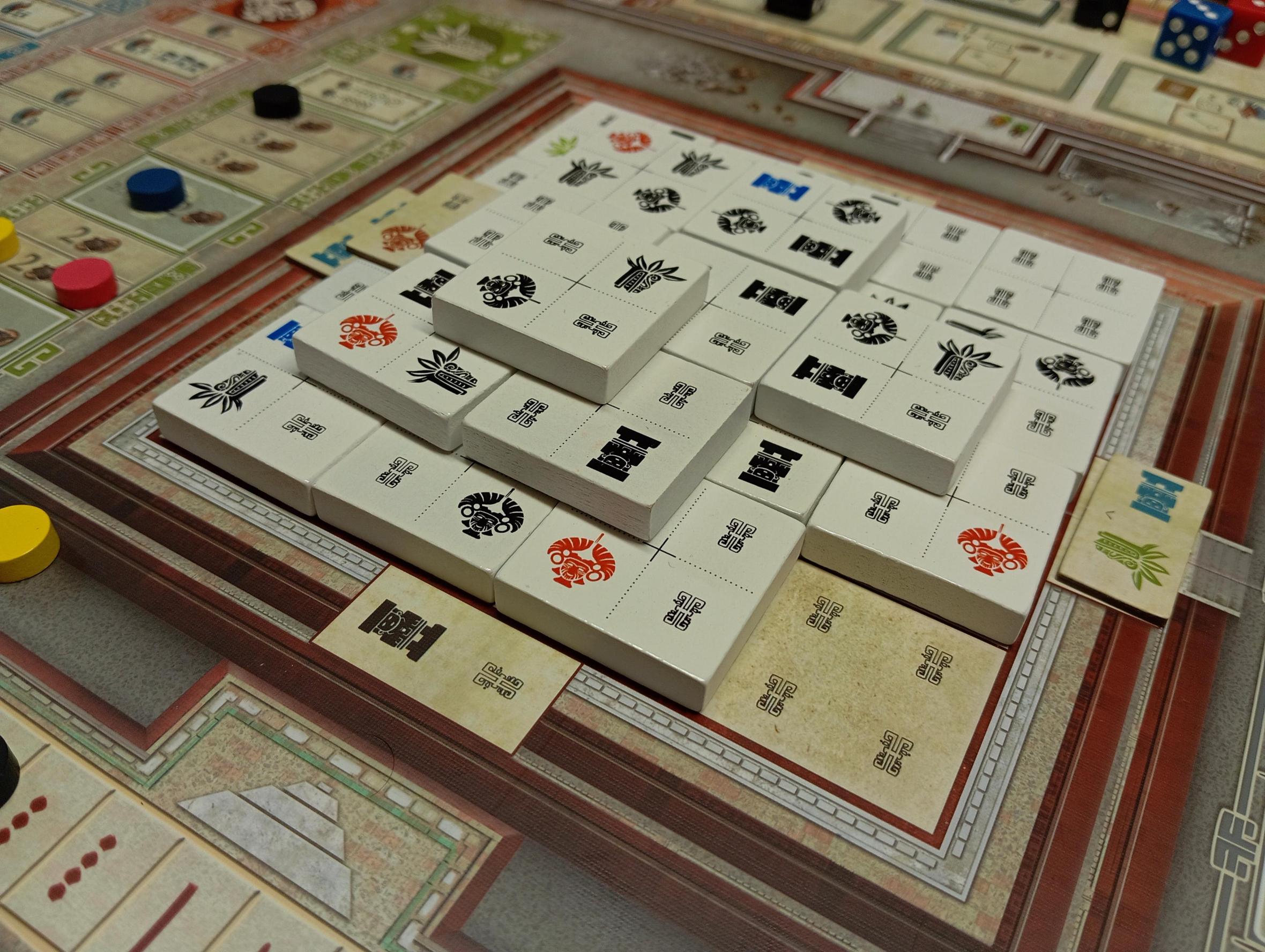
Wo kaufen
Shop-Preise und gebrauchte Exemplare, täglich geprüft.
An Ludoyas Tischen
Alle Statistiken in Ludoya- 822
- Erfasste Partien
- 632
- Spieler
- 1h 53m
- Durchschnittliche Partie
- 181
- In Sammlungen
- 32
- Auf Wunschlisten
- 1
- Vorbestellt
6,3/10
aus 116 Ludoya-Rezensionen
Jan Solo8,0 Gran juego de gestión de recursos y construcción de la pirámide. Modo solitario interesante, pero a mi gusto excesivamente farragoso y lento.
Evan2,5 In this game you move one of your player markers around a roundel 1-3 spaces then resolve the action in the space you end at. Your makers are dice, and the effect of the action spaces is based on a table that looks for how many of your dice are in the space, then also what the pip value of your lowest die is. Often the effect of the space will then add pips to one or two of your dice. When a die hits 6, it resets to 1, and you gain a step on a track that produces points at the end of the round per step you have. Then you also gain a reward from a small wheel of options next to that track. Mostly what you are doing is collecting bricks and wood, then spending the bricks and wood to build the structure at the center of the board. There are extremely important technology tiles you can invest in to make your actions better. Another key thing to manage is the need to spend cacao tokens equal to the number of players in an action space to resolve the action. If you can't pay it, then you wind up skipping your action and instead getting the cacao tokens plus 1 instead. You can avoid this by taking gather actions more often, but since there's very little if any engine building in the game, it does feel like a large portion of your actions in the game work out to similar feeling gather then spend cycles. When you take the action to build the central structure, some but not all of the tiles have colored icons that give you a free step on the matching temple track in addition to the large number of points produced by the action normally. Ability to build is dependent on a substantial number of turns setup, getting the resouces and lining your dice up. Temple track steps are somewhat hard to come by and each step produces points, resources or cacao in addition to having high value endgame scoring criteria at the top, so when you are ready to build and all the pieces are totally colorless, and then you flip up colored pieces for the next person so they can spend exactly what you did only they get a substantial additional return doesn't feel great. Temple builds additionally come with steps on a track that gives bonus 4 points each round to the player who built the most. The track rests right next to the building space and is clearly tied to it. The problem here is that there is a second space that adds stair tokens to the temple, with a different cost, and a different place on the roundel, which makes it needlessly hard to see who has the potential to gain a step and when. Additionally, the stair tokens have a pointlessly specific orientation they need to be placed at because there is a tiny hard to see arrow on the tile that has to point inward. This is there to make matching the icons when you place the stair token more luck driven for no reason I can understand. Additionally these tiles can have either one or two bonus colored icon payouts that again, depend on luck of what's available, again rewarding players for lucking into situations they had no control over establishing. There's also a confusing action space that we rarely saw used. It awards some points, gives you a step on the death track, and then reduces the value of being on that track for everyone. Why have a space that invests in a track, and then simultaneously reduces the value of that same track? When a player's marker goes from 1 to 6, you also click ahead the round timer, which additionally moves after each player has had an action. The game has two modes, one where the round ends the moment the marker hits the end of the track producing uneven turns, or when it hits the end of the track each player gets one more turn. Neither of these is great, because if you age out one of your markers in the final round it effectively doesn't change the pace of the game. Why not just have even turns without playing a whole additional round? I suppose it's due to the fact that when a player is about to age out a die is very unpredictable, since when you resolve a space with two age icons, you can age the same die twice, rather than having to spread it across two dice. What this means is that it's vastly more influential to the flow of the game to age out early in the round than later in the round. More unevenness to the feel and flow of the game. I additionally was confused by one special reward tile that you can spend to ignore paying a food cost, even the totality of food required at the end of the round to feed your people. So, spend it now to avoid paying 3 or 4 food for a crowded action space, or spend it at the end of the round to avoid paying up to 8. There's a massive point hit for not feeding your people, it seems like a pretty core 'watch yourself' mechanism, that you can just ignore for a round by virtue of taking this tile. Very odd. I don't know, this is an ok game were everything feels just a little off. A few minor changes and I think this could have been great, it just doesn't feel very interesting or cohesive. Any of the little things I'm complaining about could probably be forgiven if the core mechanism was more interesting. :star: Art, Iconography and components functional :nostar: Clever or interesting mechanisms :star: Reasonably low downtime between turns with mildly AP players :star: Multiple plays stay interesting :nostar: Low or mitigatable luck elements :star::nostar::nostar::nostar::nostar: Raw enjoyment
Garfield8,0 #50 [c] Theme: :star::star::star::star::nostar: <!-- size 7]The pyramide is great --> Gameplay: :star::star::star::star::star: <!-- size 7]Lots of meaningful decisions --> Interaction: :star::star::star::nostar::nostar: <!-- size 7]Where are the other dice placed --> Artwork: :star::star::star::nostar::nostar: <!-- size 7]Ok --> Luck: :star::star::nostar::nostar::nostar: <!-- size 7]Pyramid tiles available at your turn --> Strategy: :star::star::star::star::nostar: <!-- size 7]Different strategies possible --> Components: :star::star::star::star::nostar: <!-- size 7]Pyramide tiles are great --> Play duration: :star::star::star::nostar::nostar: <!-- size 7]Ok --> Easy to teach: :star::star::star::nostar::nostar: <!-- size 7]Ok --> Rules quality: <!-- size 7]not read --> Setup time: :star::star::nostar::nostar::nostar: <!-- size 7]A lot to setup --> No downtime: :star::star::star::nostar::nostar: <!-- size 7]Ok --> Replay value: :star::star::star::star::star: <!-- size 7]Modular board, different strategies --> [/c]

Regelfragen
Aus der Spielanleitung beantwortet von Ludoyas Regelassistenten.
Wenn ich eine Hauptaktion ausführe, wie zähle ich die Arbeiter und wie viel Kakao muss ich bezahlen? Zählen gesperrte Arbeiter oder der Arbeiter, den ich gerade bewegt habe, mit?
Um die Kakaokosten zu bestimmen, zählst du zunächst die Anzahl der verschiedenfarbigen, bereits auf dem Spielplan befindlichen Arbeiter (ignoriere den ankommenden Arbeiter und alle Arbeiter auf gesperrten Anbetungsplätzen) und bezahlst entsprechend viel Kakao (S. 7). Für die Abwicklung der Effekte der Hauptaktion zählst du anschließend deine eigenen freigeschalteten Arbeiter auf diesem Spielplan, einschließlich des gerade eingesetzten Arbeiters, jedoch niemals mehr als 3 für die Effekte (S. 7).
Wenn ich Kakao sammeln nehme, welche Arbeiter werden gezählt – zählt der ankommende Arbeiter oder zählen gesperrte Arbeiter?
Für „Kakao sammeln“ zählst du die Anzahl der verschiedenfarbigen, bereits auf dem Aktionsbrett vorhandenen freigeschalteten Arbeiter (der ankommende Arbeiter und Arbeiter auf gesperrten Anbetungsplätzen werden nicht mitgezählt) und erhältst diese Anzahl plus 1 Kakao; anschließend platzierst du deinen bewegten Arbeiter im allgemeinen Bereich (S. 6).
Was genau passiert, wenn ein Arbeiter Stärke 6 (Aufstieg) erreicht? Löse ich sofort eine Sonnenfinsternis aus?
Der Aufstieg wird sofort ausgelöst, sobald ein Arbeiter auf Stärke 6 gebracht wird: Rücke auf der Straße der Toten vor, versetze diesen Würfel in den allgemeinen Bereich des Palasts und setze ihn auf Stärke 1 zurück, wähle eine Aufstiegsbelohnung und rücke anschließend die Lichtscheibe auf der Kalenderleiste vor (wodurch möglicherweise eine Finsternis ausgelöst wird) – führe jeden Aufstieg vollständig aus und löse die Finsternis nur nach dem Zug aus, falls zutreffend (S. 9).
Wie funktionieren die Platzierungsbeschränkungen für Pyramiden und Verzierungen, und wann beendet die Fertigstellung der Pyramide das Spiel?
Dekorationsplättchen dürfen nur auf erlaubten Feldern platziert werden, wenn die erforderlichen darunterliegenden Pyramidenebenen und vorausgesetzten Dekorationen vorhanden sind; beim Überdecken von Plättchen erhältst du Punkte für übereinstimmende Symbole (S. 8). Das Platzieren des obersten (vierten) Pyramidenplättchens setzt die vollständige dritte Ebene darunter voraus, bringt die angegebenen Siegpunkte und bewegt die weiße Kalender-Scheibe sofort auf die Position der schwarzen Scheibe. Dadurch wird die letzte Finsternis ausgelöst und das Spiel endet (S. 8).
Wenn ich eine Verehrungsaktion ausführe, kann ich den Arbeiter eines anderen Spielers freischalten und sowohl die Verehrungsfähigkeit nutzen als auch das Entdeckungsplättchen nehmen? Muss ich dafür etwas bezahlen?
Wenn der Arbeiter eines anderen Spielers das Verehrungsfeld besetzt, zahlst du 1 Kakao, um diesen Arbeiter freizuschalten (ihn in den allgemeinen Bereich zu versetzen), bevor du deinen dort platzierst; auf diese Weise darfst du keine eigenen Arbeiter freischalten (S. 6). Anschließend entscheidest du dich entweder dafür, die Verehrungsfähigkeit zu aktivieren oder das Entdeckungsplättchen zu nehmen, oder du zahlst 1 weiteren Kakao, um beides zu tun (alle Kakaokosten müssen bezahlt werden, bevor irgendwelche Vorteile abgehandelt werden). Wenn du ein Plättchen nimmst, zahlst du dessen aufgedruckten Preis (S. 6).
Ähnliche Spiele










Kostenlos, im Web, für Android und iOS
Spiel Teotihuacan: Die Stadt der Götter mit Ludoya
- Hab es in deiner SammlungVerwalte dein Exemplar und seine Erweiterungen, leih es Freunden oder setz es auf deine Wunschliste und erfahre, wenn der Preis fällt.Zur Sammlung hinzufügen
- Erfasse jede PartiePunkte, Sieger, Timer und Fotos, dann deine Statistiken: Siegquote, liebste Spielerzahl, beste Punktzahl.Partie erfassen
- Regelfragen klärenFrag alles zu den Regeln und erhalte eine Antwort aus der Spielanleitung, mit der Seite zum Nachprüfen.Den Regelassistenten fragen
- Finde Leute, mit denen du es spielstClubs, Spieleabende und Veranstaltungen in deiner Nähe, bei denen dieses Spiel auf den Tisch kommt.Veranstaltungen ansehen
Spieldaten (Spieler, Spielzeit, Alter, Mitwirkende) von BoardGameGeek.