
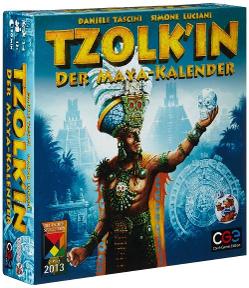
2012 · Mythologie
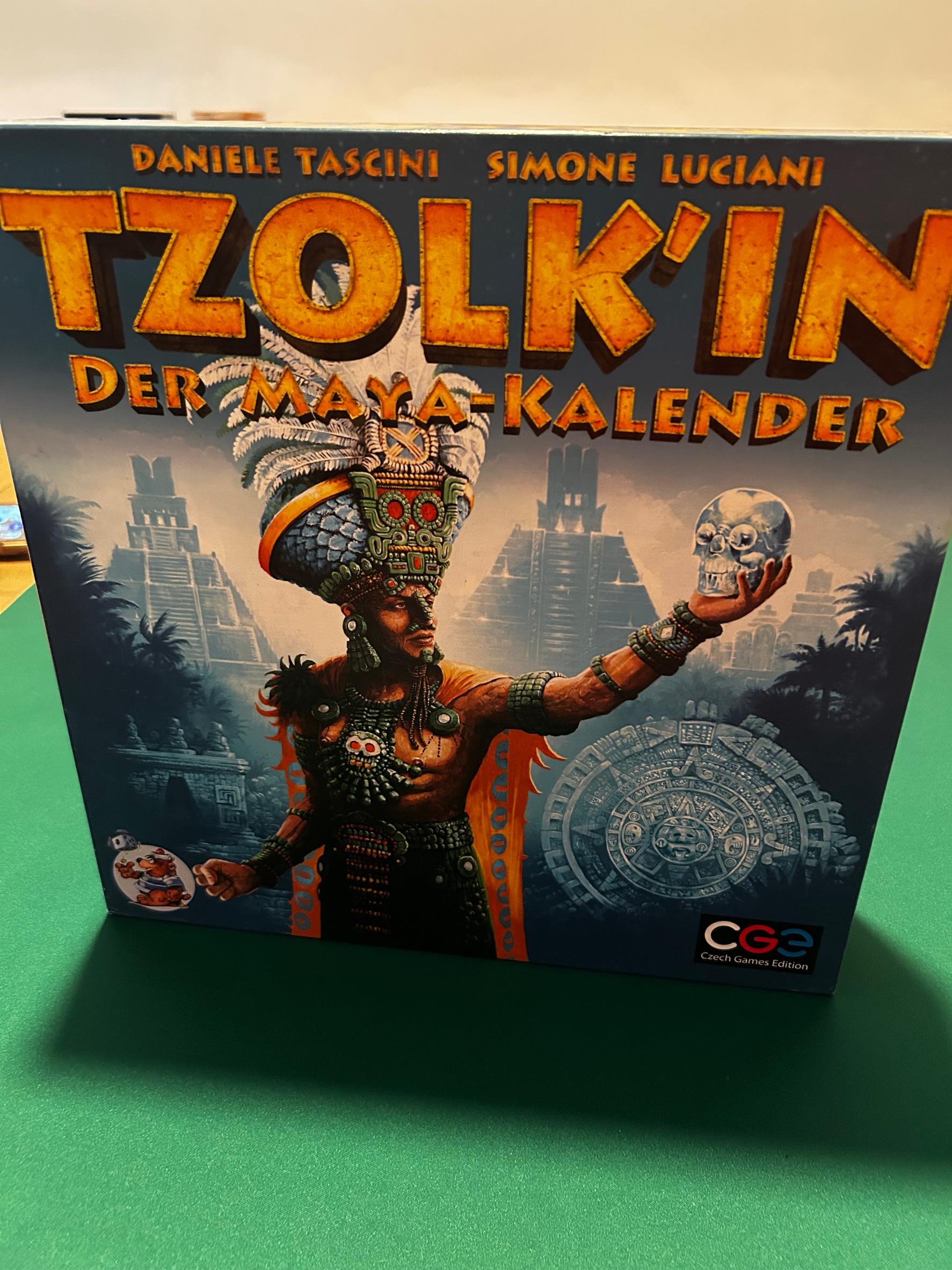
Tzolk'in: Der Maya-Kalender
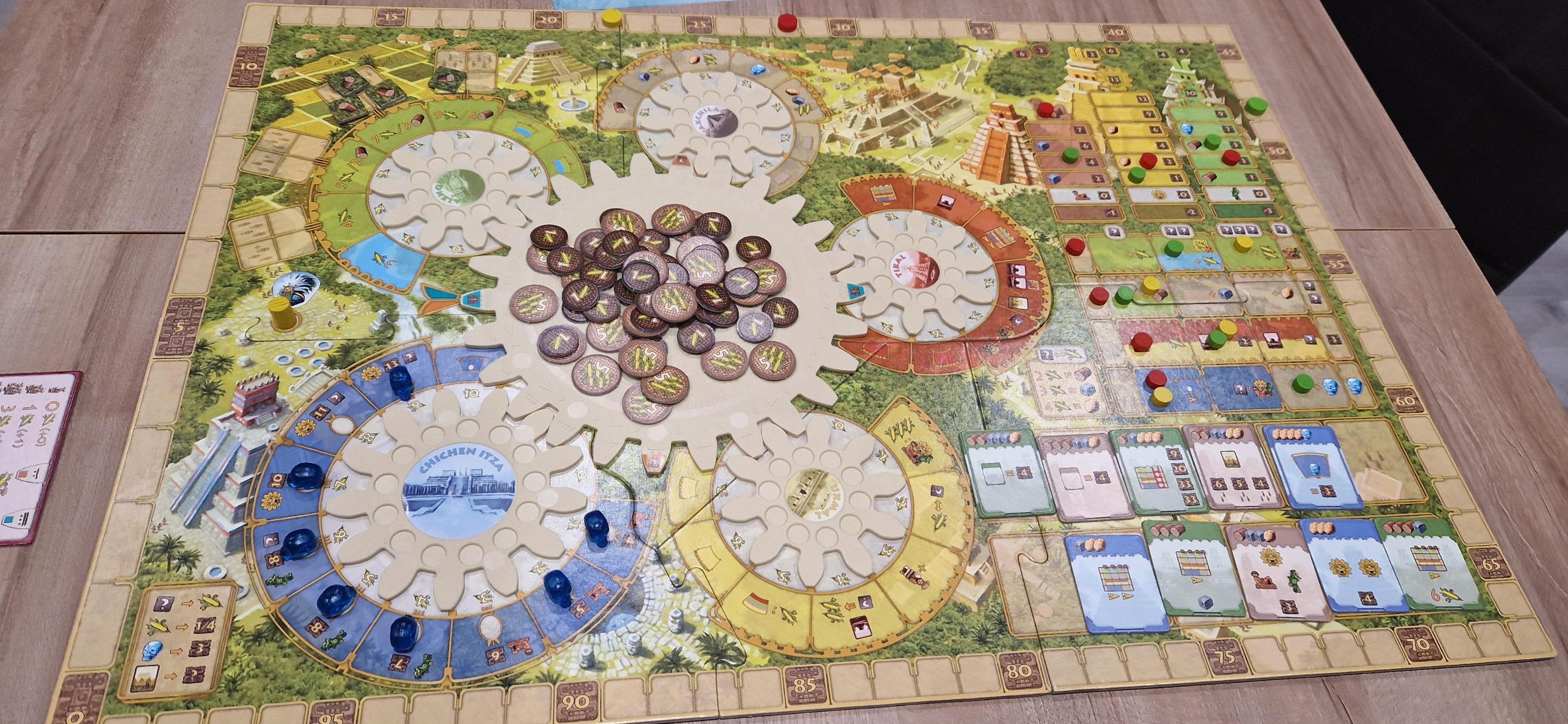
Die Spieler führen rivalisierende Maya-Stämme an, setzen Arbeiter auf ein Netzwerk ineinandergreifender Zahnräder und timen ihre Aktionen so, dass sie durch die Rotation der Zahnräder unterschiedliche Aktionsfelder erreichen. In einem Zug setzen die Spieler entweder einen oder mehrere Arbeiter auf die am weitesten unten sichtbaren Zahnradpositionen ein (und bezahlen dafür Mais als Ressource) oder sie nehmen einen oder mehrere Arbeiter wieder auf und lösen die Aktion aus, die ihrer aktuellen Zahnradposition zugeordnet ist. Spätere Positionen bringen stärkere Effekte, also müssen die Spieler abwägen, ob sie Arbeiter für größere Belohnungen länger stehen lassen oder sie früher zurückholen müssen. Die Rundenstruktur schreitet voran, wenn sich das zentrale Zahnrad einmal vollständig gedreht hat, und das Spiel endet dann. Die Spieler erhalten Punkte, indem sie Gebäude errichten, Opfergaben darbringen, Ressourcen sammeln und andere Ziele erfüllen, um Punkte zu verdienen.
- Spieler
- 2–4 am besten mit 4
- Spielzeit
- 90 Min.
- Alter
- 13+
- Komplexität
- 3,7 / 5
Über das Spiel
- Illustration
- Verlag



Erweiterungen
In Ludoya ansehen
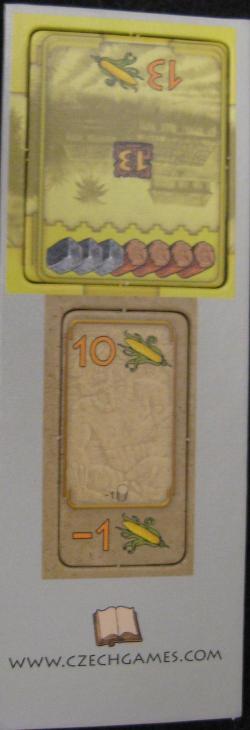
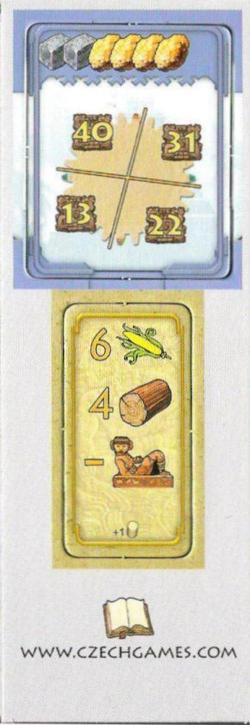
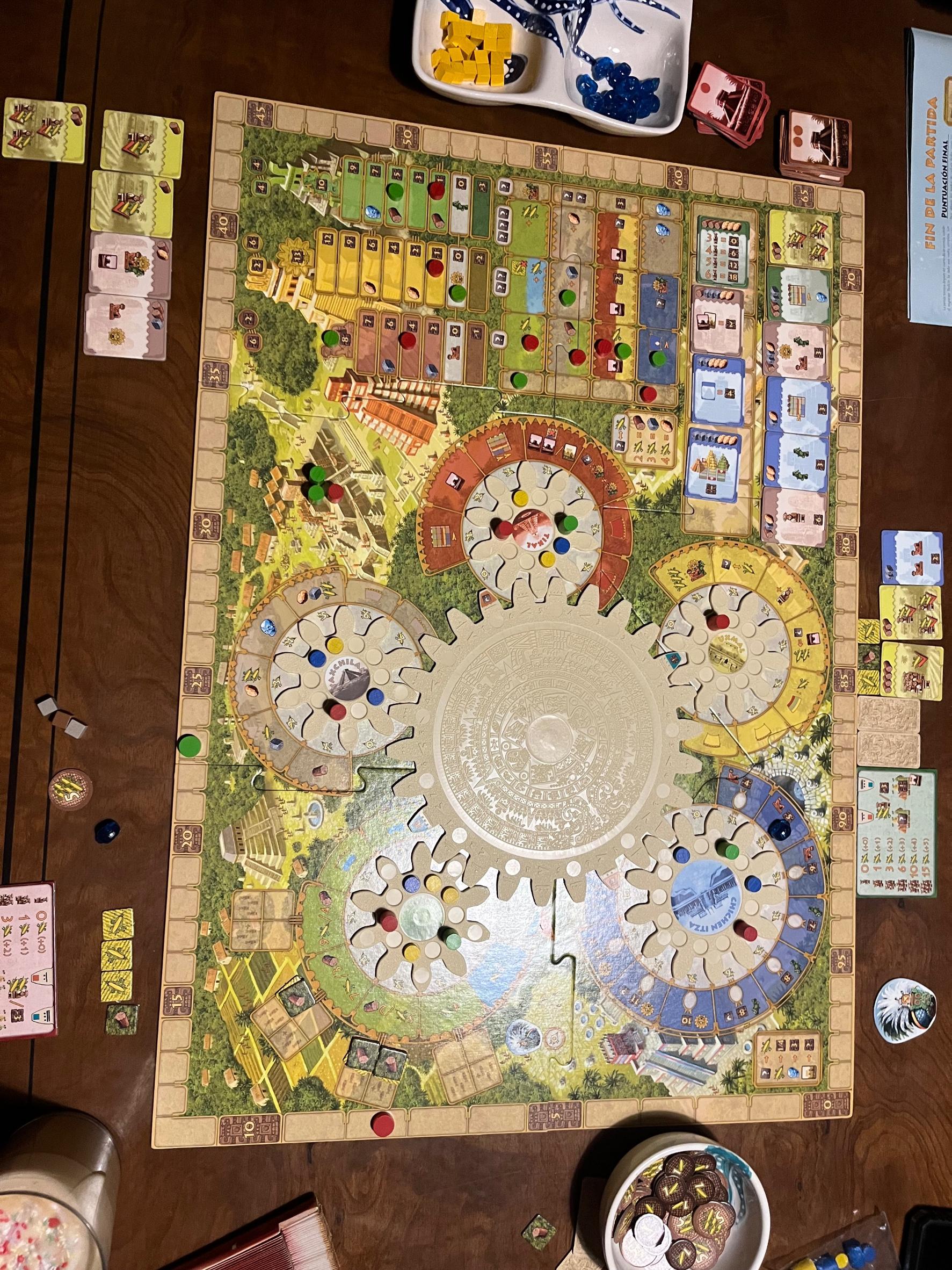
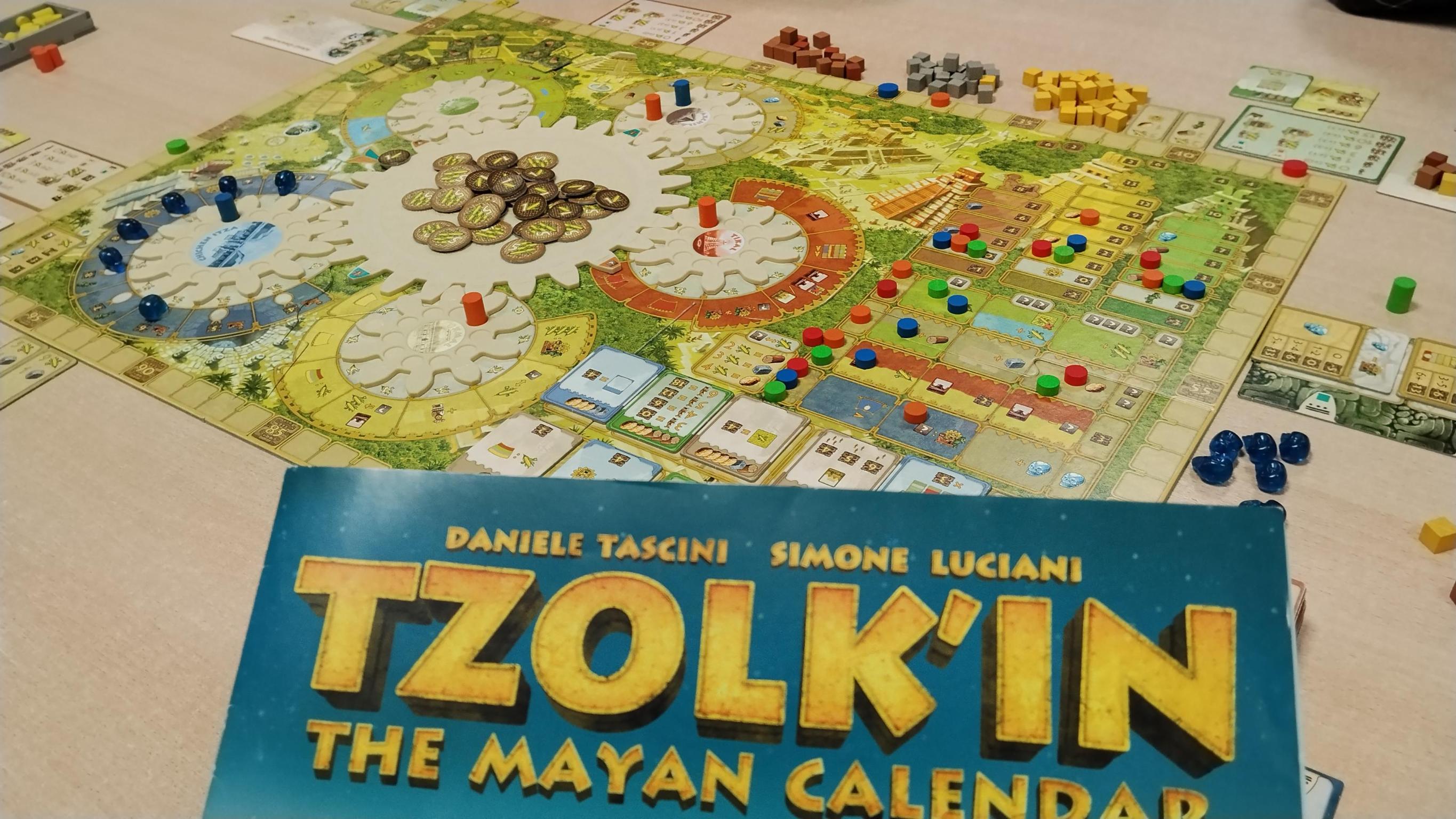
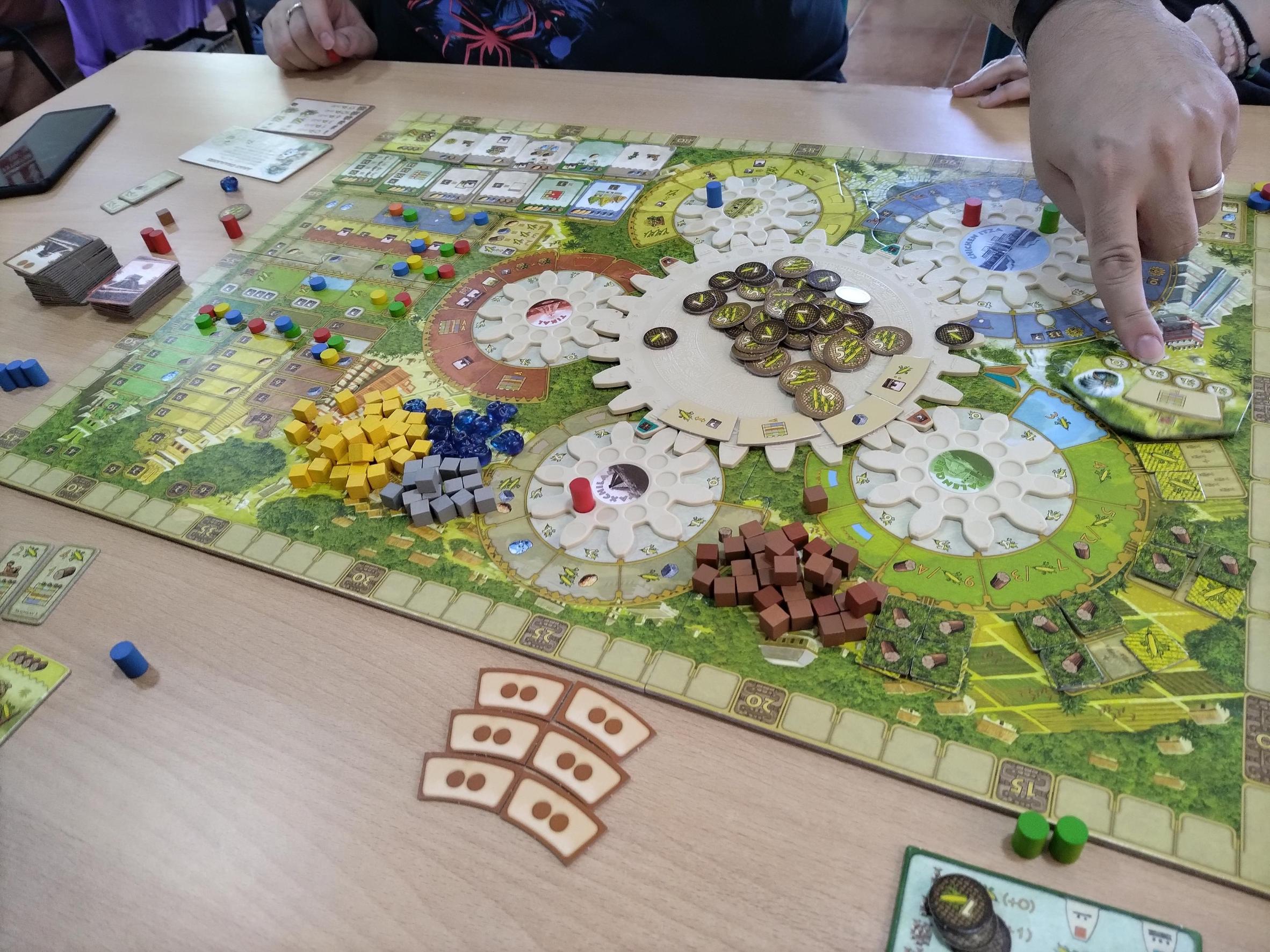
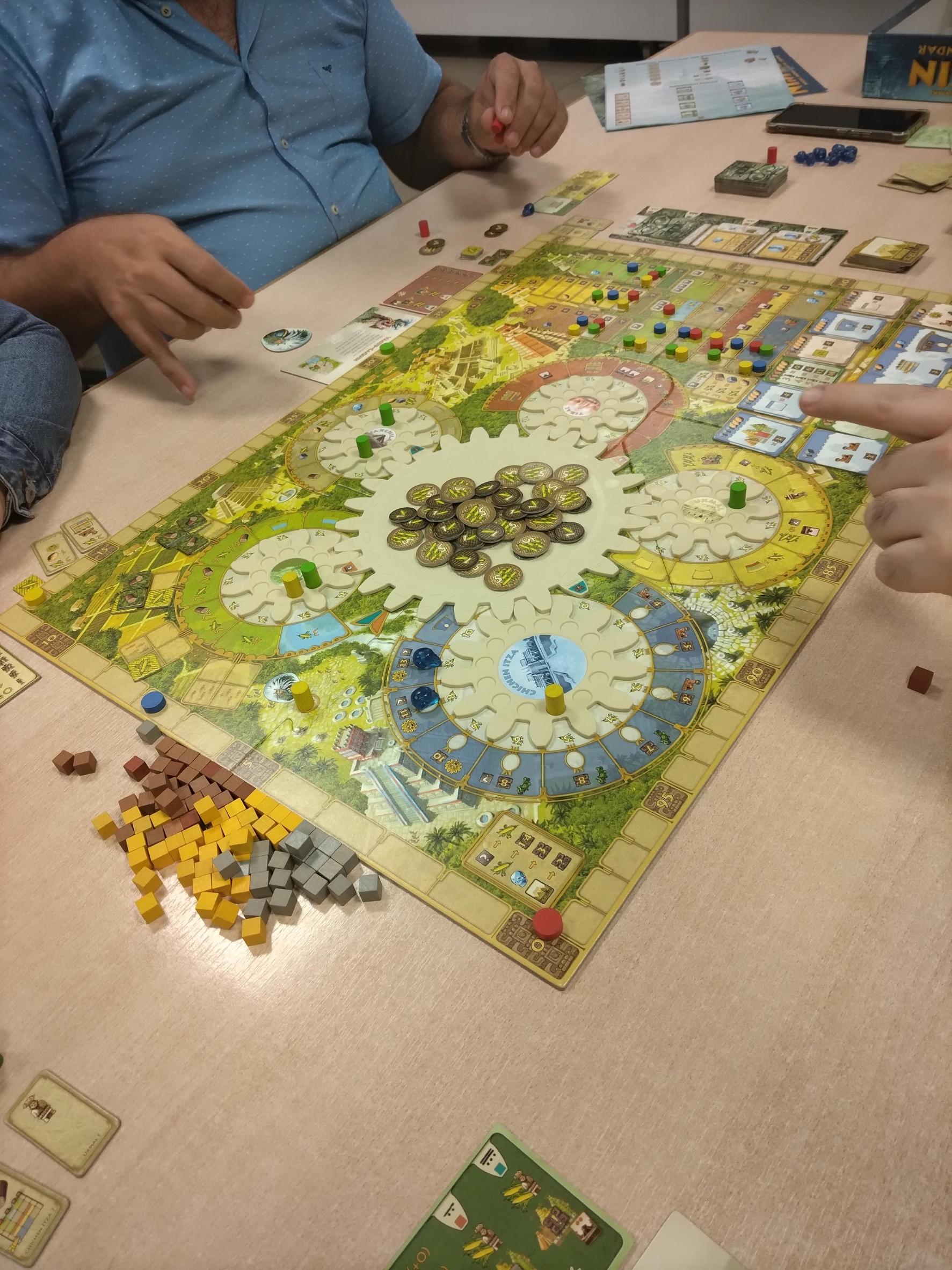
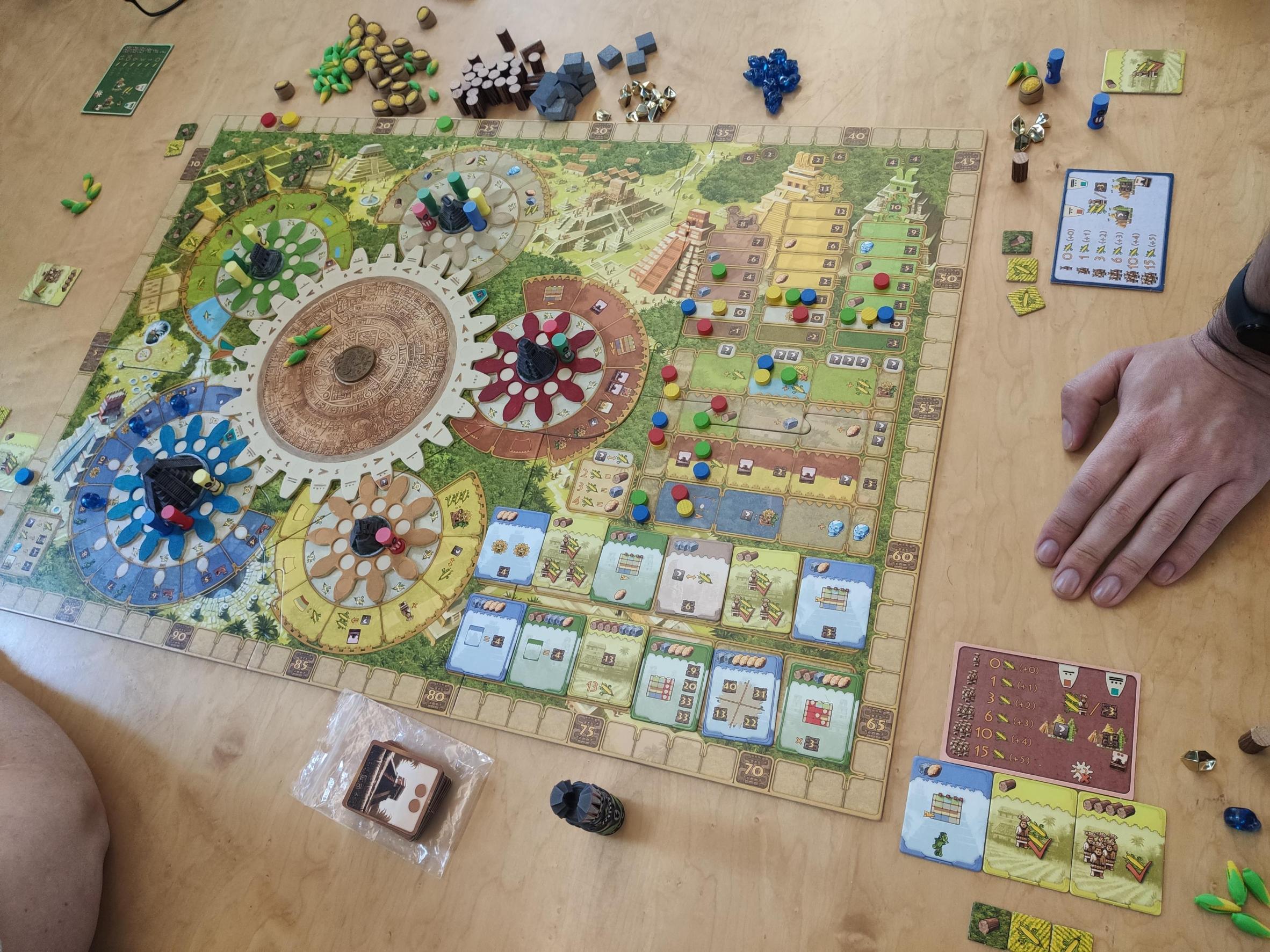
Fotos von Ludoya-Tischen
Alle Fotos in Ludoya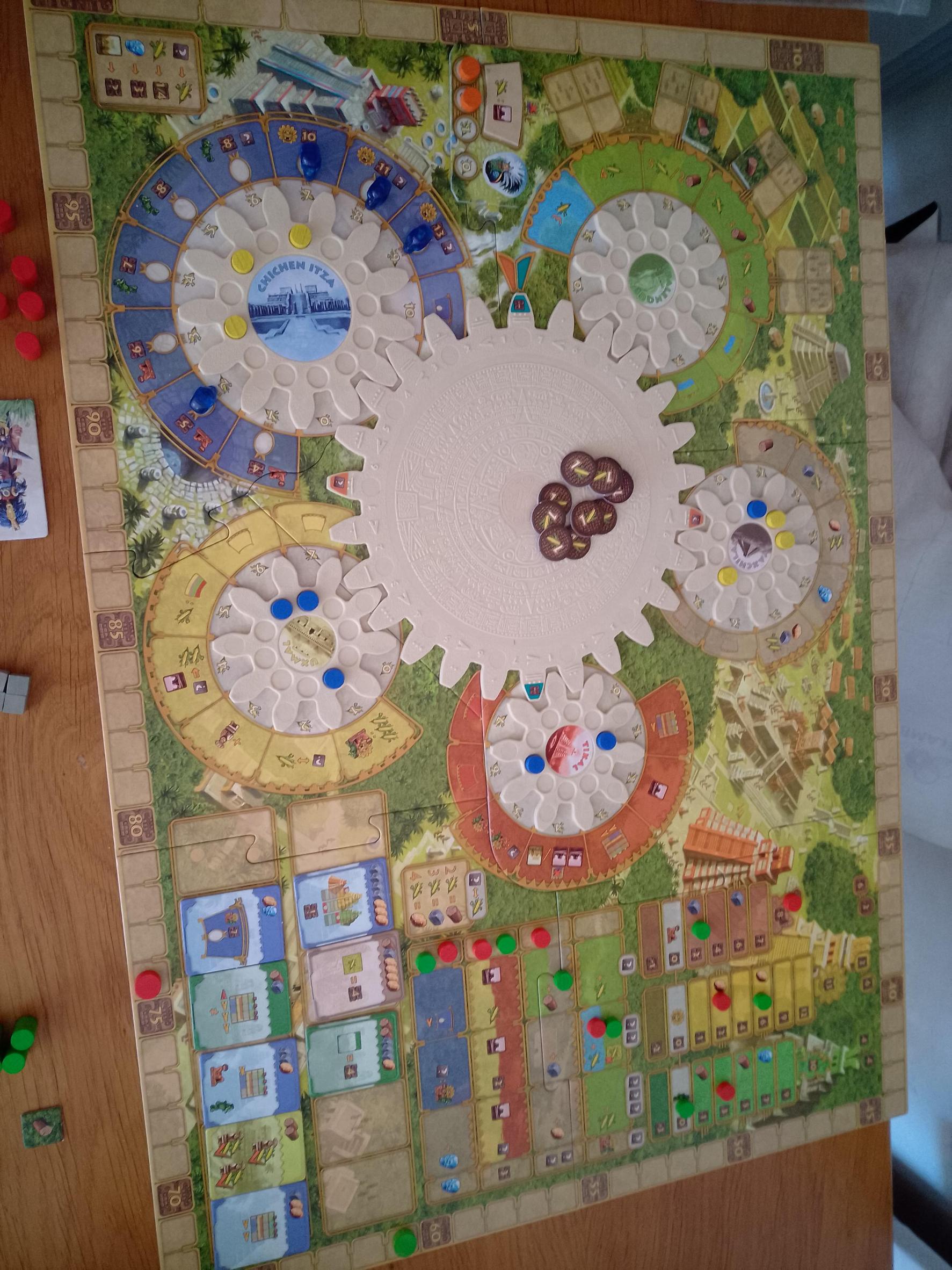
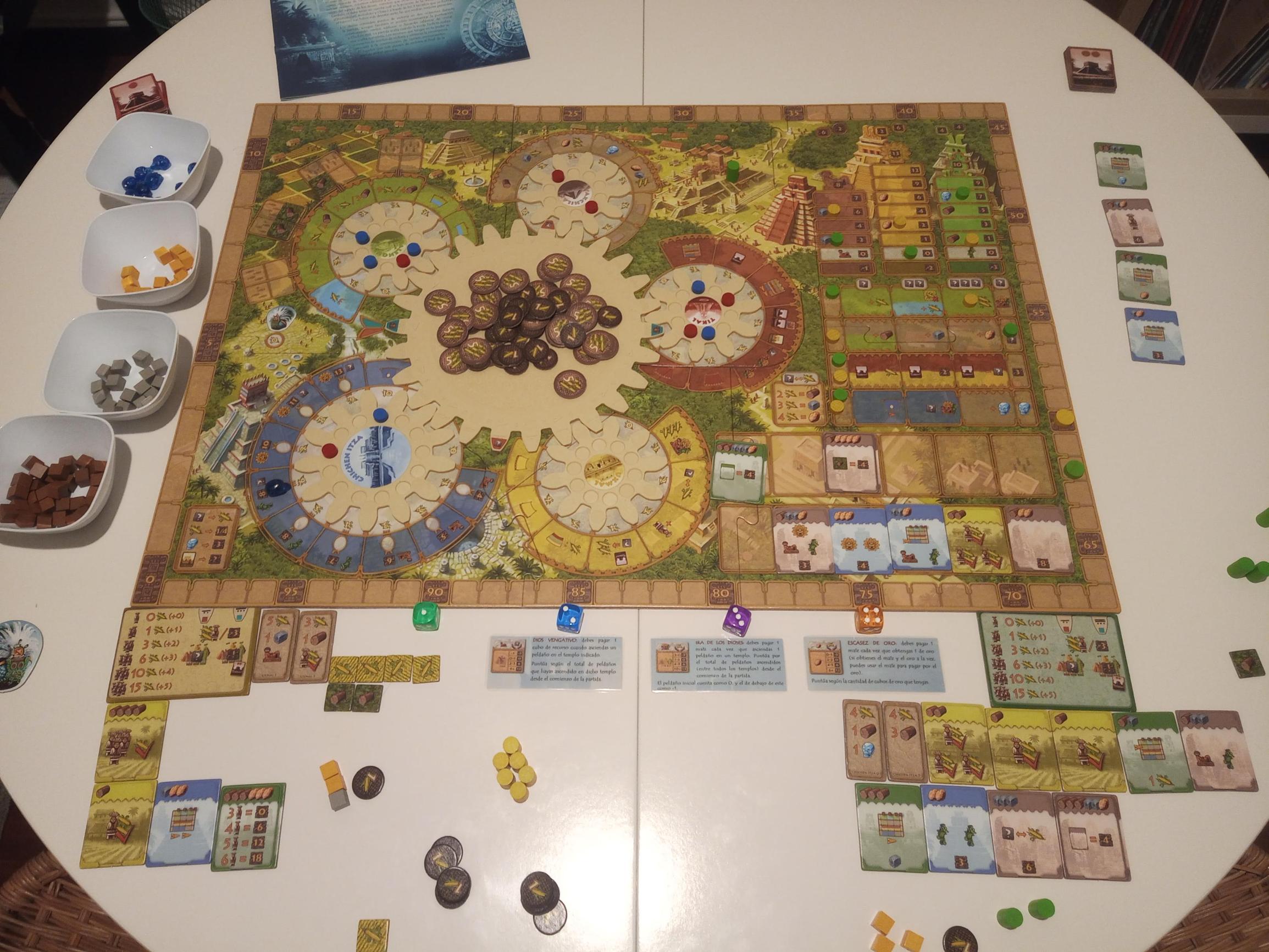
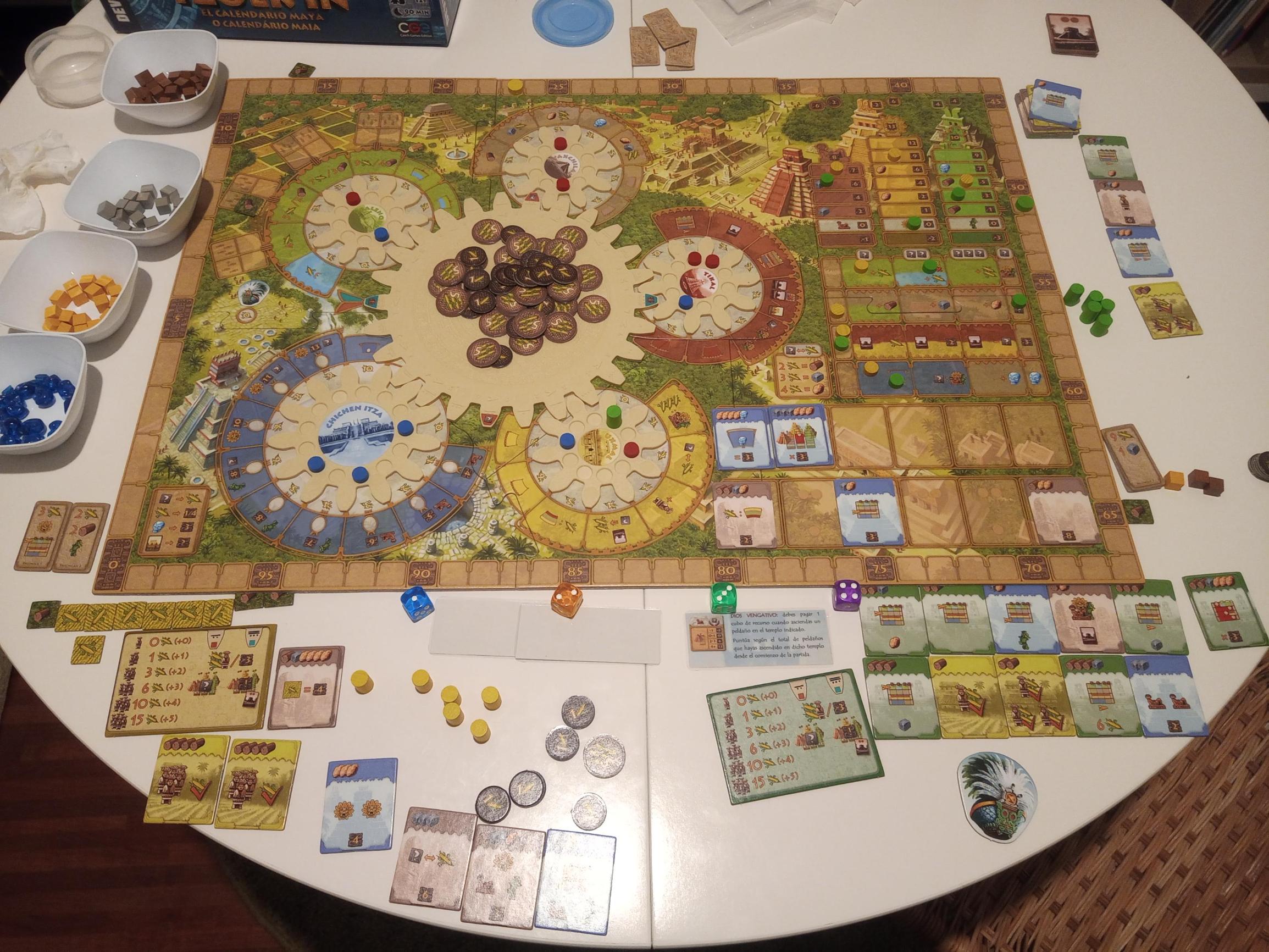
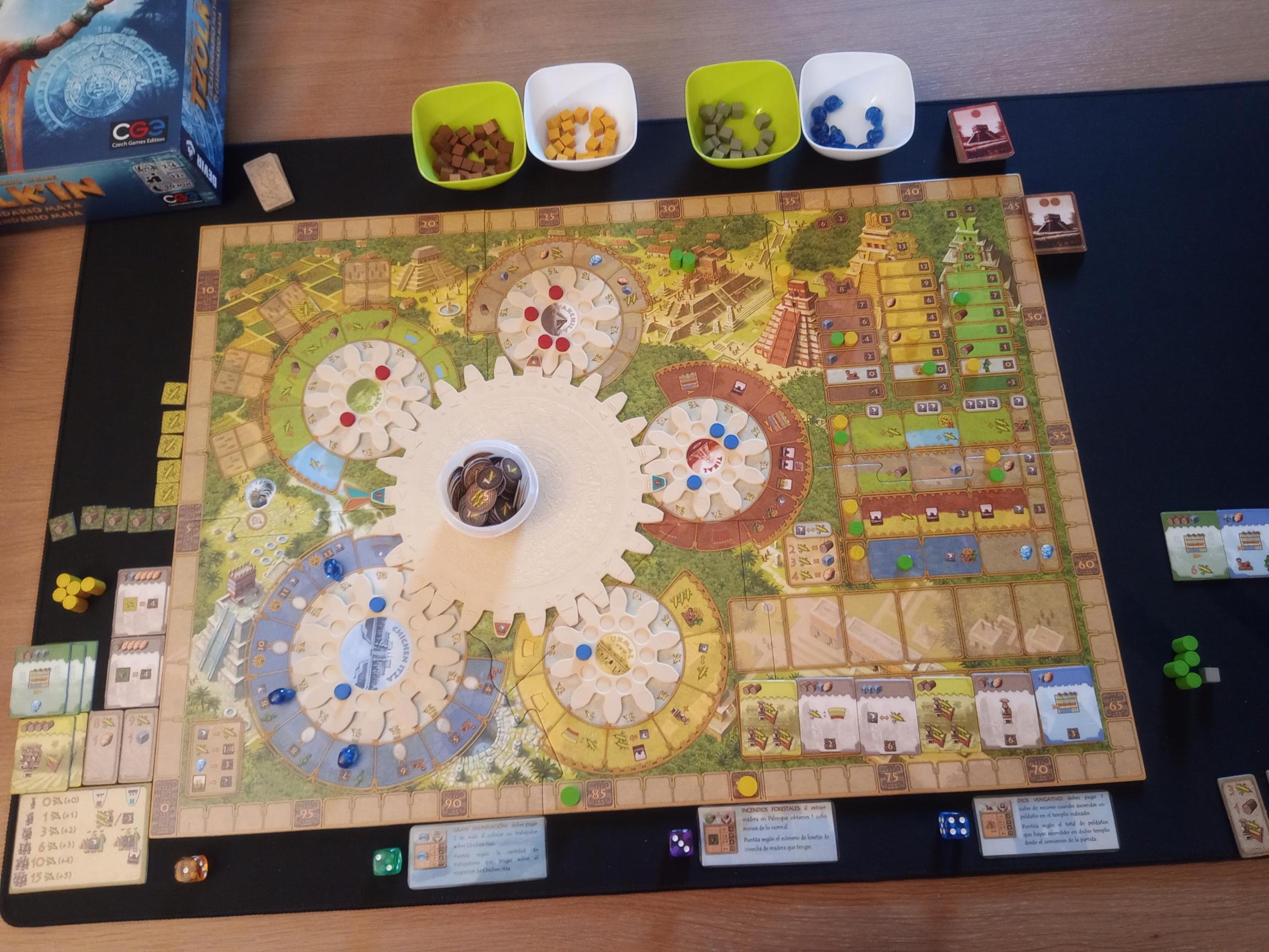
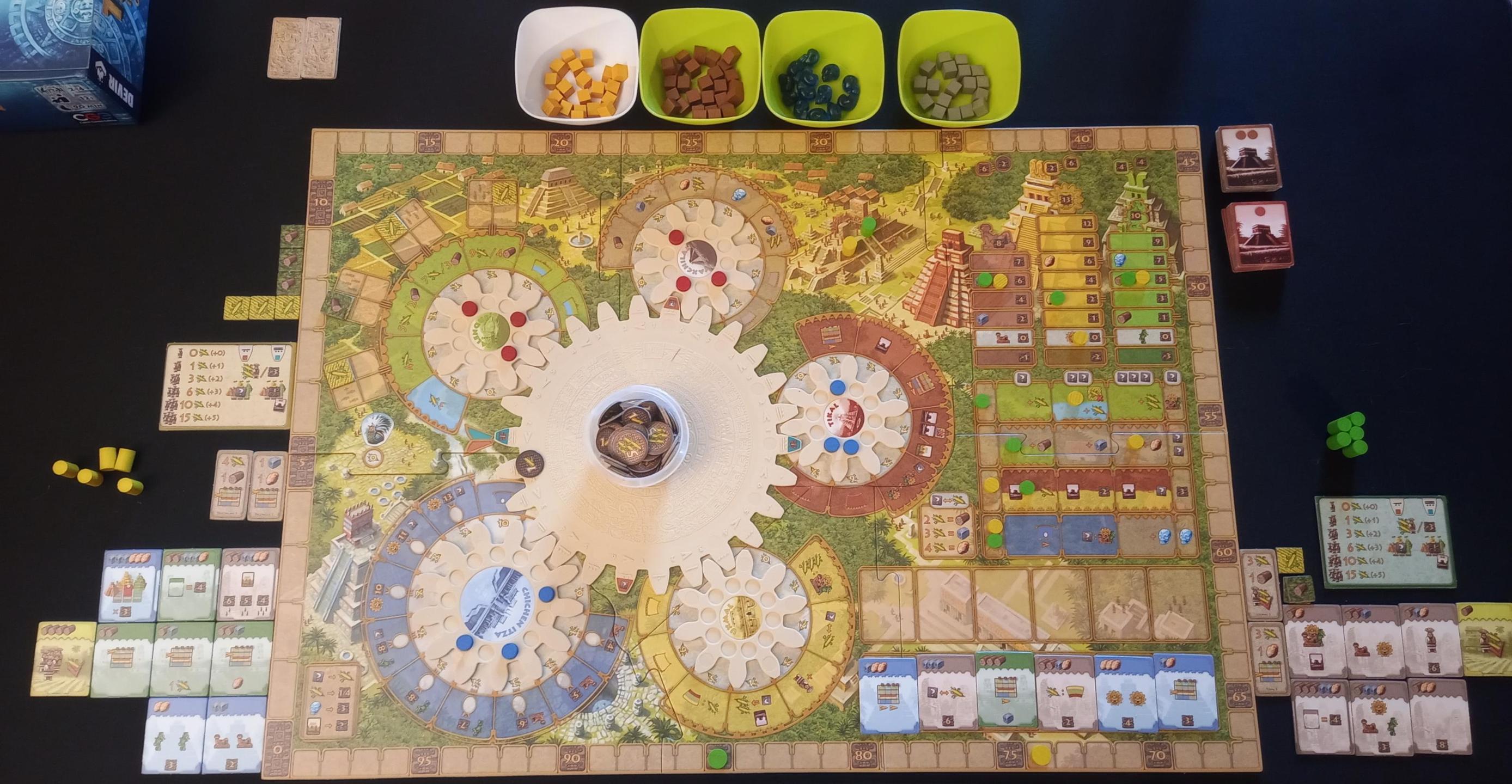
Wo kaufen
Shop-Preise und gebrauchte Exemplare, täglich geprüft.
An Ludoyas Tischen
Alle Statistiken in Ludoya- 1.232
- Erfasste Partien
- 1.036
- Spieler
- 1h 42m
- Durchschnittliche Partie
- 329
- In Sammlungen
- 48
- Auf Wunschlisten
- 1
- Vorbestellt
7,9/10
aus 185 Ludoya-Rezensionen
Jan Solo8,0 Espectacular juego de mecánicas originales e interesantes. Un desafío muy entretenido aunque con curva de aprendizaje pronunciada. Impro-Reseña⇒ https://youtu.be/6u02yJuDH5k
Pepe Gotera9,0 31€ Goblintrader
Mestremuten9,0 Rating: 5/5 Production value: 3/4 Is the game in my collection/Love to have?: 1/1


Regelfragen
Aus der Spielanleitung beantwortet von Ludoyas Regelassistenten.
Do I have to place workers or pick up workers on my turn — can I do both or skip my turn?
You must either place one or more available workers or pick up one or more of your workers; you cannot do both or skip your turn (your first turn will always be a placement turn). (page 6)
How much corn do I pay when I place workers onto the gears?
You pay corn equal to the action-space number for each worker placed, plus an additional cost based on how many workers you place that turn as indicated on your player board (the board shows the cumulative and per-worker breakdown). (page 6)
When I pick up workers, what actions can I take and can I use a lower action space?
For each worker picked up you may either perform the action where it stood, perform a lower-numbered action on the same gear by paying 1 corn per step back, or do nothing; you pick them up and resolve the chosen effects sequentially, so order matters. (page 6)
When do we feed workers and how much corn does each worker need?
On a Food Day (there are four per game) after everyone has taken a turn you must pay 2 corn for each worker in play (on the gears or in front of you); you must feed as many workers as you can and lose 3 victory points for each worker you fail to feed, while farm buildings can reduce feeding costs. (pages 13, 11)
What happens if I don't have corn to place workers — can I beg for corn and are there penalties?
At the start of your turn, if you have 2 or fewer corn you may beg: discard all your corn and take 3 from the bank, but this angers the gods so you must move down one step on a temple; if you must place but cannot and have no workers on gears you must beg (with a rare special case if you are already at the bottom of every temple). (pages 6, 11)
What does the Starting Player Space do and what are the temple top-step rules?
The Starting Player Space gives you all corn accumulated on the gear tooth immediately, returns that worker to you at the end of the round, transfers the Starting Player Marker, and may let you advance the calendar 2 days with restrictions; temple top steps are exclusive to one player and when you reach a top step you flip your board lighter-side-up (granting calendar-speed privileges). (page 10)











Kostenlos, im Web, für Android und iOS
Spiel Tzolk'in: Der Maya-Kalender mit Ludoya
- Hab es in deiner SammlungVerwalte dein Exemplar und seine Erweiterungen, leih es Freunden oder setz es auf deine Wunschliste und erfahre, wenn der Preis fällt.Zur Sammlung hinzufügen
- Erfasse jede PartiePunkte, Sieger, Timer und Fotos, dann deine Statistiken: Siegquote, liebste Spielerzahl, beste Punktzahl.Partie erfassen
- Regelfragen klärenFrag alles zu den Regeln und erhalte eine Antwort aus der Spielanleitung, mit der Seite zum Nachprüfen.Den Regelassistenten fragen
- Finde Leute, mit denen du es spielstClubs, Spieleabende und Veranstaltungen in deiner Nähe, bei denen dieses Spiel auf den Tisch kommt.Veranstaltungen ansehen
Spieldaten (Spieler, Spielzeit, Alter, Mitwirkende) von BoardGameGeek.