

2019 · Industria / Fabricación
Chicago 1875: City of the Big Shoulders
Los jugadores actúan como emprendedores e inversores reconstruyendo el Chicago posterior al incendio a lo largo de cinco décadas. Fundan y amplían empresas, compran y venden acciones, y colocan edificios y espacios de acción en el tablero de la ciudad para permitir las operaciones. En cada década, los jugadores usan una fase de bolsa para intercambiar acciones, una fase de construcción para desarrollar la ciudad, una fase de acción para asignar socios y hacer tratos, y una fase de operaciones donde las empresas compran recursos, producen bienes y envían entregas a clientes por todo el Medio Oeste. Después de la quinta década, los jugadores liquidan sus acciones, puntúan objetivos públicos y suman su dinero para determinar al ganador.
- Jugadores
- 1–4 mejor con 4
- Duración
- 120–180 min
- Edad
- 14+
- Complejidad
- 4 / 5
Sobre el juego
- Diseño
- Editorial



Expansiones
Verlas en Ludoya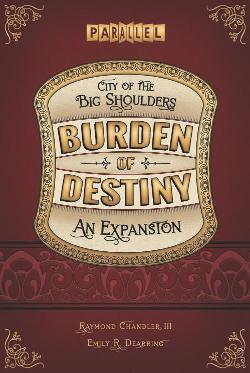
Dónde comprarlo
Precios de tiendas y copias de segunda mano, revisados cada día.
- AlphaspelEn stock899 kr
- PhilibertEn stock99.95 €
- Zatu GamesEn stock94.99 £
- Svet deskovych herConsultar stock1510 Kč
- Board Game BlissEn stock172.95 $
En las mesas de Ludoya
Todas las estadísticas en Ludoya- 74
- Partidas registradas
- 105
- Jugadores
- 3h 20m
- Partida media
- 19
- En colecciones
- 14
- En listas de deseos
- 1
- En preventa
5,8/10
de 13 reseñas en Ludoya
setropo7,5 Las primeras partidas bien, pero a partir de la cuarta se ha venido abajo.
Evan3,5 In this game players start companies by buying shares in the companies. Each round starts with a stock phase where you can start new companies, or buy stock in any of the existing companies. Then you have a worker placement phase to build infrastructure so the company can produce goods. When you use someone else's building they get a benefit. Finally the companies produce and sell their goods. Goods get sold to tiles with limited spaces that come with a reward for the player to finish off the empty spaces. When a company sells it has the option of paying the proceeds out to all stock holders which increases the value of each stock, or holding onto the money so the company can buy more expensive infrastructure in the next round. At the end of the game, the player with the most personal money in hand wins. The iconography is very good. The actions are very clear. It's also nice to see an 18xx style company stock management and payouts system applied to a worker placement game, although it's still a 4.5 to 5 hour game. Some issues I have with the game are that a company's ability to sell goods is dependant on a volatile cube market. If the cubes you need to produce with get depleted by the company running before yours, and the right color isn't drawn from the bag for replenishment, you might be out of luck. There's a 2 for 1 cube conversion to attempt to mitigate it but if the player depletes the purchase boxes down to 1 cube each then nothing refills which might not give you enough to buy to make the 2 for 1. In fact, this starvation mechanism is the only real way to hurt another player. The randomness of the bag also means there's nothing to think about it plan for while other players resolve this phase. In a game as long as this you really feel this downtime. Selling a company's stock to drive the price down has extremely little impact on how well the company does. This means that despite all the arenas of interaction in the game it ultimately feels lacking. It could be a fluke but in our game no company wound up poor enough to need to keep it's income. The last problem is minor. Just that each round players add one new worker placement spot too the board into their row marking it as theirs for purposes of bonus payout when someone uses it. You draw these buildings mid round after the stocks phase but before the worker placement phase. It's mildly annoying to not be able to know what new building you will be adding to the board when you make your stock decisions. ★ Art, Iconography and components functional ★ Clever or interesting mechanisms ☆ Reasonably low downtime between turns with mildly AP players ★ Multiple plays stay interesting ☆ Low or mitigatable luck elements ★★☆☆☆ Raw enjoyment
Nevest9,0 This is an interesting, meaty game. It combines the corporation/stock aspects of 18xx games with worker placement. Instead of buying trains and laying track (from 18xx), you buy raw materials for your factories and you can recruit managers and salespeople to help make your factories/products better. You then sell the goods you produce in a market with sometimes limited demand. Each player adds a new worker placement spot to the board each round of progressing power. You can start more than one company, but you only ever have one set of workers to gain the raw materials and other benefits for all of your companies. There’s a lot of player interaction and each decision feels important. The only small gripe I have with it is the raw materials market. It’s possible for a company not to be able to produce anything in a round just because of the random cubes that got drawn out of the bag, and that’s even before someone going in front of them purposefully screws them. There are some ways to mitigate this risk, but I feel like the game might be better if any color cube could be bought at some even higher price than any of the market spaces (paying extra to ship it in from out of town).










Quien lo tiene también tiene
 Union Stockyards2023
 La famiglia: La gran guerra de la mafia2025
 Tinners' Trail (Second Edition)2022
 Imperial Steam2022
 John Company: Segunda Edición2023
 Great Western Trail: La Gran Ruta del Oeste2017
 Nueva Ángeles2017
 Alquimistas2015
 Twilight Imperium: Cuarta Edición2018
 Speakeasy2026
 Kanban EV2020
 Arkwright2021
Gratis, en web, Android e iOS
Juega a Chicago 1875: City of the Big Shoulders con Ludoya
- Tenlo en tu colecciónControla tu copia y sus expansiones, préstala a tus amigos o ponla en tu lista de deseos y te avisamos cuando baje de precio.Añadirlo a tu colección
- Registra cada partidaPuntuaciones, ganadores, temporizadores y fotos, y luego tus estadísticas: porcentaje de victorias, número de jugadores favorito, mejor puntuación.Registrar una partida
- Puntúa sin papelUsa las hojas de puntuación y ayudas de juego de la comunidad, y deja que Ludoya sume los puntos.Buscar hojas de puntuación
- Encuentra gente con quien jugarloClubes, noches de juegos y eventos cerca de ti que sacan este juego a la mesa.Ver eventos
Datos del juego (jugadores, duración, edad, créditos) de BoardGameGeek.