
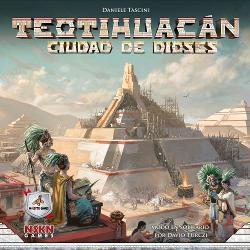
2018 · Construcción de ciudades
Teotihuacán: Ciudad de Dioses
Los jugadores controlan dados trabajadores que aumentan en fuerza a medida que actúan, moviendo un solo dado por un tablero modular de la ciudad y realizando la acción en uno de los dos espacios de cada loseta. En sus turnos, los jugadores eligen entre realizar una acción y mejorar a ese trabajador o tomar un bono inmediato sin mejora, mientras gestionan recursos y la necesidad de alimentar a su mano de obra. Las acciones sirven para desarrollar tecnologías, construir viviendas, avanzar en tres templos principales y contribuir a la pirámide escalonada central a lo largo de tres eras sucesivas. La victoria se decide por la fama acumulada después de puntuaciones periódicas.
- Jugadores
- 1–4 mejor con 4
- Duración
- 90–120 min
- Edad
- 14+
- Complejidad
- 3,8 / 5
Sobre el juego
- Diseño
- Editorial



Expansiones
Verlas en Ludoya Teotihuacán: Preclásico Tardío2019
 Teotihuacán: Sombras del Xitle2020
 Teotihuacán: Era de la Expansión2021
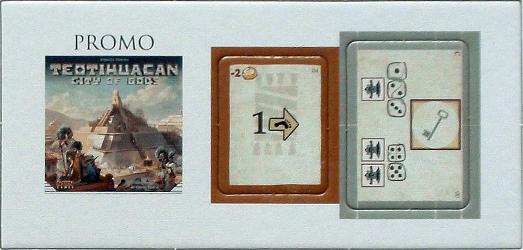 Teotihuacan: Dice Settlers Promo2018
 Teotihuacan: City of Gods – Pyramid Tile Promo, Red Temple2019
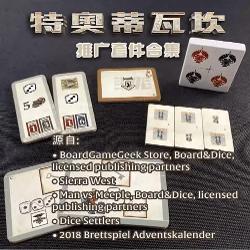 Teotihuacan: City of Gods – Promo Bundle2020
 Teotihuacan: City of Gods – 5th Player Expansion2020
 Teotihuacan: City of Gods – Decoration Tiles2019
 Teotihuacan: Brettspiel Adventskalender 2018 Promo2018
 Loot Box #12022
 Teotihuacan: City of Gods – Man vs Meeple Promo2019
 Brettspiel Adventskalender 20182018
 Teotihuacan: Expert Challenges – Book 12021
 Teotihuacan: Expert Challenges – Book 22021
 Teotihuacan: Expert Challenges – Book 32022
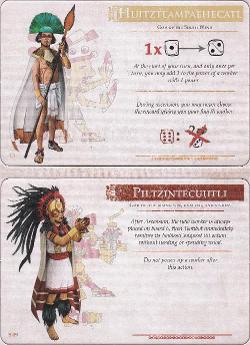 Teotihuacan: New Priests2024
 Teotihuacan: City of Gods – 5th Player Expansion2024
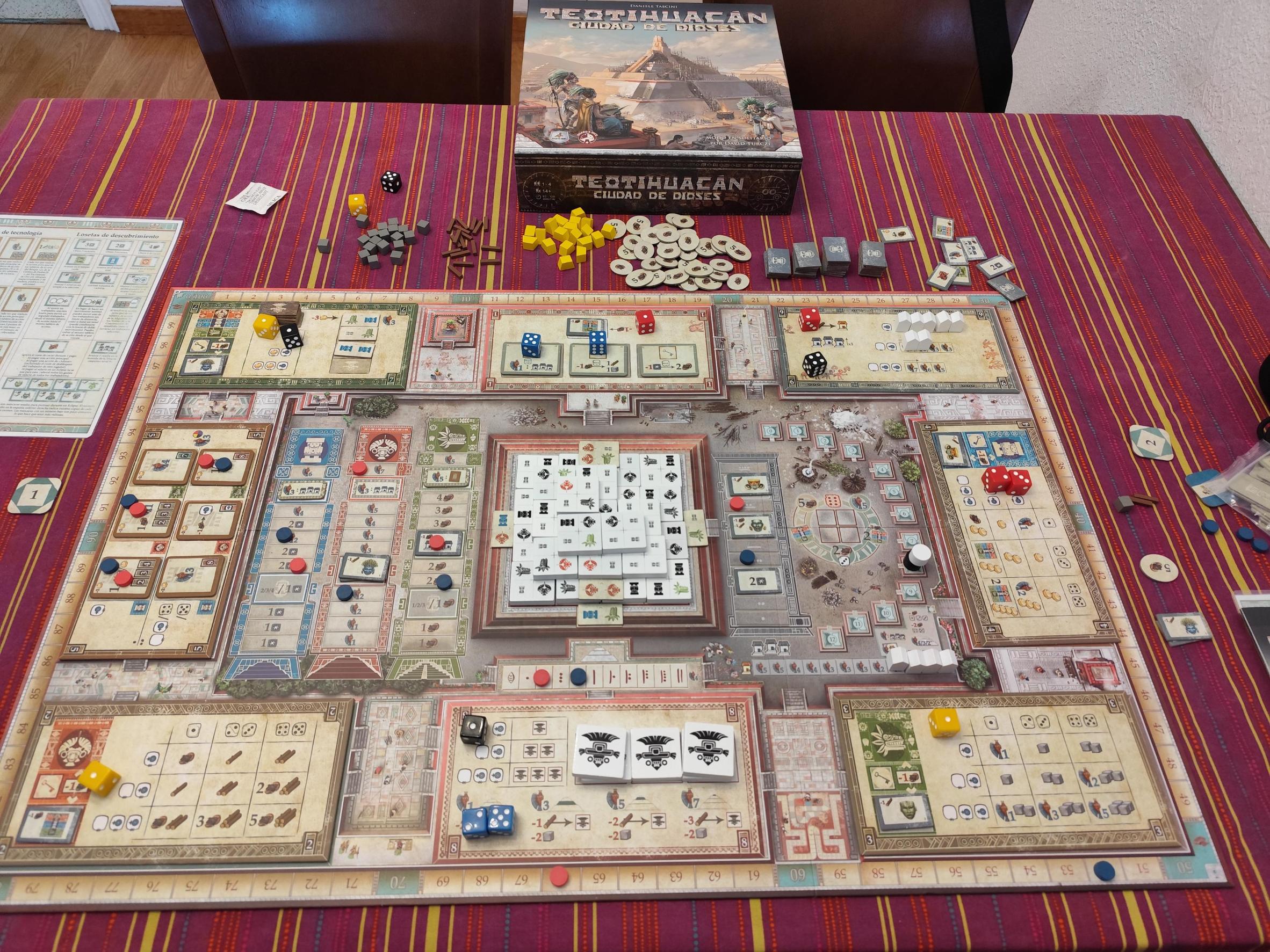
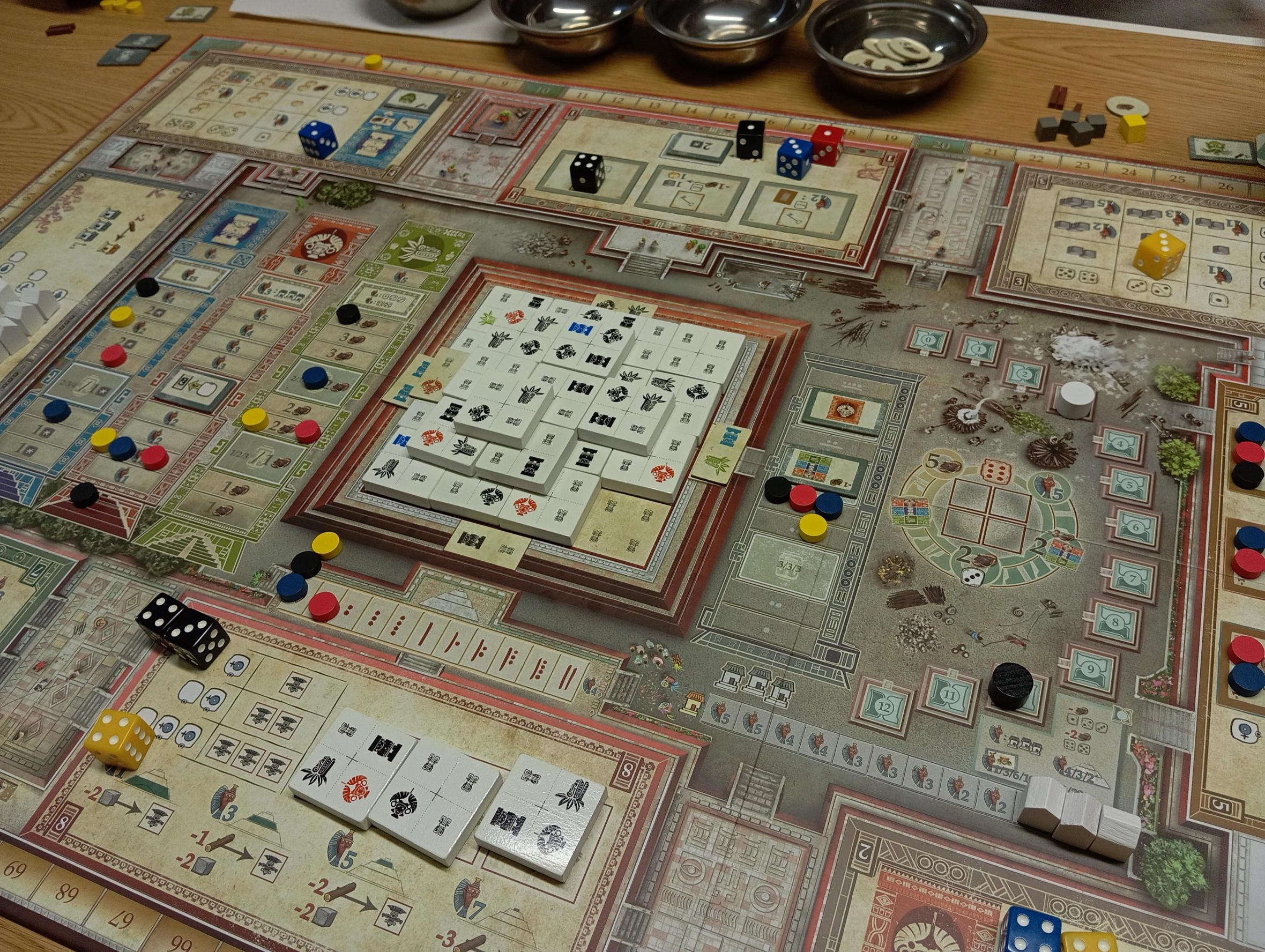
Fotos de mesas de Ludoya
Todas las fotos en Ludoya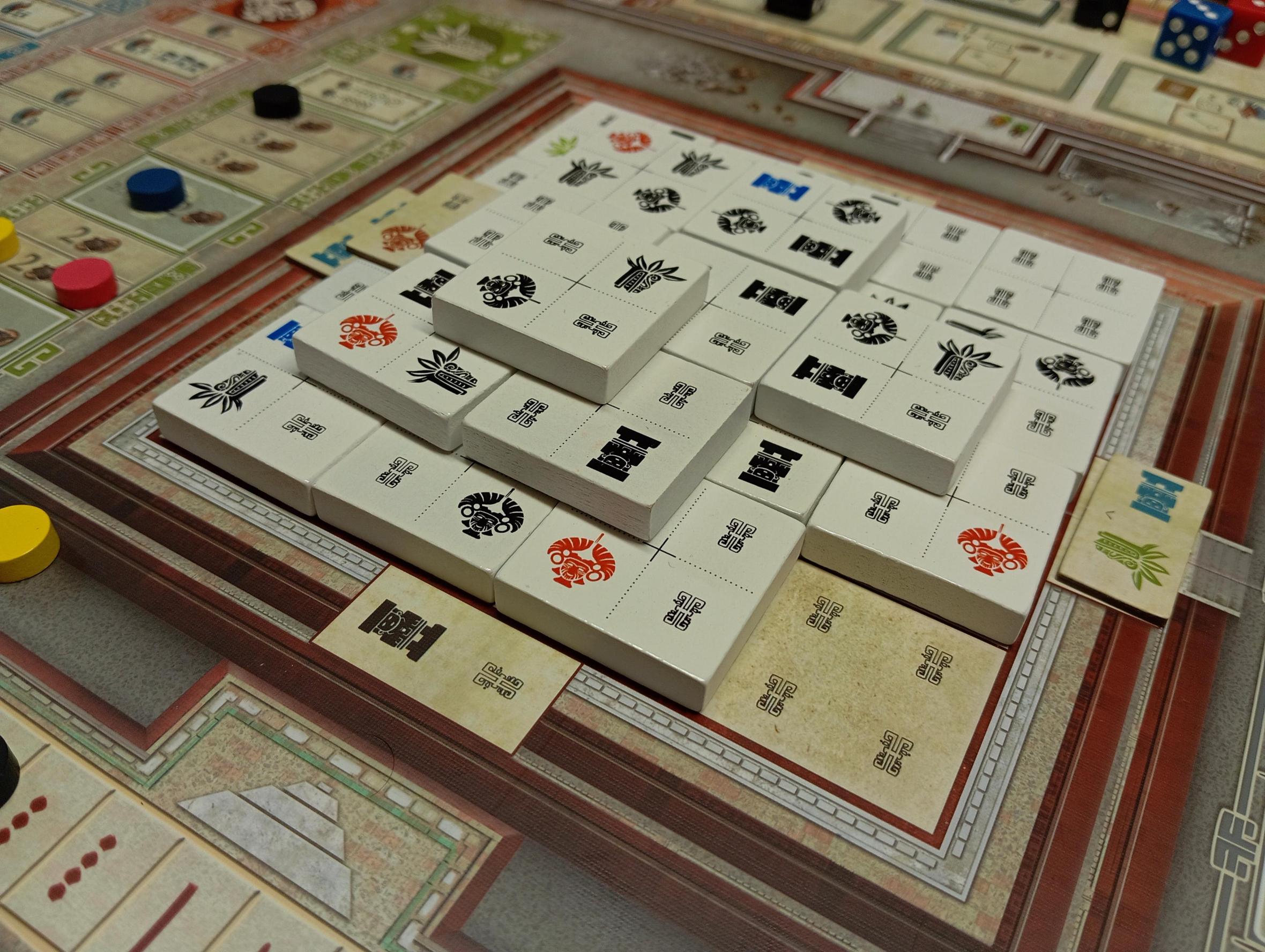
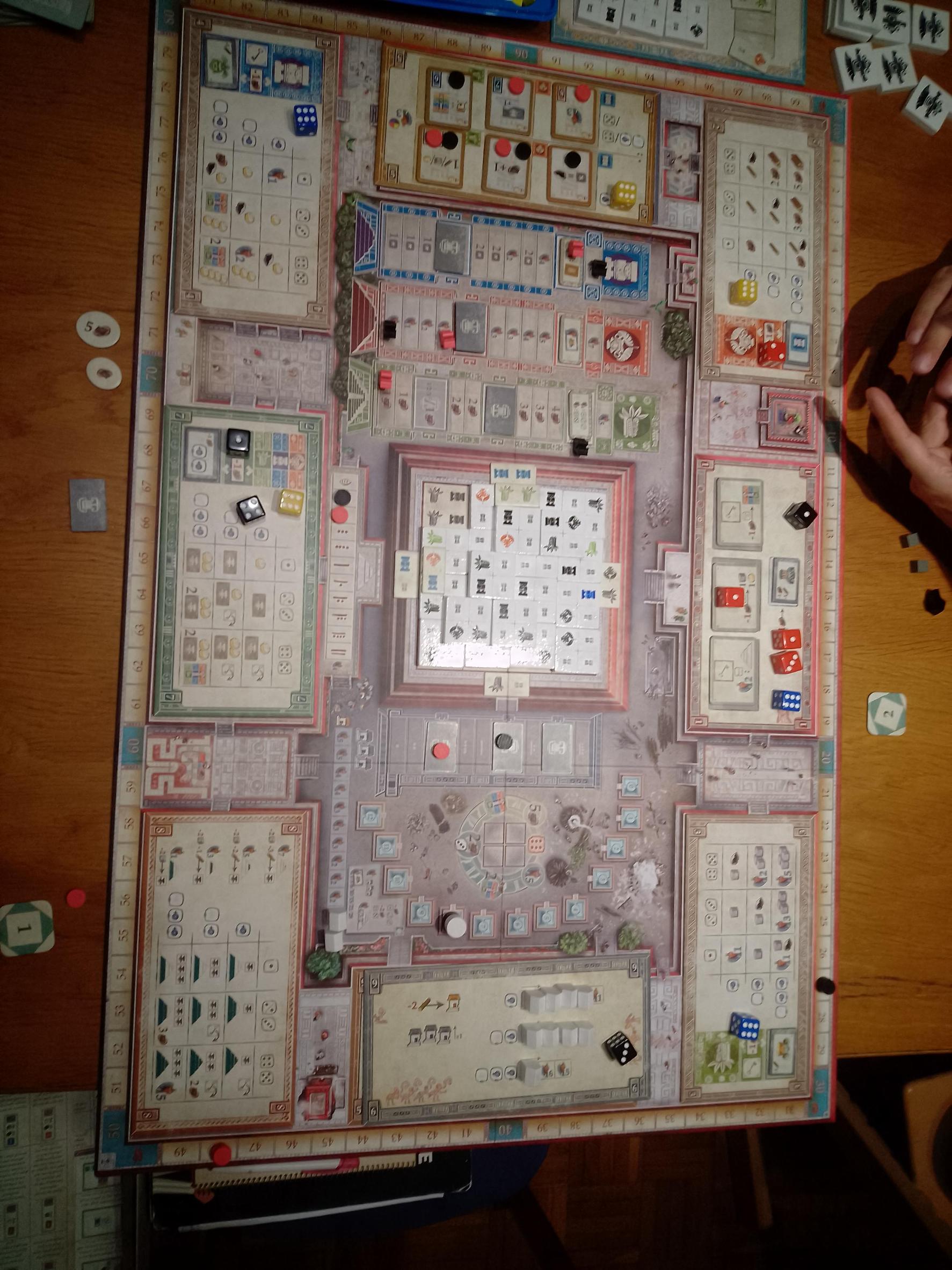
Dónde comprarlo
Precios de tiendas y copias de segunda mano, revisados cada día.
En las mesas de Ludoya
Todas las estadísticas en Ludoya- 823
- Partidas registradas
- 634
- Jugadores
- 1h 53m
- Partida media
- 183
- En colecciones
- 33
- En listas de deseos
- 1
- En preventa
6,3/10
de 117 reseñas en Ludoya
Jan Solo8,0 Gran juego de gestión de recursos y construcción de la pirámide. Modo solitario interesante, pero a mi gusto excesivamente farragoso y lento.
Evan2,5 In this game you move one of your player markers around a roundel 1-3 spaces then resolve the action in the space you end at. Your makers are dice, and the effect of the action spaces is based on a table that looks for how many of your dice are in the space, then also what the pip value of your lowest die is. Often the effect of the space will then add pips to one or two of your dice. When a die hits 6, it resets to 1, and you gain a step on a track that produces points at the end of the round per step you have. Then you also gain a reward from a small wheel of options next to that track. Mostly what you are doing is collecting bricks and wood, then spending the bricks and wood to build the structure at the center of the board. There are extremely important technology tiles you can invest in to make your actions better. Another key thing to manage is the need to spend cacao tokens equal to the number of players in an action space to resolve the action. If you can't pay it, then you wind up skipping your action and instead getting the cacao tokens plus 1 instead. You can avoid this by taking gather actions more often, but since there's very little if any engine building in the game, it does feel like a large portion of your actions in the game work out to similar feeling gather then spend cycles. When you take the action to build the central structure, some but not all of the tiles have colored icons that give you a free step on the matching temple track in addition to the large number of points produced by the action normally. Ability to build is dependent on a substantial number of turns setup, getting the resouces and lining your dice up. Temple track steps are somewhat hard to come by and each step produces points, resources or cacao in addition to having high value endgame scoring criteria at the top, so when you are ready to build and all the pieces are totally colorless, and then you flip up colored pieces for the next person so they can spend exactly what you did only they get a substantial additional return doesn't feel great. Temple builds additionally come with steps on a track that gives bonus 4 points each round to the player who built the most. The track rests right next to the building space and is clearly tied to it. The problem here is that there is a second space that adds stair tokens to the temple, with a different cost, and a different place on the roundel, which makes it needlessly hard to see who has the potential to gain a step and when. Additionally, the stair tokens have a pointlessly specific orientation they need to be placed at because there is a tiny hard to see arrow on the tile that has to point inward. This is there to make matching the icons when you place the stair token more luck driven for no reason I can understand. Additionally these tiles can have either one or two bonus colored icon payouts that again, depend on luck of what's available, again rewarding players for lucking into situations they had no control over establishing. There's also a confusing action space that we rarely saw used. It awards some points, gives you a step on the death track, and then reduces the value of being on that track for everyone. Why have a space that invests in a track, and then simultaneously reduces the value of that same track? When a player's marker goes from 1 to 6, you also click ahead the round timer, which additionally moves after each player has had an action. The game has two modes, one where the round ends the moment the marker hits the end of the track producing uneven turns, or when it hits the end of the track each player gets one more turn. Neither of these is great, because if you age out one of your markers in the final round it effectively doesn't change the pace of the game. Why not just have even turns without playing a whole additional round? I suppose it's due to the fact that when a player is about to age out a die is very unpredictable, since when you resolve a space with two age icons, you can age the same die twice, rather than having to spread it across two dice. What this means is that it's vastly more influential to the flow of the game to age out early in the round than later in the round. More unevenness to the feel and flow of the game. I additionally was confused by one special reward tile that you can spend to ignore paying a food cost, even the totality of food required at the end of the round to feed your people. So, spend it now to avoid paying 3 or 4 food for a crowded action space, or spend it at the end of the round to avoid paying up to 8. There's a massive point hit for not feeding your people, it seems like a pretty core 'watch yourself' mechanism, that you can just ignore for a round by virtue of taking this tile. Very odd. I don't know, this is an ok game were everything feels just a little off. A few minor changes and I think this could have been great, it just doesn't feel very interesting or cohesive. Any of the little things I'm complaining about could probably be forgiven if the core mechanism was more interesting. ★ Art, Iconography and components functional ☆ Clever or interesting mechanisms ★ Reasonably low downtime between turns with mildly AP players ★ Multiple plays stay interesting ☆ Low or mitigatable luck elements ★☆☆☆☆ Raw enjoyment
Garfield8,0 #50 [c] Theme: ★★★★☆ <!-- size 7]The pyramide is great --> Gameplay: ★★★★★ <!-- size 7]Lots of meaningful decisions --> Interaction: ★★★☆☆ <!-- size 7]Where are the other dice placed --> Artwork: ★★★☆☆ <!-- size 7]Ok --> Luck: ★★☆☆☆ <!-- size 7]Pyramid tiles available at your turn --> Strategy: ★★★★☆ <!-- size 7]Different strategies possible --> Components: ★★★★☆ <!-- size 7]Pyramide tiles are great --> Play duration: ★★★☆☆ <!-- size 7]Ok --> Easy to teach: ★★★☆☆ <!-- size 7]Ok --> Rules quality: <!-- size 7]not read --> Setup time: ★★☆☆☆ <!-- size 7]A lot to setup --> No downtime: ★★★☆☆ <!-- size 7]Ok --> Replay value: ★★★★★ <!-- size 7]Modular board, different strategies --> [/c]

Dudas de reglas
Respondidas a partir del reglamento por el asistente de reglas de Ludoya.
Cuando realizo una acción principal, ¿cómo cuento los trabajadores y cuánto cacao tengo que pagar? ¿Cuentan los trabajadores bloqueados o el trabajador que acabo de mover?
Para determinar el coste en cacao, primero cuenta el número de trabajadores desbloqueados de distinto color que ya están en el tablero (ignora el trabajador que llega y cualquier trabajador en espacios de adoración bloqueados) y paga esa cantidad de cacao (p. 7). Para resolver los efectos de la acción principal, después cuenta tus propios trabajadores desbloqueados en ese tablero, incluido el trabajador que acabas de colocar, pero nunca más de 3 a efectos de los efectos (p. 7).
Cuando realizo la acción Recolectar cacao, ¿qué trabajadores cuentan: el trabajador que llega o los trabajadores bloqueados?
Para Recolectar cacao, cuenta el número de trabajadores desbloqueados de distintos colores que ya están presentes en el Tablero de acciones (no cuentes al trabajador que llega ni a ningún trabajador bloqueado en un espacio de adoración) y obtén esa cantidad más 1 cacao; luego coloca tu trabajador movido en el área general (p. 6).
¿Qué ocurre exactamente cuando un trabajador alcanza el poder 6 (Ascensión)? ¿Activo un Eclipse inmediatamente?
La ascensión se activa inmediatamente cuando un trabajador alcanza una fuerza de 6: avanza en la Avenida de los Muertos, mueve ese dado al área general del Palacio y restablécelo a fuerza 1, elige una recompensa de Ascensión y luego avanza el disco de luz en el marcador del Calendario (lo que puede activar un Eclipse); resuelve cada ascensión por completo y activa el Eclipse solo después del turno, si corresponde (p. 9).
¿Cómo funcionan las restricciones para colocar Pirámides y Decoraciones, y cuándo termina la partida al completarse la Pirámide?
Las losetas de Decoración solo deben colocarse en espacios permitidos cuando estén presentes las capas de pirámide subyacentes requeridas y las Decoraciones prerrequisito, y obtienes puntos por los iconos coincidentes al cubrir las losetas (p. 8). Colocar la loseta de Pirámide superior (de cuarto nivel) requiere tener debajo el tercer nivel completo, otorga los PV indicados y mueve inmediatamente el disco blanco del Calendario a la posición del disco negro, lo que activa el Eclipse final y pone fin a la partida (p. 8).
Cuando realizo una acción de Adoración, ¿puedo desbloquear el trabajador de otro jugador y hacer tanto la habilidad de adoración como reclamar la loseta de Descubrimiento? ¿Tengo que pagar algo?
Si el trabajador de otro jugador ocupa el espacio de Adoración, pagas 1 cacao para desbloquearlo (lo mueves al área general) antes de colocar el tuyo; no puedes desbloquear tus propios trabajadores de esta forma (p. 6). Luego eliges entre activar la habilidad de Adoración o reclamar la loseta de Descubrimiento, o pagar 1 cacao adicional para hacer ambas cosas (todos los costes de cacao deben pagarse antes de resolver cualquier beneficio); si reclamas una loseta, pagas el coste indicado en ella (p. 6).
Juegos similares
 Teotihuacán: Ciudad de Dioses – Edición completa2025
 Thebai2026
 Great Western Trail: Argentina2022
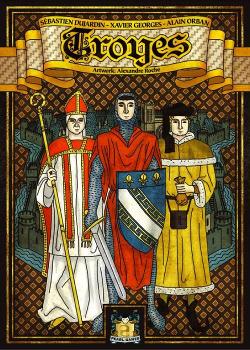 Troyes2017
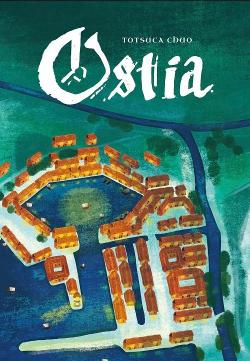 Ostia
Ostia Small City: Deluxe Edition2023
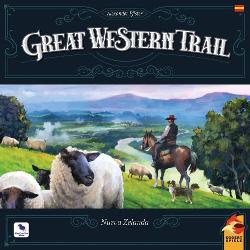 Great Western Trail: Nueva Zelanda2023
 Ezra and Nehemiah2024
 Ark Nova2022
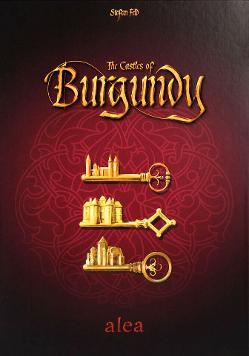 The Castles of Burgundy2020
 Merv: El Corazón de la Ruta de la Seda2021
 The Magnificent2020



Gratis, en web, Android e iOS
Juega a Teotihuacán: Ciudad de Dioses con Ludoya
- Tenlo en tu colecciónControla tu copia y sus expansiones, préstala a tus amigos o ponla en tu lista de deseos y te avisamos cuando baje de precio.Añadirlo a tu colección
- Registra cada partidaPuntuaciones, ganadores, temporizadores y fotos, y luego tus estadísticas: porcentaje de victorias, número de jugadores favorito, mejor puntuación.Registrar una partida
- Resuelve dudas de reglasPregunta lo que quieras sobre las reglas y obtén una respuesta sacada del reglamento, con la página donde comprobarla.Preguntar al asistente de reglas
- Encuentra gente con quien jugarloClubes, noches de juegos y eventos cerca de ti que sacan este juego a la mesa.Ver eventos
Datos del juego (jugadores, duración, edad, créditos) de BoardGameGeek.