
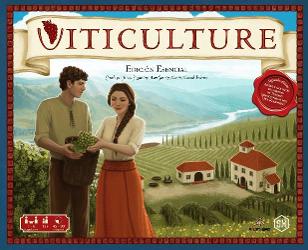
2015 · Económico
Viticulture Edición esencial
Los jugadores toman el papel de dueños de viñedos en la rústica Toscana, heredando pequeñas parcelas, una zona de prensado, una bodega y un puñado de trabajadores. Cada año se divide en estaciones; los jugadores asignan trabajadores a acciones estacionales como plantar vides, cuidar los campos, cosechar uvas, construir estructuras, atender visitantes y hacer vino. Los visitantes llegan en forma de cartas que otorgan bonificaciones de un solo uso o habilidades especiales cuando se asigna un trabajador a atenderlos. Los jugadores amplían sus fincas adquiriendo campos y edificios adicionales, plantando y mejorando vides, y completando pedidos de vino para ganar puntos. El juego incluye módulos que añaden crecimiento familiar, opciones variadas de propiedades, mazos de visitantes revisados y reglas de automa en solitario, todo manteniendo el ciclo central de colocación de trabajadores y acciones estacionales.
- Jugadores
- 1–6 mejor con 4
- Duración
- 45–90 min
- Edad
- 13+
- Complejidad
- 2,9 / 5
Sobre el juego
- Publisher




Expansiones
Verlas en Ludoya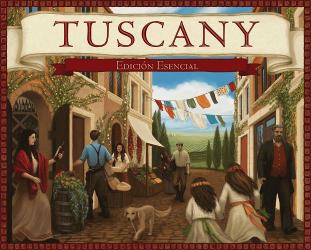 Viticulture: Tuscany Edición Esencial2017
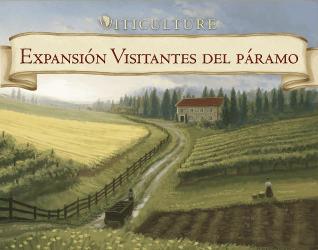 Viticulture: Visitantes del páramo2017
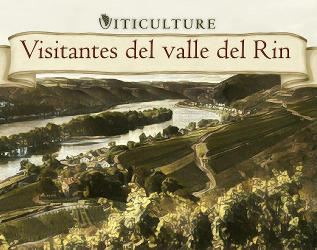 Viticulture: Visitantes del valle del Rin2018
 Viticulture World: Expansión Cooperativa2022
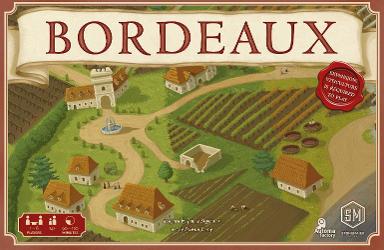 Viticulture: Bordeaux
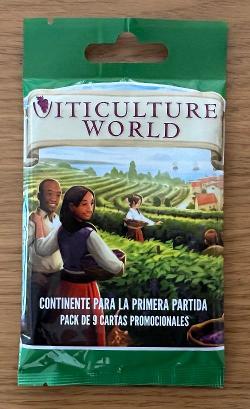 Viticulture World: Continente para la primera partida (Pack de cartas promocionales)2022
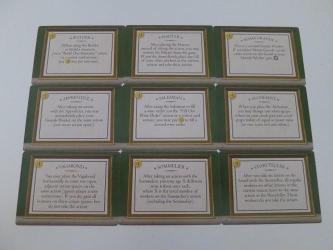 Tuscany: Promos trabajadores especiales2017
 Viticulture: Arboriculture and Formaggio Expansions2013
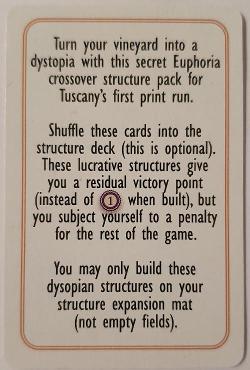 Tuscany & Euphoria Crossover Structures2014
 Viticulture: Formaggio Expansion2013
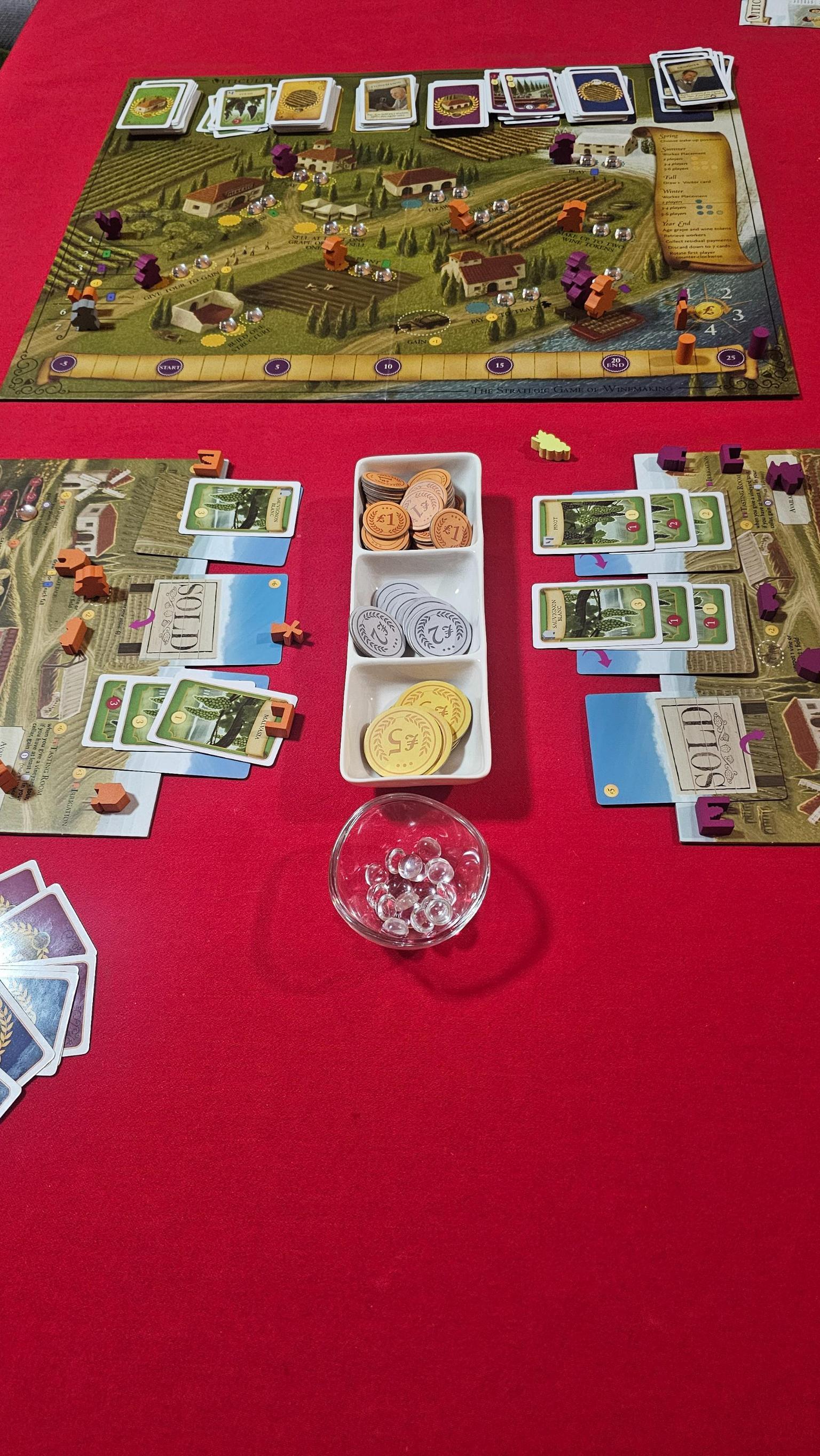
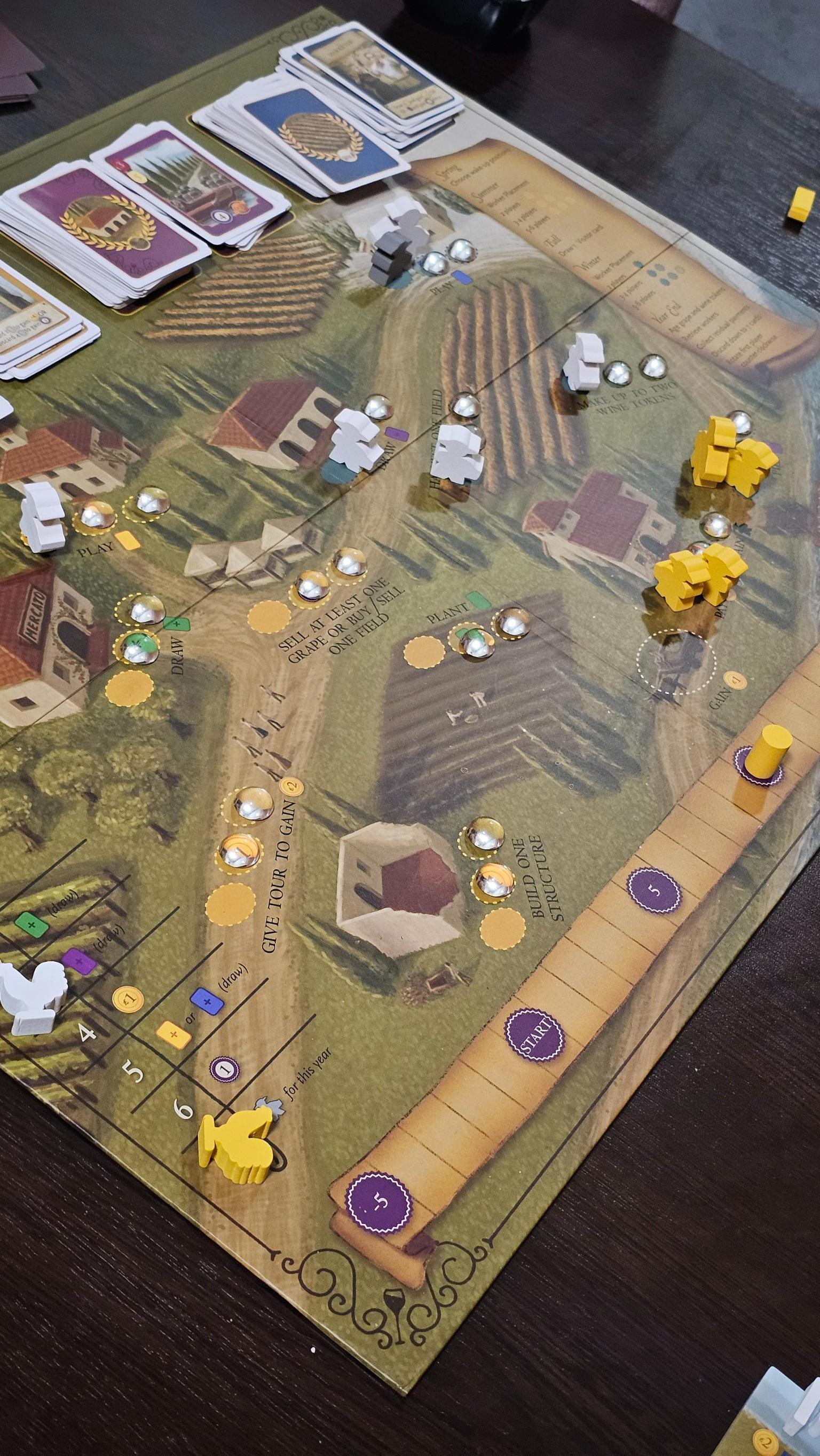
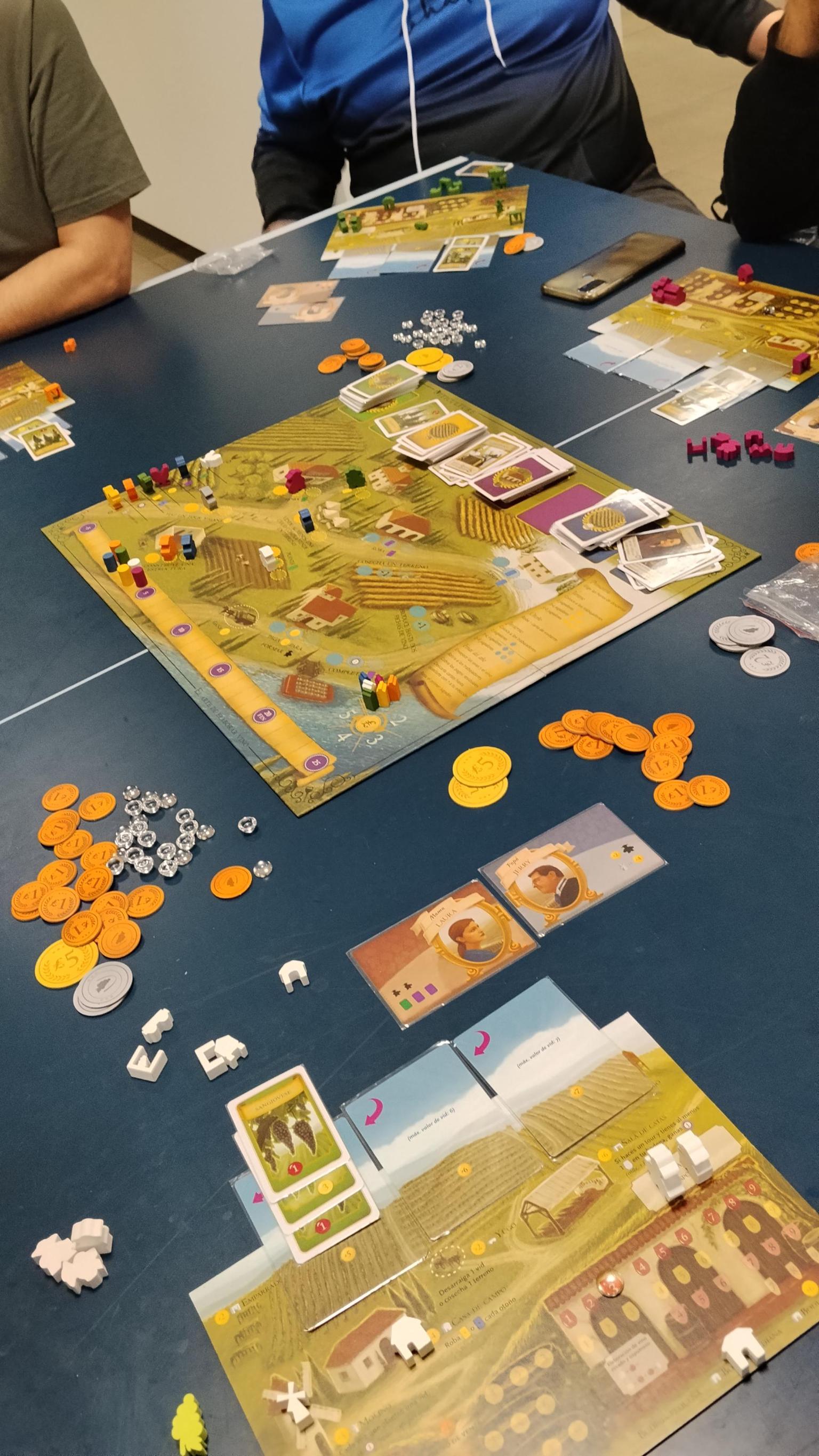
Fotos de mesas de Ludoya
Todas las fotos en Ludoya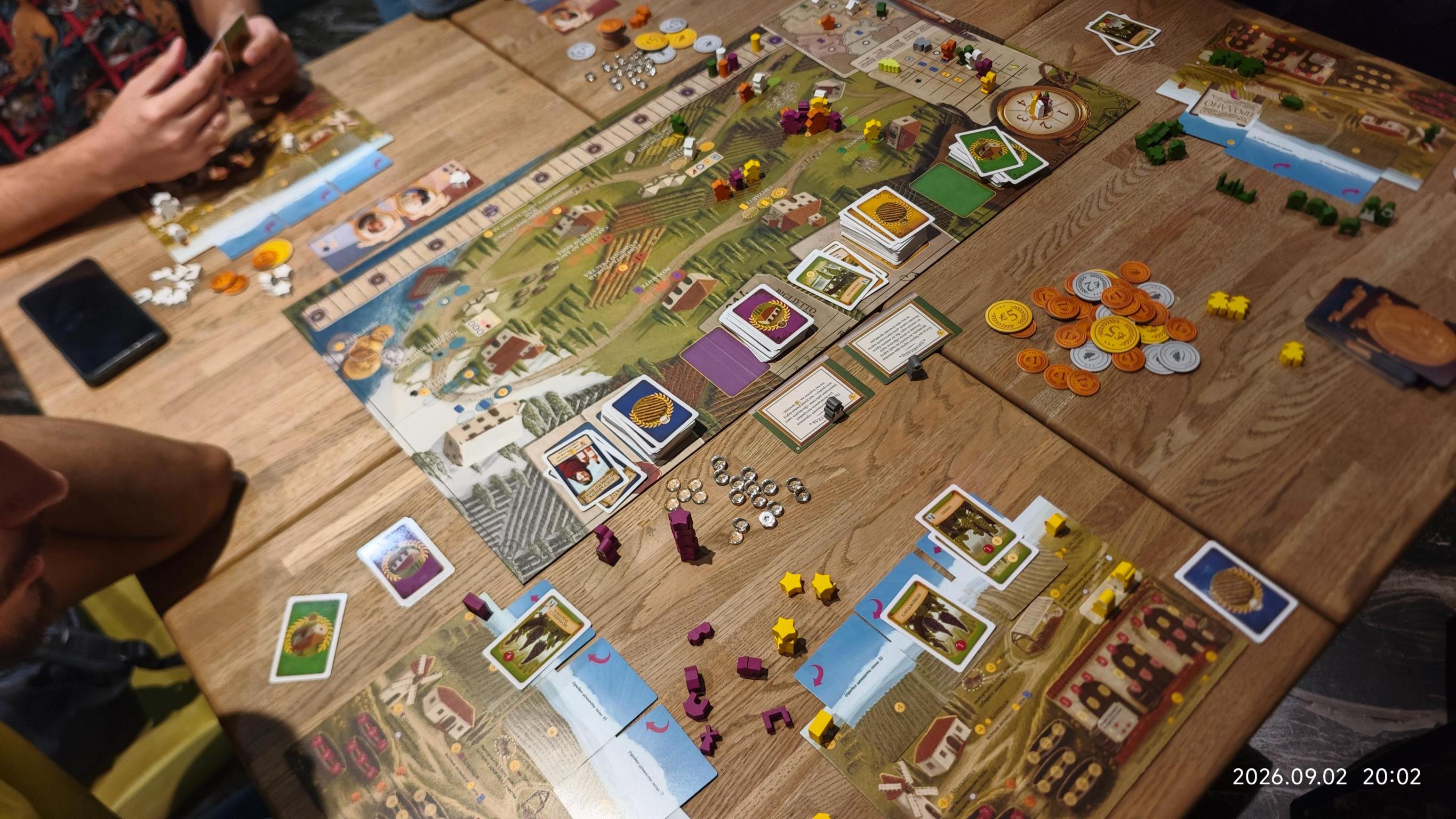
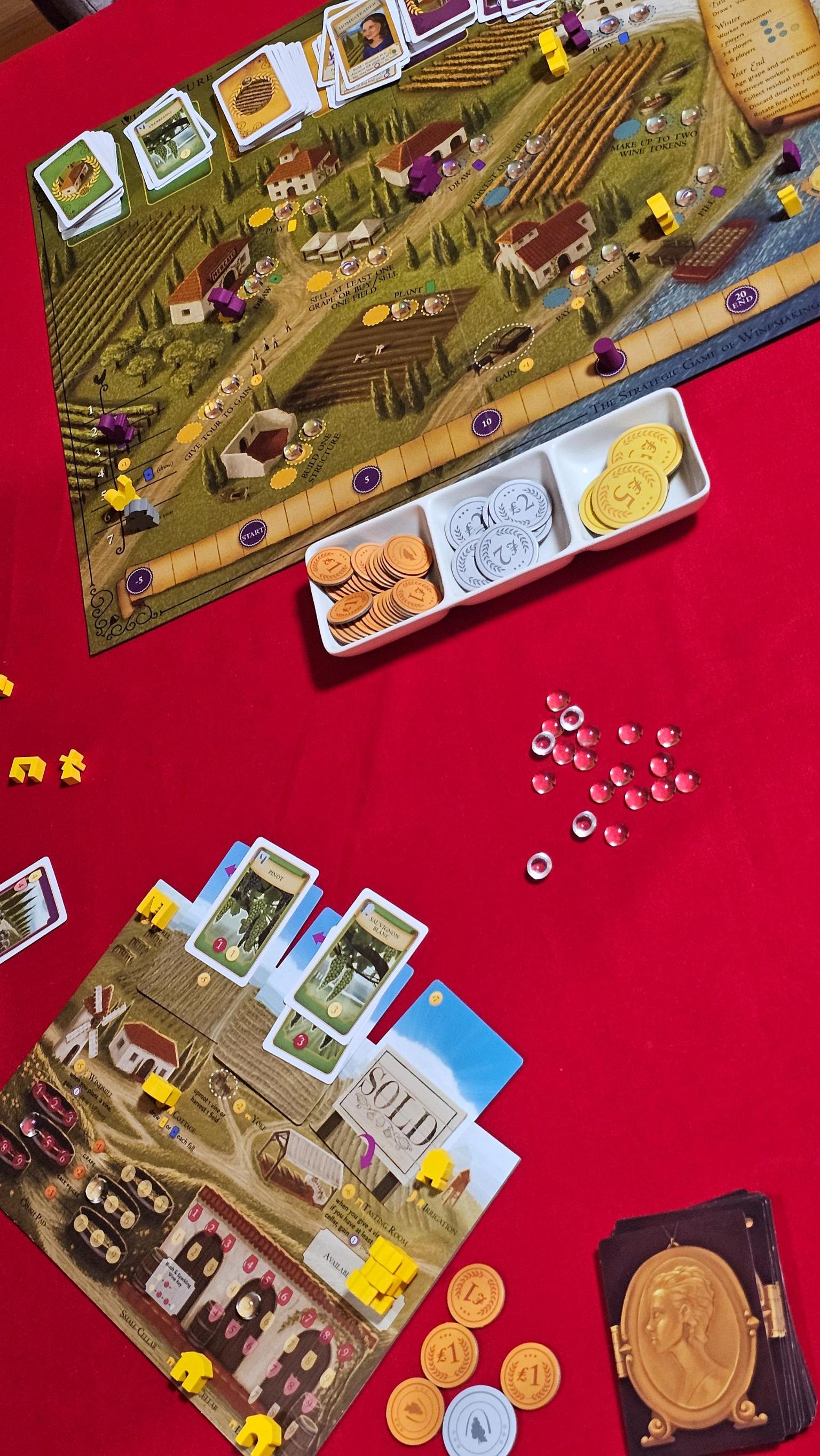
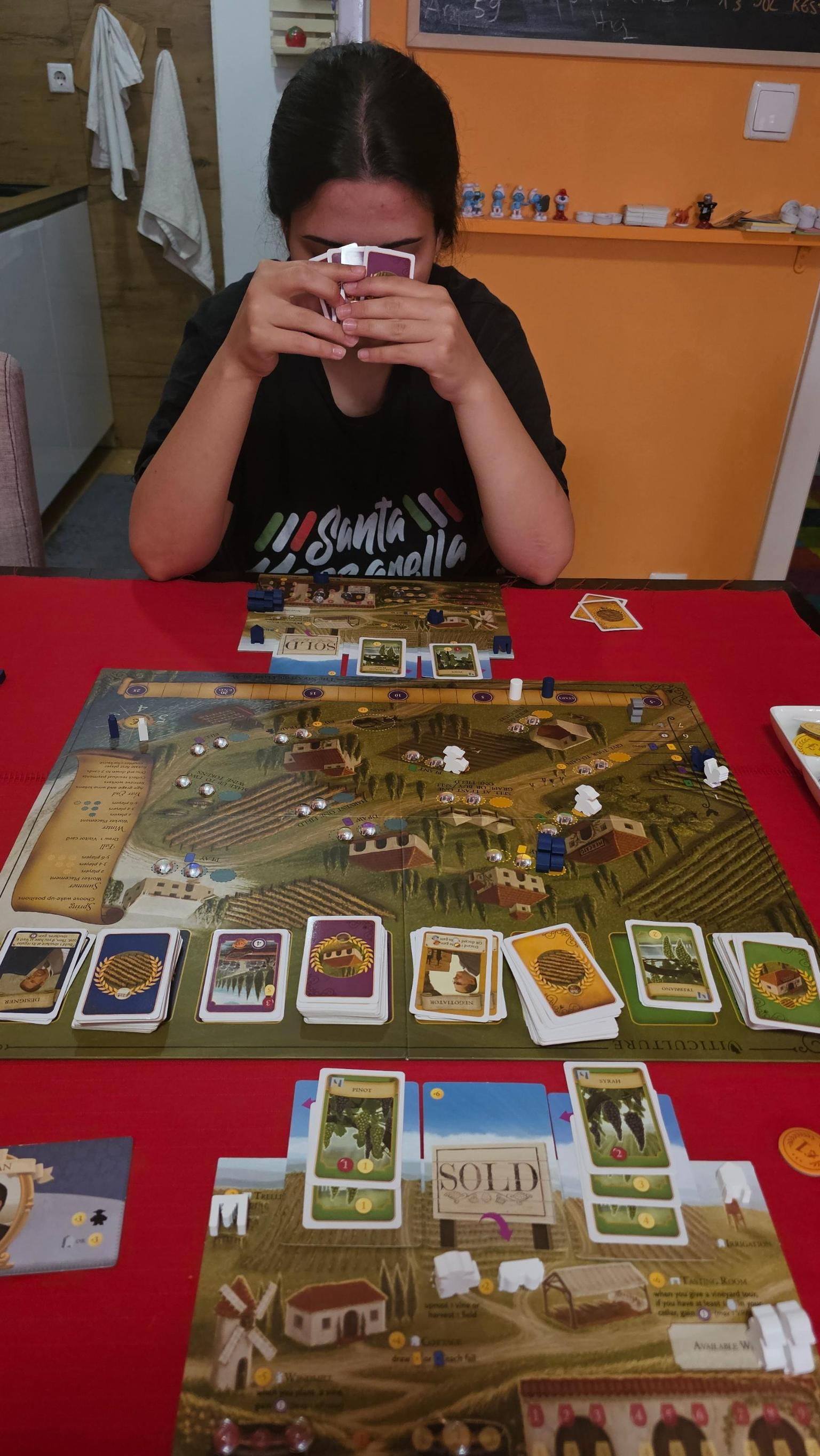
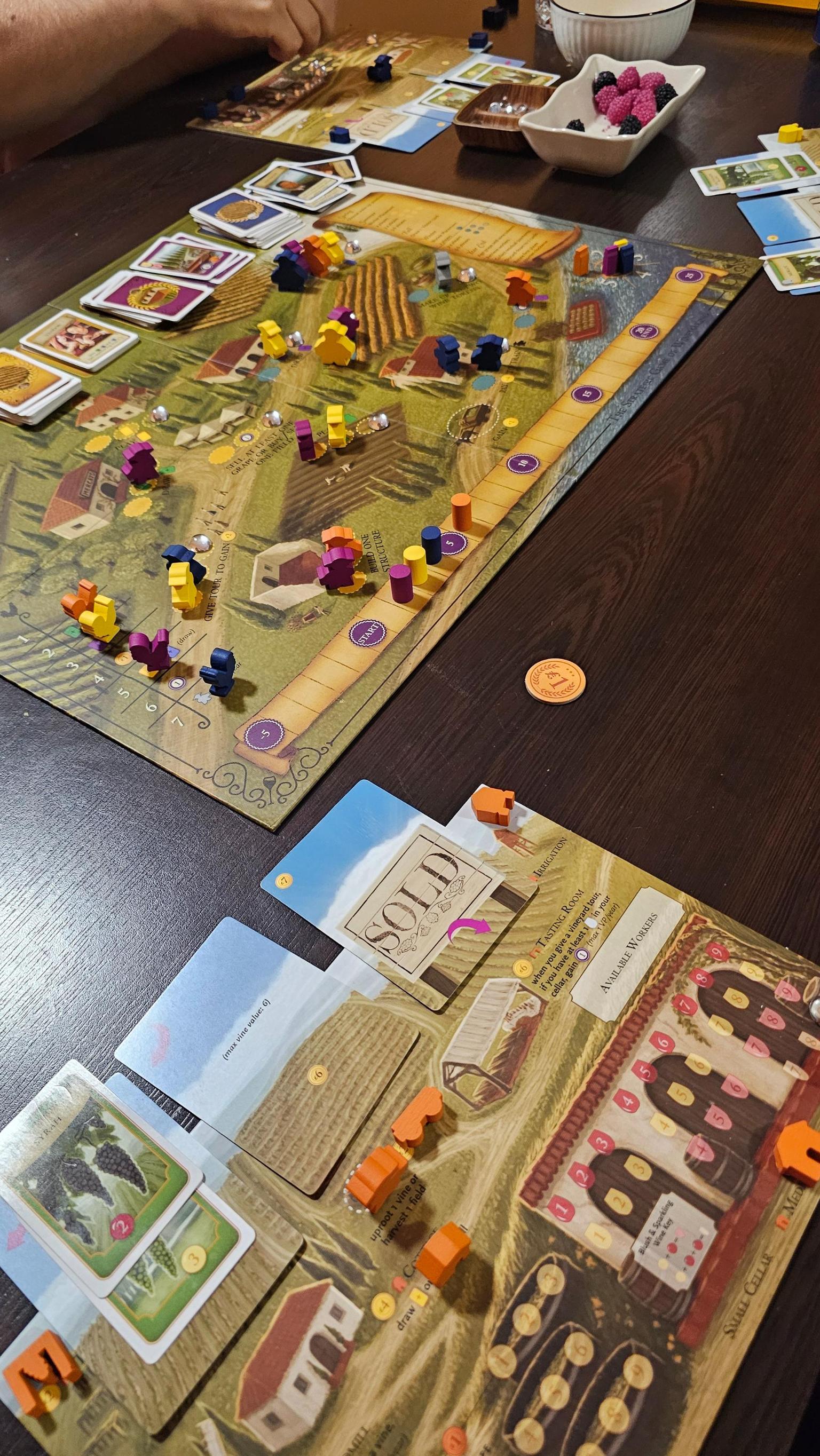
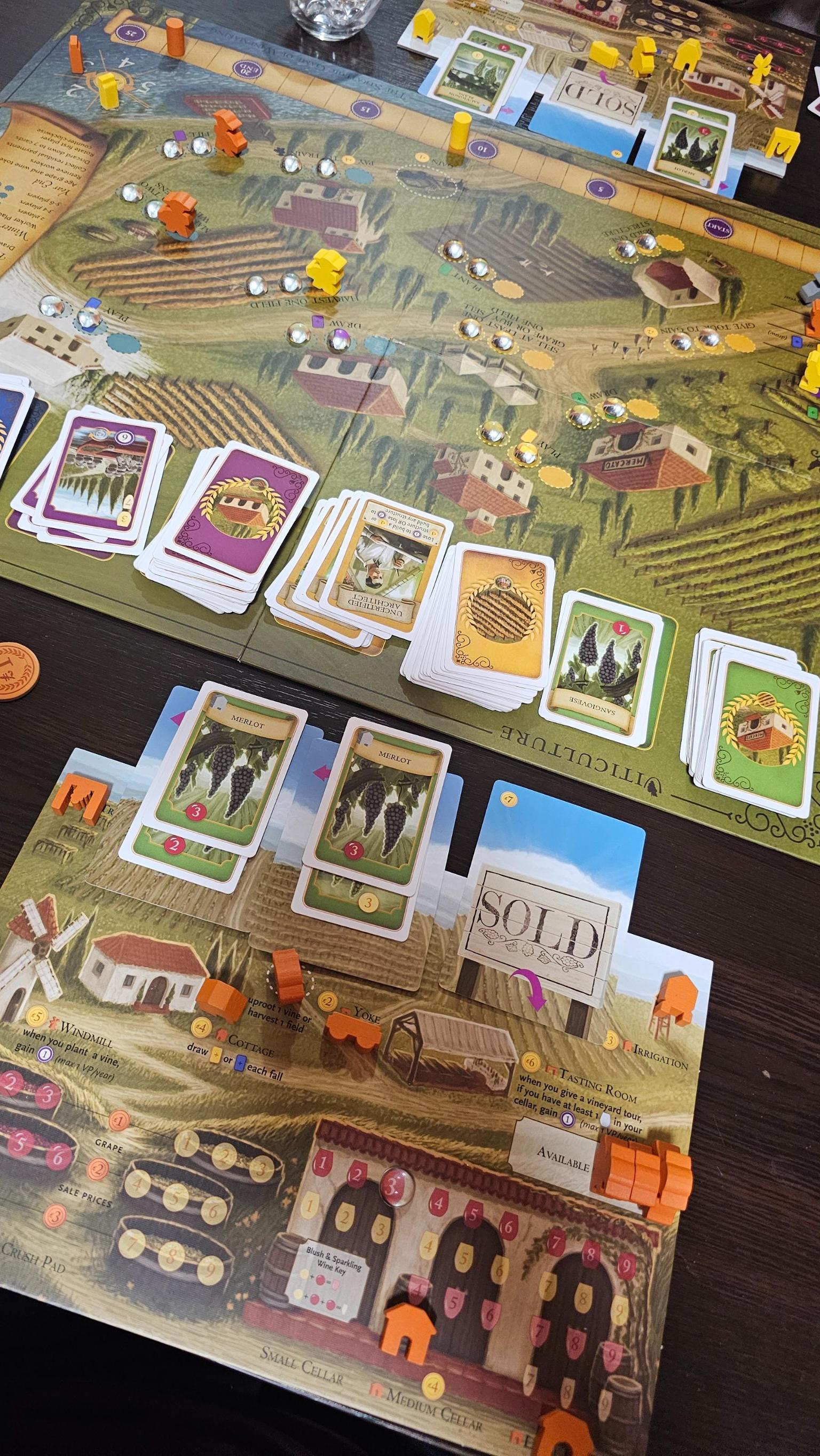
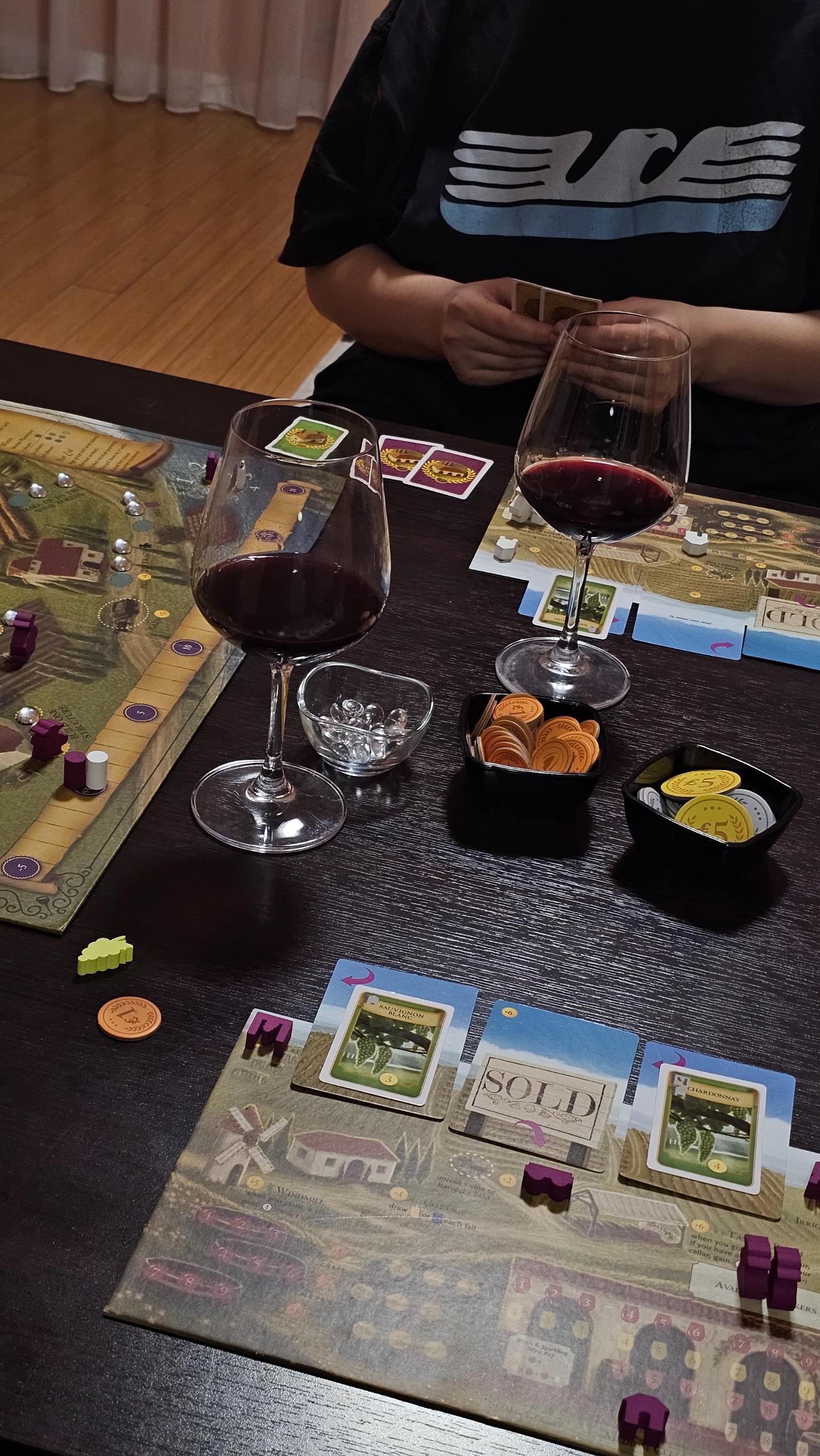
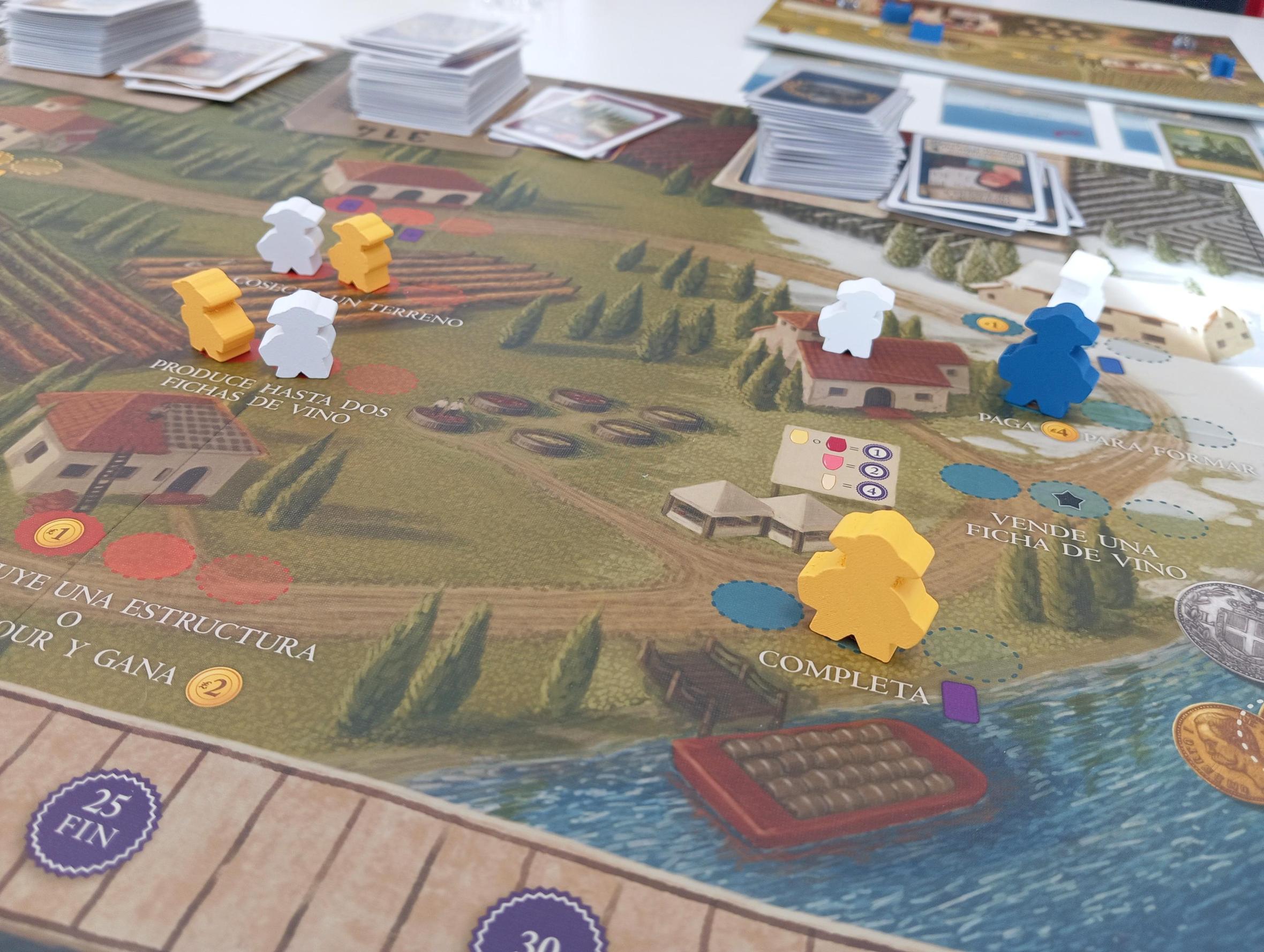
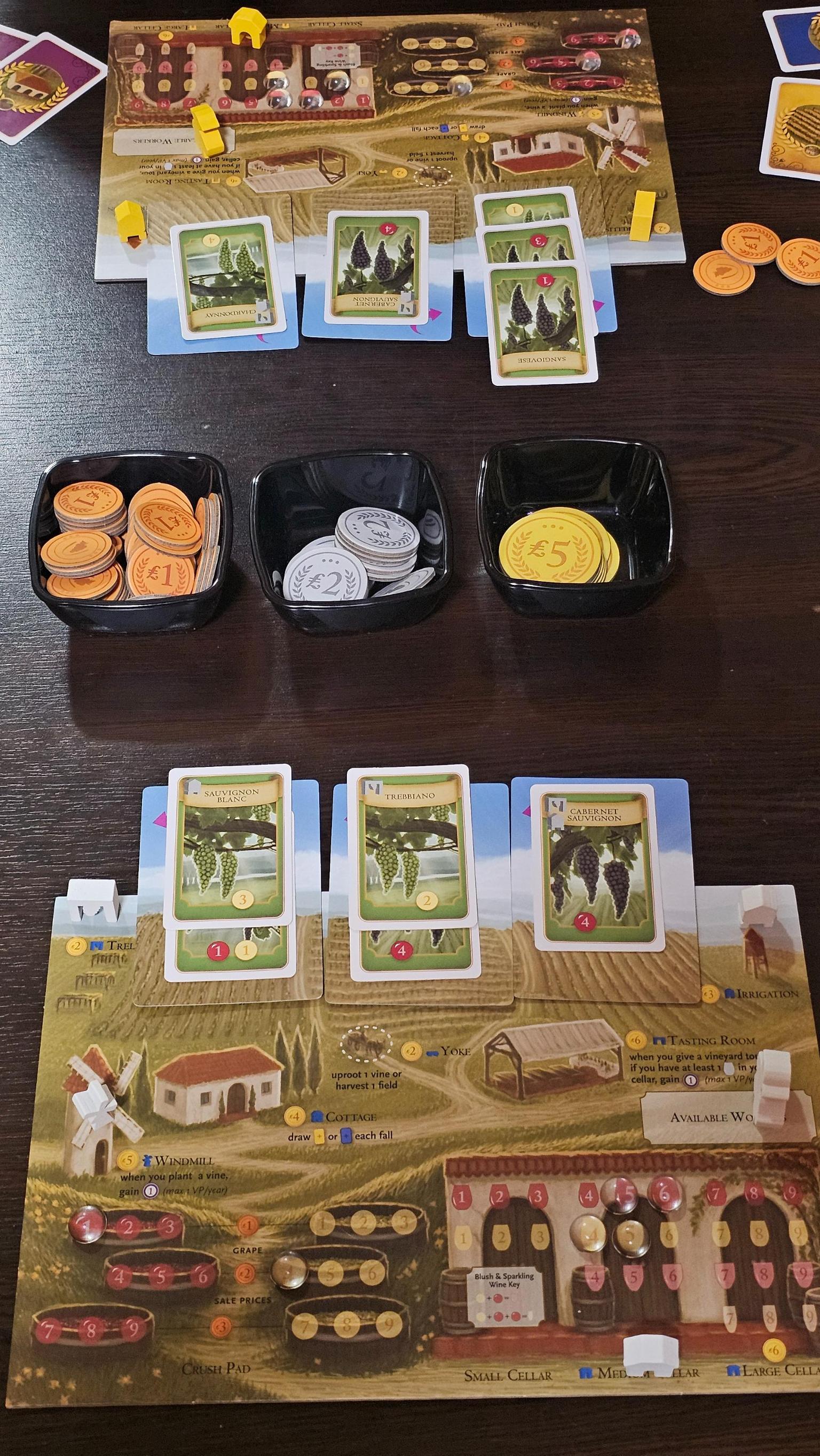
Dónde comprarlo
Precios de tiendas y copias de segunda mano, revisados cada día.
En las mesas de Ludoya
Todas las estadísticas en Ludoya- 1691
- Partidas registradas
- 1228
- Jugadores
- 1h 34m
- Partida media
- 353
- En colecciones
- 59
- En listas de deseos
7,8/10
de 205 reseñas en Ludoya
Jan Solo8,0 Eurogame medio de colocación de trabajadores en el que deberás plantar uvas, cosechar y elaborar vinos para obtener puntos de victoria. Un euro medio muy vistoso que deja muy buenas sensaciones. Impro-Reseña⇒ https://youtu.be/ocbIBc1KXeM
Mohasz8,6 RATING WITH TUSCANY EXPANSION (BASE GAME: 7.0) As much as I wanted to instantly love this game, our first 2p game was somewhat underwhelming. The game starts slow, then in the second half you almost don't have anything to do with all your workers and money. All you really want to do is play cards that give you VP or fulfill order cards. I also felt like the game was a bit overcomplicated for what it offers. I'm sure it gets better once you fully understand the strategies but either way, I wasn't blown away, I expected more from such a highly regarded game. + Tuscany Essential - It is truly a better game with the Tuscany board, 7.0 -> 8.5. The visitor cards can still be a bit swingy, but other than that, really fun. + Visitor card expansions
Mestremuten8,0 Rating: 4/5 Production value: 3/4 Is the game in my collection/Love to have?: 1/1

Dudas de reglas
Respondidas a partir del reglamento por el asistente de reglas de Ludoya.
When do I place my rooster on the wake‑up chart and when do I get the wake‑up bonus?
In Spring, starting with the first‑player and going clockwise, each player places their rooster on an unoccupied wake‑up row and immediately gains that row’s listed bonus; the rooster placement also determines turn order for Summer, Fall, and Winter that year (page 6).
Can I place more than one worker on the same action space?
No — each action space can be occupied by only one worker, though larger player counts open additional spaces for the same action; the exception is the grande worker, which may be placed on a fully occupied action to perform that action (and it grants the bonus only if placed on a bonus space) (page 7).
If I harvest a grape value but that crush‑pad slot is already occupied, where does the new grape go?
When harvesting, you must place the grape on the matching value icon if empty; if that icon is occupied you devalue the new grape to the next lowest empty icon (and continue downward if needed) (page 14).
Can I play a visitor card whenever I want, or only when I take a specific action?
You may only play a summer or winter visitor by taking the corresponding "play visitor" action (placing a worker there), and you may only play a visitor if you can fully resolve its effect when played; visitor effects resolve immediately and then the card is discarded (pages 9–10).
How many wine tokens can I make at once, and do I need a certain cellar to make higher‑value, blush, or sparkling wines?
When making wine you may create up to two wine tokens (they can be same or different types), but you must own the appropriate cellar to produce blush/sparkling or wines above certain values, and each cellar slot holds exactly one wine token (see cellar level and capacity rules) (page 15).
When I fill a wine order, do I get residual lira right away or later, and how does the residual tracker work?
When you fill an order you discard the required wine tokens, gain the victory points on the card, and immediately advance your residual token on the residual tracker by the card’s lira amount; you then collect lira from your residual position at the end of each year (the marker remains where you moved it and caps at £5) (page 16).







Gratis, en web, Android e iOS
Juega a Viticulture Edición esencial con Ludoya
- Tenlo en tu colecciónControla tu copia y sus expansiones, préstala a tus amigos o ponla en tu lista de deseos y te avisamos cuando baje de precio.Añadirlo a tu colección
- Registra cada partidaPuntuaciones, ganadores, temporizadores y fotos, y luego tus estadísticas: porcentaje de victorias, número de jugadores favorito, mejor puntuación.Registrar una partida
- Resuelve dudas de reglasPregunta lo que quieras sobre las reglas y obtén una respuesta sacada del reglamento, con la página donde comprobarla.Preguntar al asistente de reglas
- Encuentra gente con quien jugarloClubes, noches de juegos y eventos cerca de ti que sacan este juego a la mesa.Ver eventos
Datos del juego (jugadores, duración, edad, créditos) de BoardGameGeek.