
2018 · Econômico
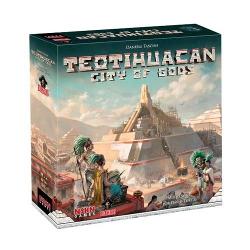
Teotihuacan: City of Gods
Os jogadores controlam dados de trabalhadores que ficam mais fortes à medida que agem, movendo um único dado por um tabuleiro modular da cidade e realizando a ação de um dos dois espaços em cada peça. Em seus turnos, os jogadores escolhem entre realizar uma ação e aprimorar aquele trabalhador, ou receber um bônus imediato sem aprimoramento, enquanto gerenciam recursos e a necessidade de alimentar sua força de trabalho. As ações permitem desenvolver tecnologias, construir moradias, avançar em três grandes templos e contribuir para a pirâmide central em degraus ao longo de três eras sucessivas. A vitória é decidida pela fama acumulada após as pontuações periódicas.
- Jogadores
- 1–4 melhor com 4
- Tempo de jogo
- 90–120 min
- Idade
- 14+
- Complexidade
- 3,8 / 5
Sobre o jogo
- Design
- Publisher



Expansões
Ver na Ludoya Teotihuacan: Late Preclassic Period2020
 Teotihuacan: Shadow of Xitle2021
 Teotihuacan: Expansion Period2021
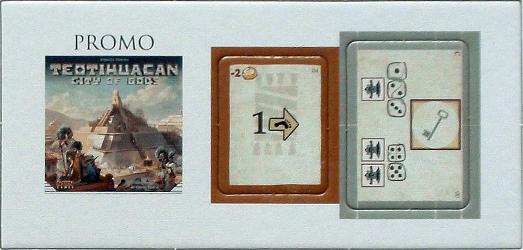 Teotihuacan: Dice Settlers Promo2018
 Teotihuacan: City of Gods – Pyramid Tile Promo, Red Temple2019
 Teotihuacan: City of Gods – Promo Bundle2020
 Teotihuacan: City of Gods – 5th Player Expansion2020
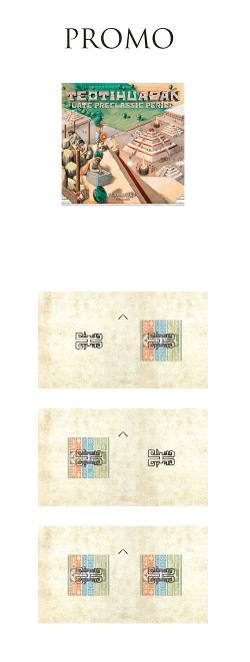 Teotihuacan: City of Gods – Decoration Tiles2019
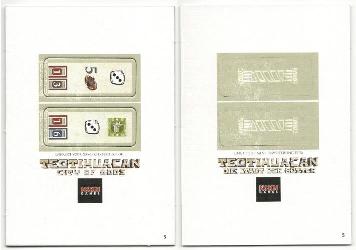 Teotihuacan: Brettspiel Adventskalender 2018 Promo2018
 Loot Box #12022
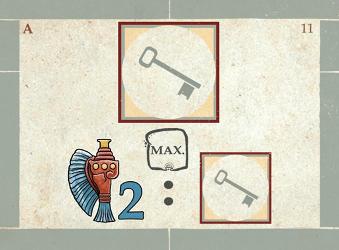 Teotihuacan: City of Gods – Man vs Meeple Promo2019
 Brettspiel Adventskalender 20182018
 Teotihuacan: Expert Challenges – Book 12021
 Teotihuacan: Expert Challenges – Book 22021
 Teotihuacan: Expert Challenges – Book 32022
 Teotihuacan: New Priests2024
 Teotihuacan: City of Gods – 5th Player Expansion2024
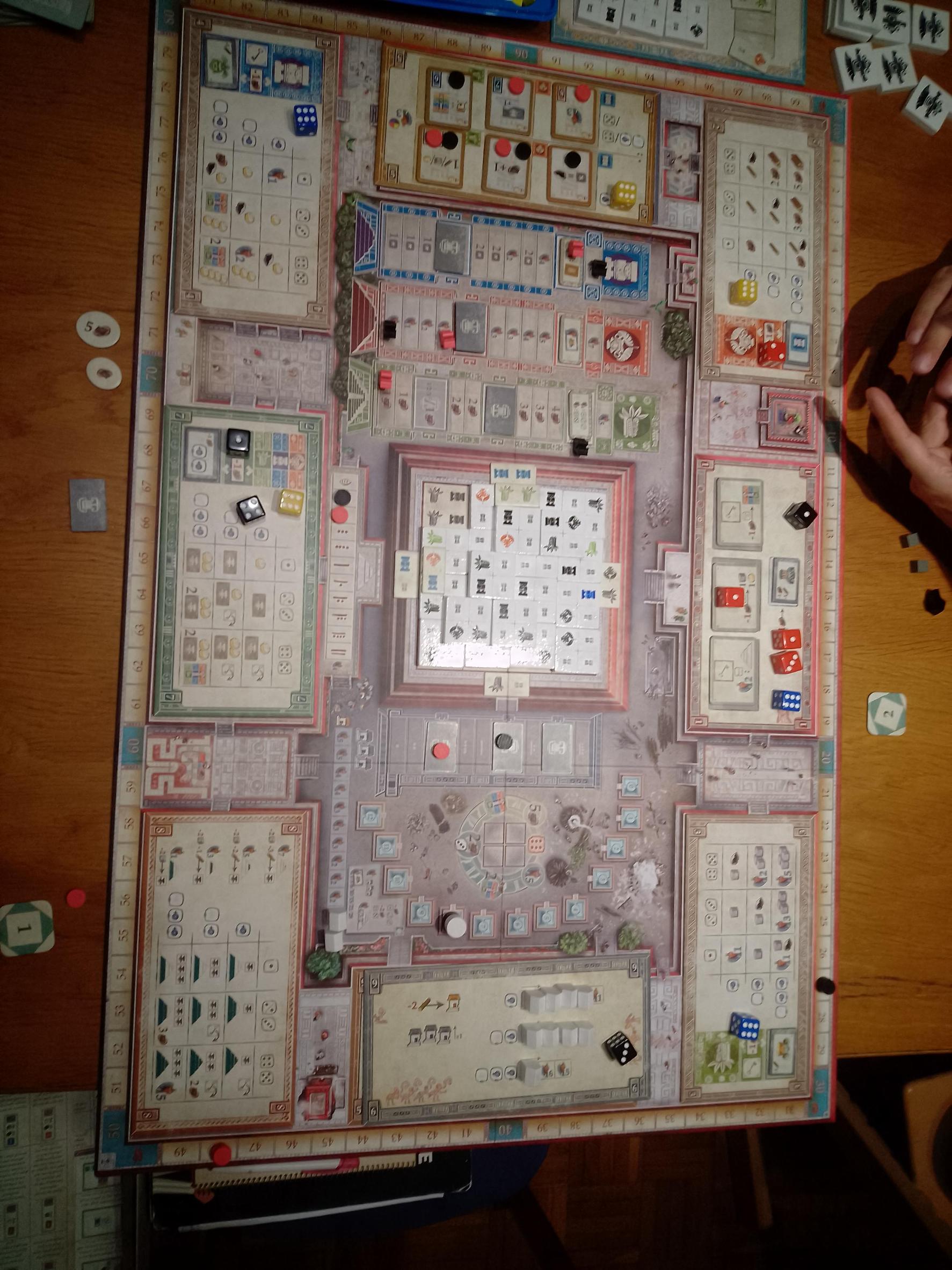
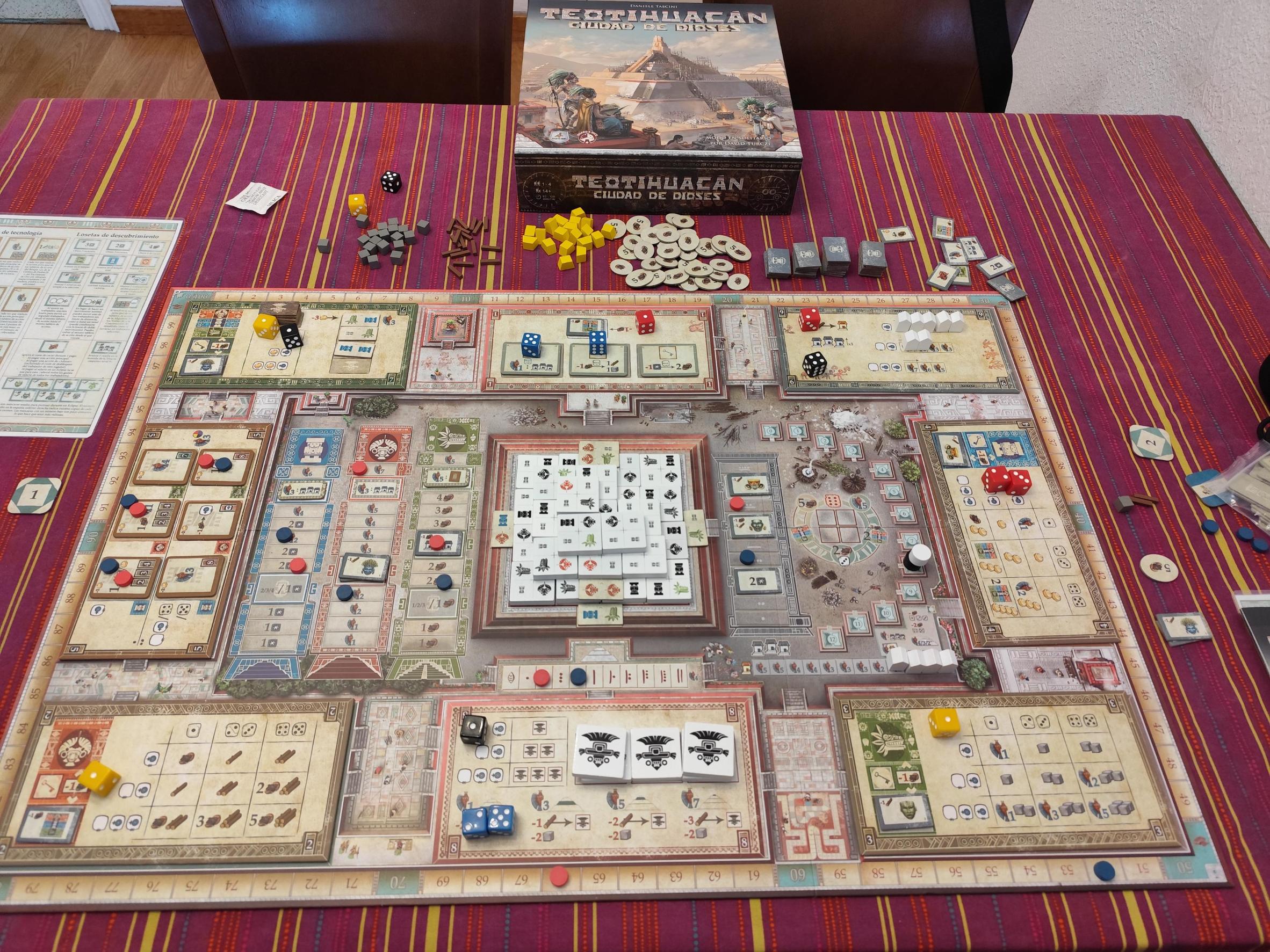
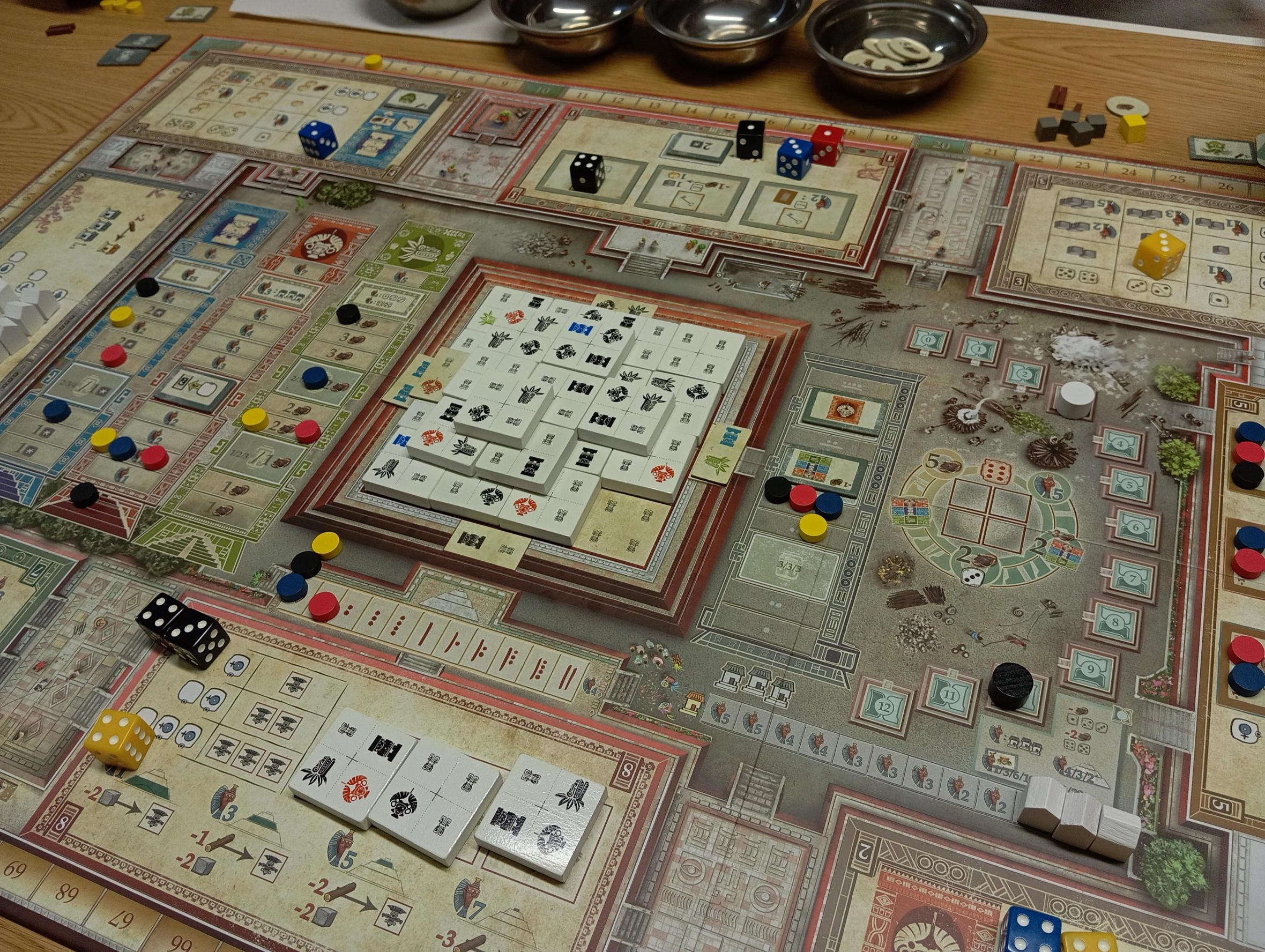
Fotos das mesas da Ludoya
Todas as fotos na Ludoya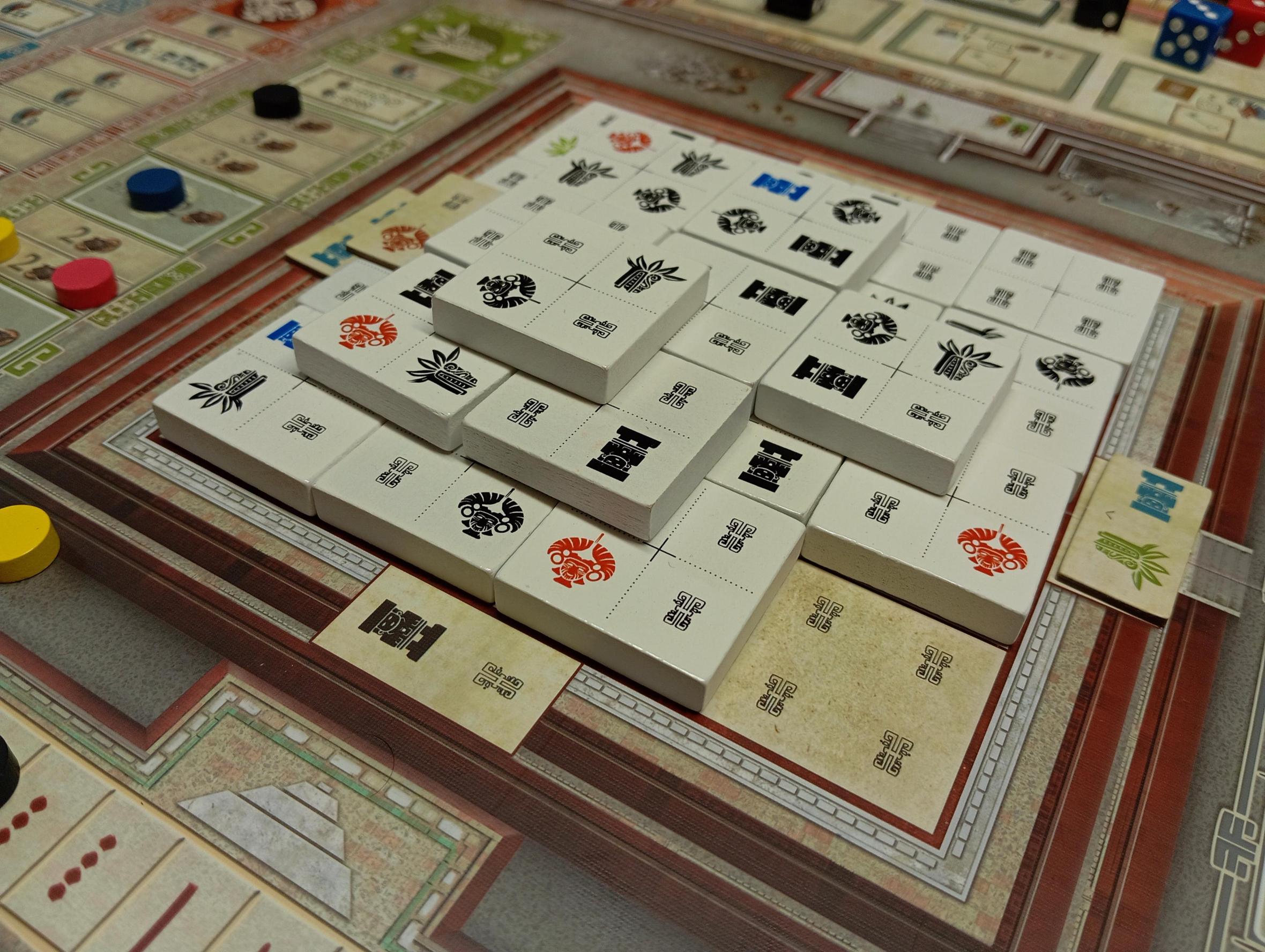
Onde comprar
Preços das lojas e cópias usadas, verificados todos os dias.
Nas mesas da Ludoya
Todas as estatísticas na Ludoya- 822
- Partidas registradas
- 632
- Jogadores
- 1h 53m
- Partida média
- 181
- Em ludotecas
- 32
- Em listas de desejos
- 1
- Comprado na pré-venda
6,3/10
de 116 avaliações na Ludoya
Jan Solo8,0 Gran juego de gestión de recursos y construcción de la pirámide. Modo solitario interesante, pero a mi gusto excesivamente farragoso y lento.
Evan2,5 In this game you move one of your player markers around a roundel 1-3 spaces then resolve the action in the space you end at. Your makers are dice, and the effect of the action spaces is based on a table that looks for how many of your dice are in the space, then also what the pip value of your lowest die is. Often the effect of the space will then add pips to one or two of your dice. When a die hits 6, it resets to 1, and you gain a step on a track that produces points at the end of the round per step you have. Then you also gain a reward from a small wheel of options next to that track. Mostly what you are doing is collecting bricks and wood, then spending the bricks and wood to build the structure at the center of the board. There are extremely important technology tiles you can invest in to make your actions better. Another key thing to manage is the need to spend cacao tokens equal to the number of players in an action space to resolve the action. If you can't pay it, then you wind up skipping your action and instead getting the cacao tokens plus 1 instead. You can avoid this by taking gather actions more often, but since there's very little if any engine building in the game, it does feel like a large portion of your actions in the game work out to similar feeling gather then spend cycles. When you take the action to build the central structure, some but not all of the tiles have colored icons that give you a free step on the matching temple track in addition to the large number of points produced by the action normally. Ability to build is dependent on a substantial number of turns setup, getting the resouces and lining your dice up. Temple track steps are somewhat hard to come by and each step produces points, resources or cacao in addition to having high value endgame scoring criteria at the top, so when you are ready to build and all the pieces are totally colorless, and then you flip up colored pieces for the next person so they can spend exactly what you did only they get a substantial additional return doesn't feel great. Temple builds additionally come with steps on a track that gives bonus 4 points each round to the player who built the most. The track rests right next to the building space and is clearly tied to it. The problem here is that there is a second space that adds stair tokens to the temple, with a different cost, and a different place on the roundel, which makes it needlessly hard to see who has the potential to gain a step and when. Additionally, the stair tokens have a pointlessly specific orientation they need to be placed at because there is a tiny hard to see arrow on the tile that has to point inward. This is there to make matching the icons when you place the stair token more luck driven for no reason I can understand. Additionally these tiles can have either one or two bonus colored icon payouts that again, depend on luck of what's available, again rewarding players for lucking into situations they had no control over establishing. There's also a confusing action space that we rarely saw used. It awards some points, gives you a step on the death track, and then reduces the value of being on that track for everyone. Why have a space that invests in a track, and then simultaneously reduces the value of that same track? When a player's marker goes from 1 to 6, you also click ahead the round timer, which additionally moves after each player has had an action. The game has two modes, one where the round ends the moment the marker hits the end of the track producing uneven turns, or when it hits the end of the track each player gets one more turn. Neither of these is great, because if you age out one of your markers in the final round it effectively doesn't change the pace of the game. Why not just have even turns without playing a whole additional round? I suppose it's due to the fact that when a player is about to age out a die is very unpredictable, since when you resolve a space with two age icons, you can age the same die twice, rather than having to spread it across two dice. What this means is that it's vastly more influential to the flow of the game to age out early in the round than later in the round. More unevenness to the feel and flow of the game. I additionally was confused by one special reward tile that you can spend to ignore paying a food cost, even the totality of food required at the end of the round to feed your people. So, spend it now to avoid paying 3 or 4 food for a crowded action space, or spend it at the end of the round to avoid paying up to 8. There's a massive point hit for not feeding your people, it seems like a pretty core 'watch yourself' mechanism, that you can just ignore for a round by virtue of taking this tile. Very odd. I don't know, this is an ok game were everything feels just a little off. A few minor changes and I think this could have been great, it just doesn't feel very interesting or cohesive. Any of the little things I'm complaining about could probably be forgiven if the core mechanism was more interesting. :star: Art, Iconography and components functional :nostar: Clever or interesting mechanisms :star: Reasonably low downtime between turns with mildly AP players :star: Multiple plays stay interesting :nostar: Low or mitigatable luck elements :star::nostar::nostar::nostar::nostar: Raw enjoyment
Garfield8,0 #50 [c] Theme: :star::star::star::star::nostar: <!-- size 7]The pyramide is great --> Gameplay: :star::star::star::star::star: <!-- size 7]Lots of meaningful decisions --> Interaction: :star::star::star::nostar::nostar: <!-- size 7]Where are the other dice placed --> Artwork: :star::star::star::nostar::nostar: <!-- size 7]Ok --> Luck: :star::star::nostar::nostar::nostar: <!-- size 7]Pyramid tiles available at your turn --> Strategy: :star::star::star::star::nostar: <!-- size 7]Different strategies possible --> Components: :star::star::star::star::nostar: <!-- size 7]Pyramide tiles are great --> Play duration: :star::star::star::nostar::nostar: <!-- size 7]Ok --> Easy to teach: :star::star::star::nostar::nostar: <!-- size 7]Ok --> Rules quality: <!-- size 7]not read --> Setup time: :star::star::nostar::nostar::nostar: <!-- size 7]A lot to setup --> No downtime: :star::star::star::nostar::nostar: <!-- size 7]Ok --> Replay value: :star::star::star::star::star: <!-- size 7]Modular board, different strategies --> [/c]

Dúvidas de regras
Respondidas a partir do manual pelo assistente de regras da Ludoya.
Quando realizo uma ação Principal, como conto os trabalhadores e quanto cacau tenho de pagar? Os trabalhadores bloqueados ou o trabalhador que acabei de mover contam?
Para determinar o custo em cacau, primeiro conte o número de trabalhadores desbloqueados de cores diferentes que já estão no tabuleiro (ignore o trabalhador que está chegando e quaisquer trabalhadores em espaços de adoração bloqueados) e pague essa quantidade de cacau (p. 7). Para resolver os efeitos da ação principal, conte então os seus próprios trabalhadores desbloqueados nesse tabuleiro, incluindo o trabalhador que você acabou de colocar, mas nunca mais de 3 para fins de efeito (p. 7).
Quando escolho Coletar Cacau, quais trabalhadores são contados — o trabalhador que chega ou os trabalhadores bloqueados?
Para Coletar Cacau, conte o número de trabalhadores desbloqueados de cores diferentes que já estão presentes no Tabuleiro de Ações (não conte o trabalhador que está chegando nem nenhum trabalhador bloqueado em espaços de adoração) e ganhe essa quantidade mais 1 cacau; depois, coloque o trabalhador movido na área geral (p. 6).
O que exatamente acontece quando um trabalhador chega ao poder 6 (Ascensão)? Eu ativo um Eclipse imediatamente?
A ascensão é acionada imediatamente quando um trabalhador é energizado até 6: avance na Avenida dos Mortos, mova esse dado para a área geral do Palácio e redefina-o para poder 1, escolha uma recompensa de Ascensão e, em seguida, avance o disco de luz na trilha do Calendário (o que pode acionar um Eclipse) — resolva cada ascensão completamente e só acione o Eclipse após o turno, se aplicável (p. 9).
Como funcionam as restrições de colocação da Pirâmide e das Decorações, e quando a conclusão da Pirâmide encerra o jogo?
As peças de decoração só podem ser colocadas em espaços permitidos quando as camadas de pirâmide subjacentes exigidas e as Decorações pré-requisitadas estiverem presentes, e você marca pontos por ícones correspondentes ao cobrir peças (p. 8). Colocar a peça do topo da Pirâmide (quarto nível) exige o terceiro nível completo abaixo dela, concede os PVs indicados e move imediatamente o disco branco do Calendário para a posição do disco preto, acionando o Eclipse final e encerrando o jogo (p. 8).
Quando realizo uma ação de Adoração, posso desbloquear o trabalhador de outro jogador e fazer tanto a habilidade de adoração quanto reivindicar a peça de Descoberta? Preciso pagar alguma coisa?
Se o trabalhador de outro jogador ocupa o espaço de Adoração, você paga 1 cacau para desbloquear esse trabalhador (movê-lo para a área geral) antes de colocar o seu; você não pode desbloquear seus próprios trabalhadores dessa forma (p. 6). Em seguida, você escolhe ativar a habilidade de Adoração ou pegar a peça de Descoberta, ou pagar 1 cacau adicional para fazer ambos (todos os custos em cacau devem ser pagos antes de resolver quaisquer benefícios); se pegar uma peça, você paga o custo impresso nela (p. 6).
Jogos semelhantes






Grátis, na web, Android e iOS
Jogue Teotihuacan: City of Gods com a Ludoya
- Tenha na sua ludotecaAcompanhe sua cópia e suas expansões, empreste para os amigos ou coloque na lista de desejos e seja avisado quando o preço cair.Adicionar à sua ludoteca
- Registre cada partidaPontuações, vencedores, cronômetros e fotos, e depois suas estatísticas: taxa de vitórias, número de jogadores favorito, melhor pontuação.Registrar uma partida
- Tire dúvidas de regrasPergunte qualquer coisa sobre as regras e receba uma resposta do manual, com a página para conferir.Perguntar ao assistente de regras
- Encontre gente para jogarClubes, noites de jogos e eventos perto de você que levam este jogo para a mesa.Ver eventos
Dados do jogo (jogadores, tempo de jogo, idade, créditos) do BoardGameGeek.