

2015 · Romanbasiert
Eine Studie in Smaragdgrün
Es ist 1882, und uralte kosmische Herrscher dominieren die Gesellschaft im Verborgenen, während ein geheimer Bürgerkrieg zwischen ihren Loyalisten und Untergrundrevolutionären schwelt. Die Spieler übernehmen die Kontrolle über viktorianische Agenten, rekrutieren Verbündete, platzieren Einfluss in Städten und führen verdeckte Aktionen aus, während die Loyalitäten verborgen bleiben. Das Gameplay verbindet Gebietskontrolle, asymmetrische Ziele und kartenbasierte Auflösung: Die Spieler draften und spielen Charakterkarten, bewegen sich und prallen um Orte aufeinander, lösen Attentate und Revolten auf und managen eine sich verändernde öffentliche Ordnung. Das Ergebnis hängt von Deduktion, Timing und davon ab, ob ein Spieler die Wiederherstellung vorantreibt oder die Herrschaft der Alten Wesen verteidigt.
- Spieler
- 2–5 am besten mit 5
- Spielzeit
- 60 Min.
- Alter
- 13+
- Komplexität
- 2,9 / 5
Über das Spiel
- Autoren
- Illustration
- Publisher



Wo kaufen
Shop-Preise und gebrauchte Exemplare, täglich geprüft.
An Ludoyas Tischen
Alle Statistiken in Ludoya- 90
- Erfasste Partien
- 158
- Spieler
- 2h 1m
- Durchschnittliche Partie
- 40
- In Sammlungen
- 3
- Auf Wunschlisten
4,4/10
aus 22 Ludoya-Rezensionen
Evan2,5 A Study In Emerald first edition is currently my favorite game. After reading about the changed they made to second edition, I had avoided it up until now, but this week I was given the opportunity to actually try it so I thought I should. In the game, players use a deck-building mechanism to place cubes into the various spots on the board. if at the start of your turn, you have the most components in that spot, you can take the top card of the pile and add it to your deck. I absolutely love this mechanism. Players also have a secret alignment, although they still win the game alone. If at the end of the game, you wind up on the same team as the player with the fewest points, there is a penalty. I do love being able to be out for myself but also being required to look at my opponent's moves to predict what team they might be on. All of this is true in both the first and second edition of the games. Speaking to the second edition specifically, I have some problems. In both games, there is a mechanism where players can hire agents. These are markers on the board that you can move from city to city, which are a requirement for certain actions, but more specifically they add claim to any space where you have cubes down to bid for a card. In first edition, you pay to walk these agents around the map, and the card icons you use to move them are the same that you use to buy new claim cubes, so there's a semi-predictable flow to when someone is getting ready to move. In addition, they also break ties when it comes to situations where two players have equal claim on a card. In second edition, the agents can teleport anywhere by spending a card icon that is used exclusively for teleporting agents. In addition, while they still count for claim they no longer break ties. The result of this in our game was that cards on top of piles got caught into unbreakable stale mates more easily, which hurt the players involved substantially as the game length was reduced. Another issue I ran into was that points are uncomfortably rare. In first edition, players vie for control of city cards, handing them back and forth, gaining or losing points while fighting for whatever points they can gather from permanent sources. These city cards are always available in addition to whatever is on the top of the card piles. In second edition, the cards worth points don't get handed back and forth, they are simply claimed by whomever gets it and that's it. Not only that, they are not always available, as they just get shuffled into the piles and come up when they come up. This makes for a boom-and-bust feeling as some rounds there are lots of points to fight for and other rounds it feels like there's nothing to fight for. The third big problem I have is that the endgame penalty is different. In the first edition, if you were on the same team as the player in last you automatically are disqualified from winning. In second edition, the players on the same team merely lose 5 points. This means that in second edition, you don't really have to care who your teammates are before initiating the end of the game. Again, the game time is so reduced that spending actions bluffing your faction seems senseless. All in all, I wouldn't go so far as to say second edition is a bad game in the spectrum of board games that exist, but much of what I love about first edition is absent or changed, and I can't imagine recommending someone get this as opposed to hunting down a first edition copy. :star: Art, Iconography and components functional :nostar: Clever or interesting mechanisms :star: Reasonably low downtime between turns with mildly AP players :star: Multiple plays stay interesting :star: Low or mitigatable luck elements :nostar::nostar::nostar::nostar::nostar: Raw enjoyment
Mestremuten7,0 Rating: 3/5 Production value: 3/4 Is the game in my collection/Love to have?: 1/1
Really cool game with awesome theme that combines deck building, bidding and partnership. A bit short for me and needs 3-4 players to work.

Ähnliche Spiele
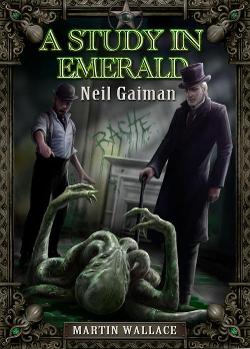 A Study in Emerald2013
 Cthulhu: Dark Providence2025
 Nightfall: The Coldest War2012
 Wonderland's War2024
 Marvel Zombies: X-Men Resistance2023
 Last Night on Earth: The Zombie Game – 10 Year Anniversary Edition2017
 Legendary: A James Bond Deck Building Game2019
 I, Spy2015
 MIND MGMT: Das parapsychische Spionage-"Spiel"2022
 The Presence2025
 Army of the Dead: A Zombicide Game2024
 Zombicide Season 2: Prison Outbreak2014
Wer es hat, hat auch
 Descent: Die Reise ins Dunkel2006
 AuZtralien2018
 Pergamon2011
 Room 252012
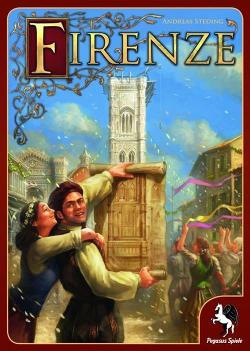 Firenze2010
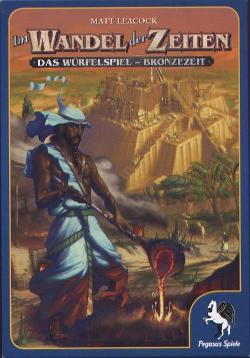 Im Wandel der Zeiten: Das Würfelspiel – Bronzezeit2009
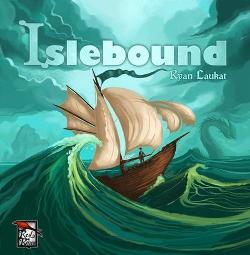 Islebound2016
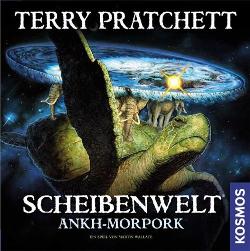 Scheibenwelt: Ankh-Morpork2011
 Dominant Species2011
 Wasteland Express Delivery Service2017
 Ohne Furcht und Adel inkl. der Erweiterung Die dunklen Lande2009
 Dungeon Raiders2013
Kostenlos, im Web, für Android und iOS
Spiel Eine Studie in Smaragdgrün mit Ludoya
- Hab es in deiner SammlungVerwalte dein Exemplar und seine Erweiterungen, leih es Freunden oder setz es auf deine Wunschliste und erfahre, wenn der Preis fällt.Zur Sammlung hinzufügen
- Erfasse jede PartiePunkte, Sieger, Timer und Fotos, dann deine Statistiken: Siegquote, liebste Spielerzahl, beste Punktzahl.Partie erfassen
- Werte ohne PapierNutze die Wertungsbögen und Spielhelfer der Community und lass Ludoya die Punkte zusammenzählen.Wertungsbögen finden
- Finde Leute, mit denen du es spielstClubs, Spieleabende und Veranstaltungen in deiner Nähe, bei denen dieses Spiel auf den Tisch kommt.Veranstaltungen ansehen
Spieldaten (Spieler, Spielzeit, Alter, Mitwirkende) von BoardGameGeek.