
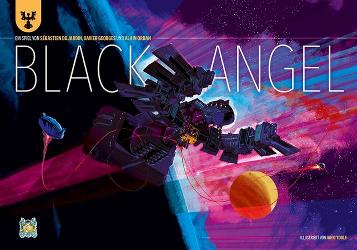
2019 · Weltraumerkundung
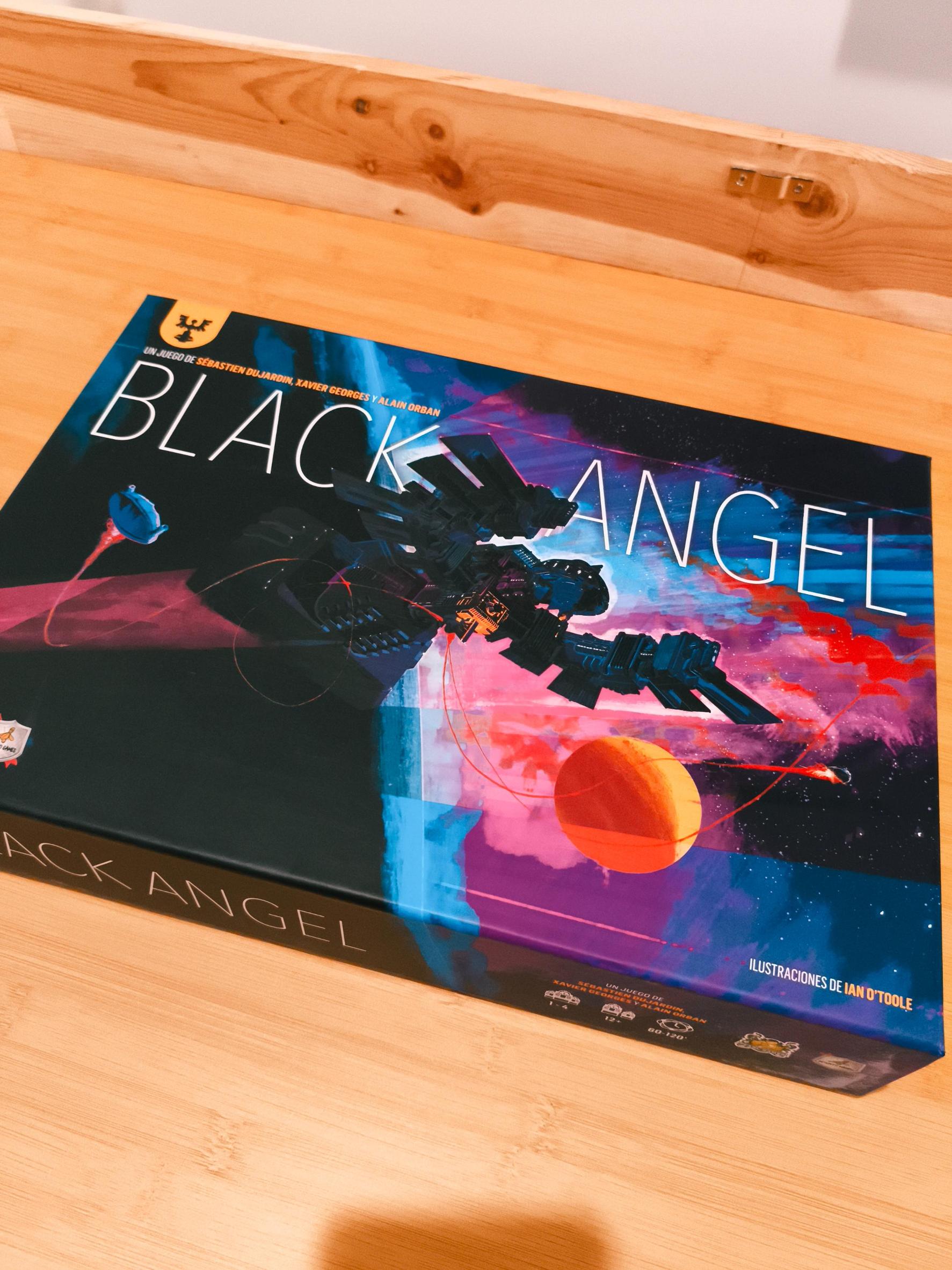
Black Angel
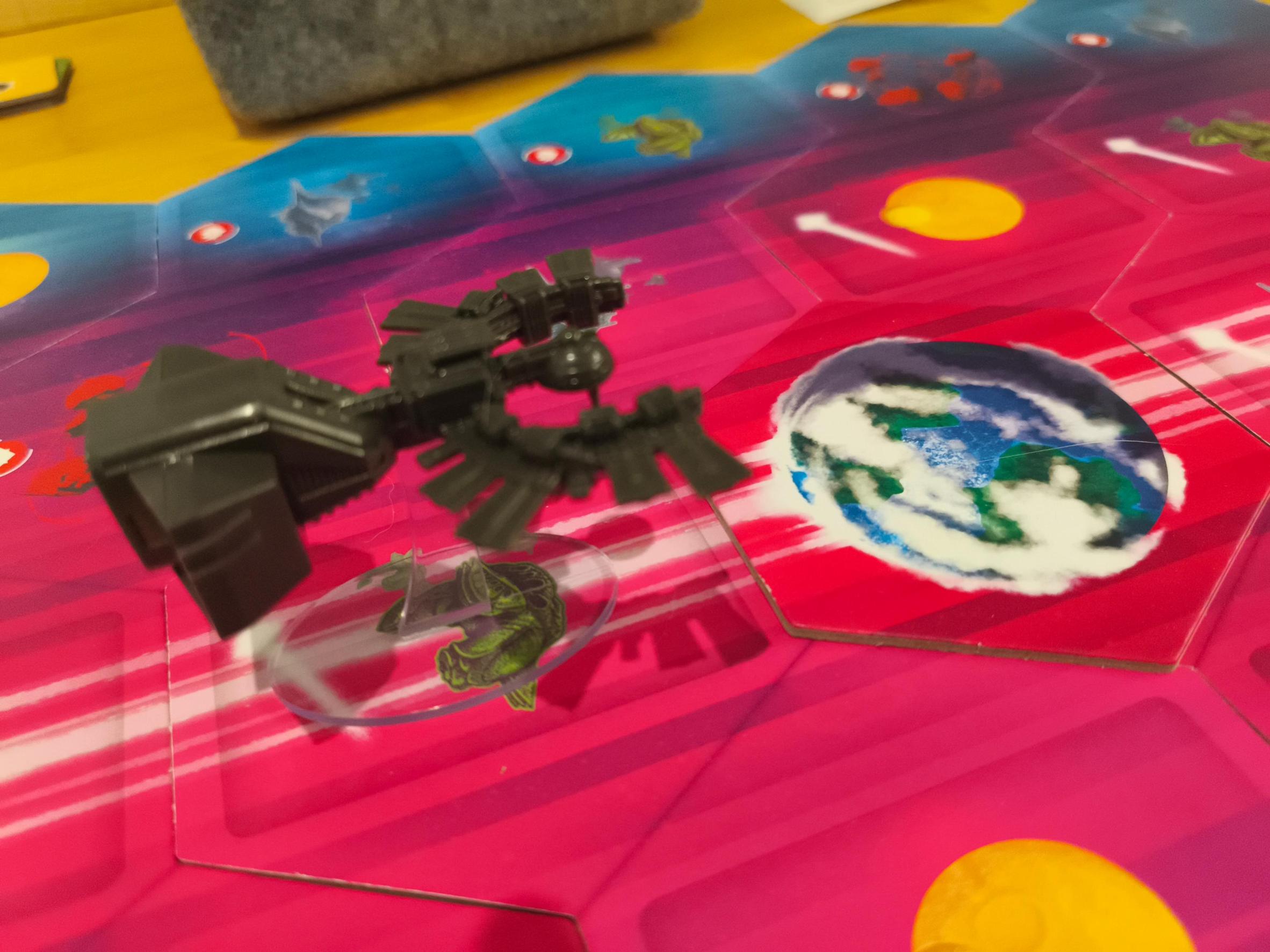
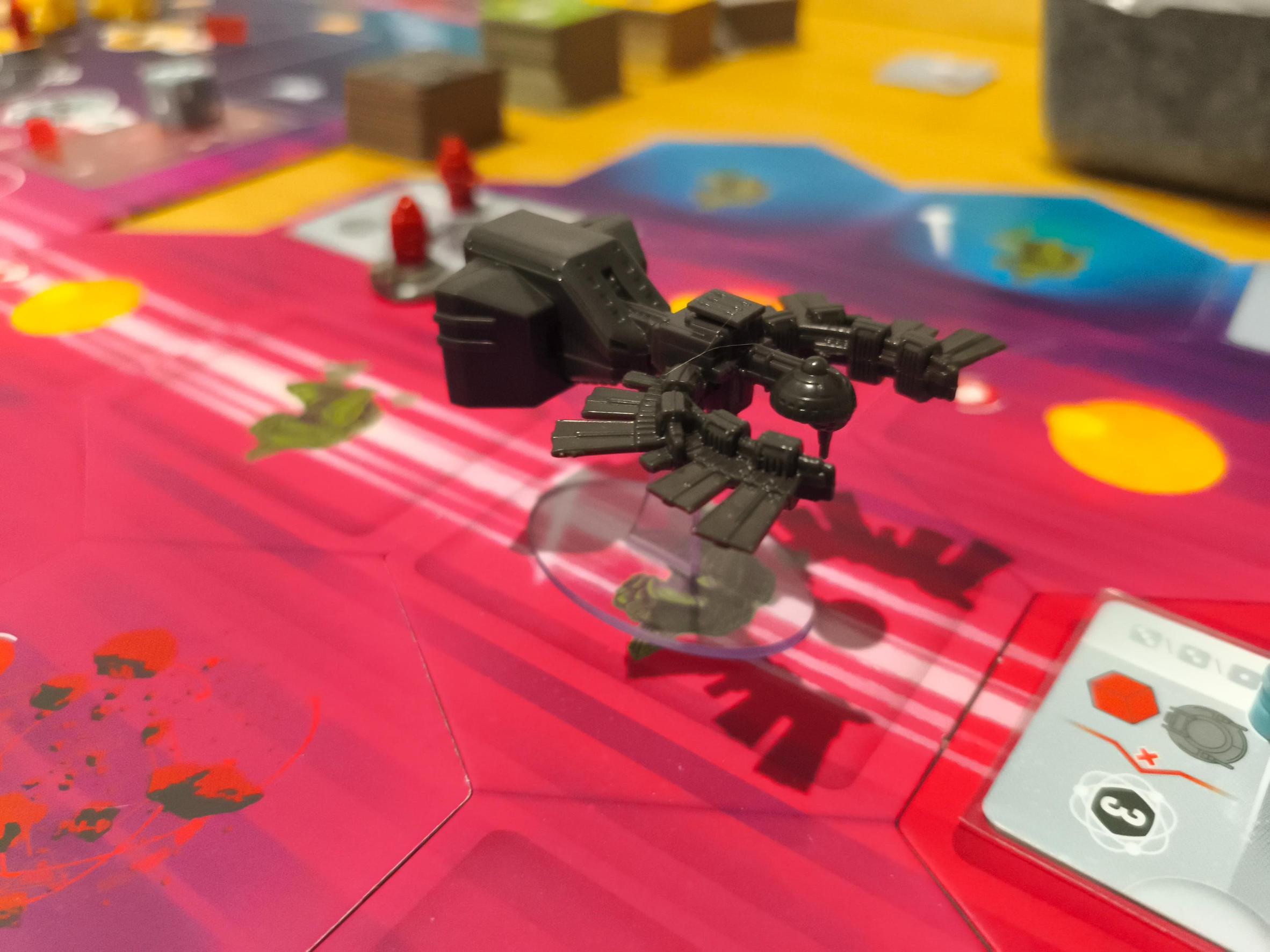
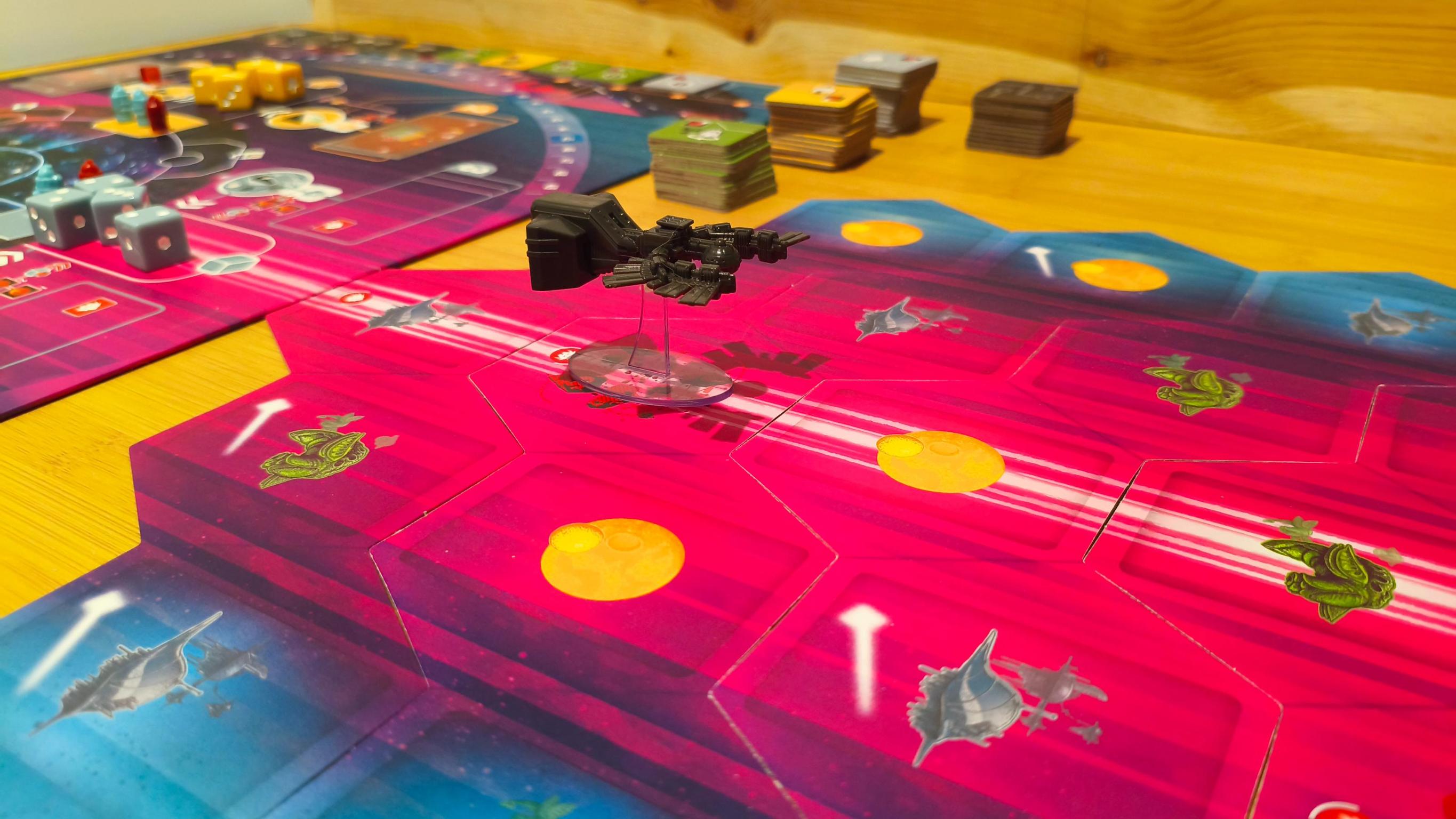
Die Spieler übernehmen die Rolle rivalisierender KI, die gemeinsam eine massive interstellare Fregatte verwalten, die das genetische Erbe der Menschheit transportiert, nachdem die Erde unbewohnbar geworden ist. In jedem Zug setzen die Spieler Roboterbesatzung ein, spielen Karten aus und würfeln, um Sternensysteme zu erkunden, mit außerirdischen Spezies zu verhandeln oder zusammenzustoßen, Schiffssysteme aufzurüsten und Räuber abzuwehren. Der Spielfortschritt wird durch eine bewegliche Schiffsfigur und ein Ravager-Deck verfolgt; das Spiel endet, wenn das Schiff die Zielwelt erreicht oder die Ravager aufgebraucht sind. Danach erhalten die Spieler Punkte für erfüllte Missionen, entwickelte Technologien, gelöste Begegnungen und andere Ziele. Die KI mit den meisten Punkten gewinnt.
- Spieler
- 1–4 am besten mit 3
- Spielzeit
- 60–120 Min.
- Alter
- 12+
- Komplexität
- 3,9 / 5
Über das Spiel
- Publisher




Fotos von Ludoya-Tischen
Alle Fotos in Ludoya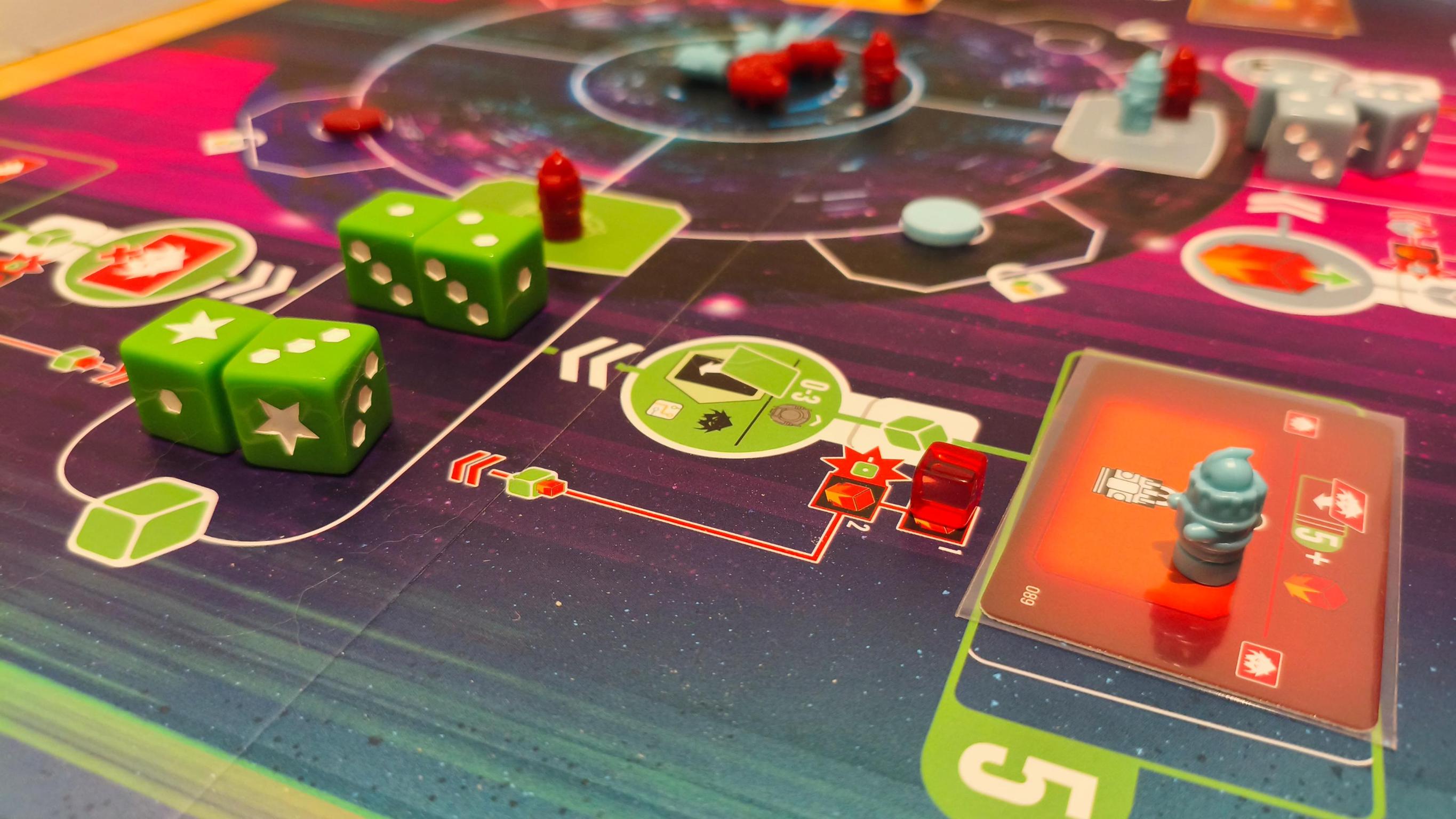
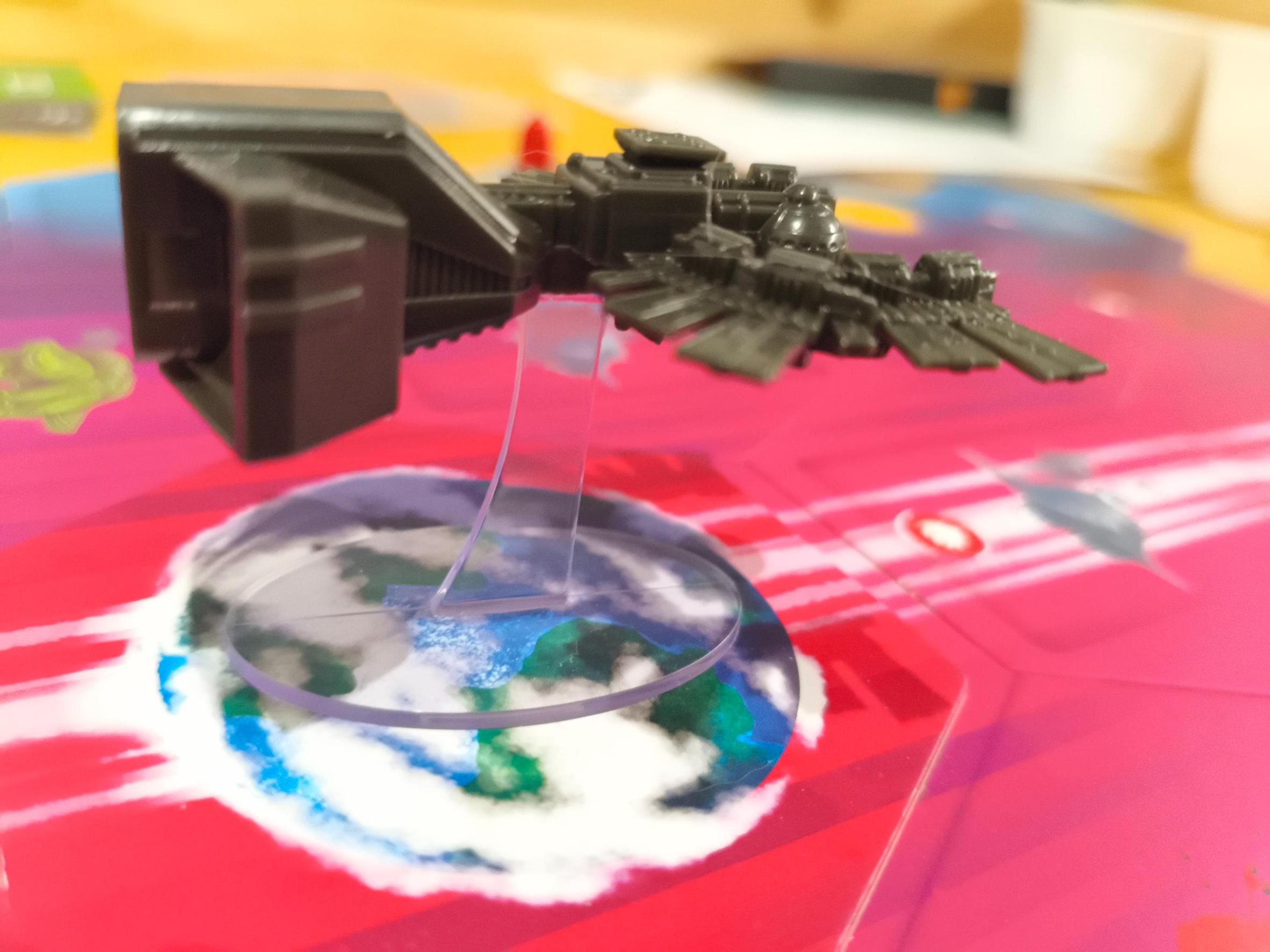
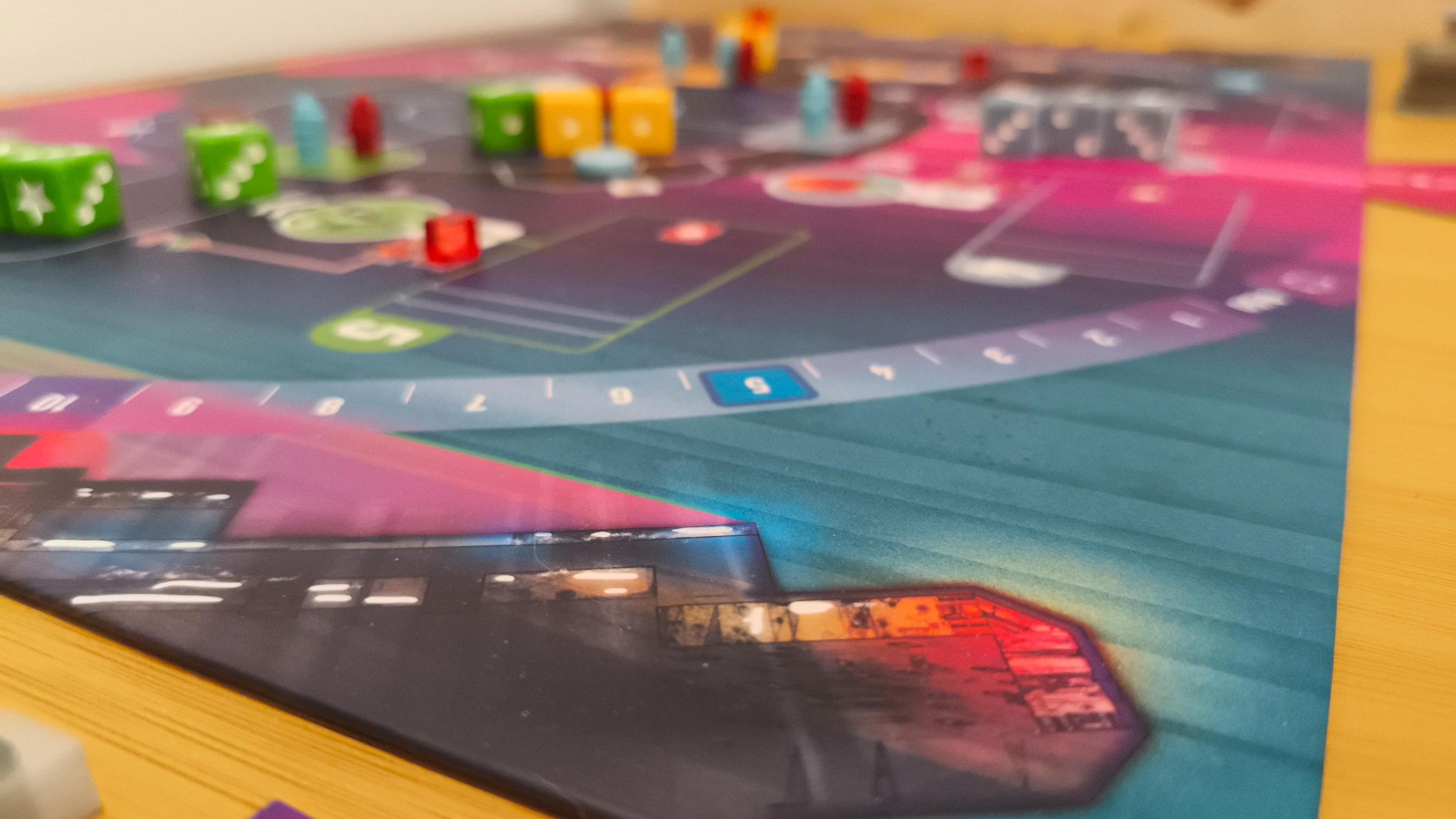
Wo kaufen
Shop-Preise und gebrauchte Exemplare, täglich geprüft.
An Ludoyas Tischen
Alle Statistiken in Ludoya- 104
- Erfasste Partien
- 115
- Spieler
- 1h 50m
- Durchschnittliche Partie
- 89
- In Sammlungen
- 13
- Auf Wunschlisten
6,4/10
aus 21 Ludoya-Rezensionen
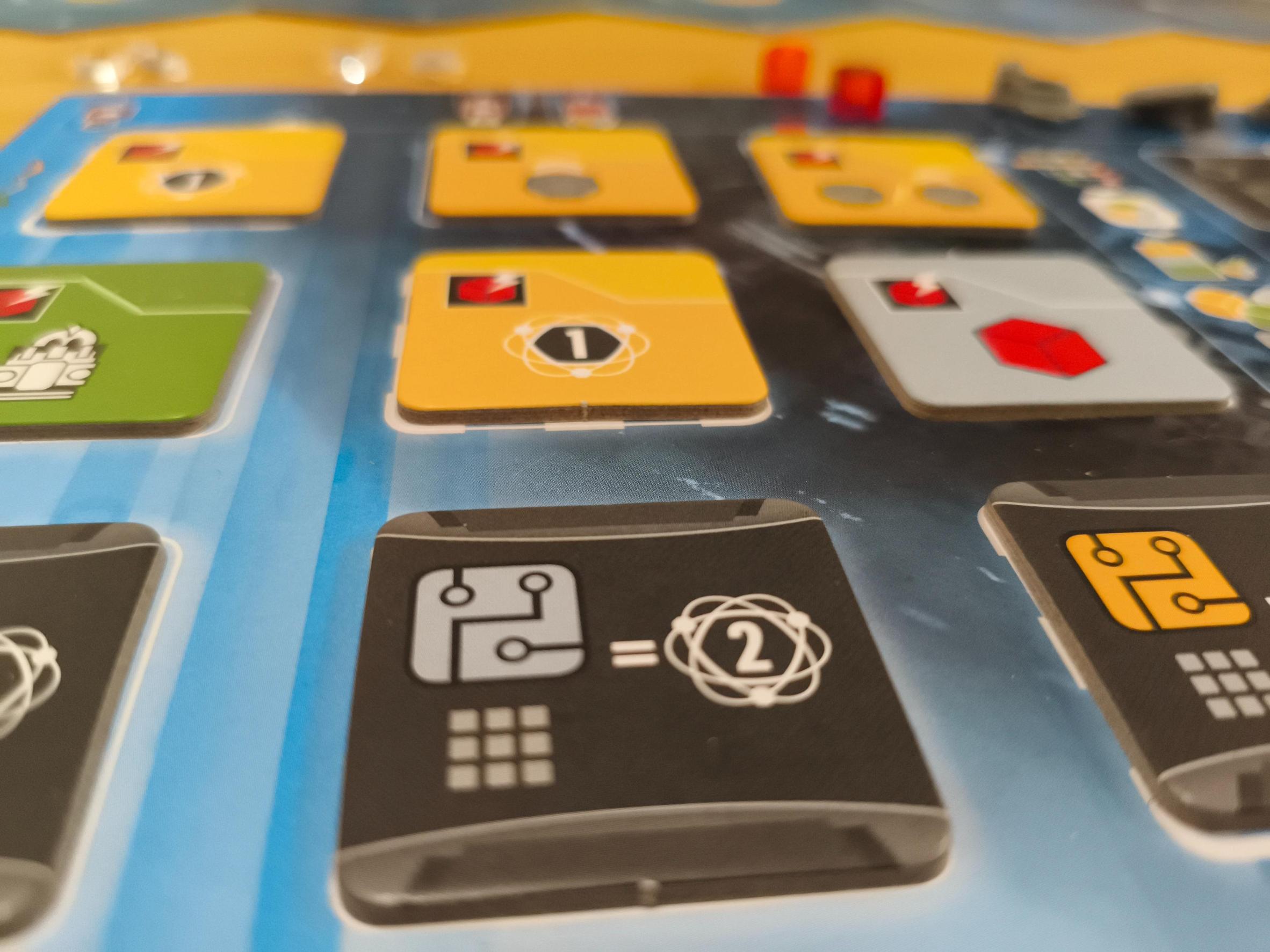
Evan5,9 At the start of the game players roll three dice, one each of the three colors of actions, and place them into their personal dice area in the ship board. Then going in turn order, each player may either select a die, and resolve the effect of a space that matches the color, a number of times equal to the pips on the die, with the dice ranging from 0-3 pips. Each of the three colors as one primary action, and one 'do things on the space map action'. For the primary actions, grey and green actions remove the two forms of damage the ship board takes on when players take space map actions. yellow dice build out your personal board of tiles. The personal board of tiles is a 3x3 grid for the tiles. New tiles slot in from the left or bottom, and if they meet another tile they push it along the chain, eventually possibly pushing tiles out of the grid entirely. The tiles come in two varieties, some are endgame scoring, some are special abilities that can be activated at the start of your turn, or when you put a damage cube on them after having taken a repair action. The most crucial thing about these tiles is that they provide you with a reliable way of getting the various resources in the game. More robots, or moving robots means you can get more dice. More spaceship tokens or moving space ship tokens means you can benefit more from the cards in your hand when you take space board actions. Then of course important luck mitigation resource production. Interestingly, the end game victory point tiles want to be pushed out, as when they sit on your grid they have a maximum scoring threshold of 4vp, but this gets increased when they get ejected. Die selection can be tricky, as you can take a die rolled by one of your opponents by paying them a crystal token. The value of the die you take can also be increased by 2 (to a maximum of 3 pips) if it's your own die being used. When you take a space action, you send out a cute little spaceship with one of your robots out into the hex board. If you end your movement on a planet matching the color of the die you used to take the action with, you can place a card from your hand that also matches the color of the space. The cards come in two varieties. Some give you a special bonus when they fall off the board as the main ship moves, others give you a new action opportunity to take with dice of the matching color. Once a player no longer can or wants to take actions, they instead reset. They discard any remaining dice, losing a point for each pip remaining, then clear the cards from the side of their board, bank the damage cubes they collected to get the extra tile activations with, then they gather the dice they deserve, roll them and place them into their area. They are allowed to lock a single die at this point, preventing that one die from being purchased by other players, by spending a crystal. Then the ship moves one tile forward, the rearmost tile falls off the world, maybe giving cool things to players sitting on the cards on that tile, then the tile is flipped and added to the front of the space map. Generally, resetting is rough. When you reset you don't get to do anything on your turn, and if you are the first player to reset, other players will often buy your dice out from under you by the time your turn comes back around. Getting their crystals is nice, but they are easy enough to come by that accelerating your next reset feels a bit frustrating. Yellow dice are also in impossibly high demand. Getting new and better tiles is an easy way to get victory points, or a crucial way to improve your engine. There are also some substantial flip luck elements in terns of how the cards that get played into space. A player with a good set of cards in their starting hand, really has a substantial advantage in the entire game. In the advanced rules it says when you have the opportunity to draw, you can draw 2 choose 1 instead of just top-deck, and this helps, but even so, there are late game cards and early game cards all shuffled in. That being said, despite the relative chaos, I find this game thrilling. I like the way the map scrolls, I like trying to manage my player board smartly and failing, I like flying through space in my little ships, I like planning what dice I need and when, and I like how the repair actions on the ships are rewarded in interesting ways. It's a heavily player driven game, and has gone differently each time. ★ Art, Iconography and components functional ★ Clever or interesting mechanisms ★ Reasonably low downtime between turns with mildly AP players ★ Multiple plays stay interesting ☆ Low or mitigatable luck elements ★★★☆☆ Raw enjoyment
Regelfragen
Aus der Spielanleitung beantwortet von Ludoyas Regelassistenten.
Wenn ich einem anderen Spieler einen Würfel abkaufe, kann ich ihn dann durch das Ausgeben von Trümmern drehen, um seine Seite zu ändern?
Nein — du kannst keinen Würfel umdrehen, den du gerade gekauft hast; Trümmer dürfen verwendet werden, um Würfel in deinem Fach während Sequenz A umzudrehen, aber nicht einen Würfel, den du in diesem Zug gekauft hast (Seite 11).
Wenn ich die Aktivierungs-Missionskarte eines anderen Spielers aktiviere, bekommt der Kartenbesitzer dann irgendetwas?
Ja — nachdem du deine Aktivierungen auf einer Karte abgehandelt hast, die dir nicht gehört, bekommt der Besitzer der Karte sofort genau eine (und nur eine) kostenlose Aktivierung dieser Karte, ohne einen Würfel zu benutzen (Seite 11).
Kann ich einen 0er (Stern-)Würfel verwenden, um Schiffe zu bewegen, wenn ich „Command Your Ships“ spiele?
Du darfst für die Aktion „Steuere deine Schiffe“ einen Stern-(0)-Würfel verwenden, aber er bewegt kein Schiff; du kannst die restlichen Schritte trotzdem ausführen (und wenn du eine 0 verwendest, musst du eine Missionskarte auslegen) (Seiten 7 und 9).
Verringert ein einzelner Schadenswürfel auf einer Black-Angel-Aktion ihren Aktivierungswert?
Nein — nur wenn eine Aktion 2 Schadenswürfel hat, wird der Aktivierungswert deines Würfels um 1 reduziert; ein einzelner Schadenswürfel hat keinen Einfluss auf den Aktivierungswert (Seite 7).
Wenn ich eine Missionskarte ins All lege, wie werden dann Verwüster und Schadenswürfel angewendet?
Zählt die Ravager-Schiffs-Symbole, die an das Hex angrenzen, und zieht so viele Ravager-Karten; legt jeden gezogenen Ravager auf die angegebene Black-Angel-Aktion und platziert einen Schadenswürfel auf dem ersten freien Schadensfeld dieser Aktion — wenn die Aktion bereits 2 Schadenswürfel hat, platziert den Würfel auf einen Vorratswürfel derselben Farbe (oder ignoriert ihn, falls es keinen gültigen Würfel gibt) (Seite 10).
Kann ich Sequenz B wählen, auch wenn ich noch Würfel in meinem Fach habe, und was passiert mit diesen Würfeln?
Ja, du kannst Sequenz B auch dann wählen, wenn sich Würfel in deinem Fach befinden, aber du musst sie zuerst in den Vorrat zurücklegen und so viele Siegpunkte verlieren, wie der Gesamtwert auf diesen Würfeln beträgt; danach nimmst und würfelst du Würfel entsprechend deinen Robotern und darfst einen davon reservieren, indem du 1 Ressource zahlst (Seiten 6 und 12).
Ähnliche Spiele
 Anachrony2017
 Pulsar 28492018
 Andromeda's Edge: Deluxe Edition2025
 Alien Frontiers: Aurora2014
 Stars of Akarios2022
 SETI: Auf der Suche nach außerirdischem Leben2024
 ISS Vanguard2024
 Andromeda's Edge2024
 Zirkadianer: Erstes Licht2019
 Mondbasis Shackleton2025
 Teotihuacan: Die Stadt der Götter – Luxus Edition2025
 Galaxy Postman2024








Kostenlos, im Web, für Android und iOS
Spiel Black Angel mit Ludoya
- Hab es in deiner SammlungVerwalte dein Exemplar und seine Erweiterungen, leih es Freunden oder setz es auf deine Wunschliste und erfahre, wenn der Preis fällt.Zur Sammlung hinzufügen
- Erfasse jede PartiePunkte, Sieger, Timer und Fotos, dann deine Statistiken: Siegquote, liebste Spielerzahl, beste Punktzahl.Partie erfassen
- Regelfragen klärenFrag alles zu den Regeln und erhalte eine Antwort aus der Spielanleitung, mit der Seite zum Nachprüfen.Den Regelassistenten fragen
- Finde Leute, mit denen du es spielstClubs, Spieleabende und Veranstaltungen in deiner Nähe, bei denen dieses Spiel auf den Tisch kommt.Veranstaltungen ansehen
Spieldaten (Spieler, Spielzeit, Alter, Mitwirkende) von BoardGameGeek.