

2018 · Animales
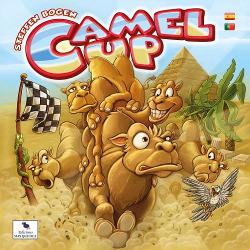
Camel Up: Edición 2.0
Los jugadores apuestan por cuál de los cinco camellos terminará primero y segundo en una carrera corta, impulsada por dados, alrededor de un recorrido modular. En su turno, los jugadores colocan o resuelven apuestas, usan cartas de acción o activan el lanzadados de pirámide que suelta un dado cada vez para mover a los camellos. Los camellos pueden caer encima de otros y formar pilas; un camello que está arriba se mueve junto con la pila de debajo, así que los resultados de movimiento pueden cambiar la clasificación de forma drástica. Esta edición actualiza el diseño del tablero y de los componentes, añade dados grabados y modos alternativos —incluyendo camellos que a veces van en la dirección equivocada—, todo sin perder la jugabilidad rápida de apostar y resolver apuestas.
- Jugadores
- 3–8 mejor con 5
- Duración
- 30–45 min
- Edad
- 8+
- Complejidad
- 1,5 / 5
Sobre el juego
- Diseño
- Arte
- Publisher



Expansiones
Verlas en Ludoya
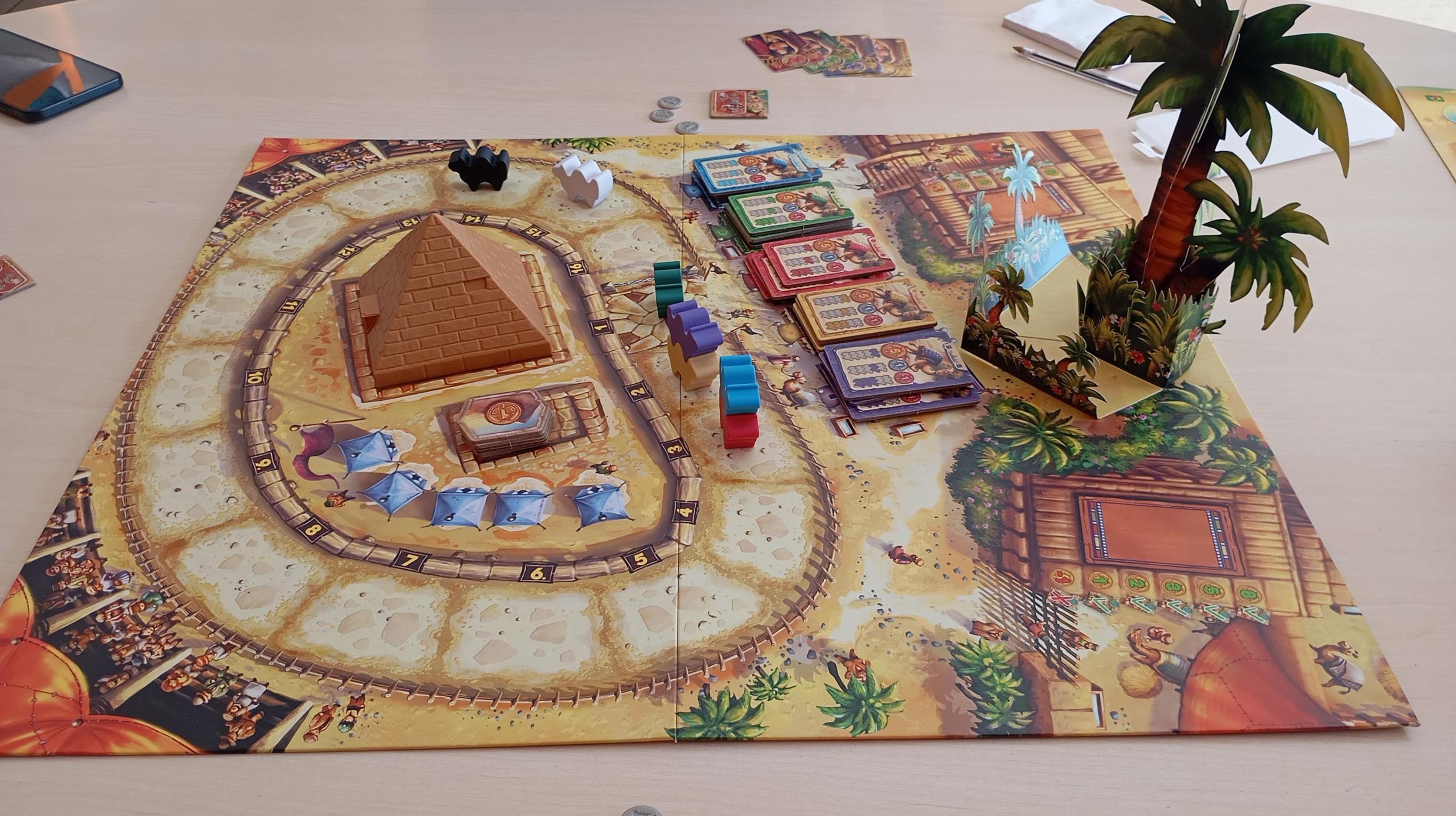
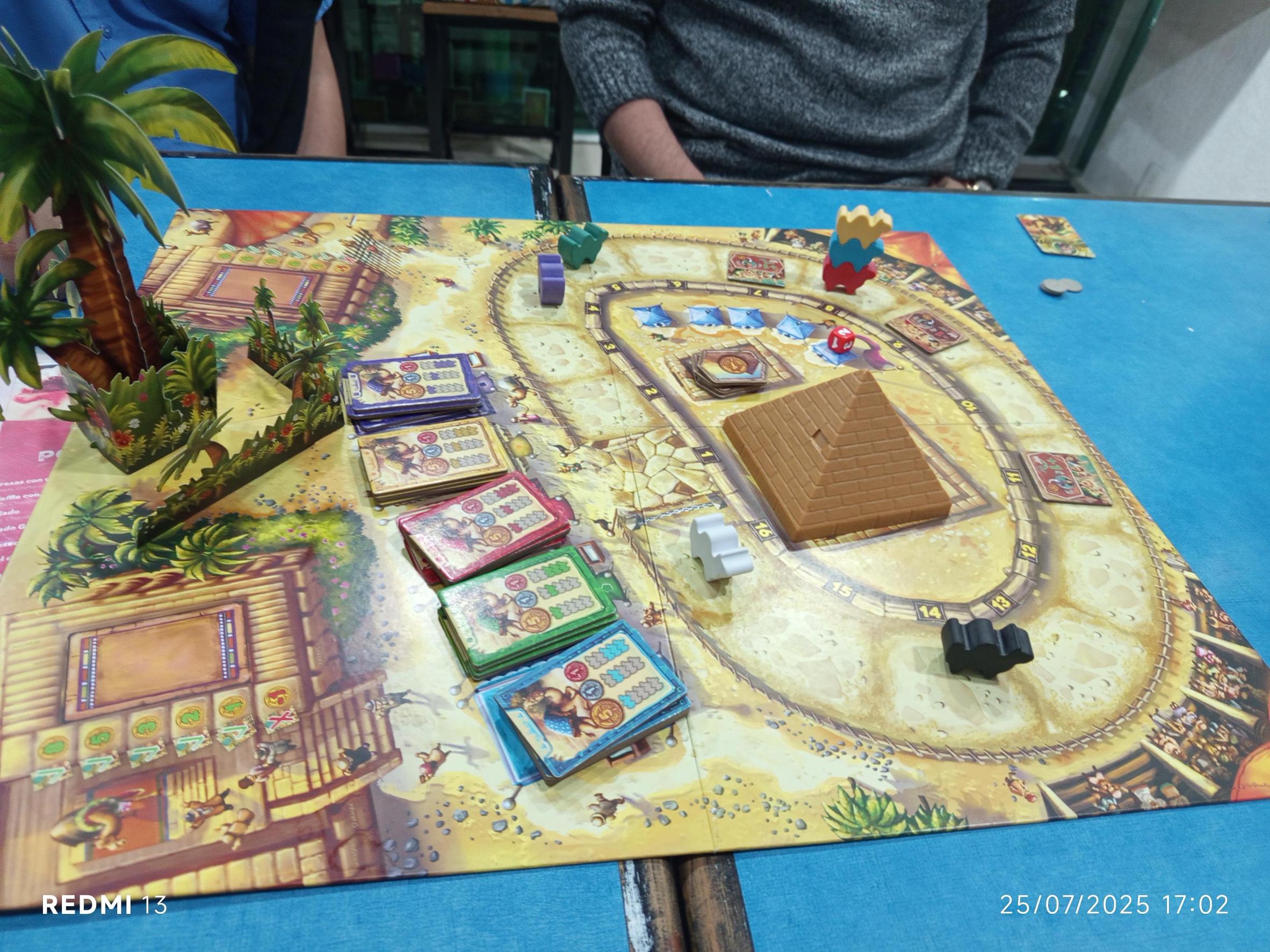
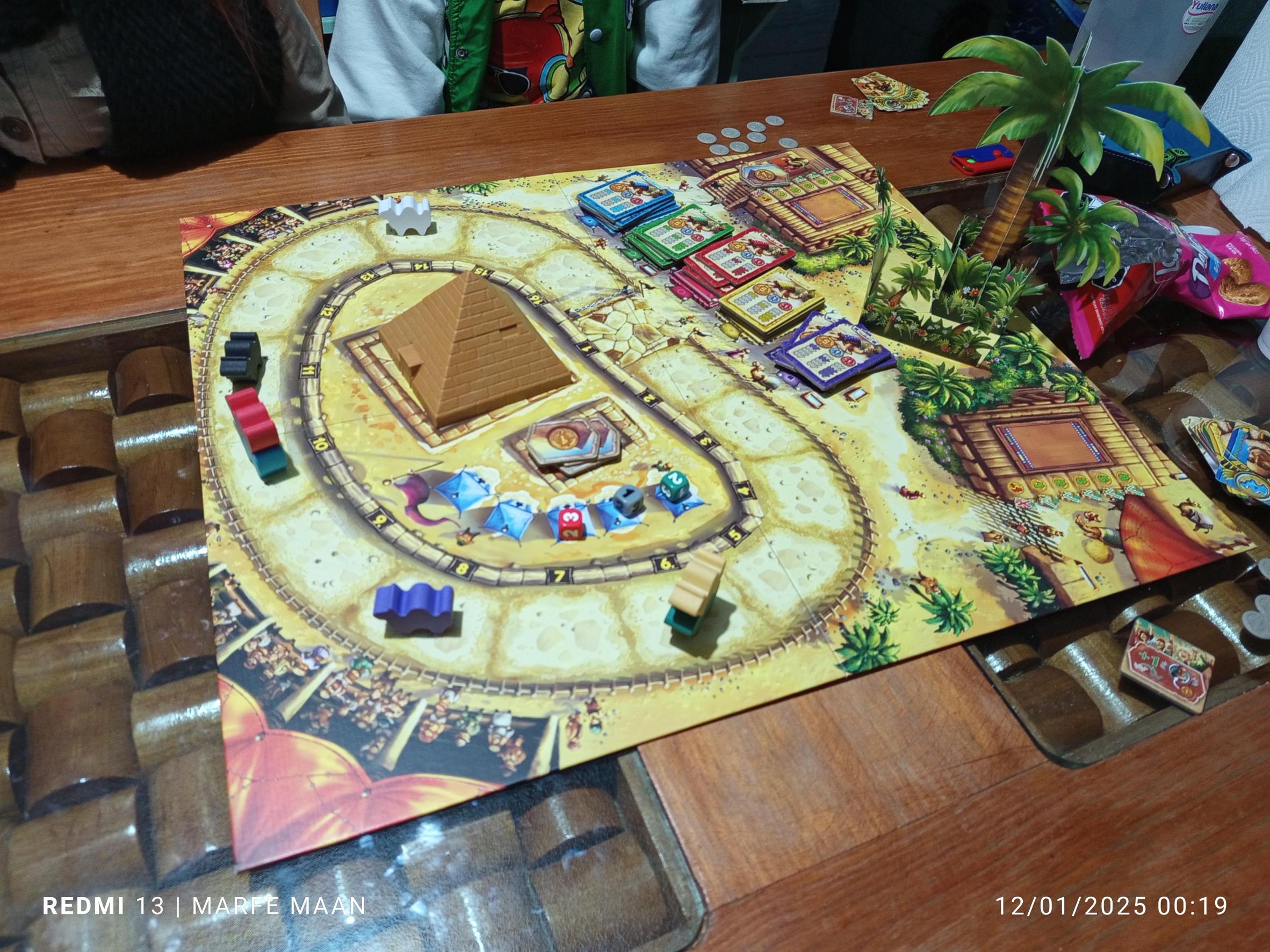
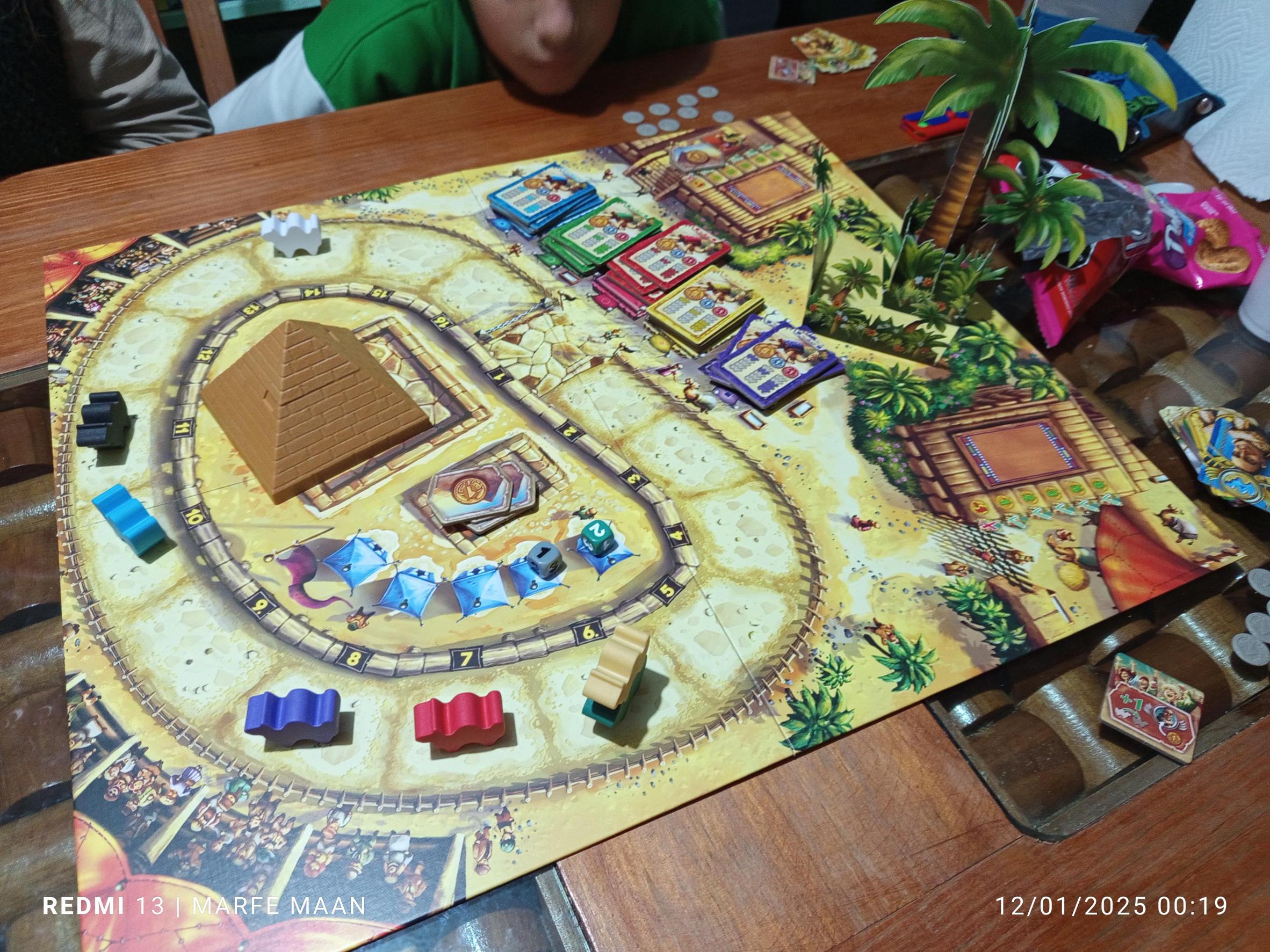
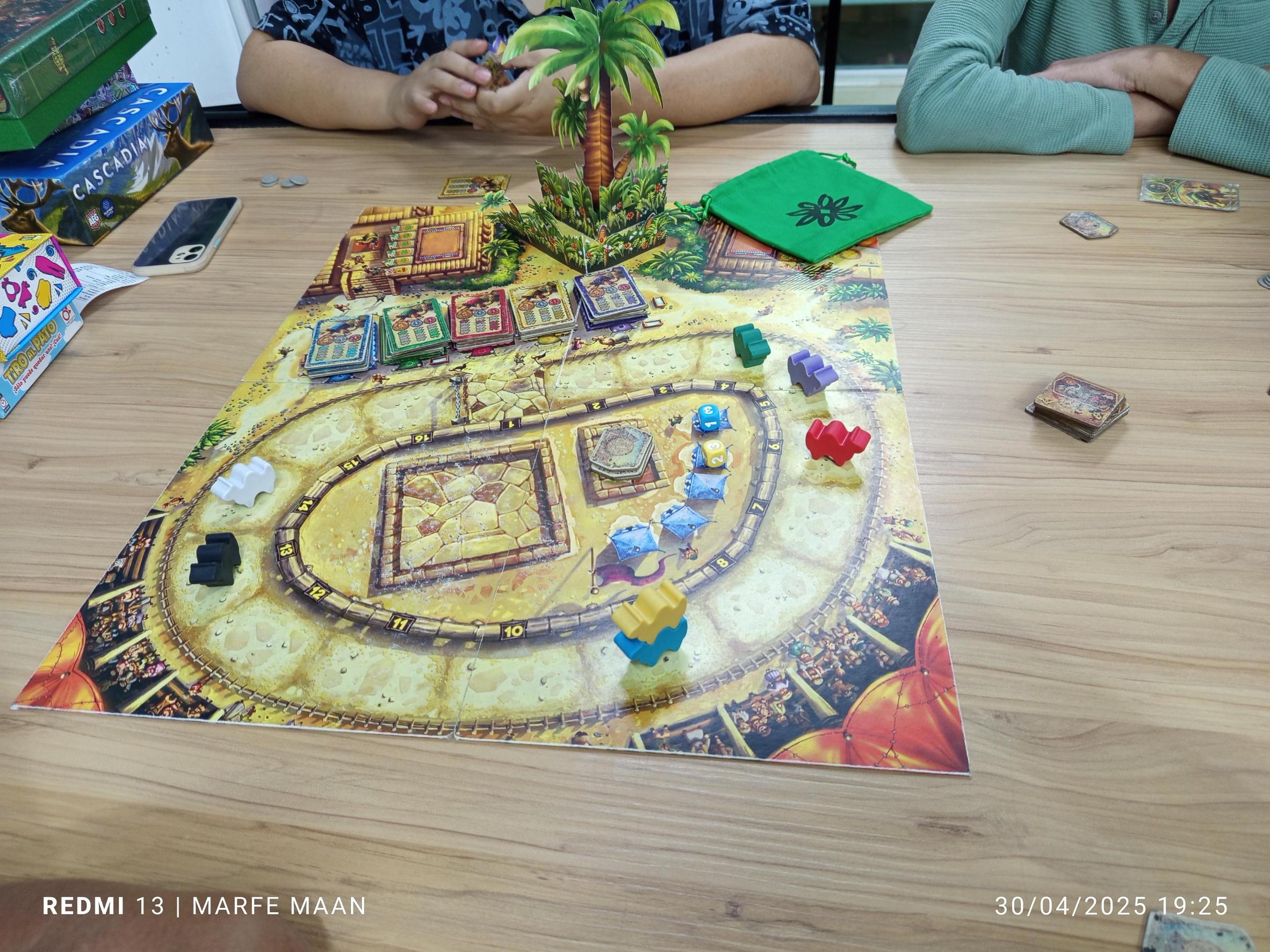
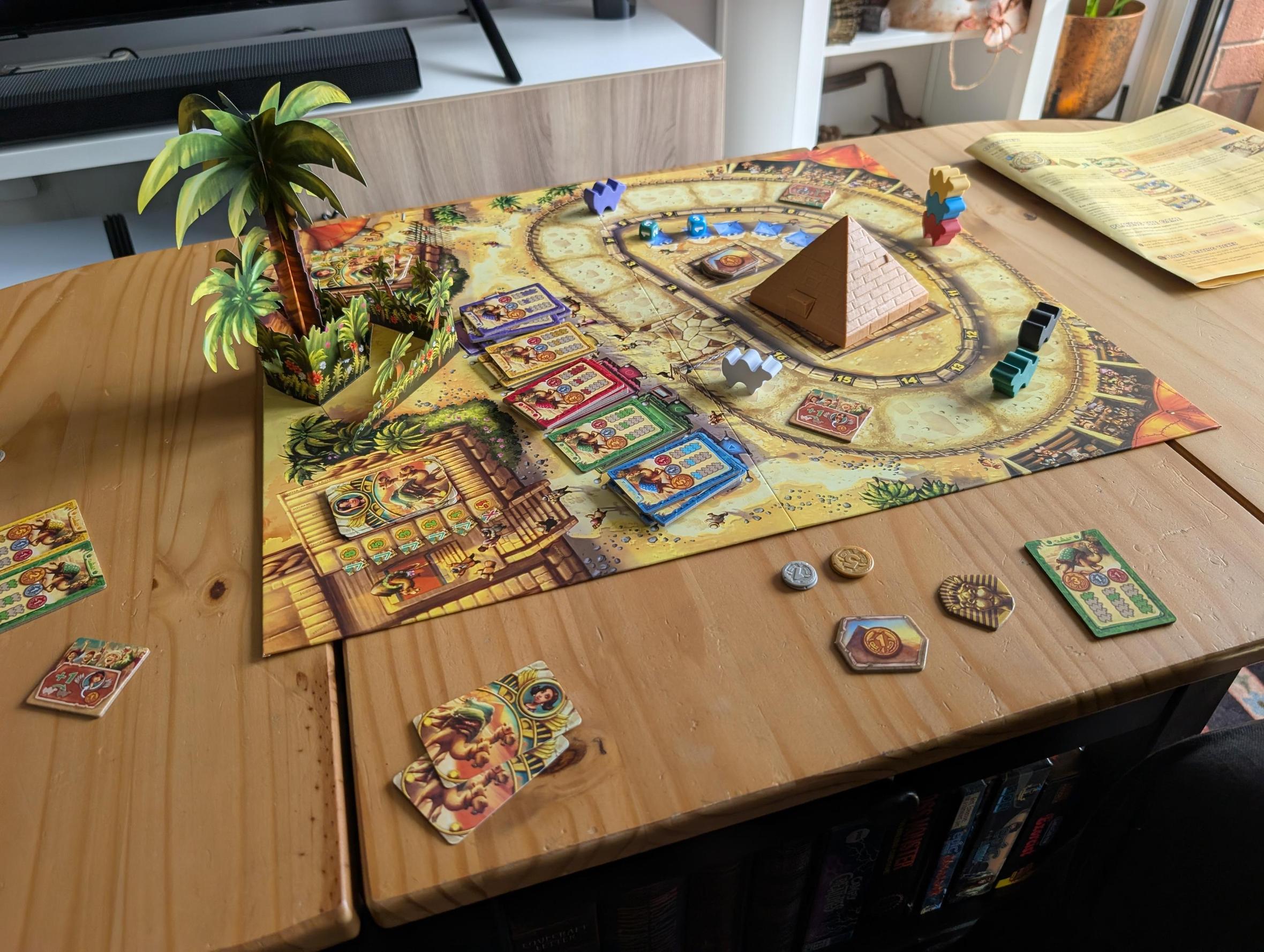
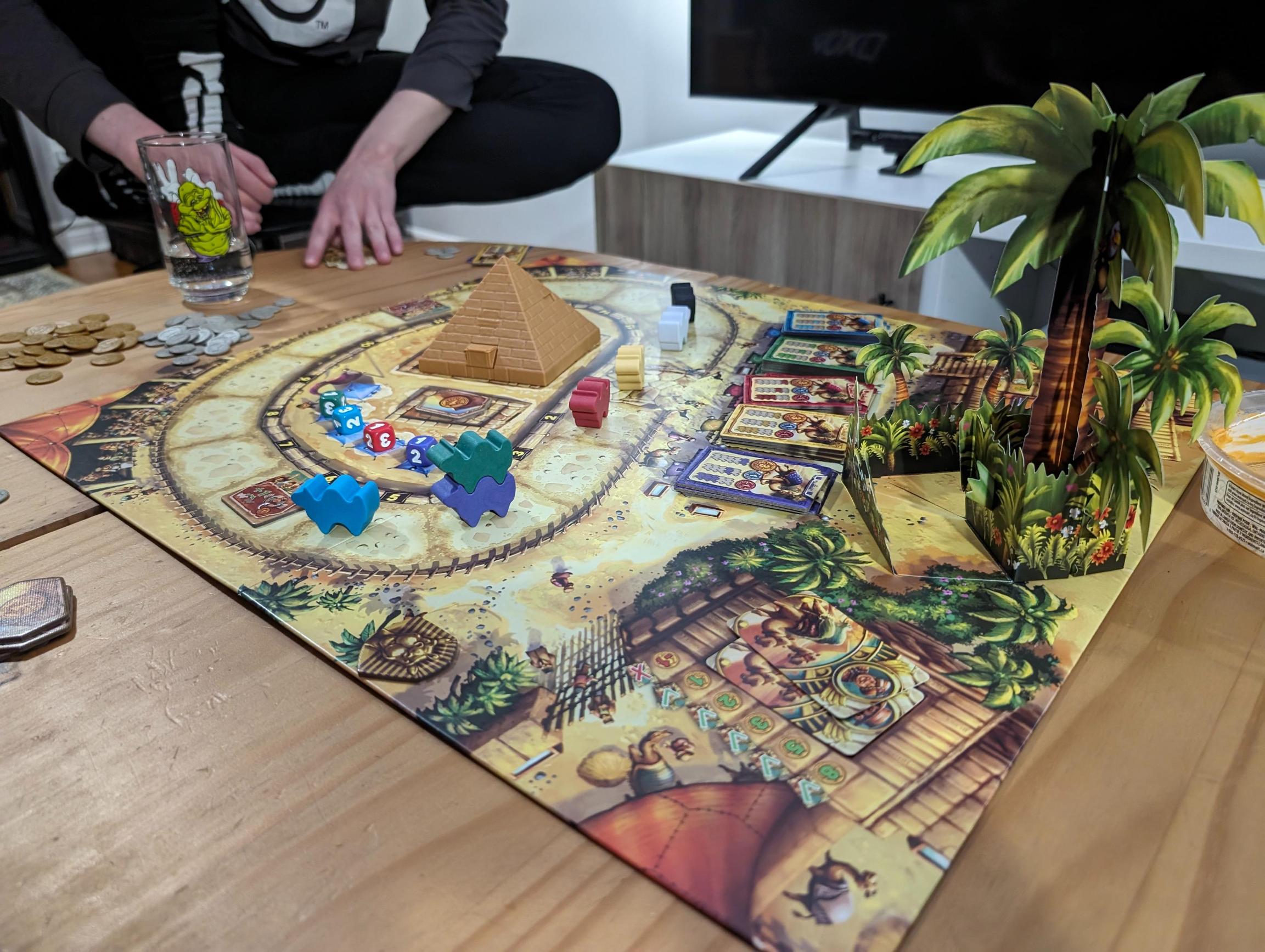
Fotos de mesas de Ludoya
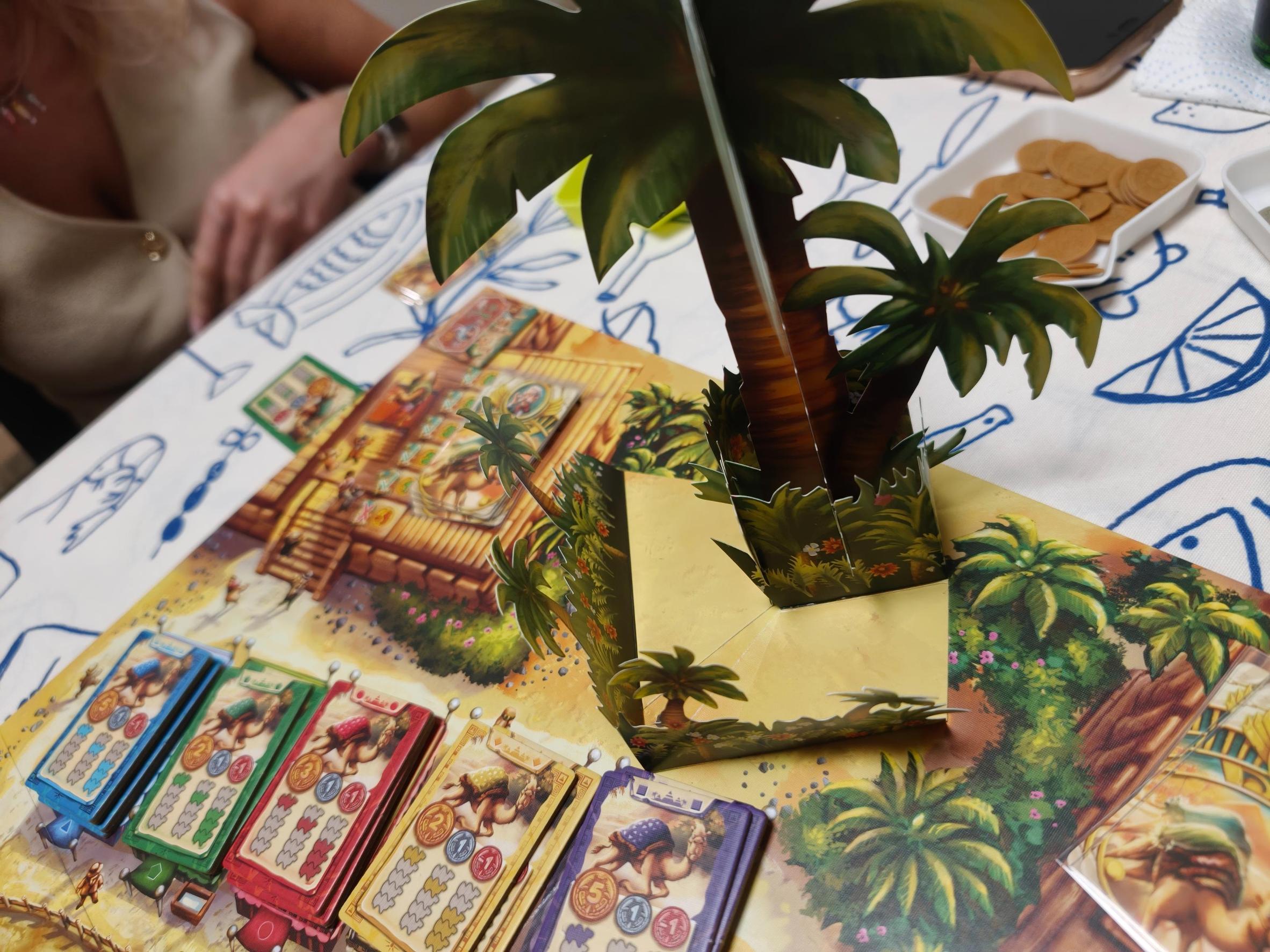
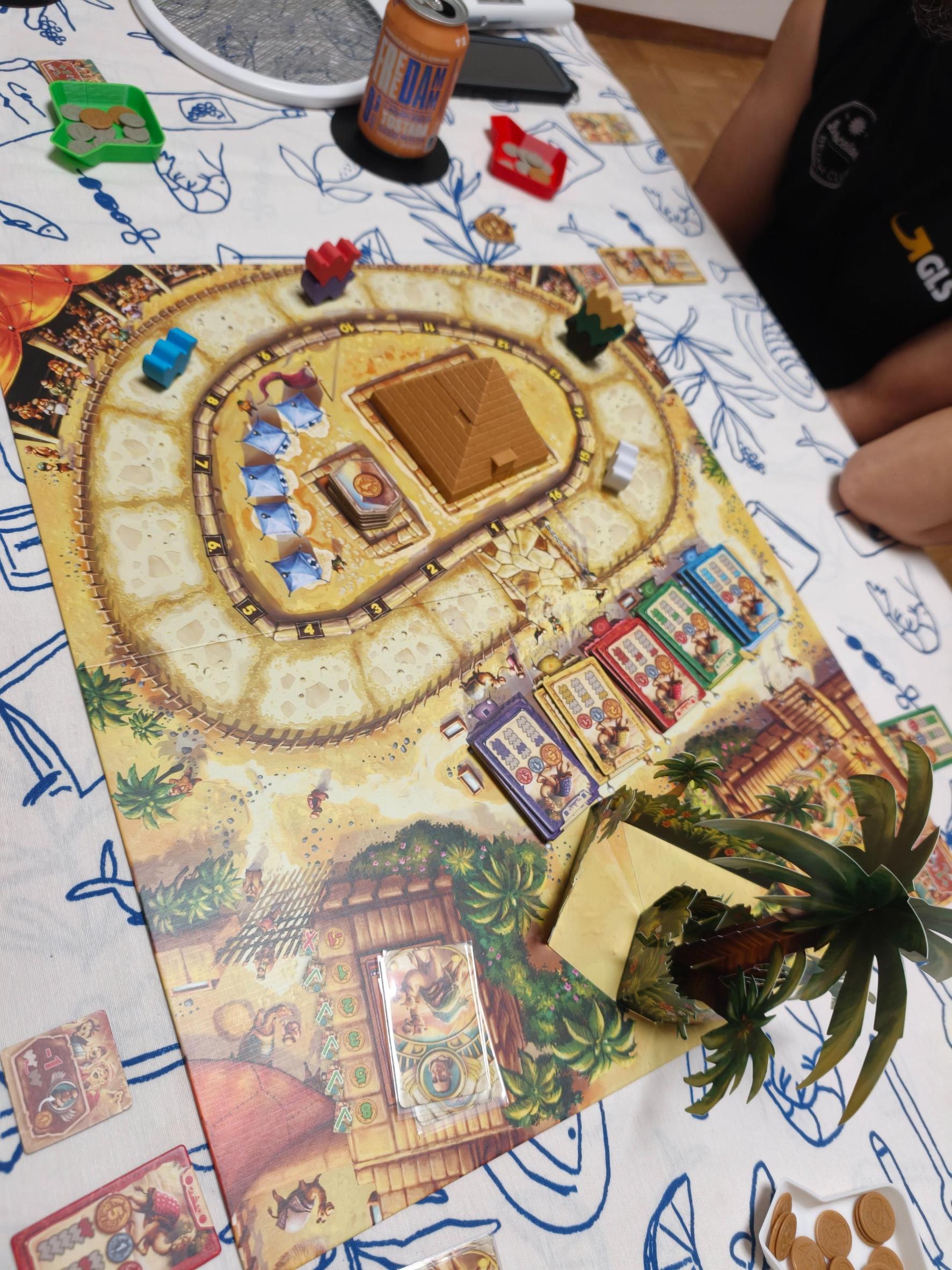
Todas las fotos en Ludoya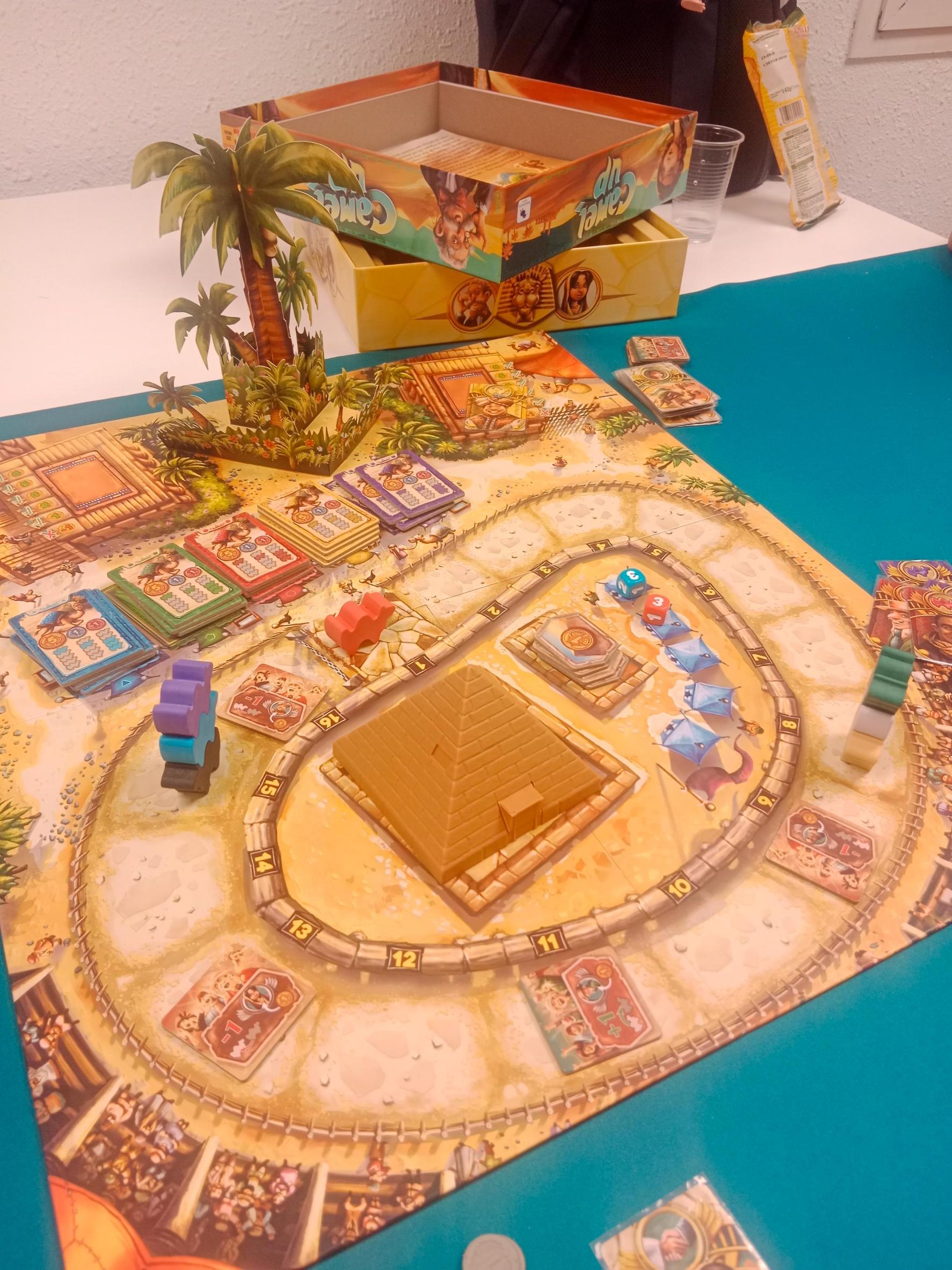
Dónde comprarlo
Precios de tiendas y copias de segunda mano, revisados cada día.
En las mesas de Ludoya
Todas las estadísticas en Ludoya- 746
- Partidas registradas
- 944
- Jugadores
- 33m 36s
- Partida media
- 197
- En colecciones
- 33
- En listas de deseos
7,8/10
de 87 reseñas en Ludoya
¡Un juegazo fiestero! Bonito, pero sin pretensiones ni seriedad. El tablero con relieve en 3D es una gran idea, le da mucha vida. ¡La pirámide para los dados es lo más! Un juego sencillo de apuestas: anima a los camellos, fastidia a los favoritos de los demás, haz tus apuestas en el momento justo y como toca; para eso hacen falta lógica, suerte y un equilibrio entre la avaricia y el sentido común.
Vic Granell8,5 Excellent betting game with lots of risk taking and fun involved. The production is amazing: great insert, components and 3D board. It's becoming a top one for us at home!!
Javo7,0 Juego rápido y sencillo para toda la familia. A mayor cantidad de jugadores más divertido. Las partidas pueden ser o muy buenas o muy aburridas, depende un poco del azar. Suele ser muy divertido cuando empiezan haber giros en las carreras.


Dudas de reglas
Respondidas a partir del reglamento por el asistente de reglas de Ludoya.
How do the Supporting dice work—when do you put a Supporting die into the Pyramid and what happens when it’s rolled?
At setup (and at the start of each new Leg) you put the Supporting die of the Camel in last place into the Pyramid, and when a Supporting die is revealed from the Pyramid you move that Camel as per the base game and then return the die to its spot on the Pedestal (setup: page 3; usage: page 4).
Can I use the extra action to add any Supporting die to the Pyramid whenever I want?
You may perform the additional action after your normal action if you own at least one Pyramid tile: return one of your Pyramid tiles to the stack and choose a Supporting die from the Pedestal to put into the Pyramid, but you may not choose the die of the currently leading Camel and you cannot do this if you took the last Pyramid tile as your action this turn (page 4).
How does the Photographer/Camera action work—when do I get paid and where can I put the Camera?
As the Photographer you place the Camera next to any empty Race track space (it must indicate a single space); if a Camel unit ends its movement on that Camera space you immediately receive 1 Egyptian pound per camel in the unit and then return the Photographer tile and Camera to their setup place (page 5).
If I put a Position Betting tile over a Leg Betting tile I own, do I still get the Leg tile’s reward?
You cover the bottom half of a Leg Betting tile to instead bet on an exact finishing position (2nd–5th); at Leg scoring you gain 3 pounds for each Position tile that is exactly correct and lose 1 pound for each that is wrong, and you may not remove the Position tile before it is scored (page 6).
What happens when I enter a Betting Partnership—can the other player refuse and how are rewards shared?
You choose another player with their card "Available" and swap Partnership cards (they cannot refuse); for that Leg you are partners and in the Leg scoring round each partner may choose one of the other’s tiles and add its reward to their own (the reward is shared, not taken away), then all Partnership cards are returned after scoring (page 7).












Gratis, en web, Android e iOS
Juega a Camel Up: Edición 2.0 con Ludoya
- Tenlo en tu colecciónControla tu copia y sus expansiones, préstala a tus amigos o ponla en tu lista de deseos y te avisamos cuando baje de precio.Añadirlo a tu colección
- Registra cada partidaPuntuaciones, ganadores, temporizadores y fotos, y luego tus estadísticas: porcentaje de victorias, número de jugadores favorito, mejor puntuación.Registrar una partida
- Resuelve dudas de reglasPregunta lo que quieras sobre las reglas y obtén una respuesta sacada del reglamento, con la página donde comprobarla.Preguntar al asistente de reglas
- Encuentra gente con quien jugarloClubes, noches de juegos y eventos cerca de ti que sacan este juego a la mesa.Ver eventos
Datos del juego (jugadores, duración, edad, créditos) de BoardGameGeek.