
2009 · Économique
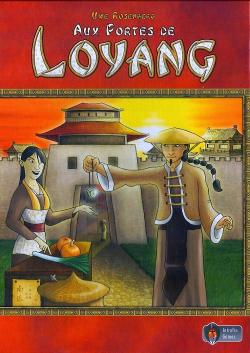
Aux Portes de Loyang
Les joueurs cultivent des champs pour produire des marchandises, puis les vendent afin de satisfaire les commandes des clients et gagner de l’argent. Les cartes représentent des champs, des clients, des assistants et des étals de marché ; à chaque manche, les joueurs obtiennent des cartes grâce à un mécanisme de draft/d’enchères et reçoivent également un champ gratuit. Une seule pose permet de remplir un champ avec un type de marchandise, et chaque champ produit une unité par manche. Les joueurs peuvent jouer des assistants et utiliser des étals de marché pour modifier la production, les revenus ou les ventes, et effectuer autant d’actions que leurs cartes et leurs marchandises le permettent. Les gains sont investis sur une piste de score où les investissements les plus précoces rapportent davantage ; à la fin de la partie, le joueur en tête sur cette piste l’emporte.
- Joueurs
- 1–4 idéal à 2
- Temps de jeu
- 60–120 min
- Âge
- 10+
- Complexité
- 3,1 / 5
À propos du jeu
- Auteurs
- Illustration
- Éditeurs





Où l'acheter
Prix des boutiques et exemplaires d'occasion, vérifiés chaque jour.
Sur les tables de Ludoya
Toutes les statistiques dans Ludoya- 285
- Parties enregistrées
- 211
- Joueurs
- 1h 25m
- Partie moyenne
- 87
- Dans des collections
- 17
- Dans des listes de souhaits
5,5/10
sur 42 avis Ludoya
Juego del maestro de refritos que me ha dado sopor jugarlo...lo jugaría alguna vez si me da por quitarme la vida.
Evan2,5 This game has an interesting core. You get a hand of cards, and then there's a push your luck mechanism, where each player takes a turn placing a card from their hand into a common central pool. Once someone plays a card to the center you want, you can grab it, along with a single card from your hand, and add them to your tableau, but then all the other cards from your hand go into the pool, and you are done taking cards for that round. Some of the cards are fields, and when you take a field card, you can as an action plant a veggie in that field, and then populate every space in the field with that veggie. At the start of each round, you pull one thing off each field. What you do with the veggies is spend them on various types of customer cards you are also trying to grab. Some customers only want one deliver, others want several, and will punish you if you fail them more than once. Ultimately, you are trying to get lots of money, and then buy steps on your score track. The steps are sequentially numbered, and your first step in a turn always costs 1, but then any additional steps you have to pay the face value for. So far I'm totally on board, and having a great time. The problem shows up with the special action cards. They are full of mean take-that effects that can't really be planned for nor responded to. At times they can totally shut down a player's engine by stealing someone's customer that they've set up their fields across multiple turns to accommodate. It also has a ton of downtime between turns, with not much to think about in the meanwhile, since you don't know your options until your turn actually arrives. It also handles four player incredibly poorly, having players choosing partners they can attack so that two players can take their turns simultaneously. ★ Art, Iconography and components functional ★ Clever or interesting mechanisms ☆ Reasonably low downtime between turns with mildly AP players ☆ Multiple plays stay interesting ★ Low or mitigatable luck elements ★☆☆☆☆ Raw enjoyment
Mestremuten8,0 Rating: 4/5 Production value: 3/4 Is the game in my collection/Love to have?: 1/1

















Gratuit, sur le web, Android et iOS
Jouez à Aux Portes de Loyang avec Ludoya
- Gardez-le dans votre collectionSuivez votre exemplaire et ses extensions, prêtez-le à vos amis ou ajoutez-le à votre liste de souhaits et soyez prévenu quand le prix baisse.Ajouter à votre collection
- Enregistrez chaque partieScores, gagnants, minuteurs et photos, puis vos statistiques : taux de victoire, nombre de joueurs préféré, meilleur score.Enregistrer une partie
- Comptez les points sans papierUtilisez les feuilles de score et les aides de jeu de la communauté, et laissez Ludoya additionner les points.Trouver des feuilles de score
- Trouvez des gens avec qui y jouerClubs, soirées jeux et événements près de chez vous qui mettent ce jeu sur la table.Voir les événements
Données du jeu (joueurs, durée, âge, crédits) issues de BoardGameGeek.