
2016 · Construction de territoires
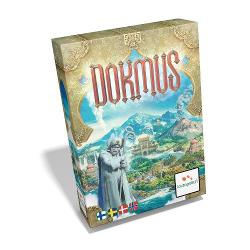
Dokmus
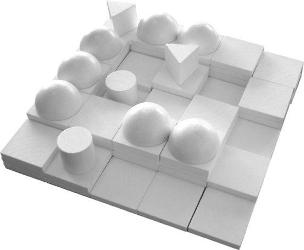
Players lead a tribe on an expedition to a mysterious island made of eight double-sided map tiles arranged in a 3×3 grid with the center empty. Guardians are represented by draftable cards each round; the chosen Guardian determines turn order and grants a unique power such as moving or rotating tiles, moving tokens, or claiming the first-player marker for the next round. On a turn, a player has three tokens to place as influence, to sacrifice to cross water or enter forests, or to throw into volcanoes. The island’s layout shifts as tiles are moved and rotated, and scoring awards points for discovered temples and ruins plus sacrificed tokens.
- Joueurs
- 2–4 idéal à 4
- Temps de jeu
- 20–40 min
- Âge
- 10+
- Complexité
- 2,1 / 5
À propos du jeu
- Auteurs
- Illustration

Extensions
Les voir dans Ludoya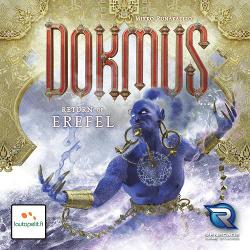
Où l'acheter
Prix des boutiques et exemplaires d'occasion, vérifiés chaque jour.
- LudifolieEn stock24.9 €
- World of Board GamesEn stock298 kr
- Games EmpireEn stock44.99 $
- PelipeikkoEn stock29.95 €
- Juegos de la Mesa RedondaRupture de stock32.4 €
Sur les tables de Ludoya
Toutes les statistiques dans Ludoya- 27
- Parties enregistrées
- 50
- Joueurs
- 55m 25s
- Partie moyenne
- 11
- Dans des collections
- 5
- Dans des listes de souhaits
7,1/10
sur 3 avis Ludoya
Evan7,2 In this game you have a grid of landscape tiles. You start with a single settlement piece on a corner tile's edge. Each round players draft turn order tiles, with each one having a special power. On your turn you can place three settlement tiles adjacent to your existing ones, and use your special power in any order. The powers manipulate the grid by moving a tile, rotating a tile, letting you bump one of your settlement markers one space or just becoming starting player. Then, each of the different terrain types have a special rule to deal with it. The ultimate goal is to have settlement pieces next to the different temples scattered throughout the board. The game is very engaging and clever considering it's simplicity. There's a big reward for being on all the tiles, so players really compete with each other for the moves and rotates, trying to get the most of our your limited actions. Some times require pulling a piece off the board, for example, if you leave any settlement tokens on volcanoes, they have to be pulled off. This isn't bad because these tokens are considered sacrifices to the gods, and there's a majority endgame scoring for most sacrificed. This is also fine from a scoring standpoint, since you really only care about being next to temples, so if some of your connecting pieces have to flay away to get there, it's no sweat off your back. It also helps the boards from getting impossibly clogged. I'm very impressed with this game, and I'm excited to see more. ★ Art, Iconography and components functional ★ Clever or interesting mechanisms ★ Reasonably low downtime between turns with mildly AP players ★ Multiple plays stay interesting ★ Low or mitigatable luck elements ★★★☆☆ Raw enjoyment



Gratuit, sur le web, Android et iOS
Jouez à Dokmus avec Ludoya
- Gardez-le dans votre collectionSuivez votre exemplaire et ses extensions, prêtez-le à vos amis ou ajoutez-le à votre liste de souhaits et soyez prévenu quand le prix baisse.Ajouter à votre collection
- Enregistrez chaque partieScores, gagnants, minuteurs et photos, puis vos statistiques : taux de victoire, nombre de joueurs préféré, meilleur score.Enregistrer une partie
- Comptez les points sans papierUtilisez les feuilles de score et les aides de jeu de la communauté, et laissez Ludoya additionner les points.Trouver des feuilles de score
- Trouvez des gens avec qui y jouerClubs, soirées jeux et événements près de chez vous qui mettent ce jeu sur la table.Voir les événements
Données du jeu (joueurs, durée, âge, crédits) issues de BoardGameGeek.