
2012 · Économique
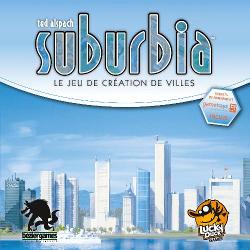
Suburbia
Suburbia is a board game for 1–4 players. It plays in 60–90 minutes and is meant for ages 8 and up. Ludoya players call it best with 3. It is rated 7 out of 10 by 78 Ludoya reviewers. The cheapest copy in stock is 30,60 € (France).
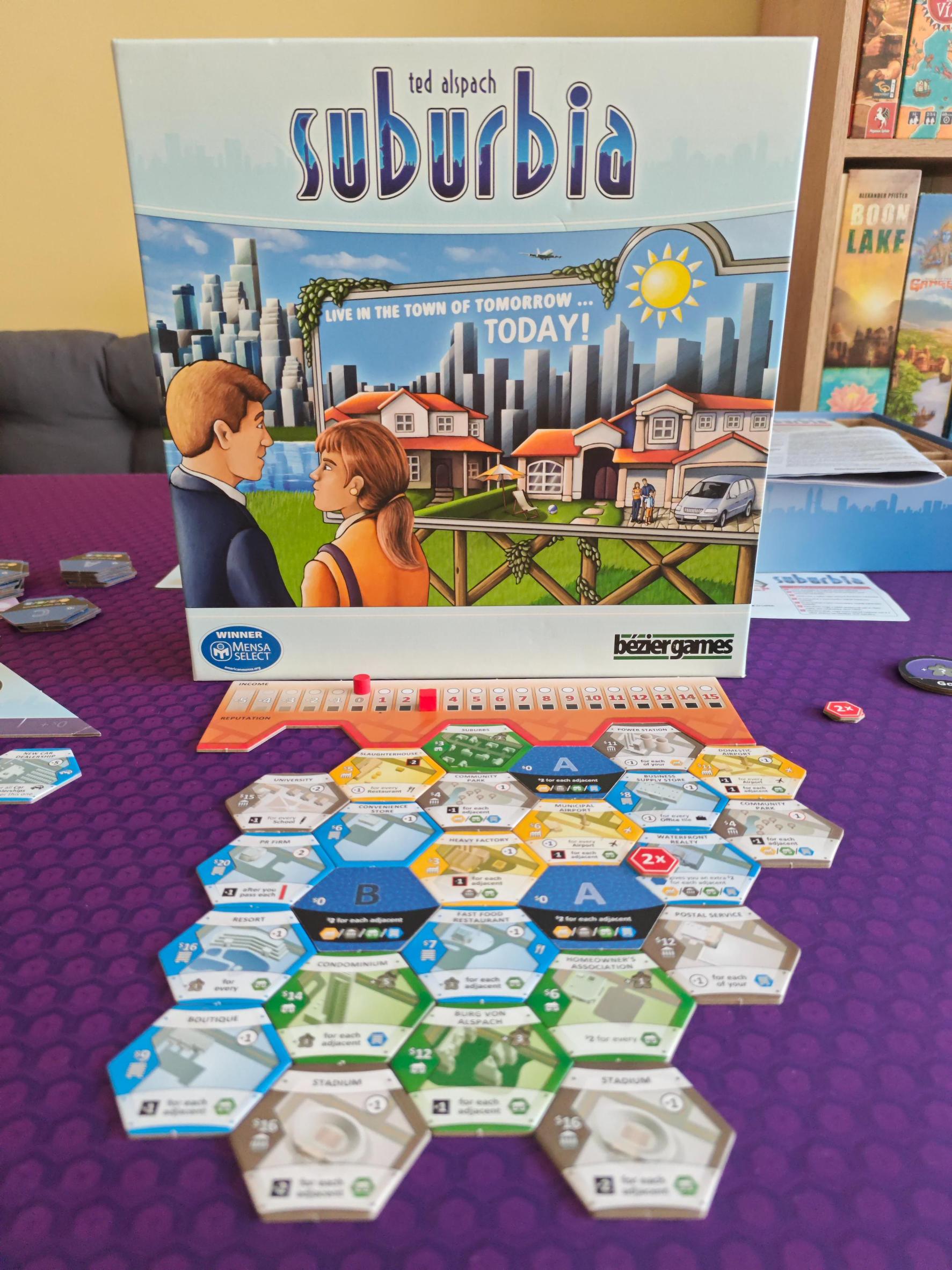
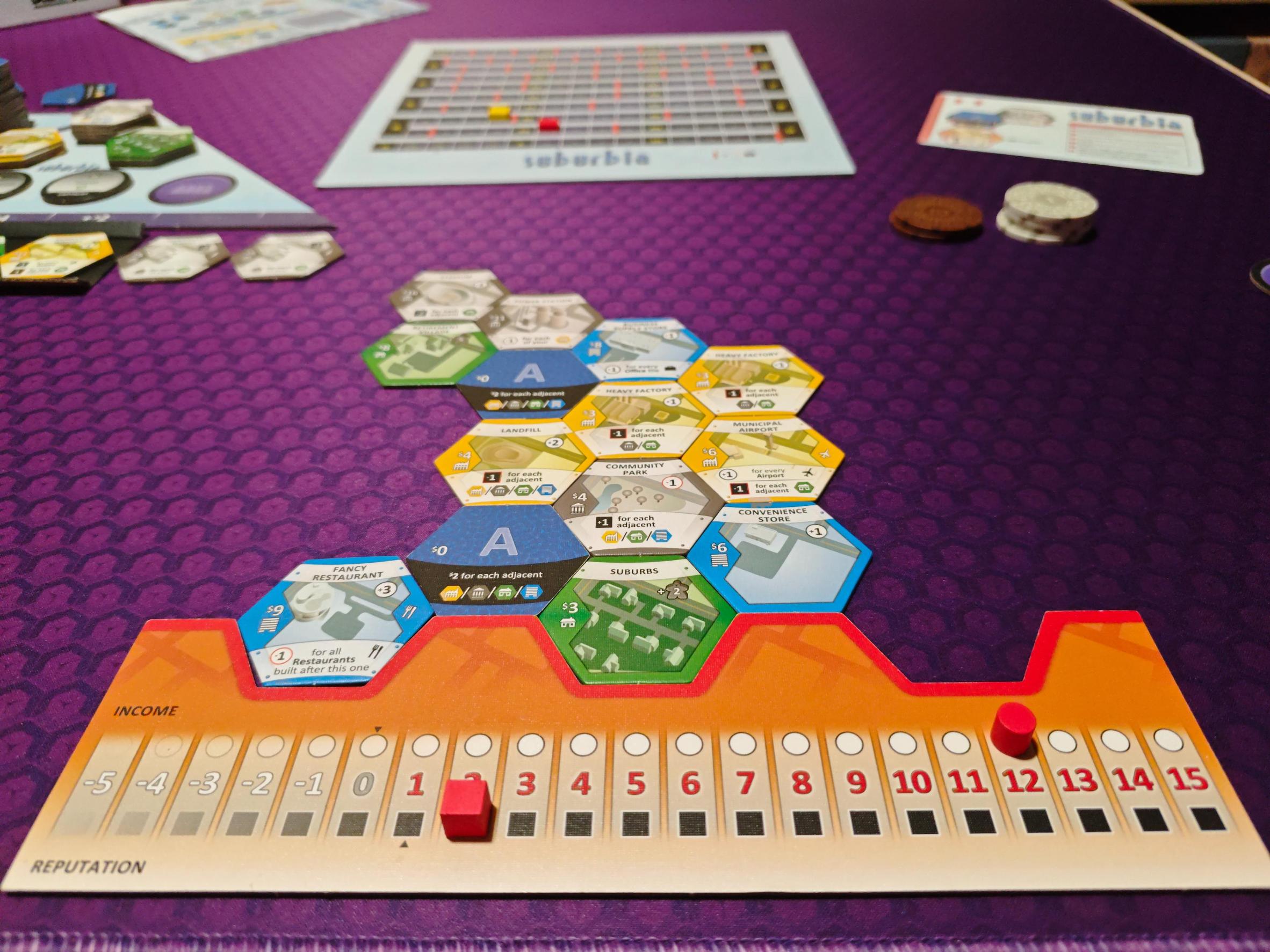
Players plan and develop a small town into a larger metropolis by placing hex-shaped building tiles that represent residential, commercial, civic, industrial, and special locations. Tiles interact with neighboring tiles to modify income and reputation; players use income to buy more tiles and reputation to generate population growth. The game tracks income and reputation separately, and population is gained as reputation rises while income funds further expansion. Players also compete for changing endgame goals and a rotating market of available buildings, creating variable setups and strategic choices about timing, placement, and engine-building.
- Joueurs
- 1–4 idéal à 3
- Temps de jeu
- 60–90 min
- Âge
- 8+
- Complexité
- 2,8 / 5
À propos du jeu
- Auteurs
- Publisher





Extensions
Les voir dans Ludoya Suburbia Inc2013
 Suburbia 5★2015
 Suburbia: Expansions (Second Edition)2021
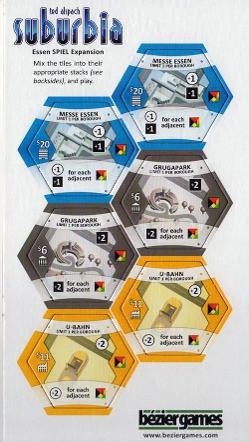 Suburbia: Essen SPIEL Expansion2012
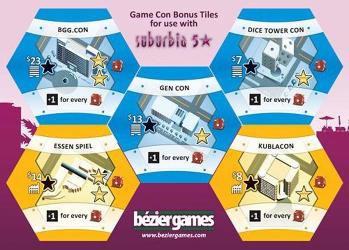 Suburbia: Con Tiles2015
 Suburbia: Collector's Edition – Man vs. Meeple Studios2019
 Suburbia: Collector's Edition – The Dice Towers2019
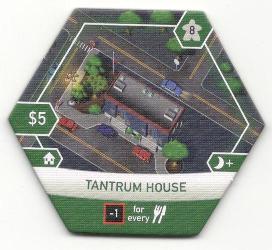 Suburbia: Collector's Edition – Tantrum House2019
 Suburbia: Collector's Edition – Sax Serenade Jazz Club2019
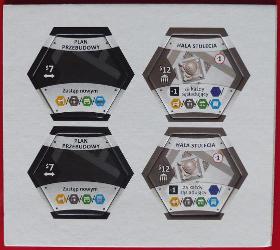 Suburbia: Hala Stulecia2013
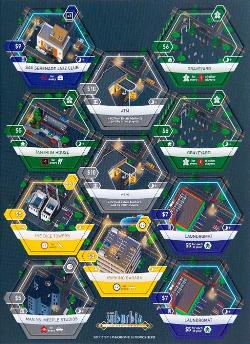 Suburbia: Nightlife Promo Tiles2019
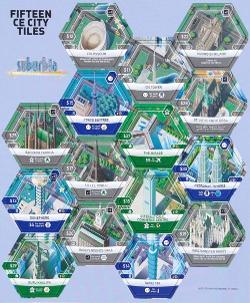 Suburbia: 15 Extra City Tiles2019
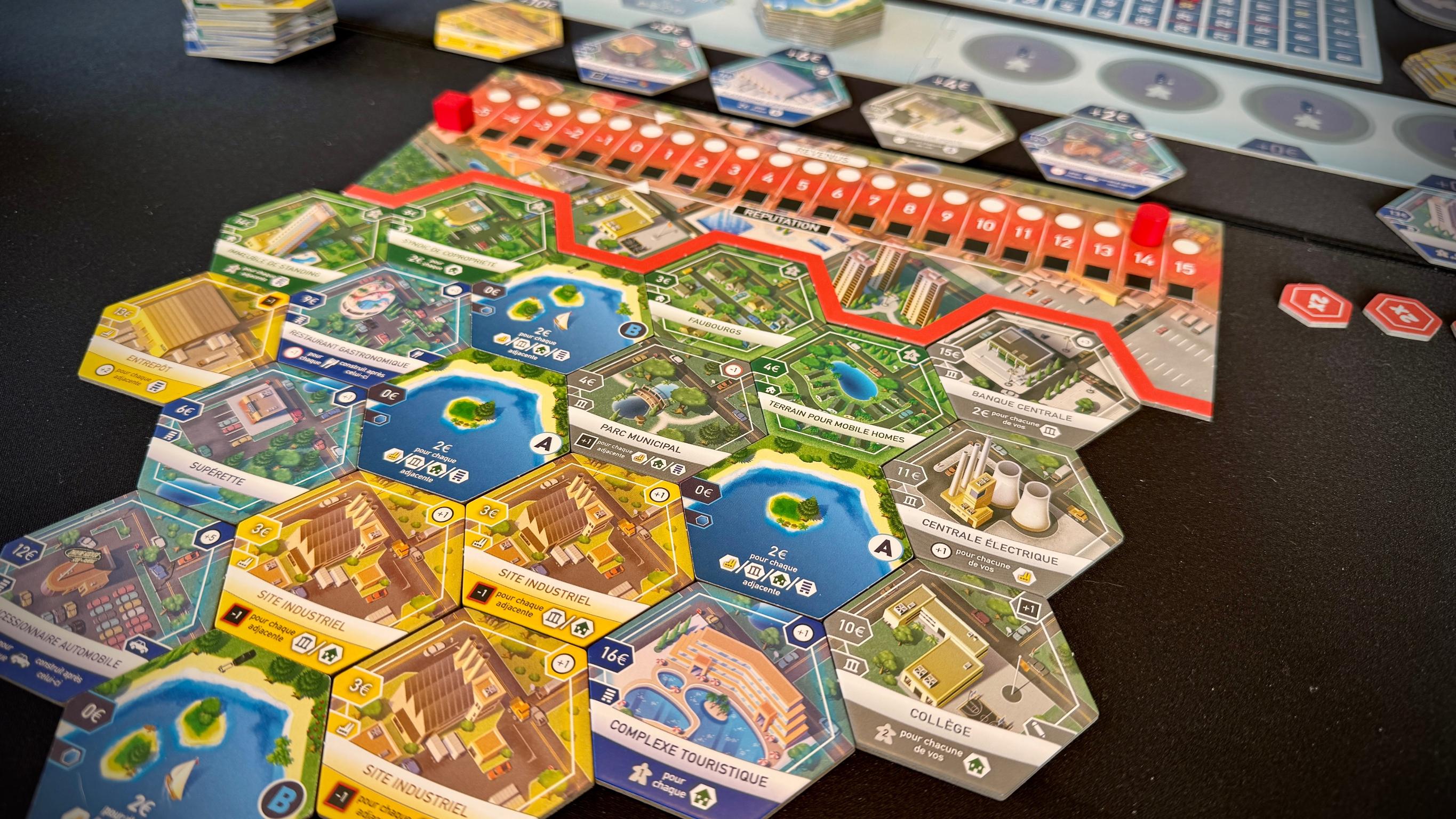
Photos des tables de Ludoya
Toutes les photos dans Ludoya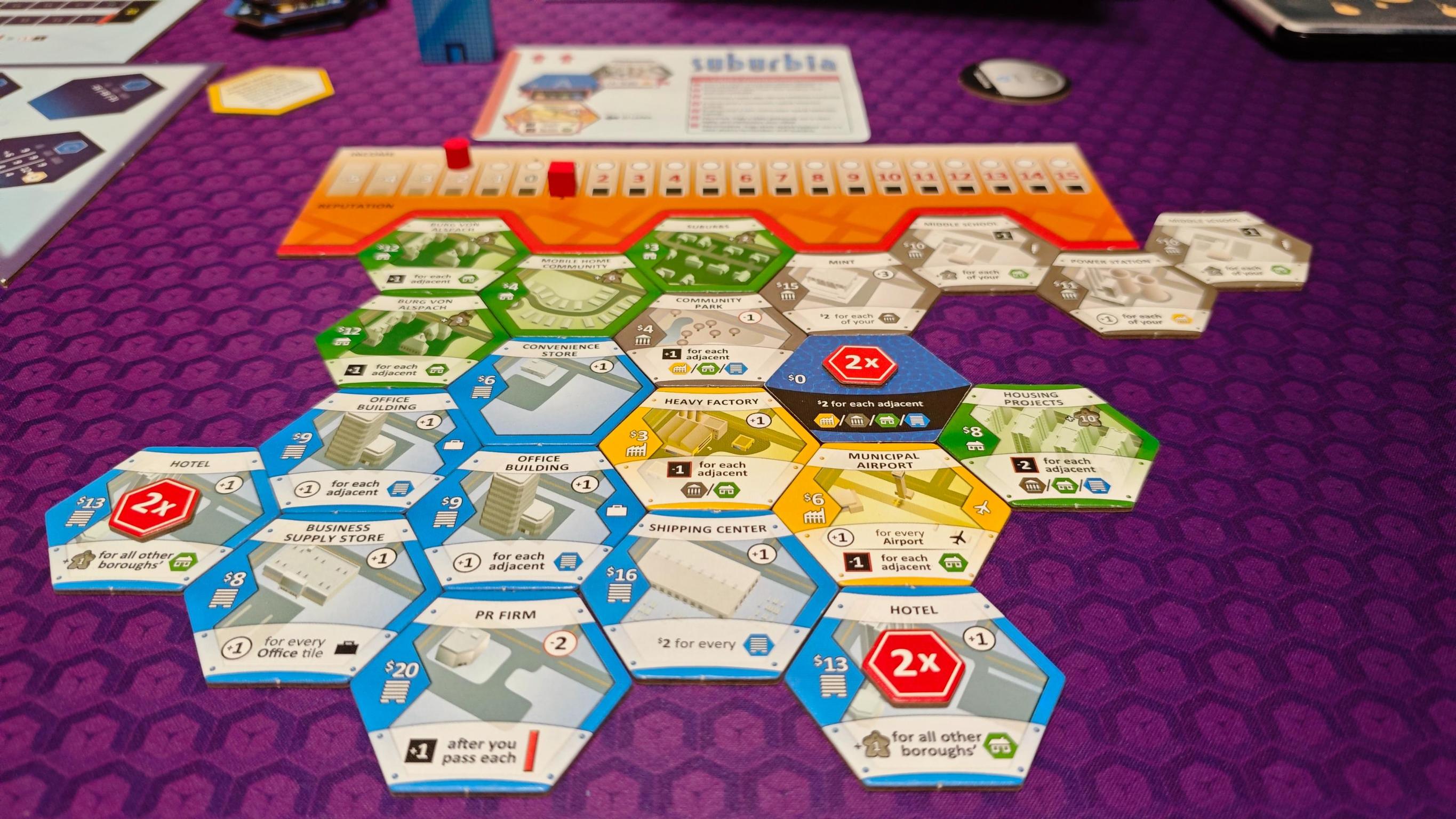
Où l'acheter
Prix des boutiques et exemplaires d'occasion, vérifiés chaque jour.
- AlphaspelEn stock345 kr
- Cardhaus GamesEn stock54.99 $
- GameplayVérifier le stock69.95 €
- Gamers Guild AZEn stock44.38 $
- Juegos de la Mesa RedondaRupture de stock46.71 €
- Va de jocsRupture de stock49.45 €
- ZacatrusRupture de stock49.45 €
- Dungeon MarvelsPrécommande57.5 €
Sur les tables de Ludoya
Toutes les statistiques dans Ludoya- 416
- Parties enregistrées
- 349
- Joueurs
- 1h 7m
- Partie moyenne
- 134
- Dans des collections
- 19
- Dans des listes de souhaits
7,0/10
sur 78 avis Ludoya
Alshter7,0 Jugado en digital. La interfaz del juego es demencial y lastra la experiencia. Creo que en tablero mejoraría el juego (y su nota)
Questions de règles
Réponses tirées du livret par l'assistant de règles de Ludoya.
Do tiles have to be placed edge-to-edge or can I place them touching only at a corner?
Tiles must always be placed so that at least one straight edge is adjacent to another tile (face up or face down). (page 3)
In what order do I resolve a tile’s cost and effects when I place it?
Resolve in this order: pay the tile cost (and any Market cost), apply the immediate effect, apply the tile’s conditional effect, apply conditional effects of adjacent tiles, apply non-adjacent effects, check other players’ tiles that affect you, then check whether your tile impacts other boroughs. (page 3)
How do lake tiles work—what do I pay and when do I collect the $2 adjacency?
When taking a tile to use as a lake you pay only the Market cost (not the printed tile cost), place it face-down adjacent to your tiles, and immediately receive $2 per adjacent residential/industrial/commercial tile; placing a lake next to another lake does not grant the $2 adjacency. (page 2)
If I place an Investment Marker on a tile, does it retrigger neighboring tiles' effects or double those other effects?
An Investment Marker doubles only the effects of the tile it’s placed on for the rest of the game and does not retrigger other tiles’ conditional effects when placed; however, future tiles placed adjacent to the invested tile will benefit from the doubled effect. (page 2)
When my population crosses a Red Line do I immediately lose Income/Reputation, and do Red Lines apply during final scoring?
You immediately decrease your Income and Reputation by one space for each Red Line you cross during population adjustment (apply this as soon as you cross it), but Red Lines are ignored during final scoring—endgame population gains do not trigger Red Line penalties. (pages 2 and 3)
Jeux similaires
 Suburbia: Collector's Edition2019
 Foundations of Rome2022
 Everdell: Edition collector2021
 Foundations of Metropolis2024
 Everdell2021
 Akropolis2022
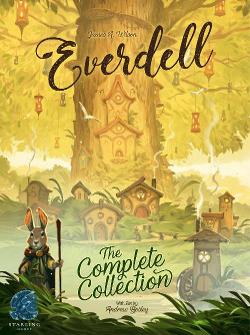 Everdell: The Complete Collection2022
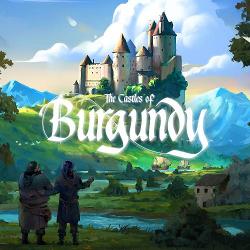 The Castles of Burgundy: Special Edition2023
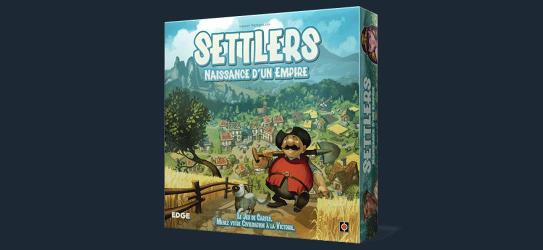 Settlers: Naissance d'un Empire2015
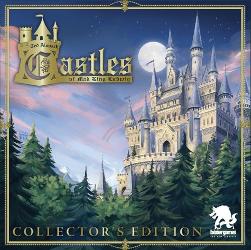 Castles of Mad King Ludwig: Collector's Edition2022
 La Quête du Bonheur2019
 Rebuilding Seattle2023








Gratuit, sur le web, Android et iOS
Jouez à Suburbia avec Ludoya
- Gardez-le dans votre collectionSuivez votre exemplaire et ses extensions, prêtez-le à vos amis ou ajoutez-le à votre liste de souhaits et soyez prévenu quand le prix baisse.Ajouter à votre collection
- Enregistrez chaque partieScores, gagnants, minuteurs et photos, puis vos statistiques : taux de victoire, nombre de joueurs préféré, meilleur score.Enregistrer une partie
- Réglez les questions de règlesPosez n'importe quelle question sur les règles et obtenez une réponse tirée du livret, avec la page pour vérifier.Demander à l'assistant de règles
- Trouvez des gens avec qui y jouerClubs, soirées jeux et événements près de chez vous qui mettent ce jeu sur la table.Voir les événements
Données du jeu (joueurs, durée, âge, crédits) issues de BoardGameGeek.