
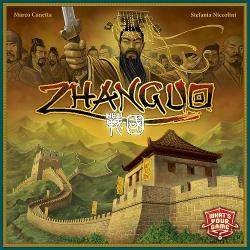
2014 · Antiquité
ZhanGuo
Les joueurs incarnent des émissaires impériaux chargés de contribuer à l’unification du nouvel empire de Qin sous le règne du premier empereur. Au fil de cinq manches, ils jouent une petite main de cartes, soit sur leur plateau personnel pour développer leur propre influence, soit sur le plateau central pour recruter de la main-d’œuvre, ériger des infrastructures, appeler des renforts et déplacer des armées parmi les anciens États combattants. Les actions font progresser des projets de construction comme les routes, les canaux et la muraille frontalière, étendent la portée administrative et génèrent des ressources économiques, tandis que la satisfaction publique mesure l’agitation populaire. Les joueurs doivent trouver l’équilibre entre leur contribution aux objectifs impériaux et leur capacité à éviter le mécontentement des citoyens et les soulèvements ; le joueur qui soutient le mieux l’empereur tout en maintenant la stabilité de la population obtient le meilleur score.
- Joueurs
- 2–4 idéal à 4
- Temps de jeu
- 60–120 min
- Âge
- 12+
- Complexité
- 3,8 / 5
À propos du jeu
- Illustration
- Publisher




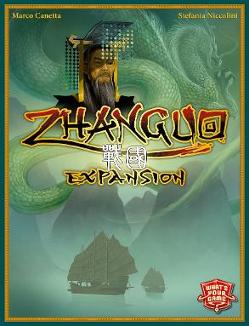
Extensions
Les voir dans Ludoya
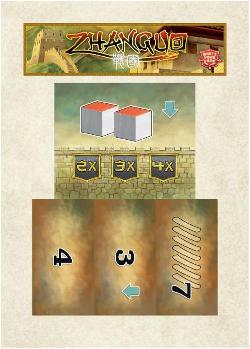
Photos des tables de Ludoya
Toutes les photos dans Ludoya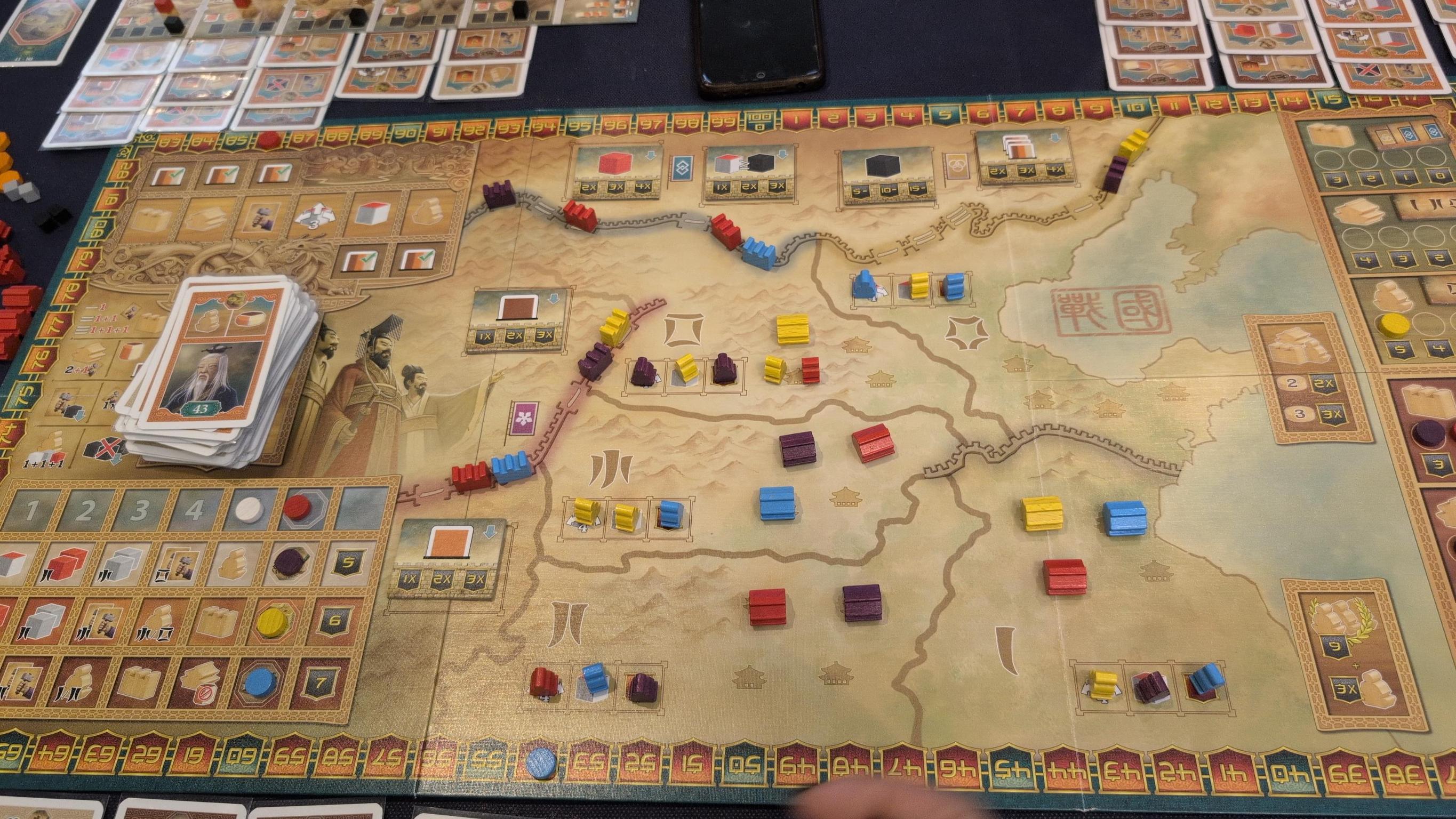
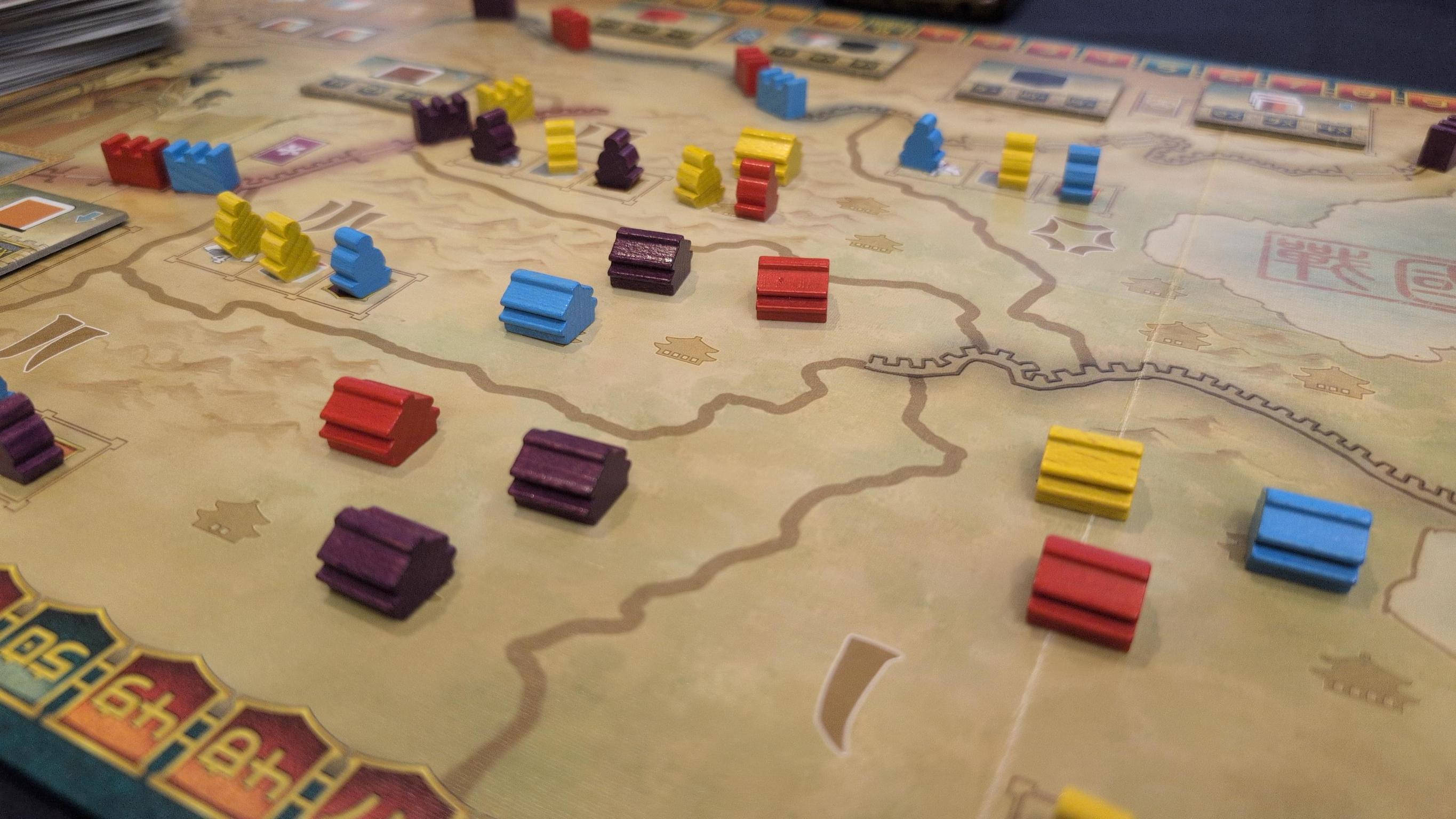
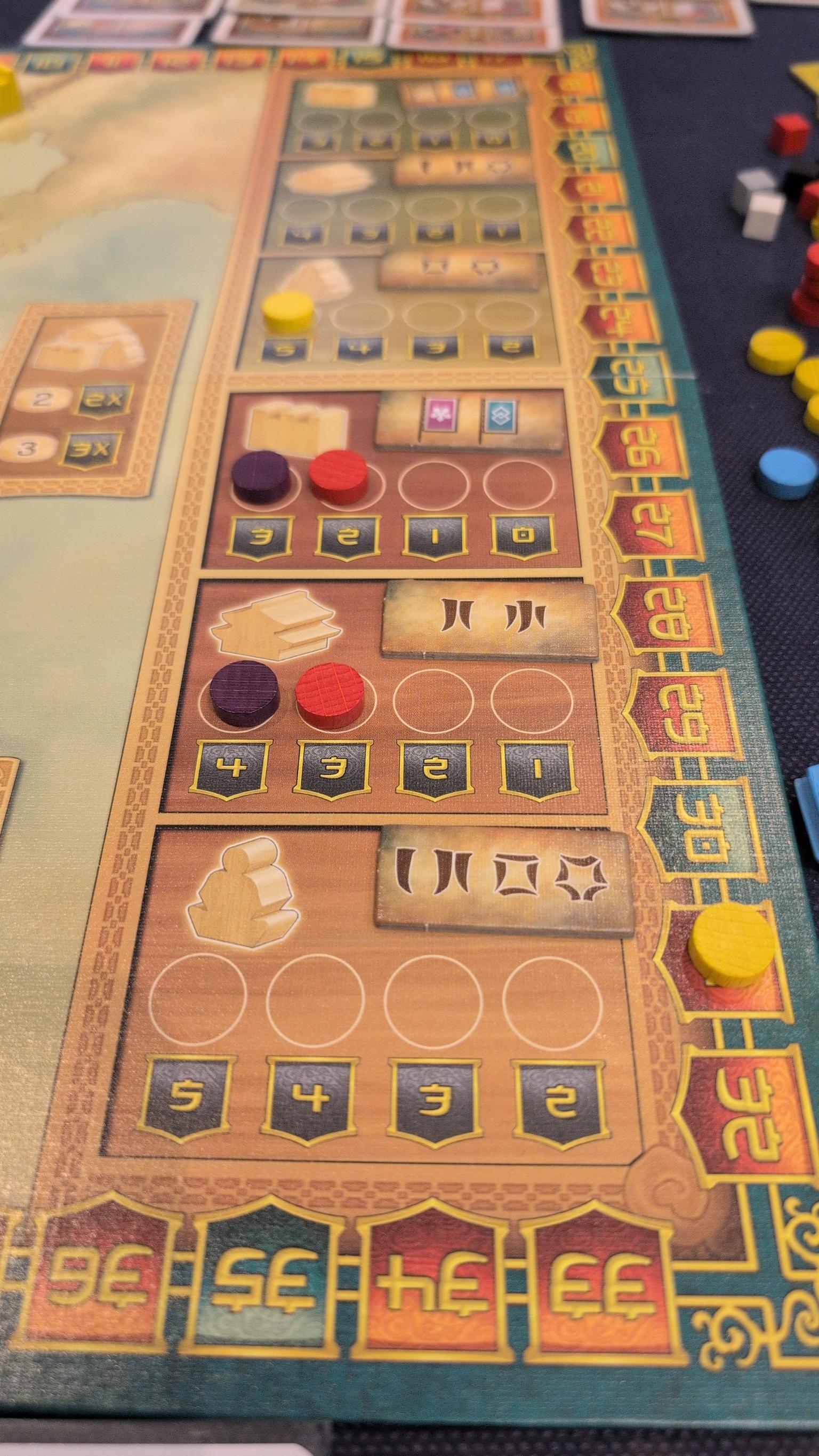
Où l'acheter
Prix des boutiques et exemplaires d'occasion, vérifiés chaque jour.
- Zatu GamesEn stock28.99 £
- Svet deskovych herVérifier le stock1250 Kč
- World of Board GamesRupture de stock689 kr
Sur les tables de Ludoya
Toutes les statistiques dans Ludoya- 37
- Parties enregistrées
- 60
- Joueurs
- 2h 27m
- Partie moyenne
- 11
- Dans des collections
- 6
- Dans des listes de souhaits
5,4/10
sur 14 avis Ludoya
Evan4,6 In this game, you play 5 rounds and each round you get a hand of 6 cards. On your turn, you either tuck one of the cards, which might enhance future actions if the number on the card you play meets the criteria, or you play the card to the board, and do a thing. You compete with other players for board positions for being firsties for achievements. The game is fairly complicated, and your strategy needs to line up between the cards you happened to draw each round and the available achievement tiles and wall bonus tiles. The significant decision point in the game is when to stop tucking and when to start acting. Players can unwittingly block you because of the number printed on the card they last played. Some actions require a card lower than the previous played card, and some want one higher, in order to get to use the bonus effects you spent so much time constructing. This blindly blocking other player's plays seems underdeveloped as does the "corruption" marker mechanic, which can sometimes cause minor trouble for you when you want to add new cards to your board, but otherwise doesn't come into play much. For a game this complicated, I wish it had a little more flexibility, as when I play it I don't feel I have many meaningful choices to make. I just do my best to get the achievements done as fast as I can, and I hope other players don't happen to get in my way. ★ Art, Iconography and components functional ★ Clever or interesting mechanisms ★ Reasonably low downtime between turns with mildly AP players ☆ Multiple plays stay interesting ☆ Low or mitigatable luck elements ★★★☆☆ Raw enjoyment
Garfield2,0 After reading the rules no desire to ever play it. Just too dry for me.






Gratuit, sur le web, Android et iOS
Jouez à ZhanGuo avec Ludoya
- Gardez-le dans votre collectionSuivez votre exemplaire et ses extensions, prêtez-le à vos amis ou ajoutez-le à votre liste de souhaits et soyez prévenu quand le prix baisse.Ajouter à votre collection
- Enregistrez chaque partieScores, gagnants, minuteurs et photos, puis vos statistiques : taux de victoire, nombre de joueurs préféré, meilleur score.Enregistrer une partie
- Comptez les points sans papierUtilisez les feuilles de score et les aides de jeu de la communauté, et laissez Ludoya additionner les points.Trouver des feuilles de score
- Trouvez des gens avec qui y jouerClubs, soirées jeux et événements près de chez vous qui mettent ce jeu sur la table.Voir les événements
Données du jeu (joueurs, durée, âge, crédits) issues de BoardGameGeek.