
2013 · Fantasy
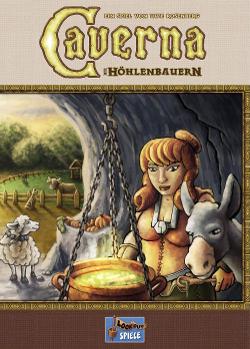
Caverna: Die Höhlenbauern
Die Spieler führen eine kleine Zwergenfamilie und erweitern eine einzelne Höhle per Worker Placement zu einem lebendigen und funktionierenden Zuhause. Jedes Familienmitglied ist dabei ein Zug auf der Aktionsleiste; die Spieler schicken sie los, um Ressourcen zu sammeln, den Wald zu roden, Felder zu bestellen, Weiden anzulegen, Tiere zu züchten und sich in den Berg zu graben, um Minen und Wasser freizulegen. Einrichtungsplättchen und Gebäude ermöglichen es den Spielern, Wohnräume, Werkstätten und Minen zu bauen, während Erz und Waffen Expeditionen erlauben, die Bonusgegenstände und Aktionen bringen. Das Spiel bietet Abwechslung durch viele Höhleneinrichtungen, eine wachsende Familie und einen Solo-Modus, um die Plättchen-Interaktionen kennenzulernen.
- Spieler
- 1–7 am besten mit 4
- Spielzeit
- 30–210 Min.
- Alter
- 12+
- Komplexität
- 3,8 / 5
Über das Spiel
- Autoren
- Illustration
- Publisher




Erweiterungen
In Ludoya ansehen Caverna: Die Höhlenbauern – Die Vergessenen Völker2018
 Caverna: Wasser-Erweiterung2015
 Caverna: Blauschild-Erweiterung2015
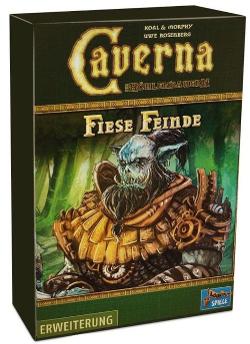 Caverna: Fiese Feinde2022
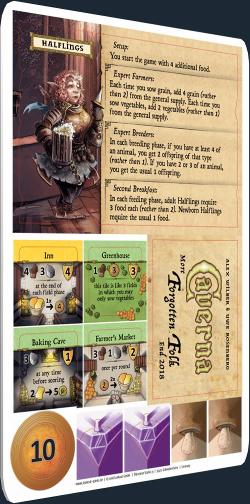 Caverna: Vergessene Völker – Halbling Promo2018
 Caverna: The Forgotten Folk – Adventurers Promo2018
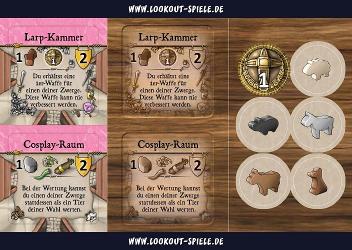 Caverna: LARP und Cosplay Postkarte2014
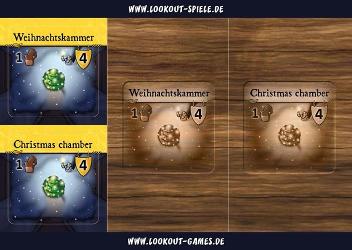 Caverna: Christmas Chamber2014
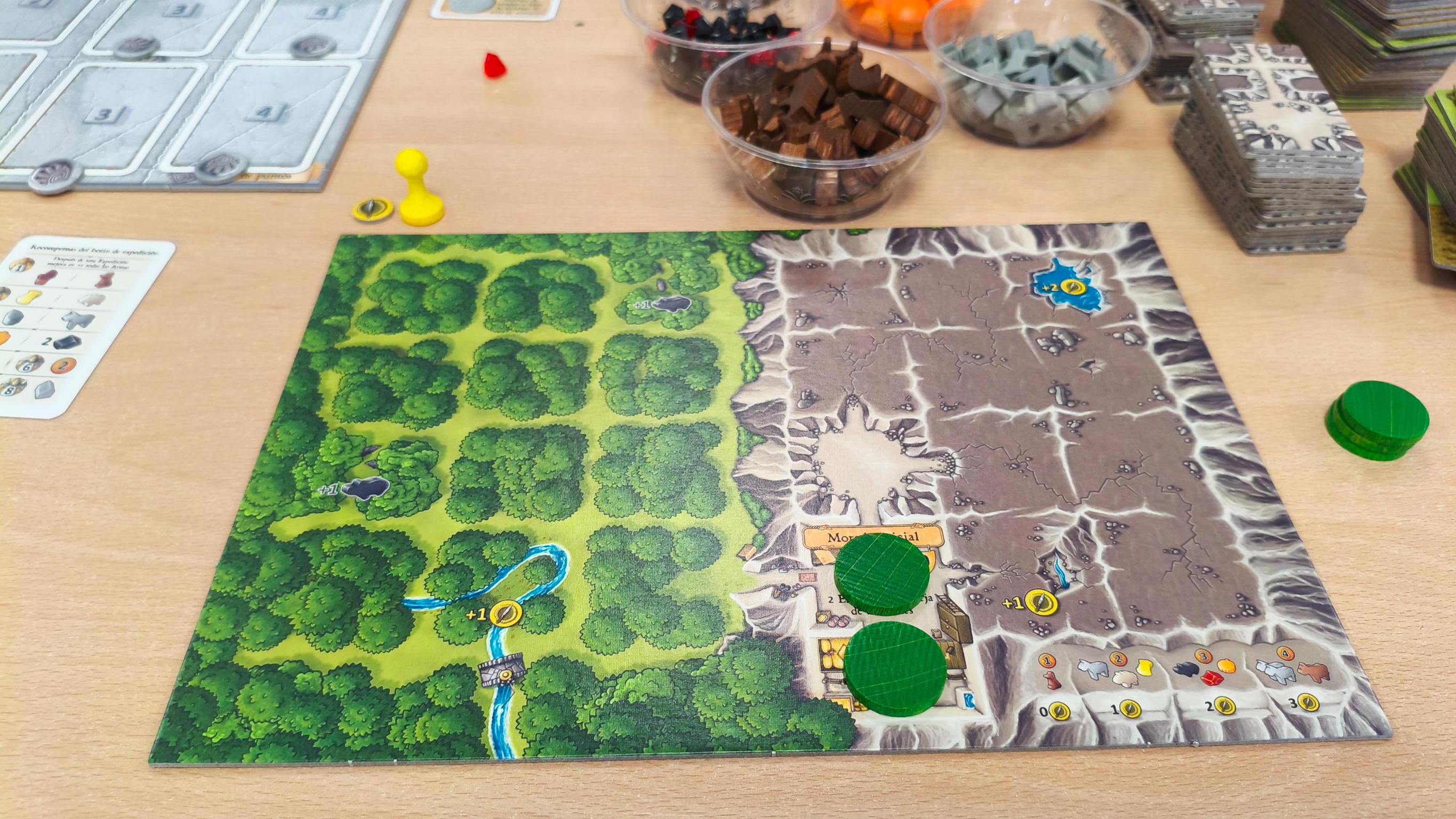
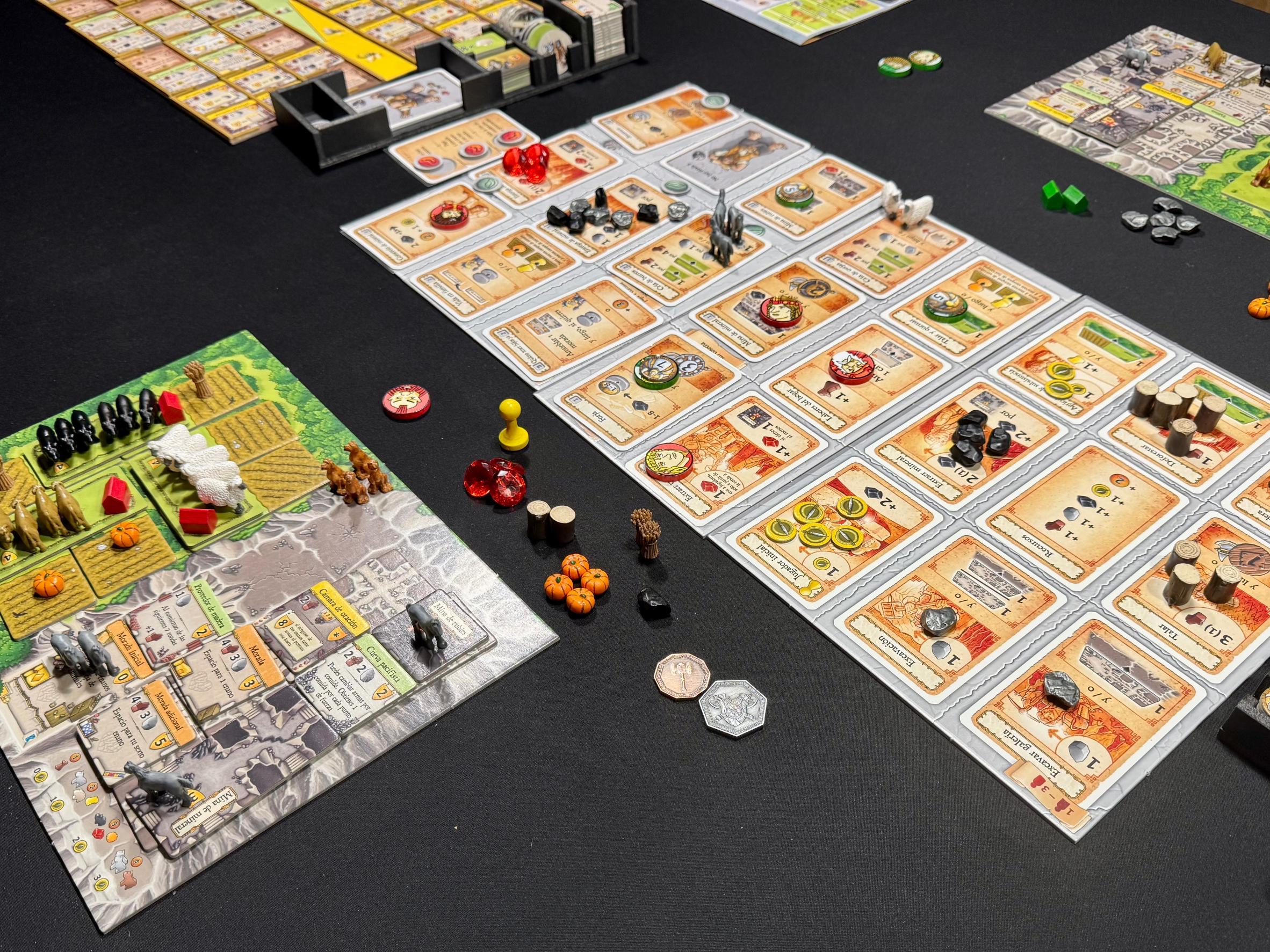
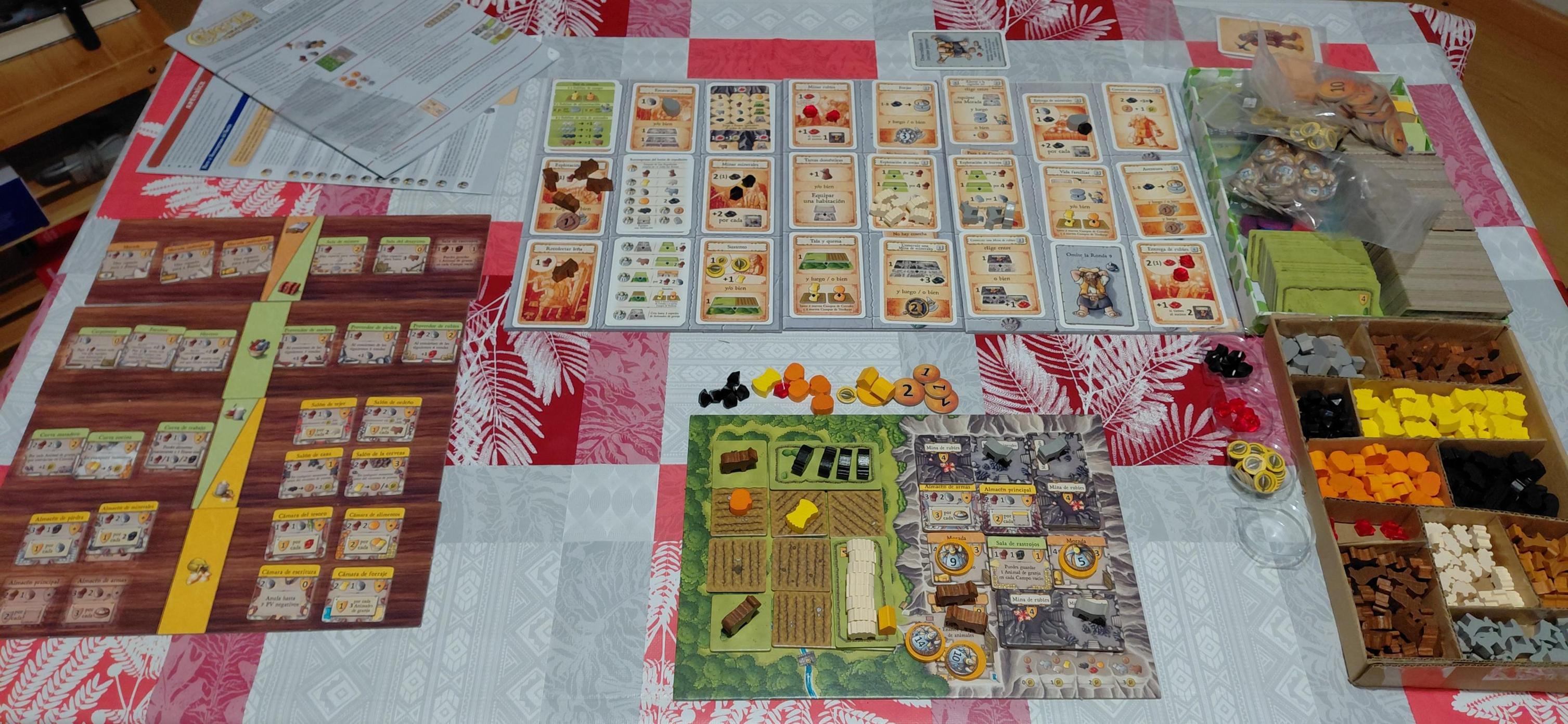
Fotos von Ludoya-Tischen
Alle Fotos in Ludoya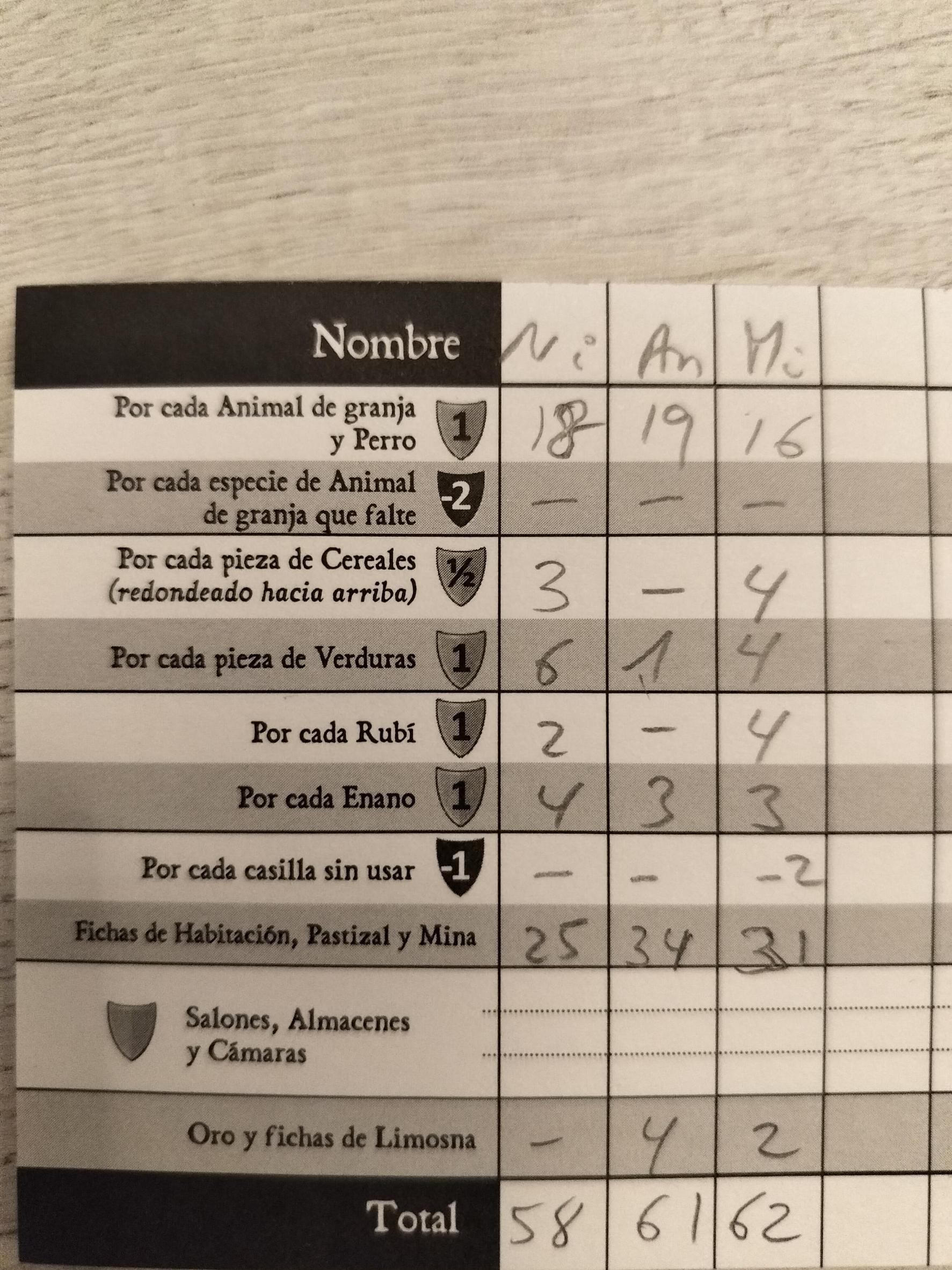
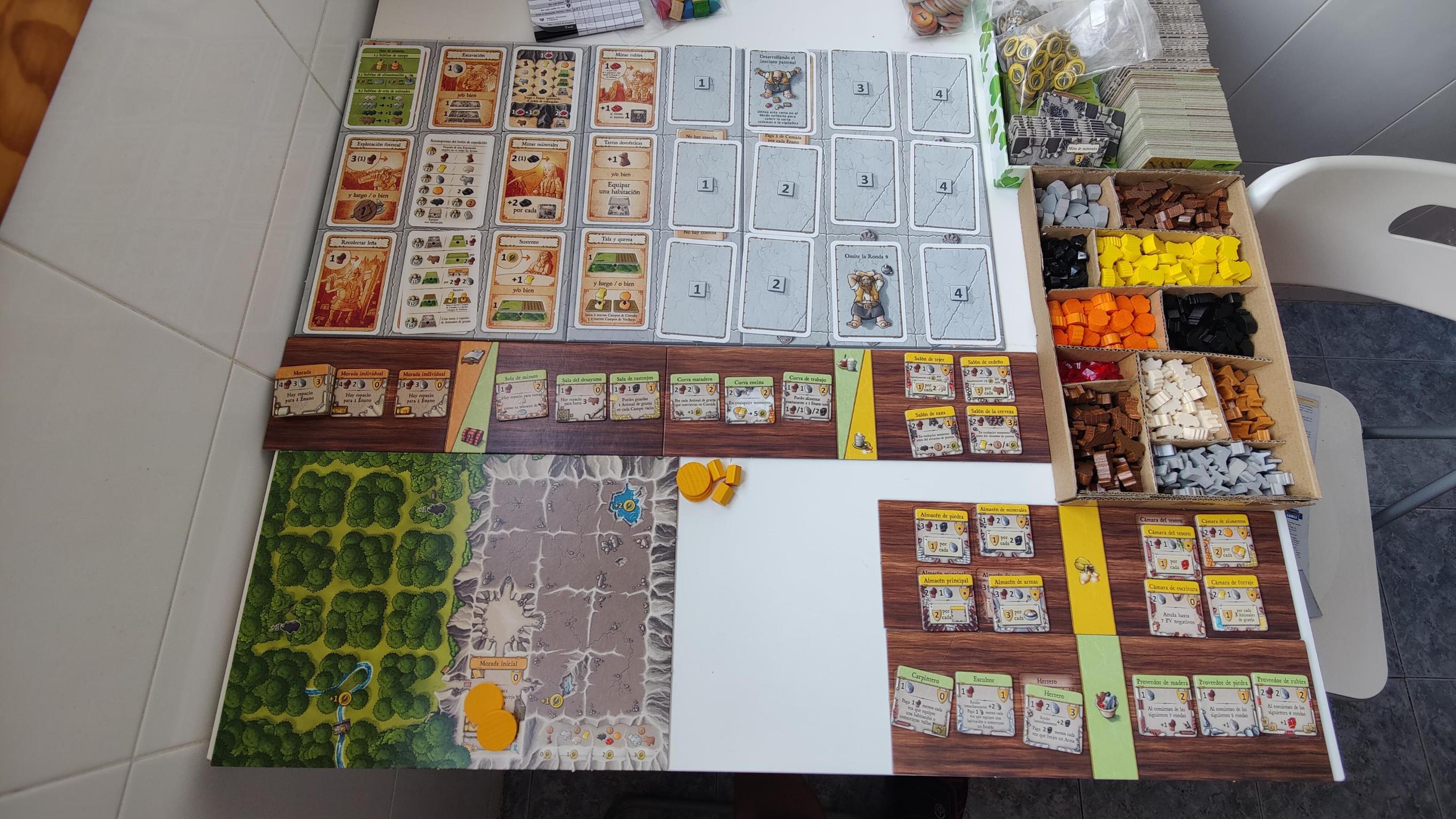
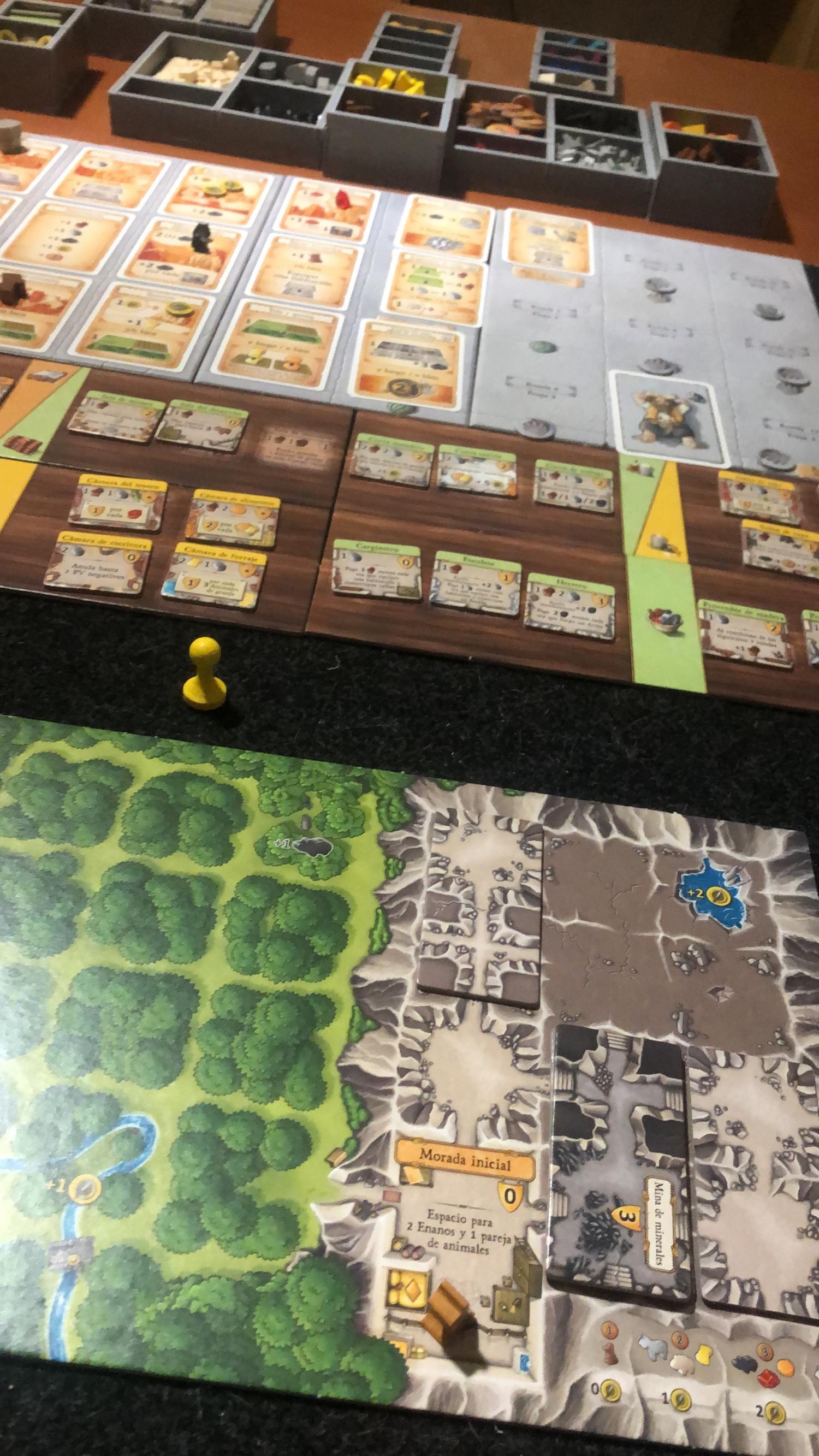
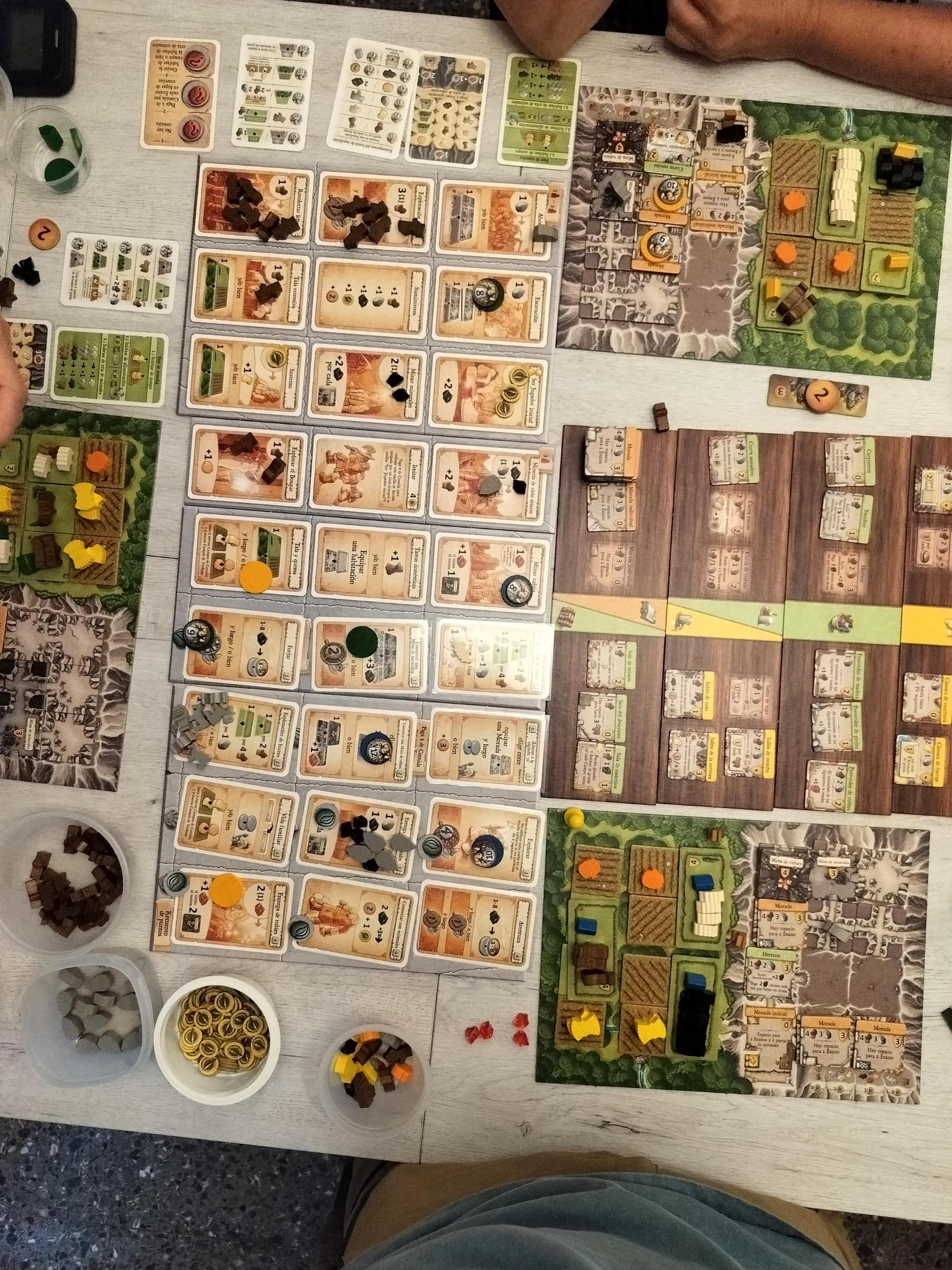
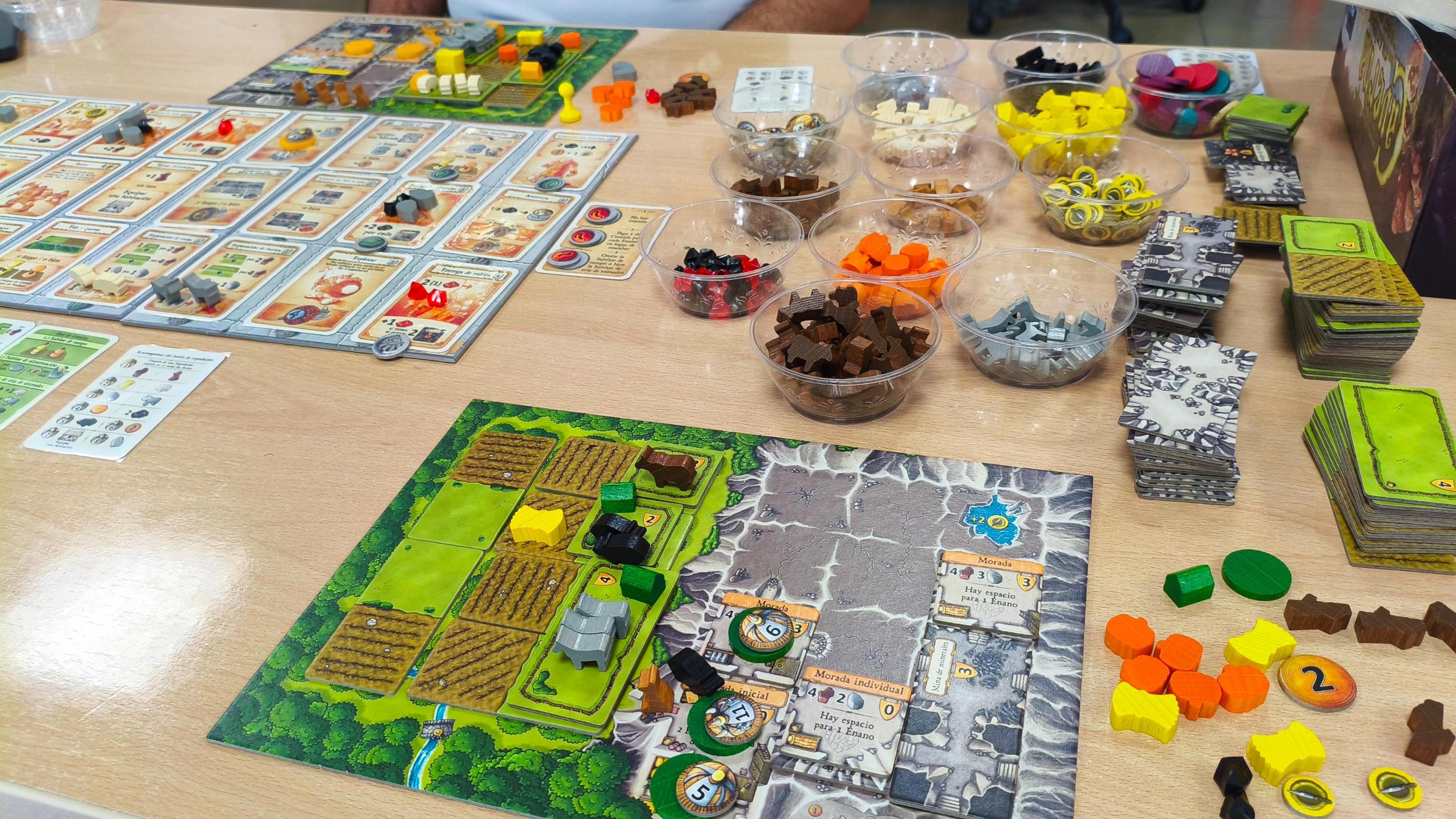
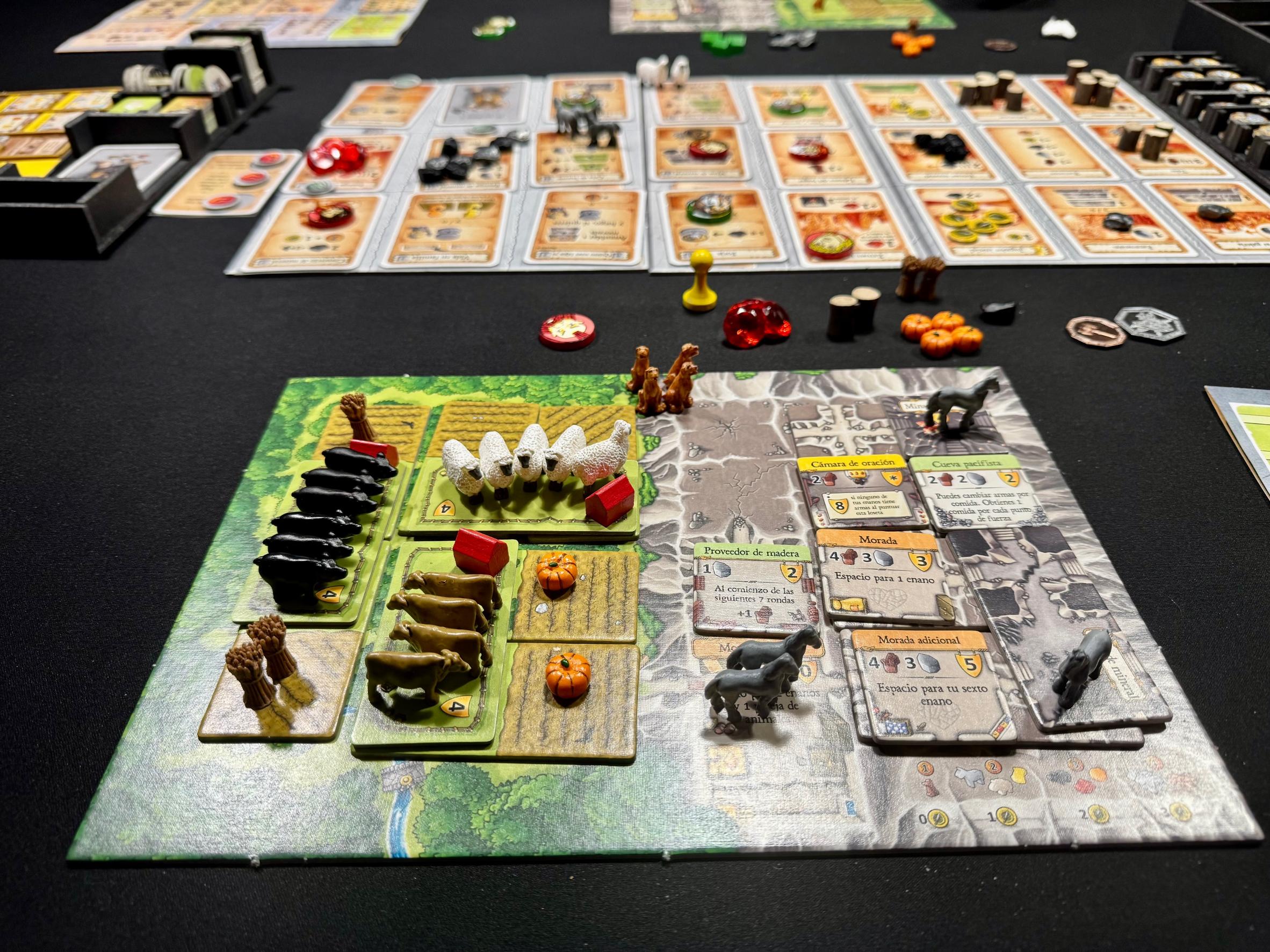
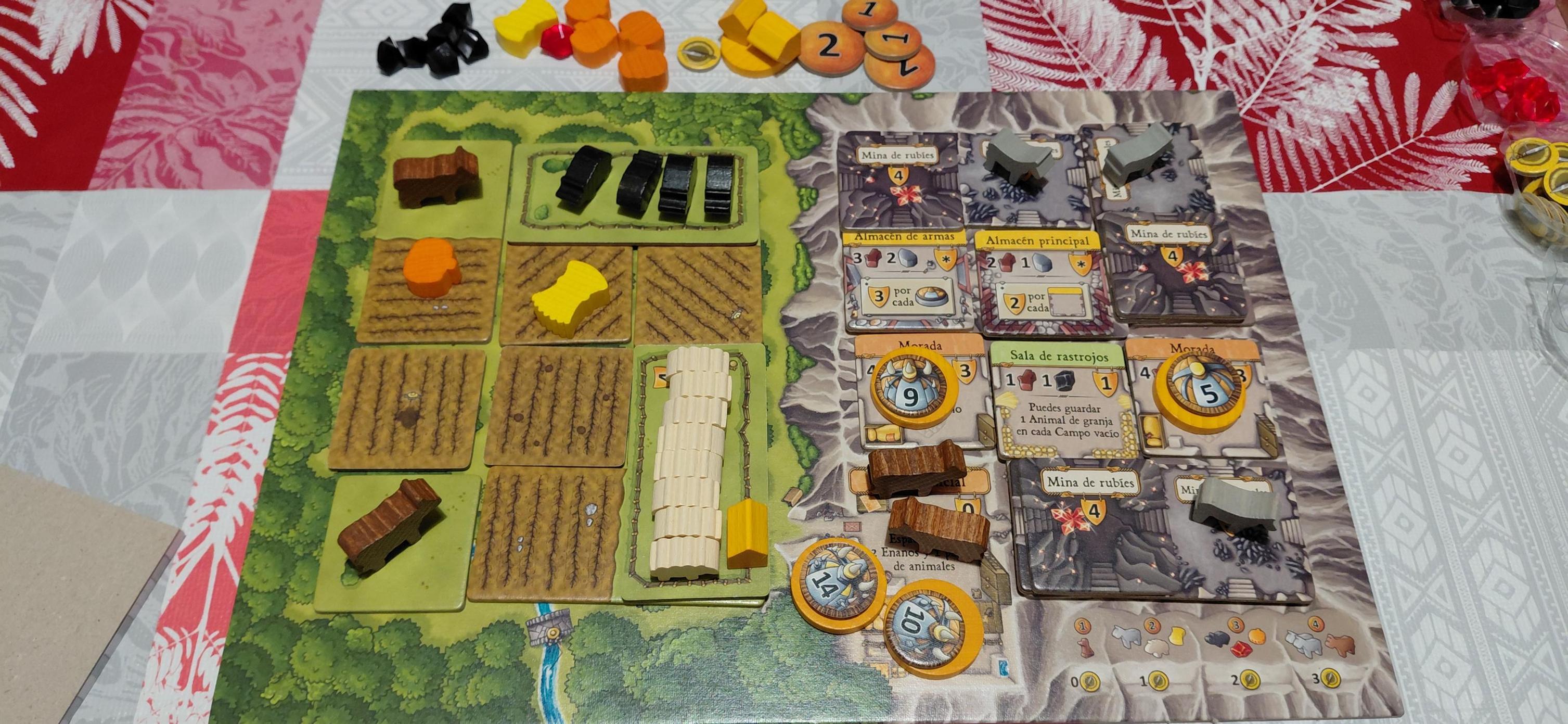
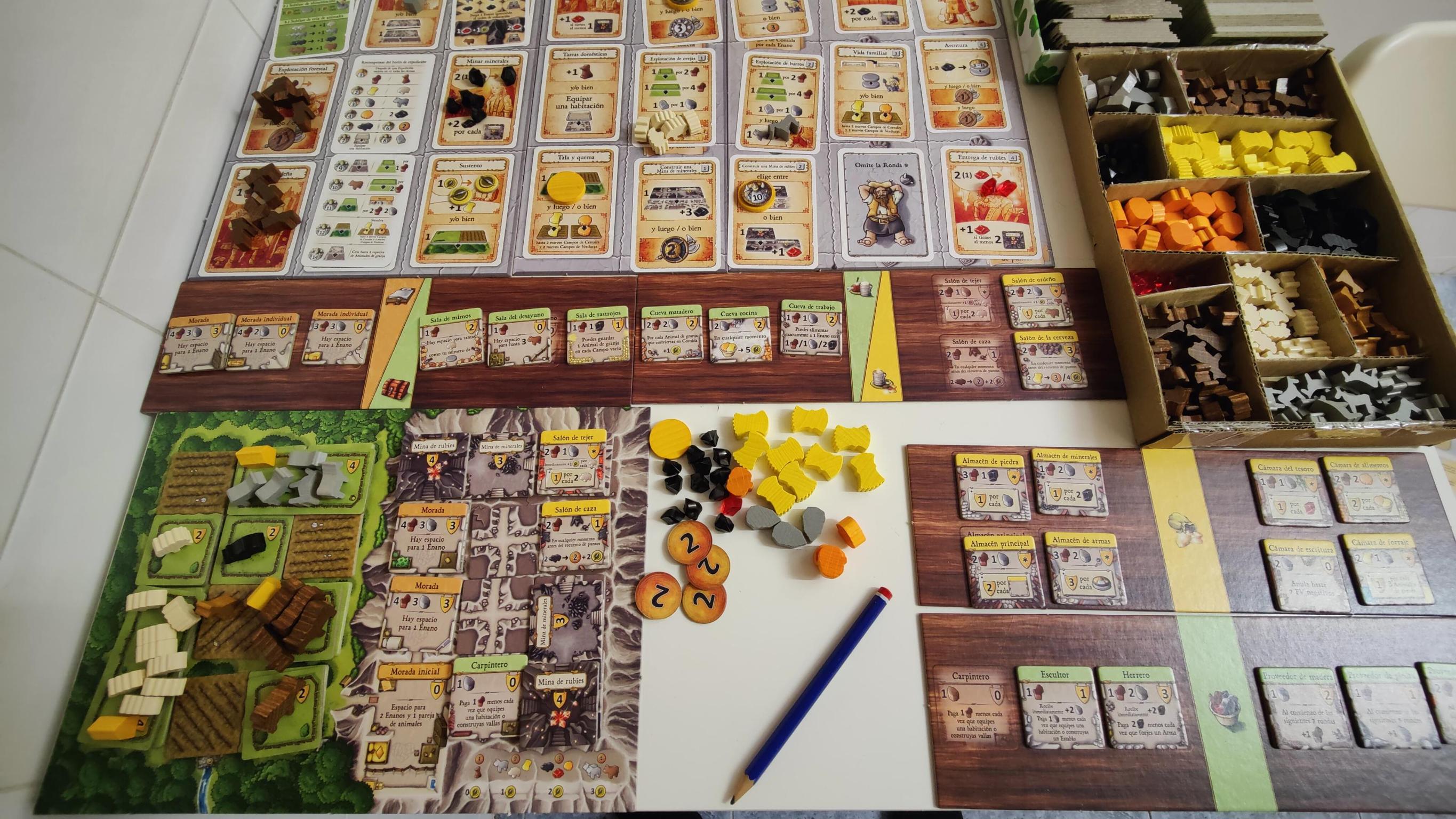
Wo kaufen
Shop-Preise und gebrauchte Exemplare, täglich geprüft.
An Ludoyas Tischen
Alle Statistiken in Ludoya- 692
- Erfasste Partien
- 604
- Spieler
- 2h 8m
- Durchschnittliche Partie
- 293
- In Sammlungen
- 30
- Auf Wunschlisten
- 1
- Vorbestellt
7,7/10
aus 125 Ludoya-Rezensionen
Jan Solo8,3 Eurogame de colocación de losetas y trabajadores donde encarnas a una familia de enanos que deberán mejorar su caverna y conseguir pastos para sus animales. Uno de los mejores juegos de colocación de trabajadores. Admite hasta 7 jugadores. Impro-Reseña⇒ https://youtu.be/F0wDGrrdWjw
Nevest9,3 I played Agricola a few times and I love the mechanics, but I really didn’t love the Occupation cards. They might be great for you or they might really not line up with what you’re doing. In a game like this, I don’t want a large element of randomness that can swing a game by large chunks of points. That’s why I greatly prefer Caverna. The randomness of the Occupation cards in Agricola has been moved to the publicly-available, specialized building tiles in Caverna that anyone can buy. I also feel like Caverna streamlines a few things in Agricola that were a little on the “needlessly complex” side (like house renovation). I love having the option to weaponize a dwarf and send them on a quest. I love the vast variety of buildings. I love the mix of building out your cave and/or clearing out your forest for pasture/crops.
Mestremuten9,0 Rating: 5/5 Production value: 3/4 Is the game in my collection/Love to have?: 1/1


Regelfragen
Aus der Spielanleitung beantwortet von Ludoyas Regelassistenten.
When does a harvest happen and what exactly do we do during a harvest?
Harvest timing is determined by the Harvest markers and round number: rounds 1–2 have no harvest, there is a harvest at the end of round 3 (round 4 has a special “pay 1 Food per Dwarf”), and by default rounds 5–12 have harvests unless modified by Harvest events. Each harvest proceeds in three sub‑phases — Field (collect crops), Feeding (pay 2 Food per Dwarf; offspring born this round cost 1 Food), then Breeding — with special cases explained by the Harvest events (pages 7, 9–10).
How do I get a new Dwarf — can a newborn act the same round?
You gain a new Dwarf by taking a Family growth action and you must have free room in your Dwellings to do so; place a Dwarf disc from your personal supply on top of the Dwarf taking the action. The newborn cannot take an action that round and must be accommodated in the Return home phase (pages 15–16).
I picked up animals but have no room — can I convert them to Food? And what about baby animals from breeding?
During the Work phase, animals you gain may be immediately converted into Food according to the Food conversion table, if you cannot or do not want to place them on your Home board (page 9 and page 11). However, baby animals born in the Breeding sub‑phase may not be converted immediately — they only appear if you can accommodate them on your Home board (page 10).
What can I spend Rubies on and are they 'wild' resources?
Rubies act as a flexible resource: you may exchange 1 Ruby (1:1) for animals, building materials, Grain, Vegetables or Gold (Cattle requires 1 Food extra), buy single Field/Meadow/Tunnel/Cavern tiles for the listed Ruby costs, and spend 1 Ruby to ignore dwarf play order for one Dwarf; Rubies are also involved in mining actions and bonuses (pages 17–18), and they can be converted into Food values as noted on the conversion table (page 11).
How do Pastures and Stables work — what are the animal capacities?
Turn a Meadow into a Small pasture for 2 Wood (holds 2 Farm animals) or pay 4 Wood to place a Large pasture on two adjacent Meadows (holds 4); a Stable costs 1 Stone and may be placed on Forest/Meadow/Pasture and is permanent. A Stable doubles pasture capacity (Small+Stable = up to 4; Large+one Stable = up to 8; with two Stables a Large pasture can use markers to indicate larger counts), a Meadow Stable holds 1 Farm animal, and a Forest Stable can hold exactly 1 Wild boar (pages 19–20).
When are new Action spaces added and how do accumulating spaces refill?
At the start of each round you turn over the top Action space card and place it on the lowest‑numbered empty Round space, making that action available from that round onward (page 7). After that, replenishing (in the Replenish accumulating spaces phase) places the goods shown on accumulating spaces each round (with the special “(1)” rule meaning smaller replenishment if the space is not empty) — there is no upper limit to goods on an accumulating space (page 8).
Wertungsbögen und Spielhelfer
- Caverna V.
- Score Sheet
- Hoja de Puntuación
Wer es hat, hat auch
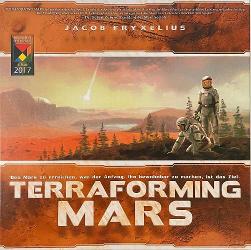
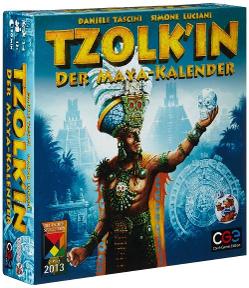
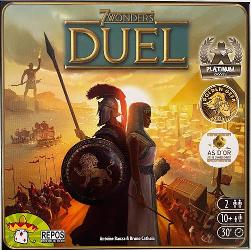
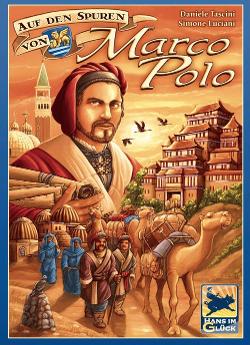

Kostenlos, im Web, für Android und iOS
Spiel Caverna: Die Höhlenbauern mit Ludoya
- Hab es in deiner SammlungVerwalte dein Exemplar und seine Erweiterungen, leih es Freunden oder setz es auf deine Wunschliste und erfahre, wenn der Preis fällt.Zur Sammlung hinzufügen
- Erfasse jede PartiePunkte, Sieger, Timer und Fotos, dann deine Statistiken: Siegquote, liebste Spielerzahl, beste Punktzahl.Partie erfassen
- Regelfragen klärenFrag alles zu den Regeln und erhalte eine Antwort aus der Spielanleitung, mit der Seite zum Nachprüfen.Den Regelassistenten fragen
- Finde Leute, mit denen du es spielstClubs, Spieleabende und Veranstaltungen in deiner Nähe, bei denen dieses Spiel auf den Tisch kommt.Veranstaltungen ansehen
Spieldaten (Spieler, Spielzeit, Alter, Mitwirkende) von BoardGameGeek.