
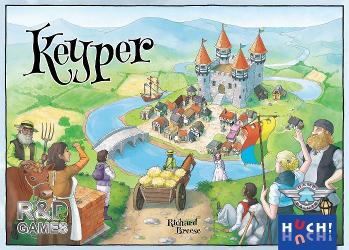
2017 · Medieval
Keyper
Os jogadores gerenciam uma aldeia e uma equipe de trabalhadores multicoloridos ao longo de quatro rodadas que representam a primavera, o verão, o outono e o inverno. Cada cor de trabalhador é especializada em uma atividade (madeira, mineração, argila etc.), enquanto os trabalhadores brancos são generalistas; os jogadores colocam trabalhadores nos tabuleiros de campo compartilhados ou em sua própria aldeia para coletar recursos, aprimorar mercadorias, minerar gemas e realizar ações. A alocação de trabalhadores permite que outros jogadores participem das alocações com cores correspondentes, possibilitando benefícios compartilhados e oportunidades de jogar os trabalhadores duas vezes; os jogadores também podem jogar trabalhadores adicionais caso fiquem sem trabalhadores antes dos outros. Os tabuleiros de campo mudam de configuração a cada estação, abrindo diferentes campos e ações sazonais, então os jogadores precisam decidir quando reivindicar os tabuleiros, quando cooperar e quais estratégias seguir para marcar o maior número de pontos.
- Jogadores
- 2–4 melhor com 3
- Tempo de jogo
- 90–120 min
- Idade
- 14+
- Complexidade
- 3,6 / 5
Sobre o jogo
- Design
- Arte
- Editora



Expansões
Ver na Ludoya
Onde comprar
Preços das lojas e cópias usadas, verificados todos os dias.
Nas mesas da Ludoya
Todas as estatísticas na Ludoya- 30
- Partidas registradas
- 44
- Jogadores
- 2h 19m
- Partida média
- 17
- Em ludotecas
- 1
- Em listas de desejos
6,5/10
de 7 avaliações na Ludoya
Evan6,0 This is an efficiency game, where your goal is to build and upgrade village tiles. This is done by placing workers in action spots in the central boards. Players can also claim boards with their player color meeple, in order to gain all the meeples placed on that board for the next round, and also they can somewhat configure the action spaces on the tile to their liking, adjusting the options for the next round. Generally the flow is collect things, spend to upgrade, and try to grab new tiles from the fliplucky display that will grant you points based on what you've accumulated. The neat thing about the game is that when a worker goes to a spot that matches his color, you get the action twice. Then someone can follow you in the action giving you both the action three times. This means that players frequently have uneven numbers of workers. When someone is out of workers, and they've already claimed a tile for the next round, they can choose to start knocking over workers to resolve their spaces again which activates them just as before, so up to three times potentially. I think with more plays and better understanding of when you want a guy boom and when you want a guy bust there's a lot you can game the game, but the length of the game and the general equality of all things makes me feel like I'd really need to push to get this to the table enough for me to grow on it, and I don't have that in me compared to the amount the puzzle interests me. By equality of all things I mean, there's no functional difference between the types of gems or animals or anything really. The agricola/caverna magic is that it matters what animals you have and when, for breeding, growing, ect. Veggies grow differently than grain. in Keyper, you get a red gem, or a yellow gem. Then you see if you can get a tile that wants a red gem or a yellow gem. No? Only green? Ok... I mean, ultimately that's fine, but it just means there's a certain dullness to the late game collection of things. Randomness in the tile availability I don't MIND, but if there was a meaningful difference between resources then I think the game would have been a keeper for me, I do think it's an odd decision not to pair this kind of flipluck without a general end of game leftovers scoring. If you aren't going to mandatorily release the tile that gives bonus points for chickens, at least punish me for having no chickens. Make choosing what action spots are available on the tile mean something more. ★ Art, Iconography and components functional ★ Clever or interesting mechanisms ★ Reasonably low downtime between turns with mildly AP players ★ Multiple plays stay interesting ☆ Low or mitigatable luck elements ★★★☆☆ Raw enjoyment
Jogou 4 vezes







Grátis, na web, Android e iOS
Jogue Keyper com a Ludoya
- Tenha na sua ludotecaAcompanhe sua cópia e suas expansões, empreste para os amigos ou coloque na lista de desejos e seja avisado quando o preço cair.Adicionar à sua ludoteca
- Registre cada partidaPontuações, vencedores, cronômetros e fotos, e depois suas estatísticas: taxa de vitórias, número de jogadores favorito, melhor pontuação.Registrar uma partida
- Marque os pontos sem papelUse as folhas de pontuação e os ajudantes de jogo da comunidade e deixe a Ludoya somar os pontos.Encontrar folhas de pontuação
- Encontre gente para jogarClubes, noites de jogos e eventos perto de você que levam este jogo para a mesa.Ver eventos
Dados do jogo (jogadores, tempo de jogo, idade, créditos) do BoardGameGeek.