
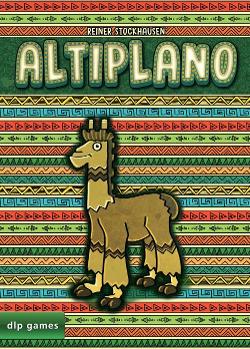
2017 · Économique
Altiplano
Bag-building set in the Andean highlands where players convert and manage goods to score points. Each player begins with a unique role tile that grants access to specific resources and actions, then expands production by acquiring new sites that generate or transform items like fish, alpaca, cacao, silver and corn. Goods serve multiple purposes: they can be sold, traded, processed into higher-value products, or stored in warehouses for endgame scoring. Players time orders, develop the road network, and manage warehouse capacity as they balance production growth against logistical constraints to maximize final points.
- Joueurs
- 2–5 idéal à 3
- Temps de jeu
- 60–120 min
- Âge
- 12+
- Complexité
- 3,3 / 5
À propos du jeu
- Auteurs
- Illustration
- Publisher




Extensions
Les voir dans Ludoya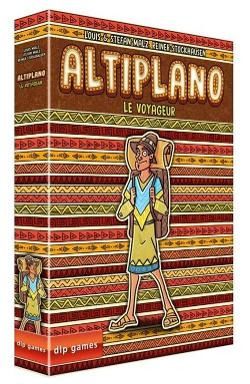
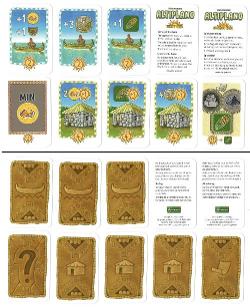
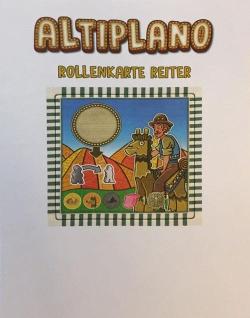

Photos des tables de Ludoya
Toutes les photos dans LudoyaOù l'acheter
Prix des boutiques et exemplaires d'occasion, vérifiés chaque jour.
- Zatu GamesEn stock 41.19 £
- GameplayVérifier le stock 49.9 €
- 401 GamesRupture de stock 61.95 $
- Mono de JuegosRupture de stock 38.95 €
- FD GamesRupture de stock 42.45 €
- Gamers Guild AZRupture de stock 50 $
- Dungeon MarvelsPrécommande 43.95 €
- Magia de TintaEn stock 43.95 €
Sur les tables de Ludoya
Toutes les statistiques dans Ludoya- 234
- Parties enregistrées
- 273
- Joueurs
- 2h 1m
- Partie moyenne
- 78
- Dans des collections
- 15
- Dans des listes de souhaits
6,4/10
sur 50 avis Ludoya
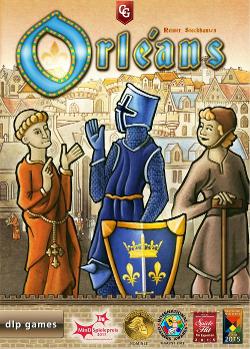
Evan4,6 In this game, you are bag building. Players start with some tokens, they randomly pull them from a bag, do a planning phase where they lay the tokens into matching action spaces, then in turn order each player can resolve an action space that they completed with tokens, which gains them some benefit and then the tokens go into a little discard bin. Lather, rinse, repeat. The thing that makes the game interesting is that each action space can only be resolved while your meeple is in the matching location. You can also spend money to buy new action spaces that hopefully combo with what you are doing. Most of the actions get you more tokens, although there are some cards that give you one time benefits, places to put the tokens for points, or increase the value of one type of token. You also have a warehouse where you get bonus points for your tokens that you fill rows with. Much of the game seems to be about managing your token horde, keeping only what you need to keep your action spaces active each turn, and sending away what you don't to the warehouse or the cards for points. It's very cute, however it's extremely multiplayer solitaire, other than, sometimes someone grabs the card you wanted or someone takes the last token from the sack. The game also goes on a little too long, and you do spend a lot of time doing the same things on your tiles over and over again, which can feel a little sloggish. I'm a big fan of this designer's previous game Orléans and for me there's no contest between the two games, although I'm not unhappy with Alta. Most of the people I played with actually said they liked Alta better. I definitely need some more plays, but honestly I'm not sure why this game doesn't have solo rules. :star: Art, Iconography and components functional :star: Clever or interesting mechanisms :star: Reasonably low downtime between turns with mildly AP players :star: Multiple plays stay interesting :star: Low or mitigatable luck elements :star::nostar::nostar::nostar::nostar: Raw enjoyment
Mestremuten7,0 Rating: 3/5 Production value: 3/4 Is the game in my collection/Love to have?: 1/1
Elfrikijugon8,0 Mercadillo de las LES 2023 (Ludo Ergo Sum).
Questions de règles
Réponses tirées du livret par l'assistant de règles de Ludoya.
Do we redraw role tiles every round or just once at the start?
Role tiles are drawn and assigned at the start (each player draws one); they remain for the game unless you choose to redraft by laying them face up and selecting them (recommended once players are familiar). (page 5)
When I use tiles to perform an action, do those tiles go back into my bag immediately?
No — tiles you use or gain during actions go into your personal container; they are returned to your cloth bag only when you would need to draw and your bag is empty. (page 7)
Can I store food or corn in my warehouse?
Food tiles can never be placed in the warehouse, but corn is treated as a good with special rules: it must be stored as soon as obtained (unless you have an extension that allows interim storage) and may substitute for the required good in a row. (page 9)
Is movement an action, and do I have to be on a location to perform its action?
Movement is not an action by itself, but your figure must be on a location to carry out that location's action; you may move before and/or after an action using your free cart or by spending food for steps according to the movement rules. (page 7)
Do coins go into my bag or planning spaces, and can I use coins I earn this round to pay for things?
Coins are never placed in the cloth bag or on planning spaces (except where market-extension coin-placement is required in planning); coins stay next to your board and you may even use coins acquired during the current round for purchases. (pages 7, 9)
How many carts can I buy in one round and how many can I own total?
You may buy at most one cart per round and you may own a maximum of four carts in total. (page 9)




Gratuit, sur le web, Android et iOS
Jouez à Altiplano avec Ludoya
- Gardez-le dans votre collectionSuivez votre exemplaire et ses extensions, prêtez-le à vos amis ou ajoutez-le à votre liste de souhaits et soyez prévenu quand le prix baisse.Ajouter à votre collection
- Enregistrez chaque partieScores, gagnants, minuteurs et photos, puis vos statistiques : taux de victoire, nombre de joueurs préféré, meilleur score.Enregistrer une partie
- Réglez les questions de règlesPosez n'importe quelle question sur les règles et obtenez une réponse tirée du livret, avec la page pour vérifier.Demander à l'assistant de règles
- Trouvez des gens avec qui y jouerClubs, soirées jeux et événements près de chez vous qui mettent ce jeu sur la table.Voir les événements
Données du jeu (joueurs, durée, âge, crédits) issues de BoardGameGeek.