
2011 · 城市建设
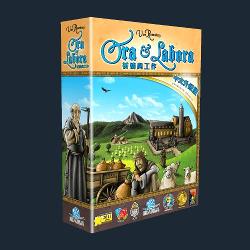
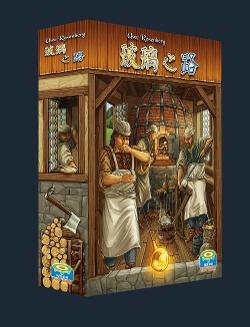
祈禱與工作
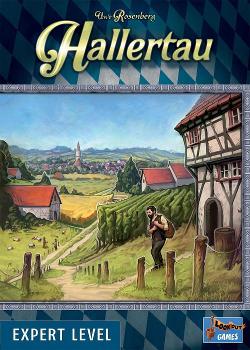
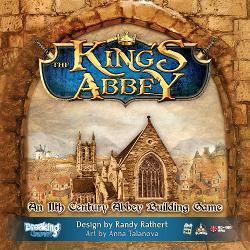
Each player runs a medieval monastery, acquiring land and constructing buildings and enterprises that produce resources and goods. Players place three workers to activate actions in buildings, using their own structures or paying others to use opponents’ buildings, and must leave workers in place until all three are placed. A shared rondel tracks available resources; turning it each round adjusts supply levels for everyone. Players gather materials, clear terrain, expand plots, and upgrade two-sided resource tiles to manufacture higher-value items like books, ceramics, ornaments, and relics. Building placement and terrain purchases shape production chains and determine final scoring.
- 人数
- 1–4 最佳 3 人
- 游戏时长
- 60–180 分钟
- 年龄
- 13+
- 复杂性
- 3.9 / 5


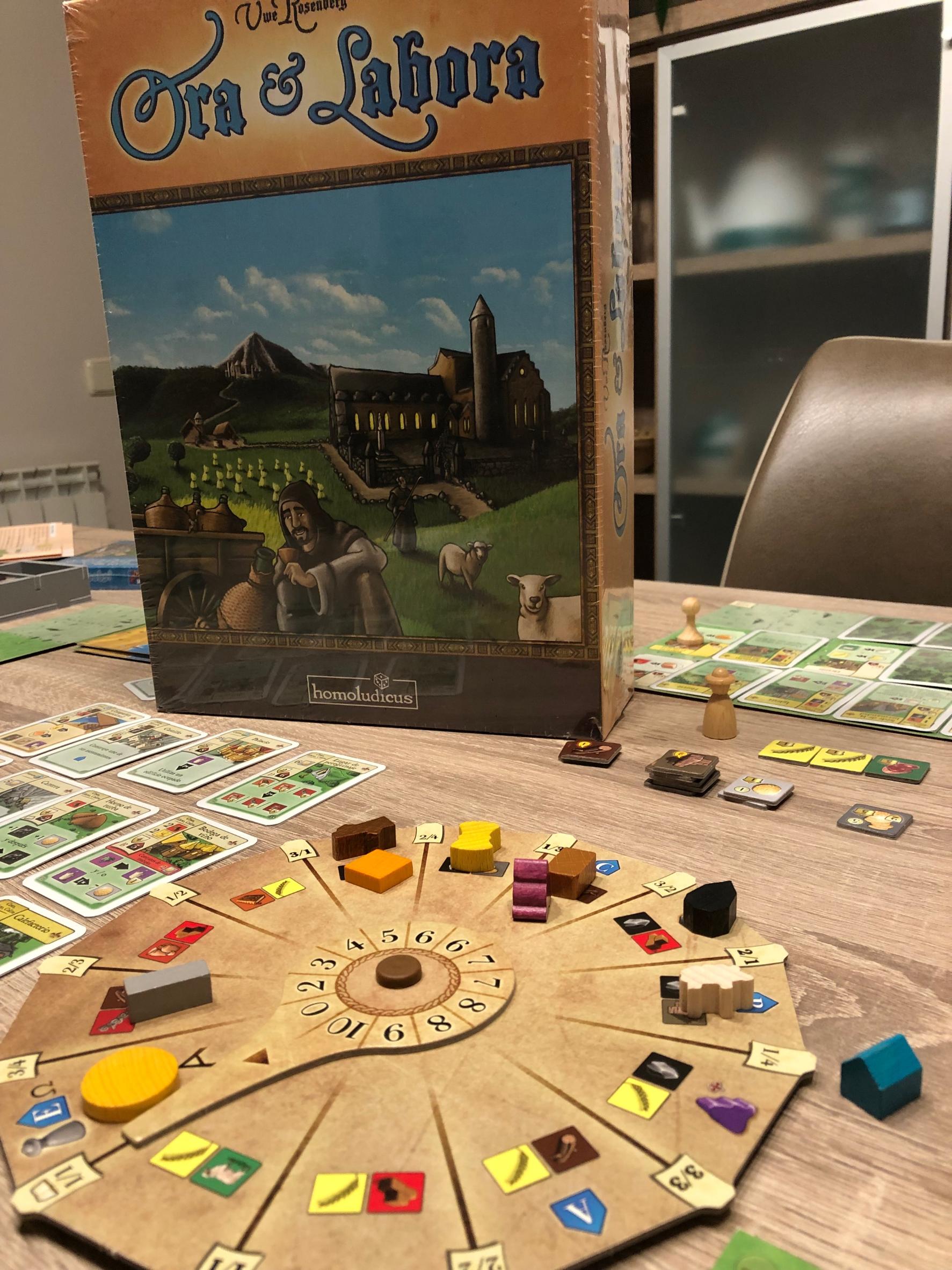
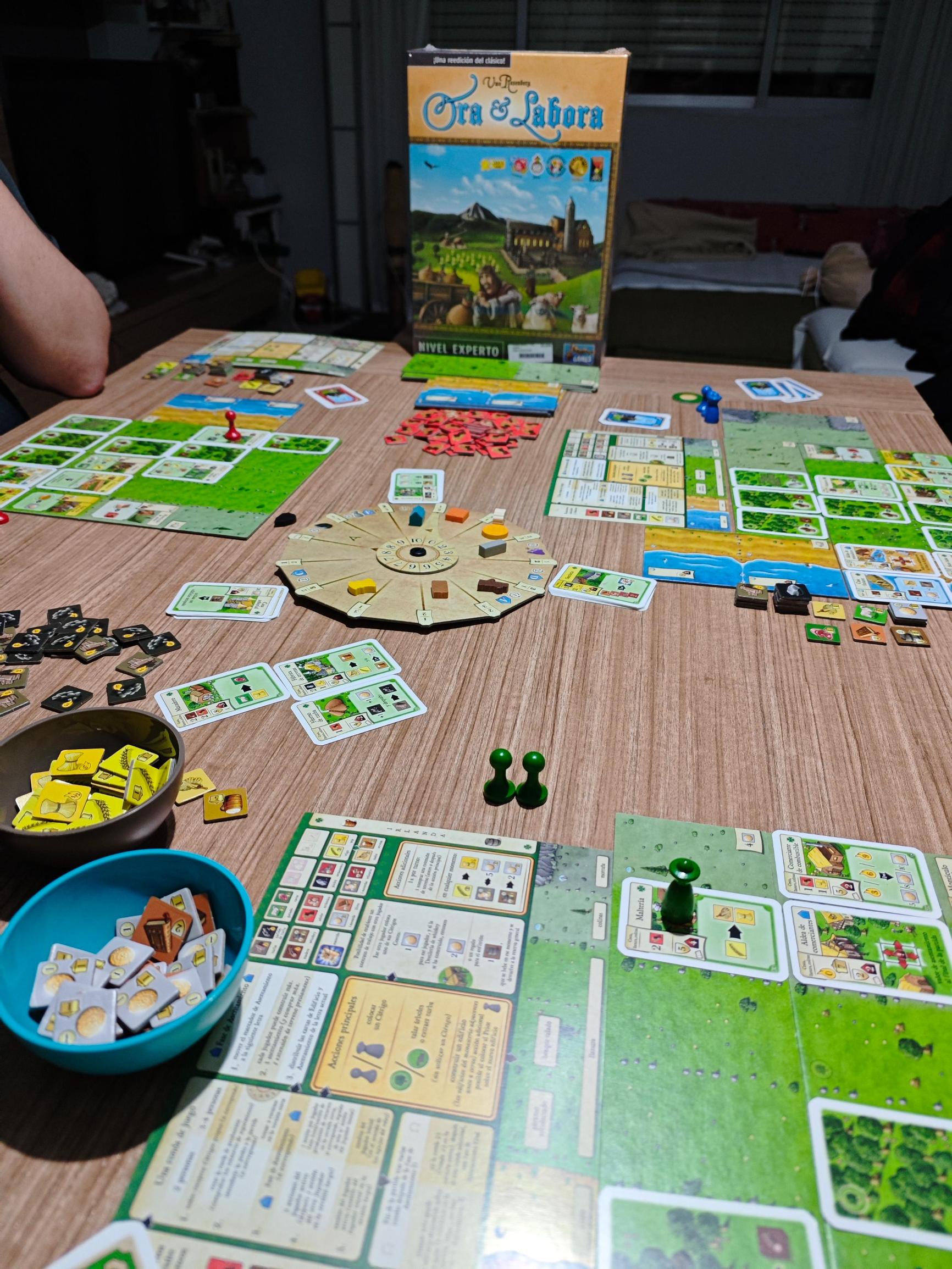
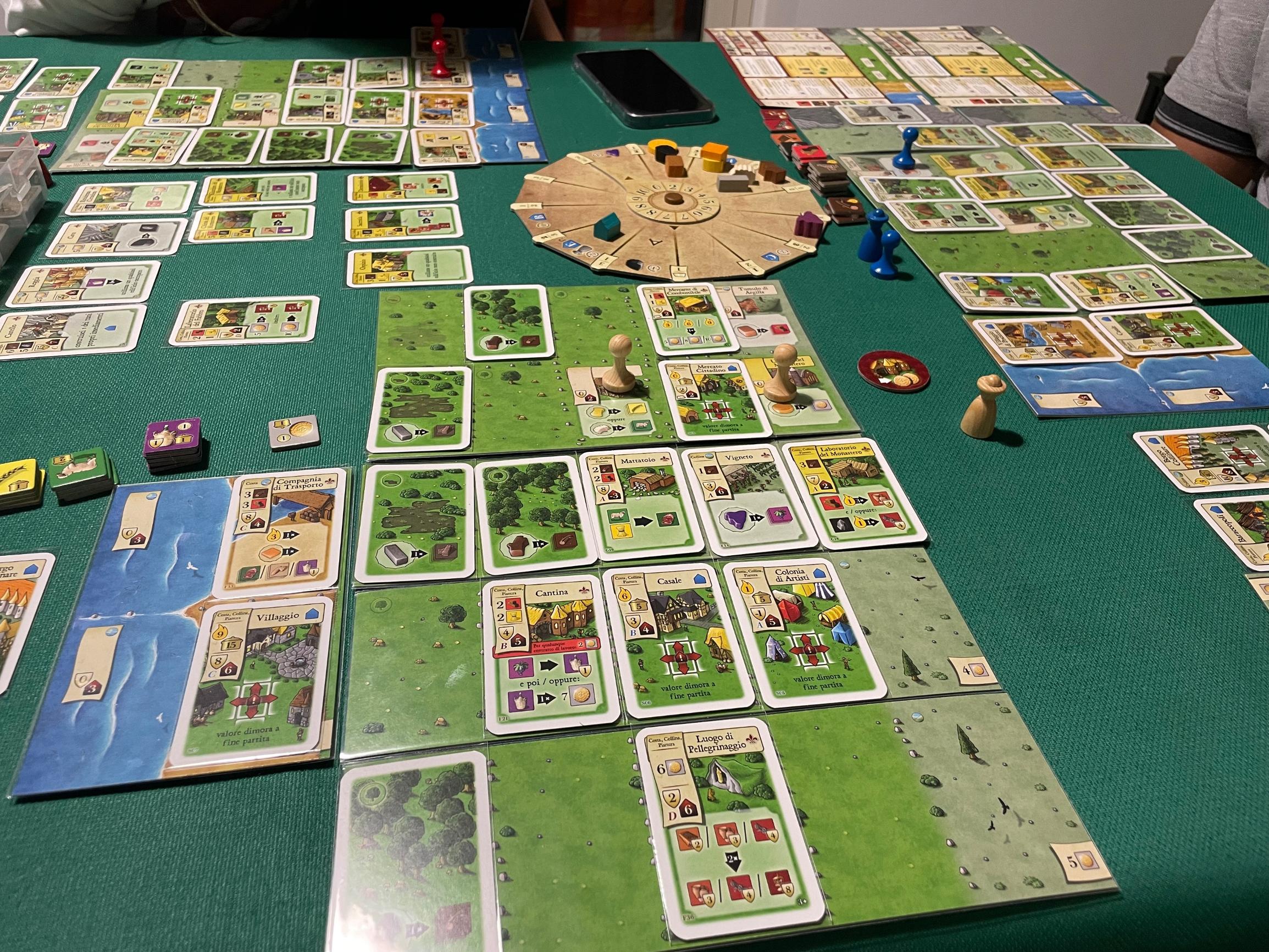
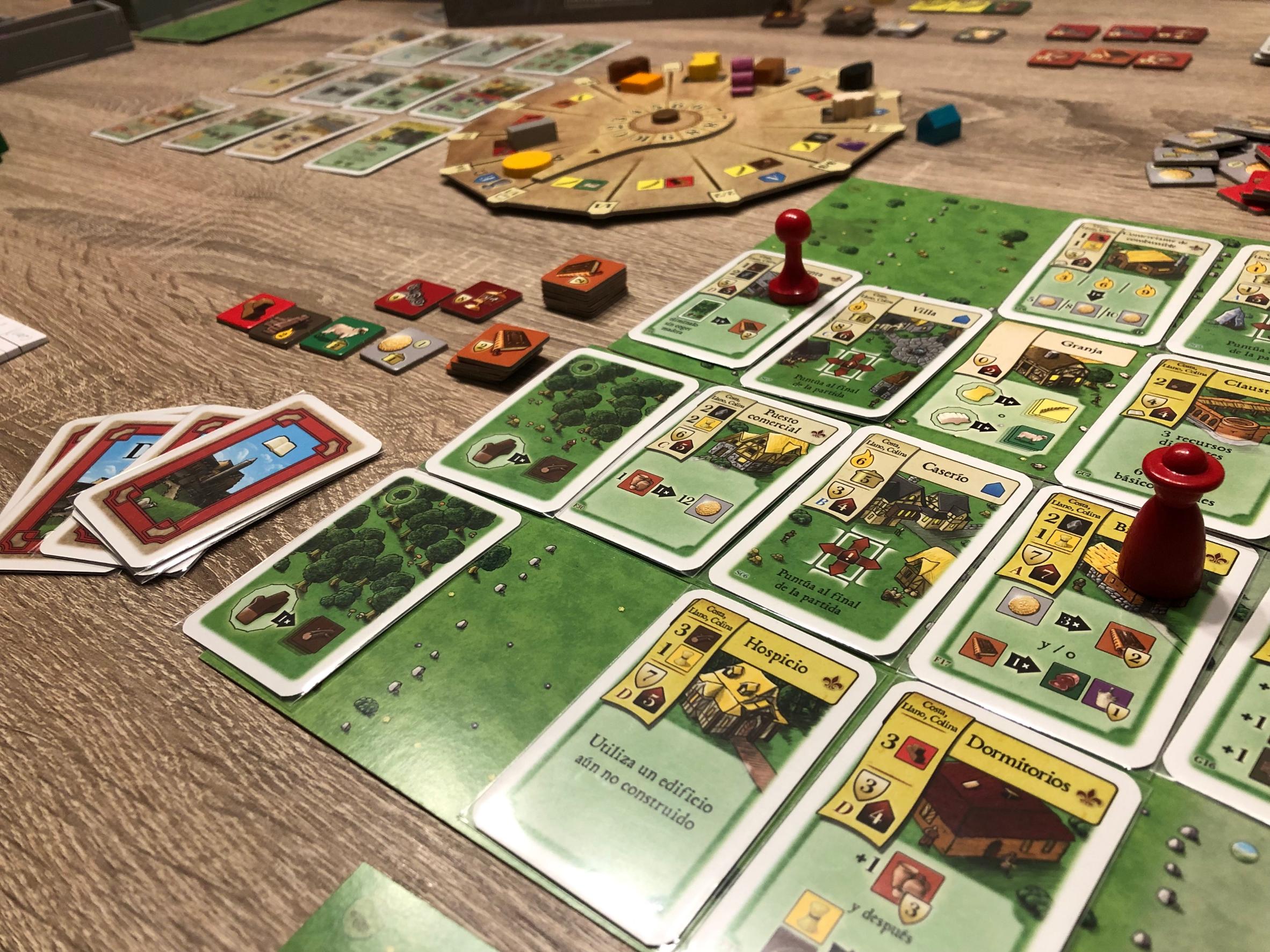
在 Ludoya 的牌桌上
在 Ludoya 中查看完整统计- 144
- 已记录对局
- 146
- 玩家
- 2h 30m
- 平均时长
- 113
- 收藏数
- 17
- 愿望清单数
- 1
- 已预购
6.3/10
基于 32 条 Ludoya 评测
Mestremuten8.0 Rating: 4/5 Production value: 3/4 Is the game in my collection/Love to have?: 1/1
Evan3.5 This is a pretty easy game with a really tough rule book. On your turn you either build a building paying the cost, or place a worker on a building to activate the ability of that building. Most of the time it produces X resources, where X is equal to the matching resource marker on the ever rotating wheel of available resource goods. Every turn the wheel clicks one spot, which changes the quantity of each good's availability. Much of the game is turning basic resources into advanced resources by flipping them over, and positioning the buildings on your board cleverly to score points. You can expand your board, and use opponent's action spots by paying them. The text on the building cards is very small, so playing with higher player counts gets hard to track very quickly. It also becomes more difficult to predict when a resource from the wheel will flush out. The puzzle is good, but the game lacks excitement. There aren't many paths through the game, and it has only two different sets of cards. This isn't always an issue for a game, when there's enough meaningful player interaction to keep things tense, but this doesn't quite hit that mark to my taste. ☆ Art, Iconography and components functional ★ Clever or interesting mechanisms ☆ Reasonably low downtime between turns with mildly AP players ☆ Multiple plays stay interesting ★ Low or mitigatable luck elements ★★★☆☆ Raw enjoyment
Garfield2.0 #56 Ugly material. Too many buildings. Too much multiplayer solitaire. Just not interesting and entertaining enough.
规则问题
由 Ludoya 的规则助手根据规则书回答。
当商品被生产出来时,生产轮是怎么运作的?我该怎么使用百搭标记?
每轮开始时,生产轮都会转动,这会改变每种商品的产量;当某种商品被生产时,它的商品指示物会移回 0 格(第 2 页)。当你使用一座引用生产轮的建筑时,你可以选择用万能指示物代替普通商品指示物;万能指示物会被移到 0,而且甚至可以用于那些其正常指示物还未进入游戏的商品(例如石头或葡萄)(第 3 页)。
我的神职人员什么时候会回来——如果我只用了一个或两个,也能把他们拿回来吗?
在每一轮开始时,只有把三个神职人员都放在建筑上的玩家才能把他们拿回来;如果你只用了一个或两个,就不会取回他们(第2页)。
当我付费使用对手的建筑(工作契约)时会发生什么?
支付一个工作合同会强制对手选择并将自己可用的一个神职人员放到该建筑上,你必须立即付款,而且这个合同不能被拒绝,也不能发给已经放完所有神职人员的玩家(第3页)。一旦有人建造了酒庄或威士忌蒸馏厂,工作合同的价格就会从1枚金币涨到2枚金币,而且你也可以改为归还1瓶葡萄酒或1瓶威士忌作为“礼物”来代替金币(第3页)。
建修道院或其他建筑时,有没有特别的摆放规则?
修道院建筑必须始终放置在其他修道院建筑的相邻位置(水平或垂直),而且每张建筑牌都会显示它可以建在哪些地形类型上(例如:山地格子上只能建采石场或城堡;水面上只能建房屋船)(第4页)。建造后,如果你的执事还可用,你可以把执事放到这座建筑上,立刻激活它(第4页)。
我什么时候、在哪里可以买并放置地形板块(区域和地块)?
你每回合可以购买一次风景板块,并且在每个定居阶段也只能购买一次,而且必须立刻放置;区域必须根据你核心领地的朝向,放在其上方或下方(不能错位),而沿海地块要接到左边,山地地块要接到右边,而且至少需要有一个对应空间相邻(第5页)。
定居阶段什么时候进行?建造一个定居点的基本规则是什么?
每当生产轮的指针经过下一叠建筑/定居卡时,就会进入一次定居阶段(在加分轮之后还会有最后一次定居阶段)(第5页)。在定居阶段中,每位玩家最多可以建造一个定居点,方法是用商品板块支付它的食物和能源费用,并将其放在一个合法的空旷地形格上(不能建在山地或水域格上,而且你也可以在建造前立刻购买一块地形)(第6页)。






游戏信息(人数、游戏时长、年龄、制作人员)来自 BoardGameGeek。